Waltzing Windmills Sheet Music Preview

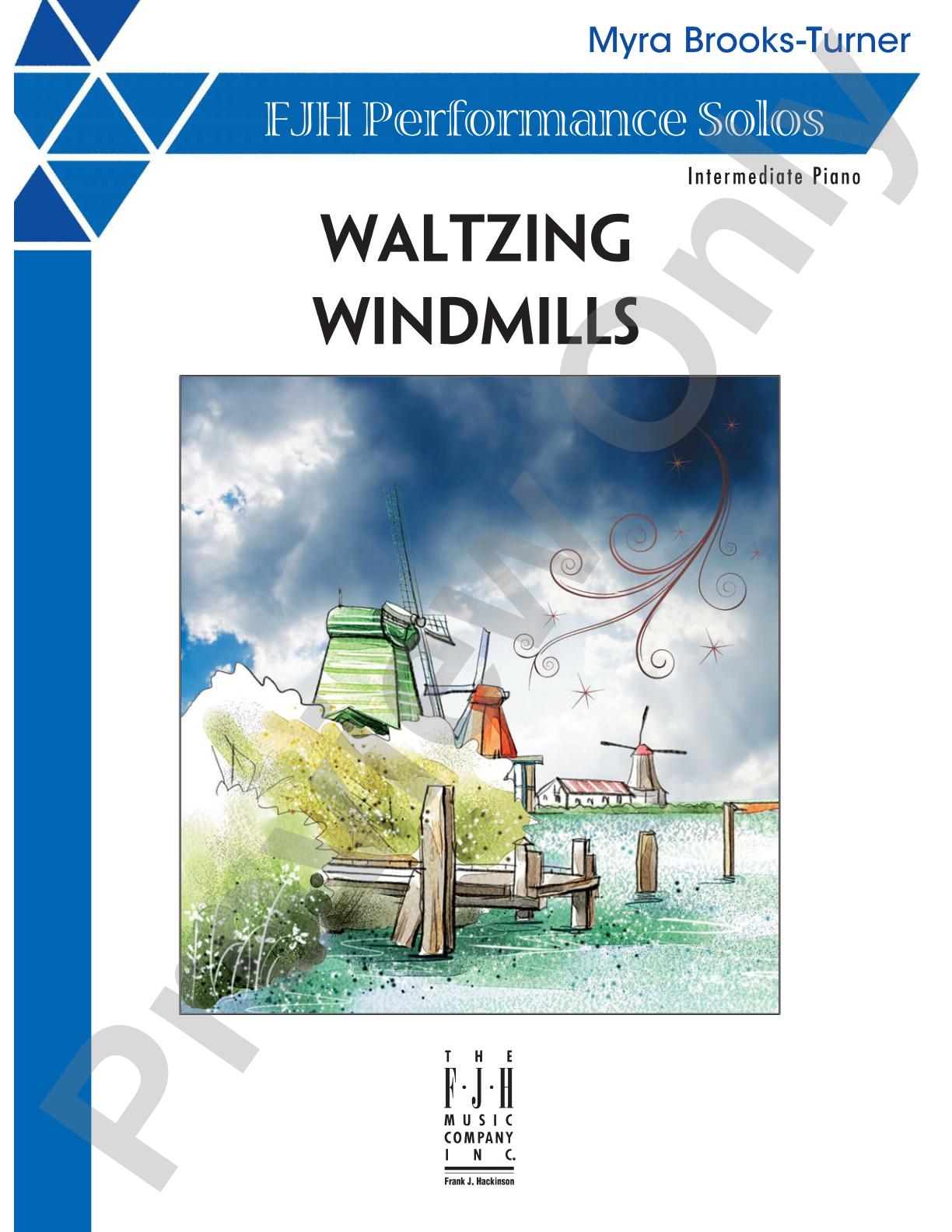
Waltzing Windmills: Piano

By Myra Brooks-Turner

Item: 98-DP2012

Digital Download
$2.95
Description
Selected for the NFMC 2014-2016 bulletin, this piece opens with bold octaves in both hands then moves to a lyrical melody. In the key of D minor, the technical demands are L.H. arpeggios, chord inversions, and octaves.

Waltzing Windmills: Piano isn't in MakeMusic Cloud just yet...but it could be. Let us know you'd like to see it, and you'll help shape what comes next. In the meantime, start a free trial and dive into thousands of interactive titles your students can play along with today.

Sample Audio
No sample audio found.
Sample Video
Additional Details
Series: FJH Performance Solos
Publisher: The FJH Music Company, Inc.
SKU: 98-DP2012

More about this title

Why we love this

Brooks-Turner writes with an ear for what intermediate pianists actually want to play. The opening gesture grabs attention immediately, those bold octaves announce the piece with real confidence, then the shift to a singing melody gives students something genuinely lyrical to shape. It's the kind of work that sounds more impressive than it is technically demanding, which means your students finish feeling accomplished rather than exhausted.

What to expect

The opening demands presence and authority; those octaves set a stage. Then something softer emerges, a song that winds through the minor key with grace and reflection, like watching a melody unfold against a minor-key landscape.

Who it's for

Intermediate pianists ready to handle moderate technical work without getting bogged down in excessive complexity. This piece suits students who respond well to clear formal structure and enjoy the contrast between dramatic opening statements and sustained melodic playing.

How to get the most out of it

  • Shape the opening octaves with weight and clarity; they should land with presence but not become pounding. Think orchestral boldness at a human scale.
  • The arpeggios in the left hand need consistent tempo and even spacing. Practice hands separately until the rhythmic pulse is rock solid, then let your right hand melody sit on top without rushing.
  • Chord inversions are easier to navigate when you visualize the harmonic movement rather than thinking hand position. Map out where each inversion sits on the keyboard before you learn the passage at tempo.
  • The D minor key signature gives the piece an introspective quality. Resist brightening the tone during the lyrical section; let the melancholy character breathe.

How to use it

Pair this with other minor-key repertoire in a recital to create a thematic program, or feature it as a solo work that stands on its own without needing a full concert context. Its selection for the NFMC bulletin makes it a natural choice for festival play and competitions where judges recognize its musicianship and technical balance.

Skills your students will build

  • Left hand arpeggios in a key signature context
  • Chord inversions across both hands
  • Octave control and power without tension
  • Phrasing a melody over accompanative texture
  • D minor tonality and its emotional character
  • Balance between rhythmic precision and lyrical expression

You May Also Like