Waltz Parisienne, Op. 63, No. 19 Sheet Music Preview

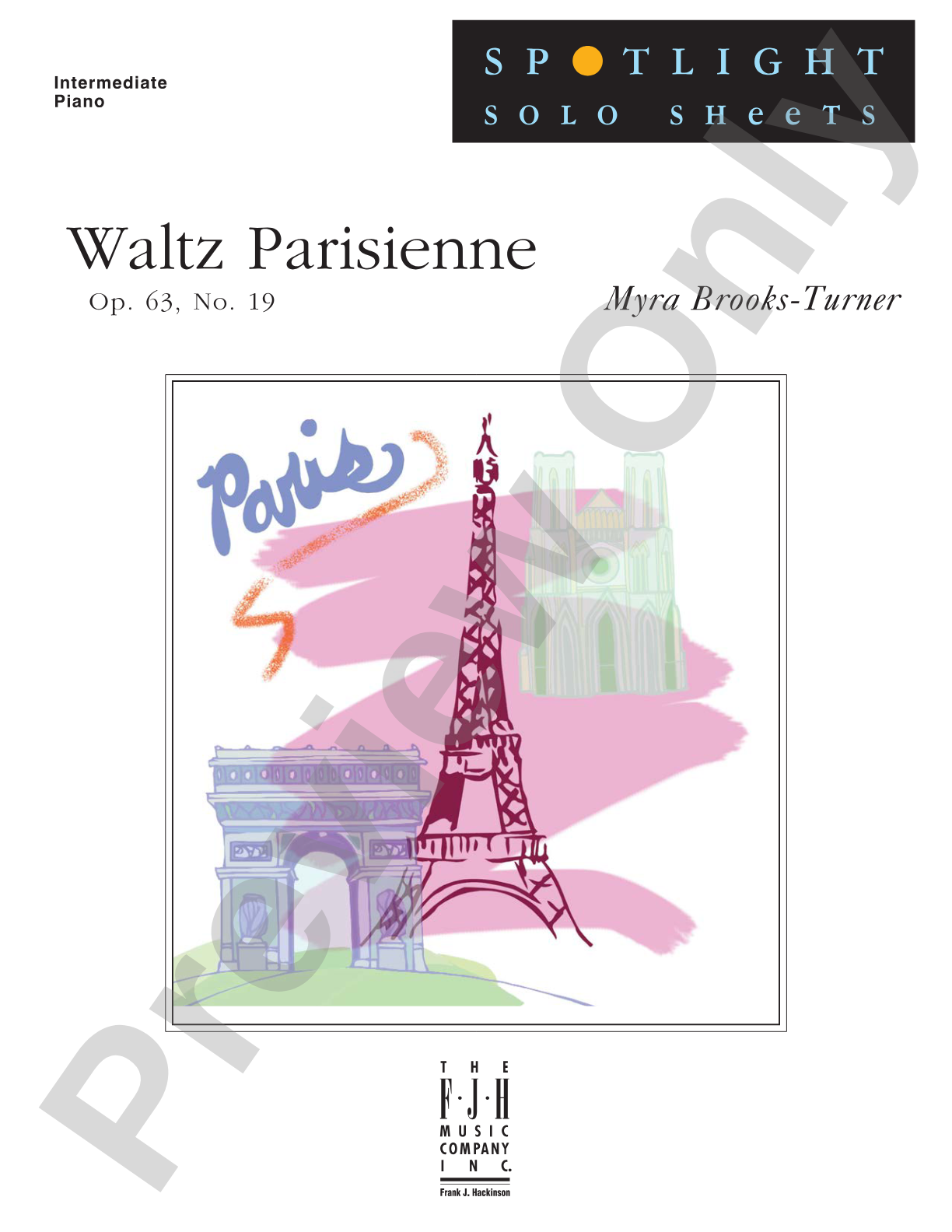
Waltz Parisienne, Op. 63, No. 19: Piano

By Myra Brooks-Turner

Item: 98-DS4174

Digital Download
$4.95
Description
Waltz Parisienne is a lyrical intermediate level solo written in 3/4 time and in G major. The lyrical melodic lines and fluid rhythmic motion throughout will showcase your students’ expressive playing.

Waltz Parisienne, Op. 63, No. 19: Piano isn't in MakeMusic Cloud just yet...but it could be. Let us know you'd like to see it, and you'll help shape what comes next. In the meantime, start a free trial and dive into thousands of interactive titles your students can play along with today.

Sample Audio
No sample audio found.
Sample Video
Additional Details
Series: Spotlight Solo Sheets
Publisher: The FJH Music Company, Inc.
SKU: 98-DS4174

More about this title

Why we love this

Brooks-Turner writes with an ear for what intermediate pianists can accomplish when given material that rewards musicality over technical fireworks. The lyrical lines sit naturally under the hand, and the 3/4 waltz meter provides enough rhythmic momentum to keep young players engaged without demanding virtuosic velocity. This is the kind of piece that builds confidence through expressive success rather than finger gymnastics.

What to expect

A graceful Parisian salon scene. The waltz moves with elegance and restraint, offering lyrical melody lines that flow without strain and rhythmic patterns that suggest ballroom motion without demanding virtuosity. The G major tonality lends brightness to the work.

Who it's for

Intermediate pianists ready to explore expressive interpretation and phrasing. This piece suits recitalists building a program of Romantic-era character pieces or students whose technical foundation is solid but whose musical sensibilities are still developing.

How to get the most out of it

  • Shape the melodic phrases with gentle dynamic swell and release rather than playing them uniformly. The lyricism emerges through thoughtful breathing, not speed.
  • Maintain an even, flowing accompaniment beneath the melody. The rhythmic motion comes from rhythmic clarity, not from pushing or dragging the tempo.
  • Voice the right-hand melody with slight emphasis so it sits naturally above the left-hand figures, especially in passages where both hands carry musical weight.

How to use it

Program this alongside other character pieces in a Romantic or contemporary recital. It pairs well with shorter salon works and offers an accessible intermediate option for spring or year-end solo performances. The accessible intermediate level makes it suitable for studio recitals where mixed-level students perform.

Skills your students will build

  • Phrasing and shaping in 3/4 meter
  • Balancing melody and accompaniment across both hands
  • Expressive tempo control without rubato excess
  • Left-hand rhythmic independence and fluidity
  • Interpretive choice within a lyrical framework

You May Also Like