
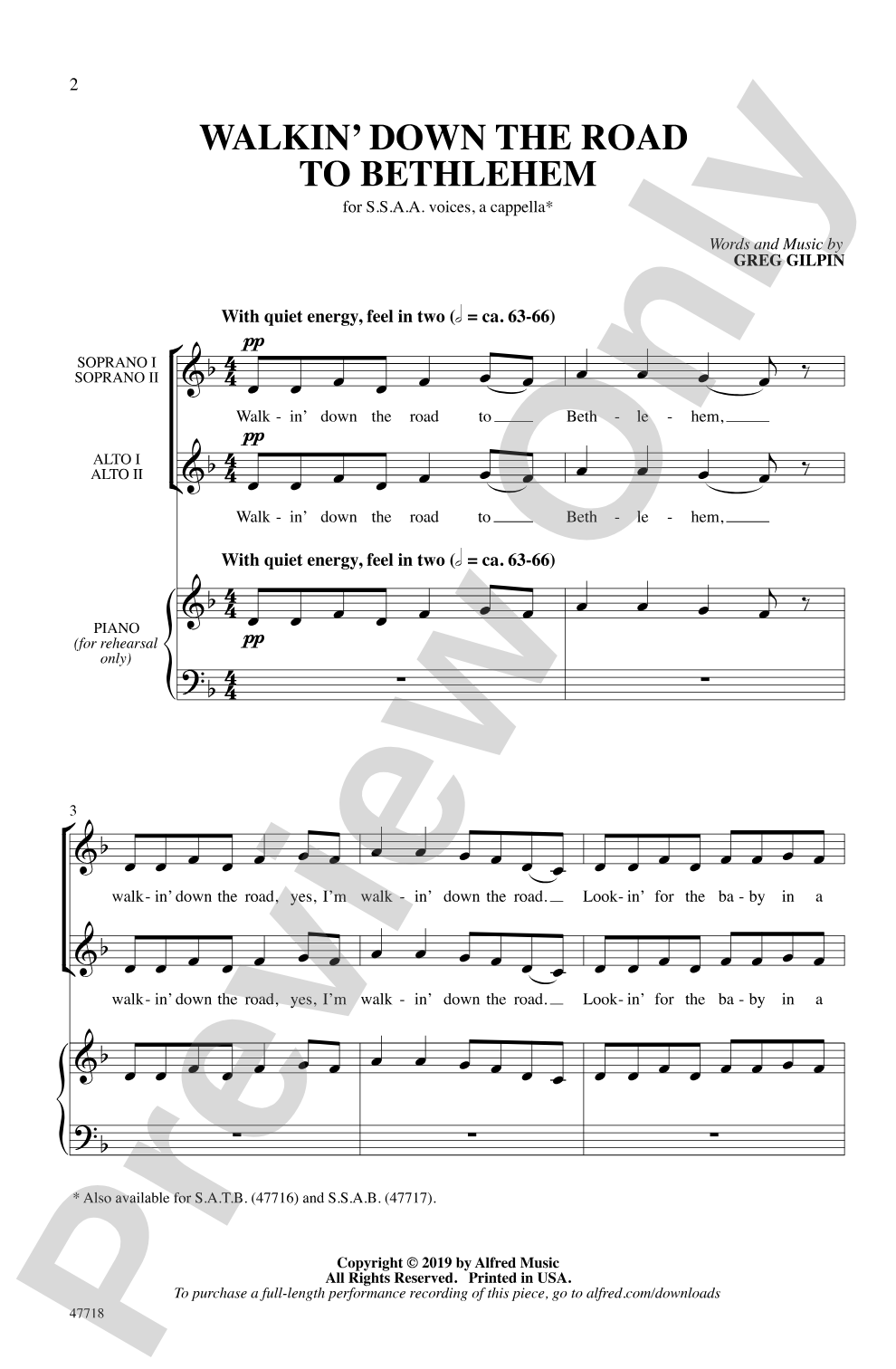
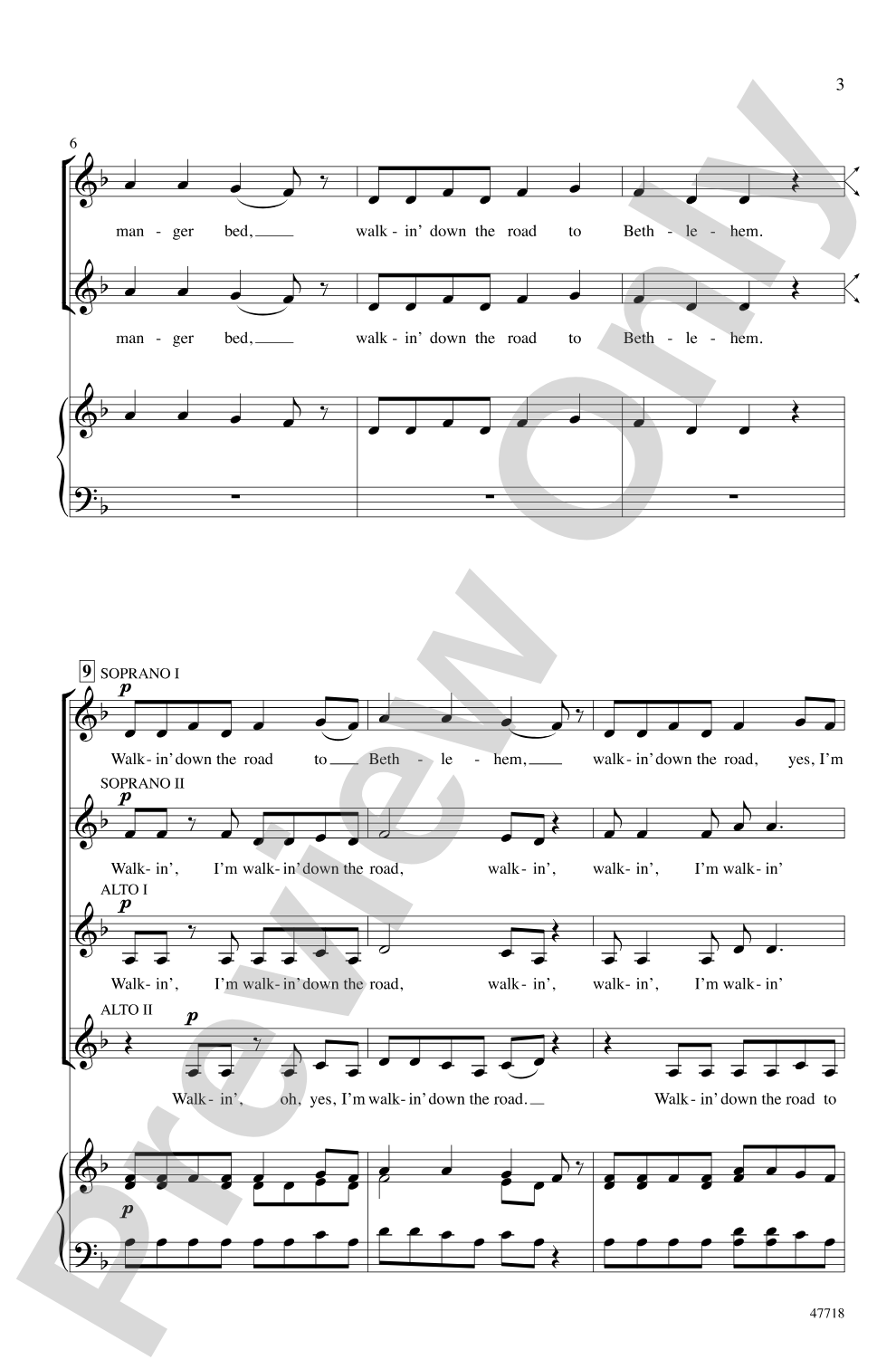
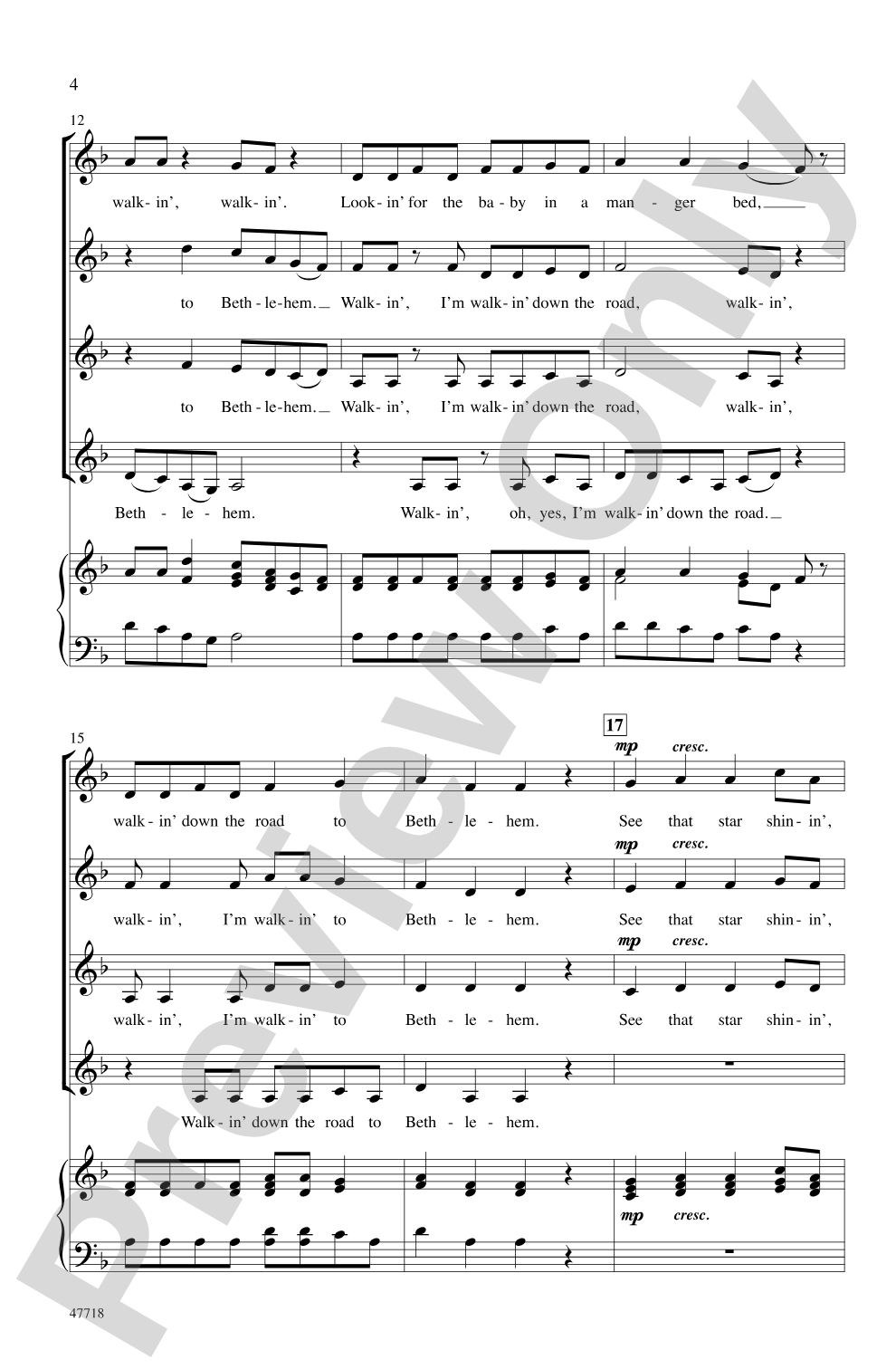

Walkin' Down the Road to Bethlehem: SSAA, a cappella Choral Octavo
Words and music by Greg Gilpin
Item: 00-PO-0006086

$2.05
Minimum order quantity: 20 copies
Pickup currently not available
Related Items
Walkin' Down the Road to Bethlehem: SATB, a cappella Choral Octavo |
$2.05
|
View | |
Walkin' Down the Road to Bethlehem: SSAB, a cappella Choral Octavo |
$2.05
|
View | |
Walkin' Down the Road to Bethlehem: SATB, a cappella Choral Octavo |
$2.05
|
View | |
Walkin' Down the Road to Bethlehem: SSAB, a cappella Choral Octavo |
$2.05
|
View | |
Walkin' Down the Road to Bethlehem: SSAA, a cappella Choral Octavo |
$2.05
|
View |
Description
A well-constructed original a cappella Christmas spiritual built upon a memorable chorus of interlocking rhythms. The gripping minor key, dramatic dynamic contrasts, and a compelling modulation will make for an impressive holiday performance.


Don't just read it, hear it, play along with it, and watch your students grow with it. In MakeMusic Cloud, Walkin' Down the Road to Bethlehem: SSAA, a cappella Choral Octavo comes alive with professional accompaniment, adjustable tempo, and built-in practice tools that turn solo practice into real progress.
Open in the Player
Jump straight in and assign it today.
Start Your Free Trial
Open this title and explore the full library in minutes.
Sample Audio
1
Audio File
--:--
0:00
0:00
Sample Video
Additional Details
Series:
Alfred Choral Designs
Publisher:
Alfred Music
Page Count:
12
SKU:
00-PO-0006086
More about this title
About the Composer: Greg Gilpin

Greg Gilpin has established himself as one of the most performed choral composers in America, with his work heard in concert halls from Carnegie Hall and Lincoln Center in New York to the Ryman Auditorium in Nashville and venues across the globe including the Sydney Opera House, Royal Festival Hall in London, and Harpa Concert Hall in Reykjavik. An ASCAP award-winning composer and conductor, he serves as Director of Educational Choral Publications for Shawnee Press and brings decades of experience leading choirs and producing recordings.
Beyond the concert stage, Gilpin has expanded his creative reach as a film composer, scoring the award-winning short film "Rosie's Rescue" and collaborating with opera singer Angela Brown on a premiere arrangement of "What Child is This?" for the Indianapolis Symphonic Choir. He holds active memberships in ACDA, NAfME, SAG-AFTRA, and is a Life Loyal Member of Phi Mu Alpha Sinfonia.
Why we love this
Gilpin crafts a spiritual that moves beyond the expected. The interlocking rhythmic patterns in the chorus demand real ensemble precision while remaining singable across a range of voice levels, and the minor key framework gives the piece unexpected emotional depth for a Christmas work. The built-in modulation and dramatic dynamic arc reward thoughtful preparation and create a performance moment that stays with an audience.
What to expect
Minor key and gripping harmonic movement create an introspective, almost longing quality that subverts typical Christmas brightness. The interlocking rhythms in the chorus spark energy and forward momentum, while the dramatic dynamic arc swings between intimate vulnerability and powerful declaration.
Who it's for
SSAA choirs seeking a Christmas piece that challenges singers musically while remaining within reach of developing ensembles. Directors who want to program something with spiritual depth and modern choral craftsmanship rather than settling for familiar holiday arrangements.
How to get the most out of it
- Establish the rhythmic foundation of the chorus early in rehearsal by isolating each voice part's rhythm separately, then layering them in pairs before bringing all four voices together.
- Let the minor key breathe. Resist the urge to brighten the sound or push for excessive volume in the opening sections; the contrasts will land far more powerfully if you honor the darker tones.
- Shape the modulation deliberately. Mark the key change clearly in your score and signal it visually to singers so the transition feels intentional rather than accidental.
- Differentiate dynamic levels with precision. Each shift should feel purposeful, not arbitrary; underscore why each dynamic change serves the text and emotional arc.
How to use it
Place this as a centerpiece in a holiday concert program, especially one that balances lighter fare with more substantive material. It works equally well in a concert focused on spirituals and sacred music or as a strong contrast piece when paired with traditional carols.
Skills your students will build
- Singing in parallel harmonies with rhythmic independence from other voice parts
- Sustaining minor key tonality and the emotional character it conveys
- Executing controlled dynamic contrasts and transitions between them
- Navigating modulation and maintaining pitch stability through key changes
- Ensemble balance and blend when multiple voices carry rhythmically complex material simultaneously