
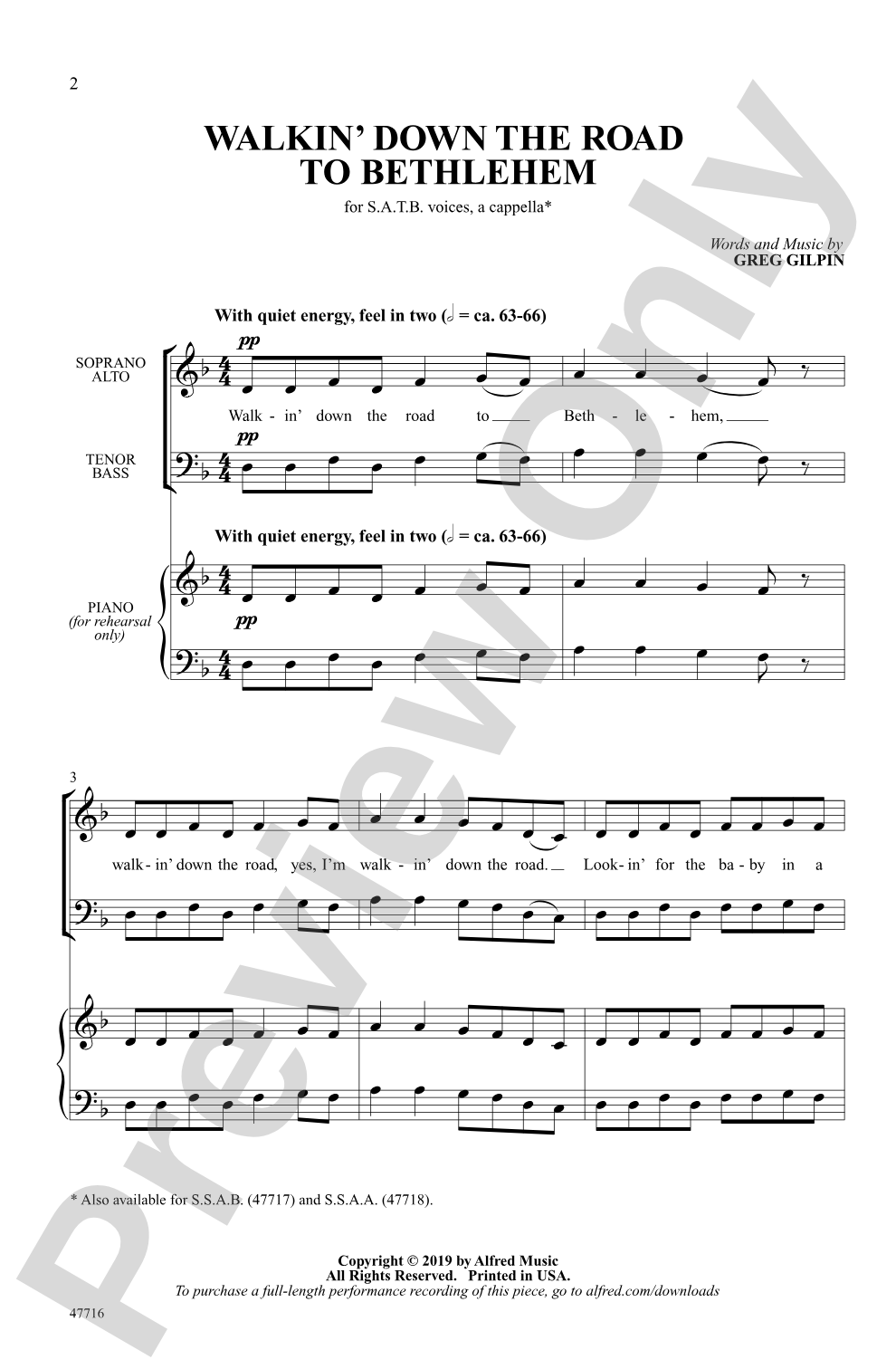
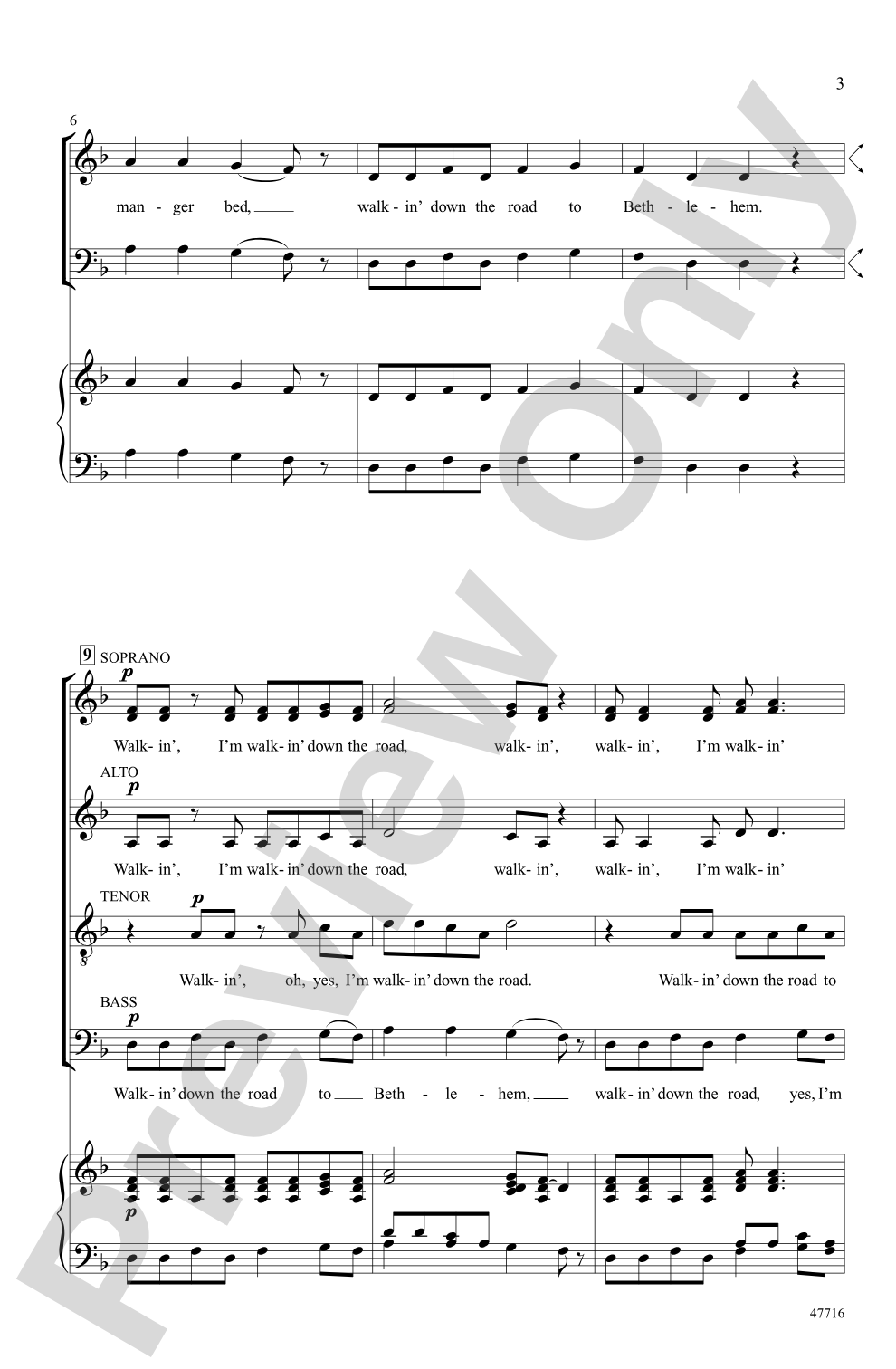
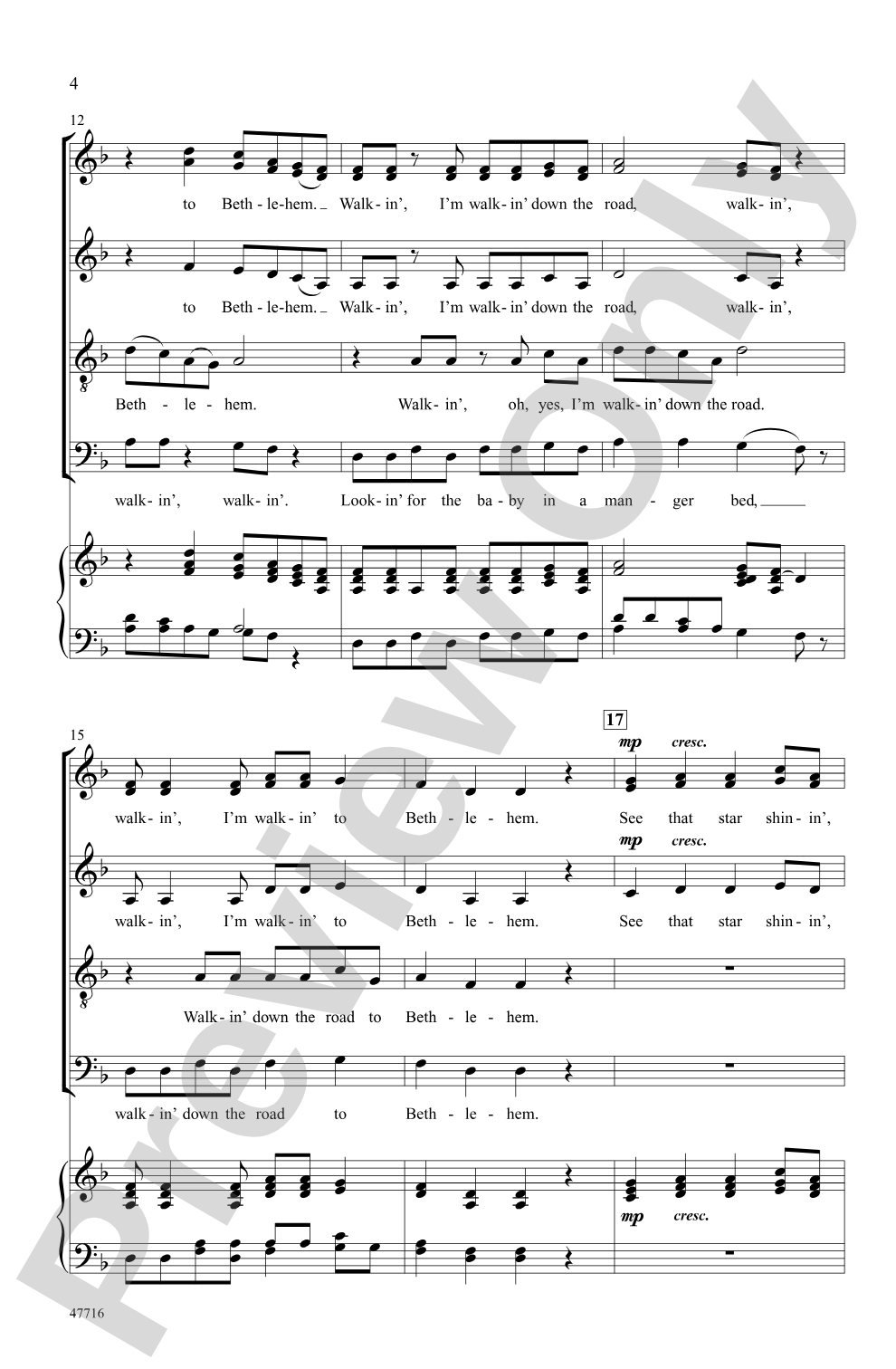

Walkin' Down the Road to Bethlehem: SATB, a cappella Choral Octavo
Words and music by Greg Gilpin
Item: 00-PO-0006005

$2.05
Minimum order quantity: 20 copies
Pickup currently not available
Related Items
Walkin' Down the Road to Bethlehem: SSAB, a cappella Choral Octavo |
$2.05
|
View | |
Walkin' Down the Road to Bethlehem: SSAA, a cappella Choral Octavo |
$2.05
|
View | |
Walkin' Down the Road to Bethlehem: SATB, a cappella Choral Octavo |
$2.05
|
View | |
Walkin' Down the Road to Bethlehem: SSAB, a cappella Choral Octavo |
$2.05
|
View | |
Walkin' Down the Road to Bethlehem: SSAA, a cappella Choral Octavo |
$2.05
|
View |
Description
A well-constructed original a cappella Christmas spiritual built upon a memorable chorus of interlocking rhythms. The gripping minor key, dramatic dynamic contrasts, and a compelling modulation will make for an impressive holiday performance.


Don't just read it, hear it, play along with it, and watch your students grow with it. In MakeMusic Cloud, Walkin' Down the Road to Bethlehem: SATB, a cappella Choral Octavo comes alive with professional accompaniment, adjustable tempo, and built-in practice tools that turn solo practice into real progress.
Open in the Player
Jump straight in and assign it today.
Start Your Free Trial
Open this title and explore the full library in minutes.
Sample Audio
1
Audio File
--:--
0:00
0:00
Sample Video
Additional Details
Series:
Alfred Choral Designs
Publisher:
Alfred Music
Page Count:
12
SKU:
00-PO-0006005
More about this title
About the Composer: Greg Gilpin

Greg Gilpin holds a prominent position as Director of Educational Choral Publications for Shawnee Press and brings decades of experience as both a composer and conductor. His works have been performed at prestigious venues including Carnegie Hall, Lincoln Center, Ryman Auditorium, Sydney Opera House, Royal Festival Hall, and Harpa Concert Hall, earning him ASCAP recognition and membership in ACDA, NAfME, and Phi Mu Alpha Sinfonia.
Beyond the concert hall, Gilpin has expanded his creative reach into film scoring, having composed the award-winning score for the short film "Rosie's Rescue" in 2021. He also collaborated with opera singer Angela Brown on a striking new arrangement of "What Child is This?" for the Indianapolis Symphonic Choir. In recent years, Gilpin has balanced his music career with work as a certified financial coach and professional organizer, demonstrating the same precision and attention to detail that characterizes his compositions.
Why we love this
Gilpin constructs this original spiritual around a deceptively simple idea: a chorus built from interlocking rhythms that immediately lodges in singers' ears and becomes the anchor for the entire piece. The minor key and dramatic dynamic contrasts give choirs room to explore genuine depth and theatricality without requiring soloists or instrumental accompaniment, making this an excellent choice for groups seeking to make a bold impression during the holiday season.
What to expect
The minor key and minor-inflected spiritual idiom create an introspective, almost mournful quality that contrasts sharply with the traditional brightness associated with Christmas music. Yet the driving rhythmic patterns and the thrust of the modulation give the piece unmistakable energy, resulting in a contemplative yet propulsive performance that catches audiences off guard.
Who it's for
This piece suits established choral ensembles with secure blend and musicianship. The a cappella writing demands tuning control and rhythmic independence, making it ideal for high school advanced choirs, college ensembles, and community choruses with singing experience.
How to get the most out of it
- Shape the rhythmic interlocking patterns in the chorus with crisp articulation; the power of this piece comes from the precision and confidence of the ensemble, not from pushing volume.
- Use the dynamic contrasts as structural signposts that guide the arc of the piece rather than as moments to telegraph emotion; let the music itself do the expressive work.
- Approach the modulation as a natural intensification of the journey rather than a sudden shift; prepare singers to feel how the key change lifts and refreshes the texture.
How to use it
Position this as a centerpiece in a Christmas concert's second half or finale to showcase your choir's range and depth. Its original composition and distinctive minor-key character pair well alongside more traditional carols and spirituals, offering variety in both style and emotional tone within a holiday program.
Skills your students will build
- Rhythmic independence and interlocking parts in a cappella settings
- Tuning and blend across sustained passages without instrumental reference
- Dynamic shaping and dramatic pacing within a minor key spiritual idiom
- Ensemble cohesion when navigating key modulations without harmonic support