
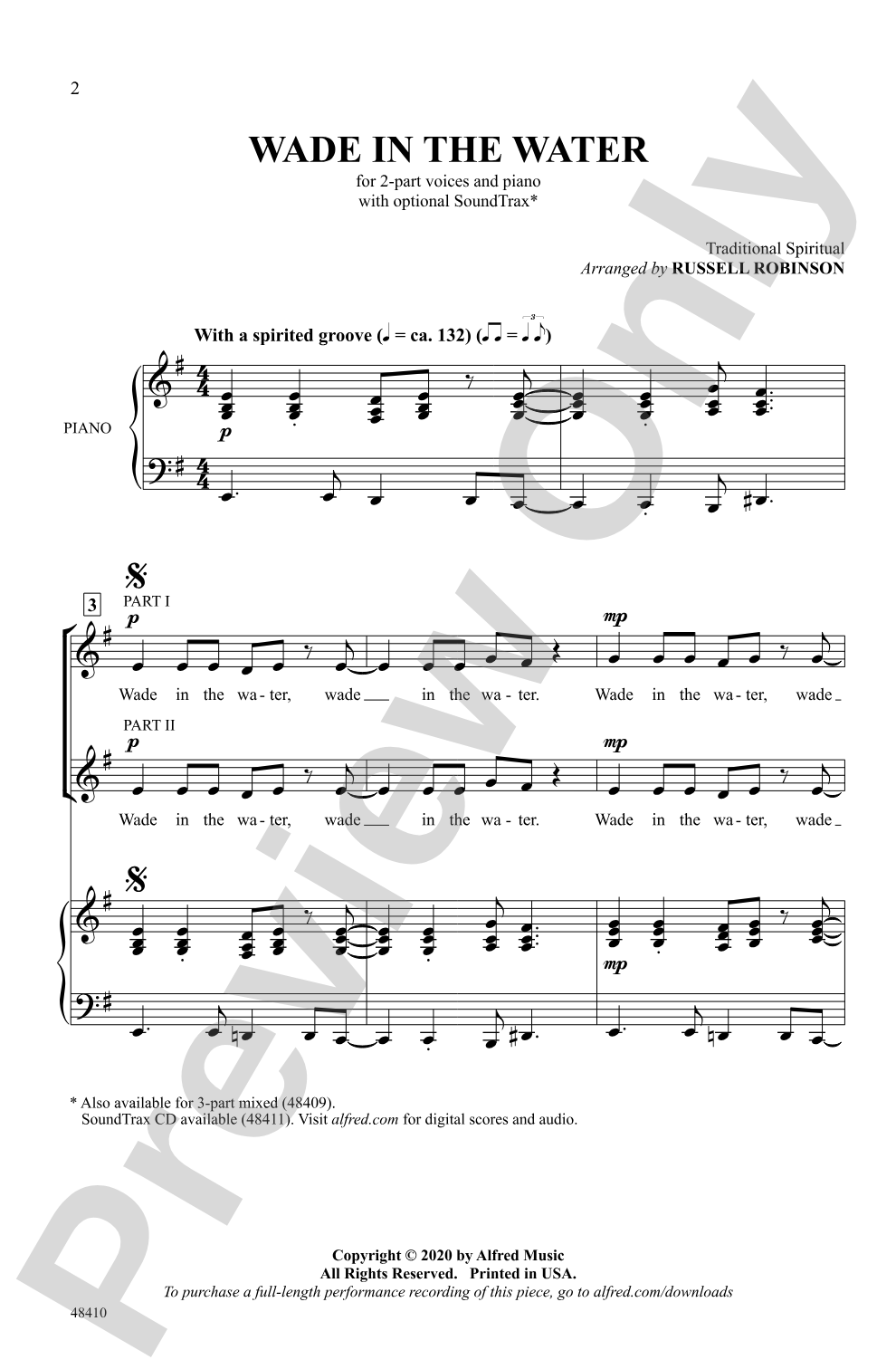
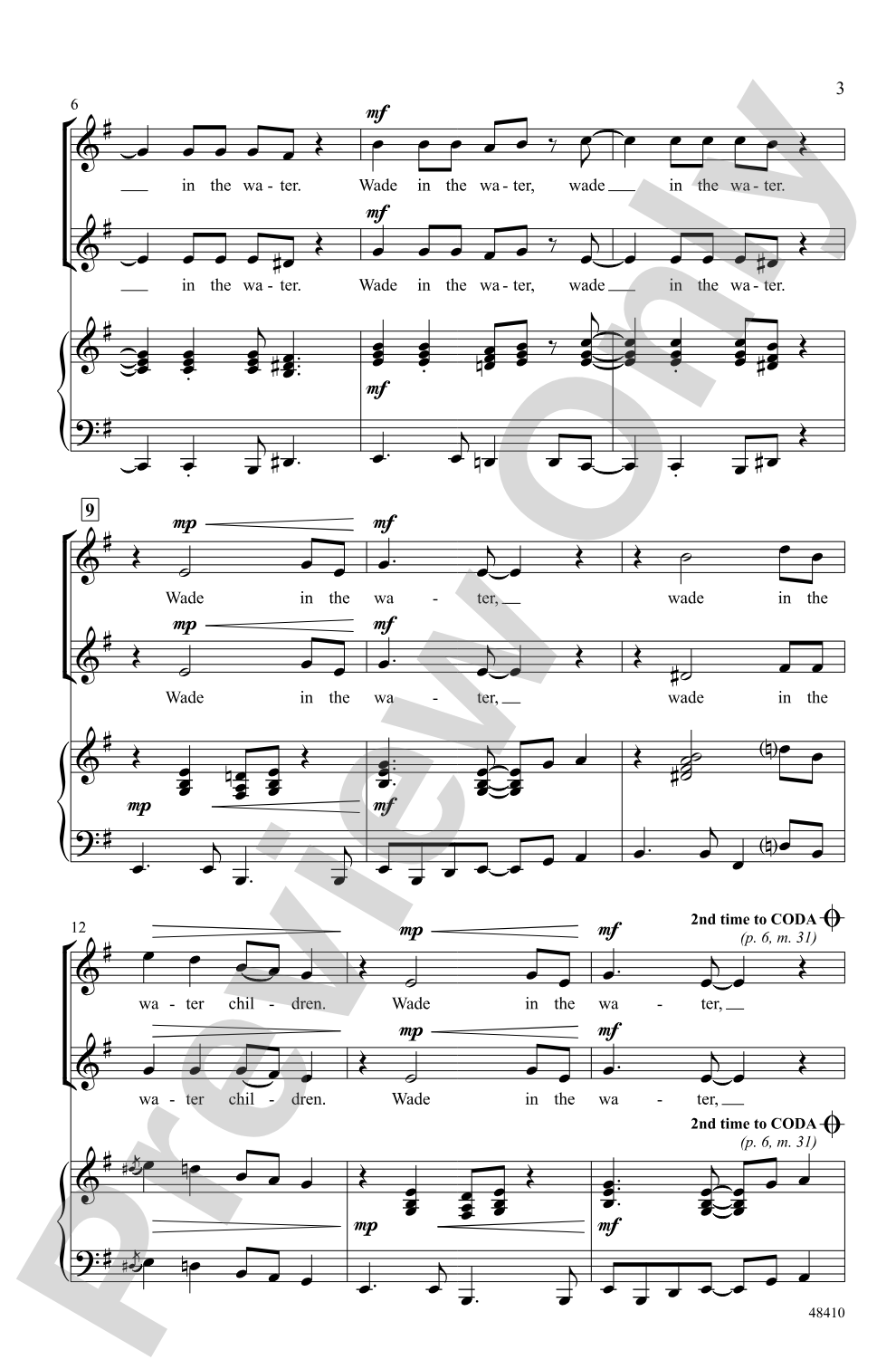

Wade in the Water: 2-Part Choral Octavo
Traditional Spiritual / arr. Russell Robinson
Item: 00-PO-0006354

$2.05
Minimum order quantity: 20 copies
Pickup currently not available
Description
A bluesy rhythmic motive stacks up across voices, creating a compelling introduction and scattered interludes for this hip interpretation of the African-American spiritual. Call-and-response verses give individual sections a chance to shine, and a brief descant plus some optional divisi add that final flourish. A great teaching piece for 2- and 3-part choirs.


Don't just read it, hear it, play along with it, and watch your students grow with it. In MakeMusic Cloud, Wade in the Water: 2-Part Choral Octavo comes alive with professional accompaniment, adjustable tempo, and built-in practice tools that turn solo practice into real progress.
Open in the Player
Jump straight in and assign it today.
Start Your Free Trial
Open this title and explore the full library in minutes.
Sample Audio
1
Audio File
--:--
0:00
0:00
Sample Video
No sample videos found.
Additional Details
Series:
Alfred Choral Designs
Publisher:
Alfred Music
Page Count:
12
SKU:
00-PO-0006354
More about this title
About the Arranger: Russell Robinson

Russell Robinson served as Emeritus Professor of Music Education at the University of Florida, where he shaped choral pedagogy for decades. His career spans conducting appearances at major venues including Carnegie Hall, Lincoln Center, and the Kennedy Center, along with presentations at festivals and conferences across six continents. Robinson was inducted into the Florida Music Educators Association Hall of Fame in 2016 and served as a National Collegiate Chair and Choral Adviser for the National Association for Music Education.
As a prolific composer and arranger, Robinson has over 500 publications in print, spanning choral works, instrumental arrangements, scholarly articles, instructional materials, and video resources. His arrangements are known for their accessibility to student choirs while maintaining musical integrity and cultural respect.
Why we love this
Robinson's arrangement captures the rhythmic vitality and call-and-response tradition of the spiritual while keeping the writing manageable for developing singers. The stacked bluesy motives create immediate interest without sacrificing clarity, and the mix of unison sections with optional divisi and descant gives your singers real ownership of their parts. This is the kind of piece that sounds sophisticated to an audience but feels achievable in rehearsal.
What to expect
From the first moment, the bluesy rhythmic stacks create momentum and energy. The piece breathes with the call-and-response exchanges, inviting individual sections into the conversation, while the descant addition at the end feels like a celebration unlocked through the singers' growing confidence.
Who it's for
Two-part choirs at the middle school and early high school level will find this piece both vocally manageable and musically satisfying. The optional divisi and descant passages let you differentiate within your section, making it flexible for groups transitioning toward three-part writing.
How to get the most out of it
- Lock the bluesy rhythmic motive in the introduction by having singers internalize the groove before adding melody; this becomes the foundation for everything that follows.
- Balance the call-and-response sections so the answering voices feel conversational rather than timid. Encourage the responding section to match the energy and conviction of the call.
- Shape the descant as a genuine flourish rather than an afterthought. It should soar above the texture with confidence while remaining in conversation with the lower voices.
- Lean into the hip, contemporary feel Robinson crafted here. This isn't a traditional spiritual arrangement, so allow your singers to feel the groove and bring rhythmic flexibility to their phrasing.
How to use it
This arrangement fits beautifully in a concert exploring spirituals and contemporary arrangements of traditional African-American music. Its rhythmic drive and shorter length (12 pages) make it an excellent choice for festival performances or as a program opener that immediately engages an audience.
Skills your students will build
- Singing syncopated rhythmic patterns in ensemble
- Balancing call-and-response dialogue between voice sections
- Maintaining groove and steady rhythm in bluesy harmonic contexts
- Reading and executing optional divisi and descant passages
- Interpreting contemporary arrangements of traditional spiritual music