
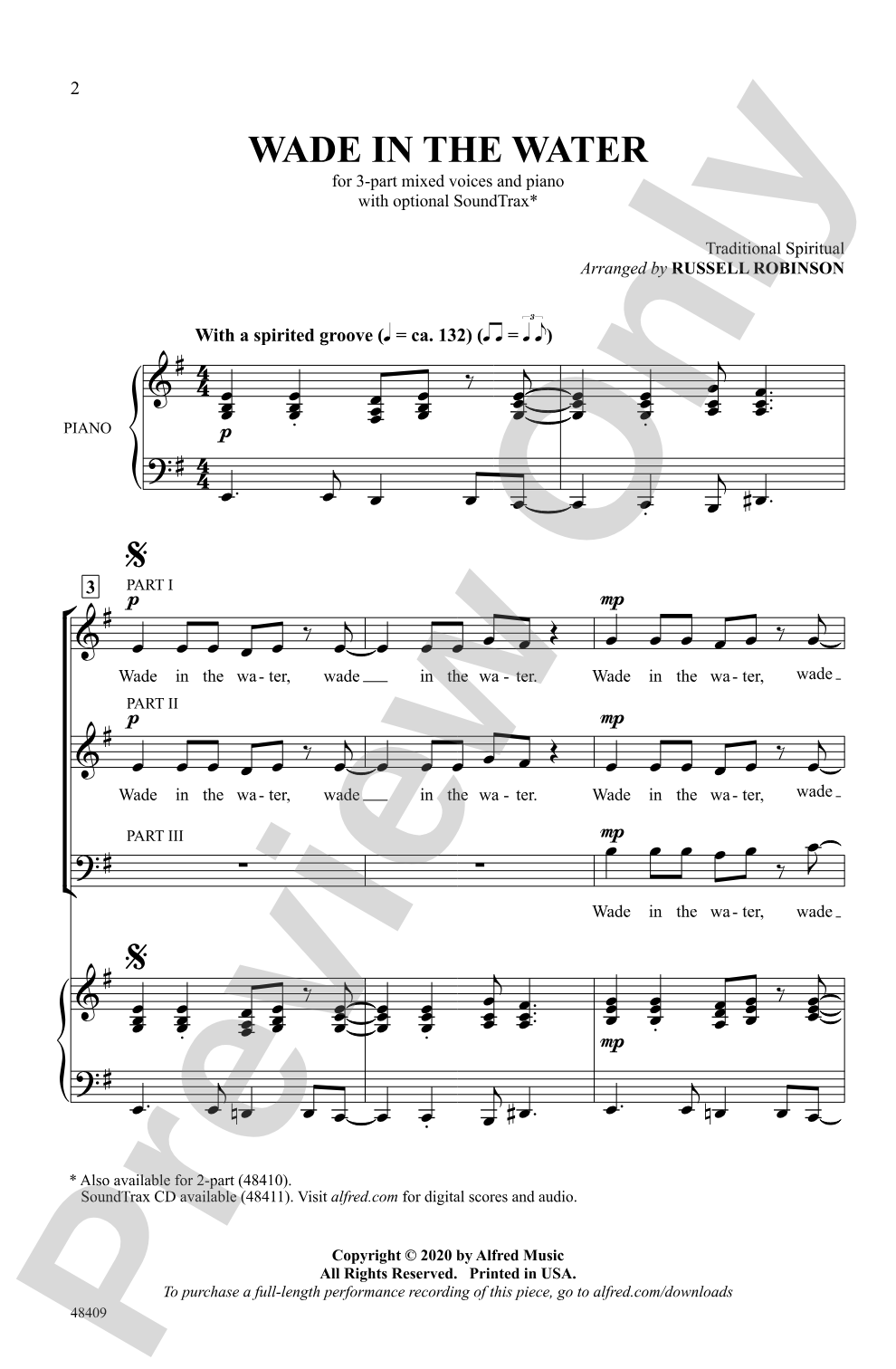
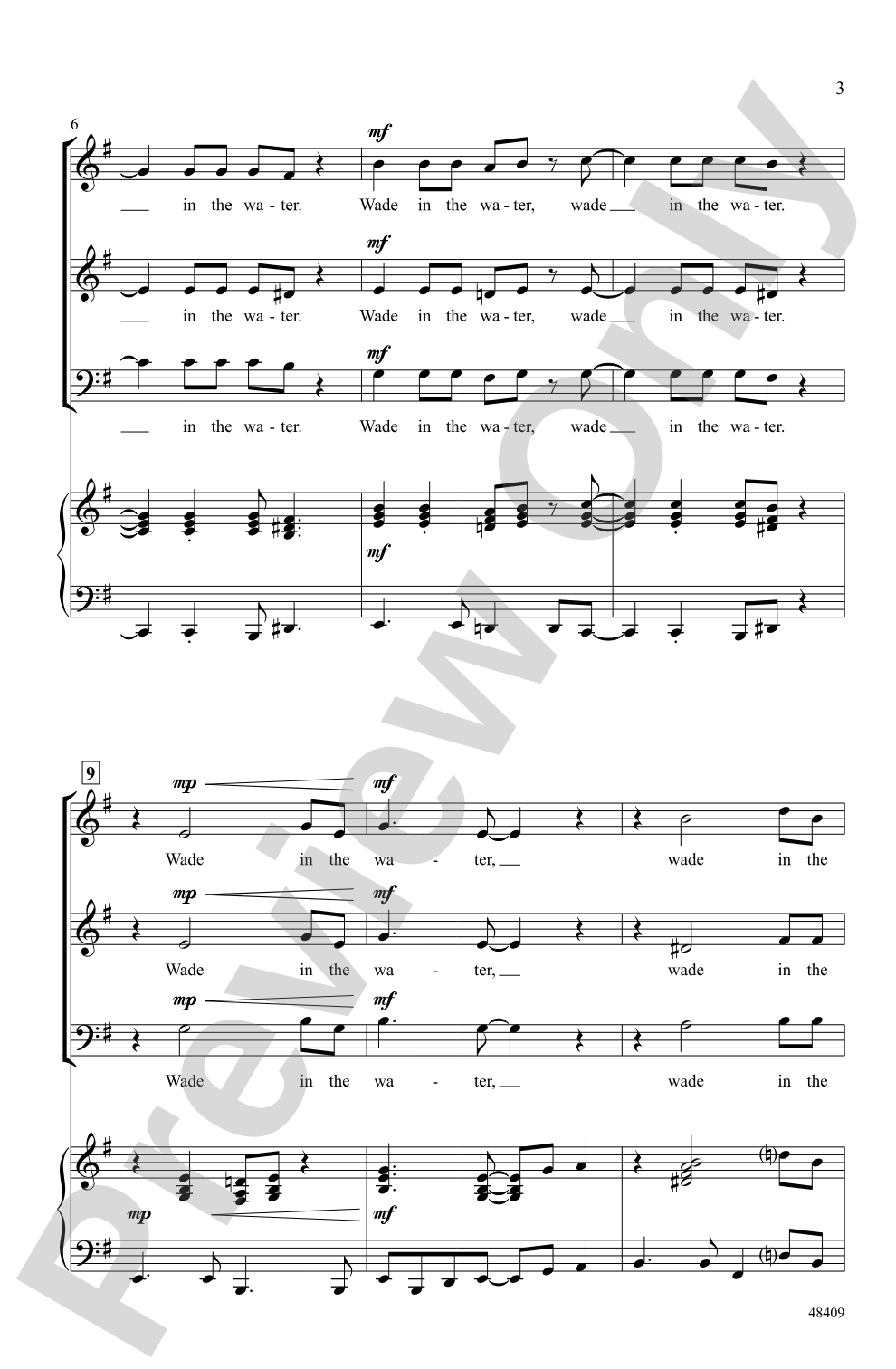
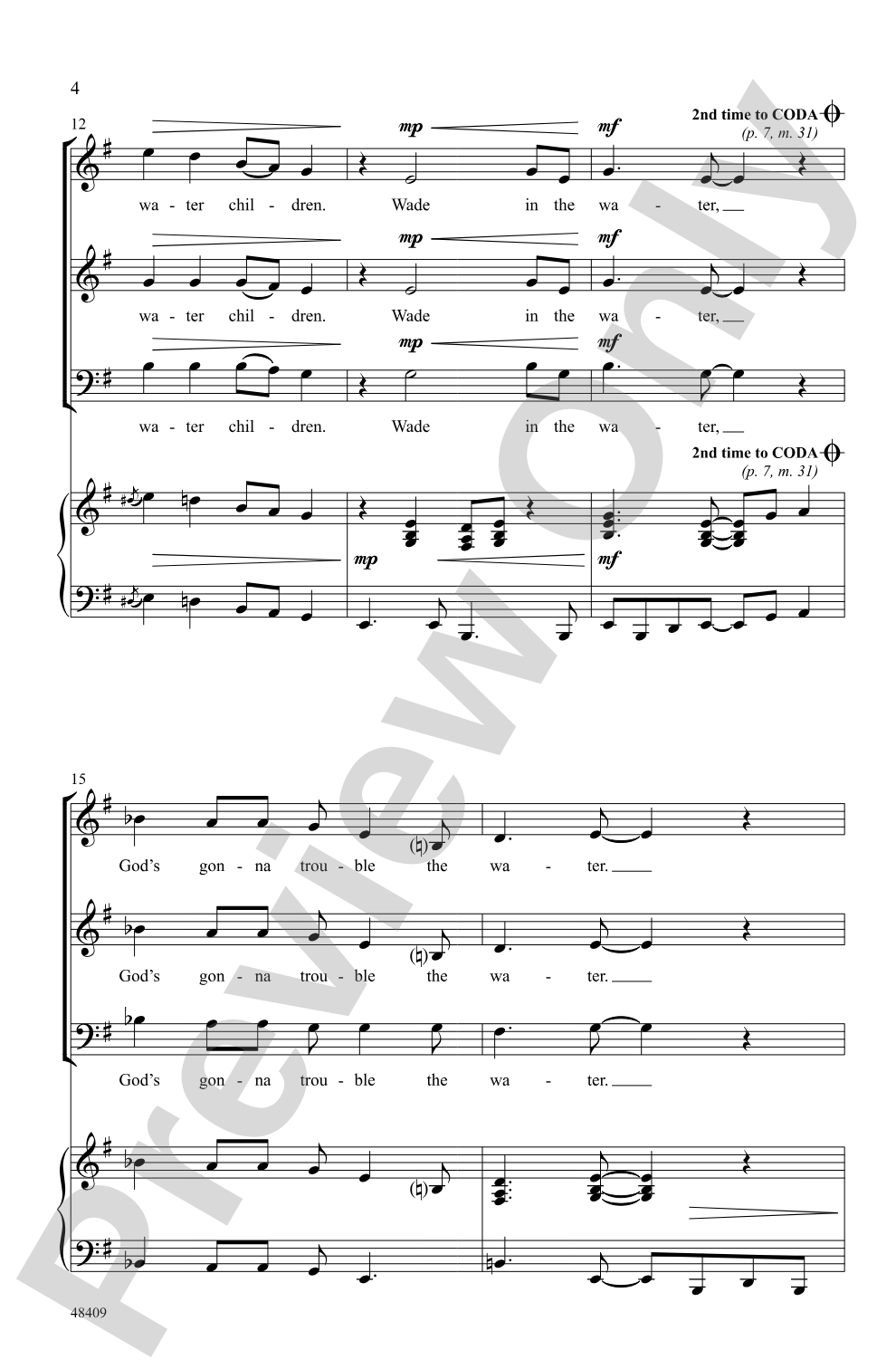

Wade in the Water: 3-Part Mixed Choral Octavo
Traditional Spiritual / arr. Russell Robinson
Item: 00-PO-0006353
$2.05
Minimum order quantity: 20 copies
Pickup currently not available
Description
A bluesy rhythmic motive stacks up across voices, creating a compelling introduction and scattered interludes for this hip interpretation of the African-American spiritual. Call-and-response verses give individual sections a chance to shine, and a brief descant plus some optional divisi add that final flourish. A great teaching piece for 2- and 3-part choirs.


Wade in the Water: 3-Part Mixed Choral Octavo isn't in MakeMusic Cloud just yet...but it could be. Let us know you'd like to see it, and you'll help shape what comes next. In the meantime, start a free trial and dive into thousands of interactive titles your students can play along with today.
Request This Title
Tell us you want it.
Start Your Free Trial
Explore everything that's ready to play right now.
Sample Audio
1
Audio File
--:--
0:00
0:00
Sample Video
Additional Details
Series:
Alfred Choral Designs
Publisher:
Alfred Music
Page Count:
12
SKU:
00-PO-0006353
More about this title
About the Arranger: Russell Robinson

Russell Robinson brings decades of experience as a conductor, educator, and arranger to his work with choirs at all levels. His career has taken him across six continents, leading performances at major venues including Carnegie Hall, Lincoln Center, and the Kennedy Center, while also serving as a consultant and clinician at festivals, honor choirs, and conferences worldwide. Robinson was inducted into the Florida Music Educators Association Hall of Fame in 2016 and held leadership roles including Associate Dean of the University of Florida College of the Arts and National Choral Adviser for NAfME.
With over 500 publications to his name, Robinson has established himself as a prolific composer and arranger whose work spans choral compositions, instrumental arrangements, instructional materials, and educational resources. His arrangements are known for their accessibility without sacrificing musical depth, making them valuable additions to developing choirs seeking substantive repertoire.
Why we love this
Robinson's arrangement takes a familiar spiritual and infuses it with contemporary rhythmic vitality while maintaining the emotional core of the original. The stacked bluesy motives create immediate textural interest and give your singers something engaging to lock onto, while the call-and-response structure ensures every voice part gets solo moments to develop confidence and presence.
What to expect
The opening pulls you in immediately with its bluesy stacked rhythms, creating forward momentum that carries through the whole piece. Call-and-response sections feel conversational and alive, with each voice part getting its moment to speak, while the descant and divisi add sparkle and modern energy to a timeless spiritual.
Who it's for
Directors working with developing 2- and 3-part choirs who want spirituals that go beyond simple unison arrangements. Your singers will find both challenge and accessibility here; the piece rewards careful rehearsal while remaining within reach of younger or less experienced ensembles.
How to get the most out of it
- Establish the rhythmic motive in rehearsal as the piece's backbone; spend time on unison or two-part runs of that figure before layering all three parts so singers understand how their line fits into the overall groove.
- Balance the call-and-response sections carefully so the responding sections don't overpower the soloists; encourage the full choir to listen actively during individual voice part spotlights.
- Shape the optional divisi moments and descant as a natural building point rather than a sudden shift; let the excitement grow organically from the verse material that precedes it.
- Use the recorded accompaniment to lock in the blues feel and groove, especially during the rhythmic interludes, so the choir can focus on intonation and blend within the established pocket.
How to use it
This arrangement shines in programs exploring African-American sacred music traditions or celebrating cultural roots in song. Its contemporary rhythmic character pairs well alongside both traditional spirituals and modern gospel-influenced works, making it a strong choice for mixed-voice festivals or community concerts that highlight American choral literature.
Skills your students will build
- Layering independent rhythmic motives and hearing how they stack in 3-part texture
- Call-and-response singing and section independence
- Blues and swing rhythmic feel with syncopation
- Blend and balance when doubling voice lines or adding divisi
- Ensemble listening and awareness of other voice parts during interludes