Viva Violas! Cover Image

Viva Violas!: String Orchestra Conductor Score

$9.00 USD
Sale price  $9.00 USD Regular price 
Skip to product information
Viva Violas! Cover Image

Viva Violas!: String Orchestra Conductor Score

By Richard Meyer

Grade: 2.5

Item: 00-20794S

$9.00
Shipped

One moment…

Description
Spotlight your viola section with this Spanish-flavored feature. The minor-keyed opening contains all the bravura of an exciting bullfight and is followed by a section that slows down briefly for a dramatic recitative-like transition, leading to a playful dance section in G Major. The rhythmic challenges of the accompaniment will keep all sections of the string orchestra interested. A Viola II part (second violin in alto clef) is included for those violists not yet ready to solo. Violin, cello, and bass parts are in first position throughout, while the solo part contains brief excursions into third position. Latin percussion parts are added for texture. Very playable!

Viva Violas!: String Orchestra Conductor Score isn't in MakeMusic Cloud just yet...but it could be. Let us know you'd like to see it, and you'll help shape what comes next. In the meantime, start a free trial and dive into thousands of interactive titles your students can play along with today.

Sample Pages

Sample Audio
No sample audio found.
Sample Video
Additional Details
Series: Highland/Etling String Orchestra
Publisher: Alfred Music
Page Count: 12
UPC: 038081219769
SKU: 00-20794S

More about this title

About the Composer: Richard Meyer
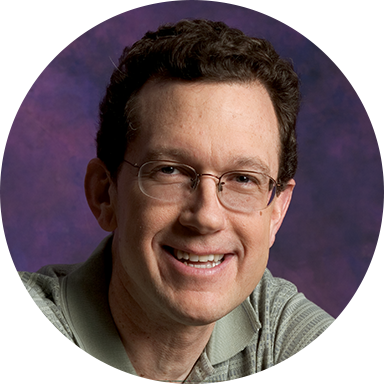
Richard Meyer

Richard Meyer spent 35 years building string programs at every level, from elementary through high school, in California public schools. His tenure at Oak Avenue Intermediate School stands out: he expanded the orchestra from 29 students to 200 and oversaw the city's entire elementary string curriculum. For 16 years he conducted the Pasadena Youth Symphony Orchestra, taking them to performances across New York, Washington D.C., Vienna, Australia, and Canada.

Beyond the podium, Meyer has shaped music education as a composer, arranger, and publisher. His catalog includes over 190 published works; he spent 16 years as string editor for Alfred Publishing and co-authored the widely-used String Explorer Series and Sight-read It for Strings. He has clinicked at the A.S.T.A. National Conference and honor orchestra workshops across multiple states. In 2009, he launched "Giving Bach" at his school, an interactive concert program now recognized nationally for bringing orchestral music to special needs and underserved students throughout Southern California.

Why we love this

Meyer knows exactly what motivates a viola section and what keeps an orchestra engaged. The accompaniment rhythms demand attention from every player, preventing the kind of boredom that can plague supporting voices, while the solo part itself is genuinely rewarding to perform without pushing beyond what Grade 2.5 students can handle technically. The Spanish character is strong enough to feel exciting but accessible enough to sound polished in a single rehearsal cycle.

What to expect

The opening bristles with matador swagger and minor-key intensity, then pulls back into a moment of theatrical suspense before breaking into an irresistible, sun-soaked dance. The energy shifts sharply but logically, giving audiences a complete emotional arc in just a few minutes.

Who it's for

String orchestras at the Grade 2.5 level looking for a feature that showcases violas without sidelining the rest of the ensemble. This works equally well for groups entering a contest or festival and for concert programs where you want a high-energy moment with Latin flair.

How to get the most out of it

  • Balance the latin percussion carefully; it should add flavor and rhythmic pulse without overshadowing the strings. A light touch from your percussion players will let the viola solo breathe.
  • Settle the tempo during the dramatic recitative-like section. Allow your violists room to shape the line expressively before launching into the G Major dance.
  • Have your accompaniment sections tap their feet through the rhythmic figures in rehearsal. Once they feel the pulse internally, the forward motion will carry naturally.

How to use it

Place this mid-program to reset energy after something introspective, or use it as a closer if your audience loves a dance number. The manageable difficulty makes it a smart choice for a festival entry when you want the judges to hear refined, confident playing rather than struggle. It also pairs well with other multicultural repertoire if you're building a themed concert.

Skills your students will build

  • Rhythmic accuracy and independence in accompaniment figures
  • Reading in alto clef
  • Third position technique on viola
  • Expressive phrasing in a solo context
  • Stylistic interpretation of Latin music
  • Part independence and texture layering

You May Also Like