

Viva!: SSA Choral Octavo
from Il re pastore
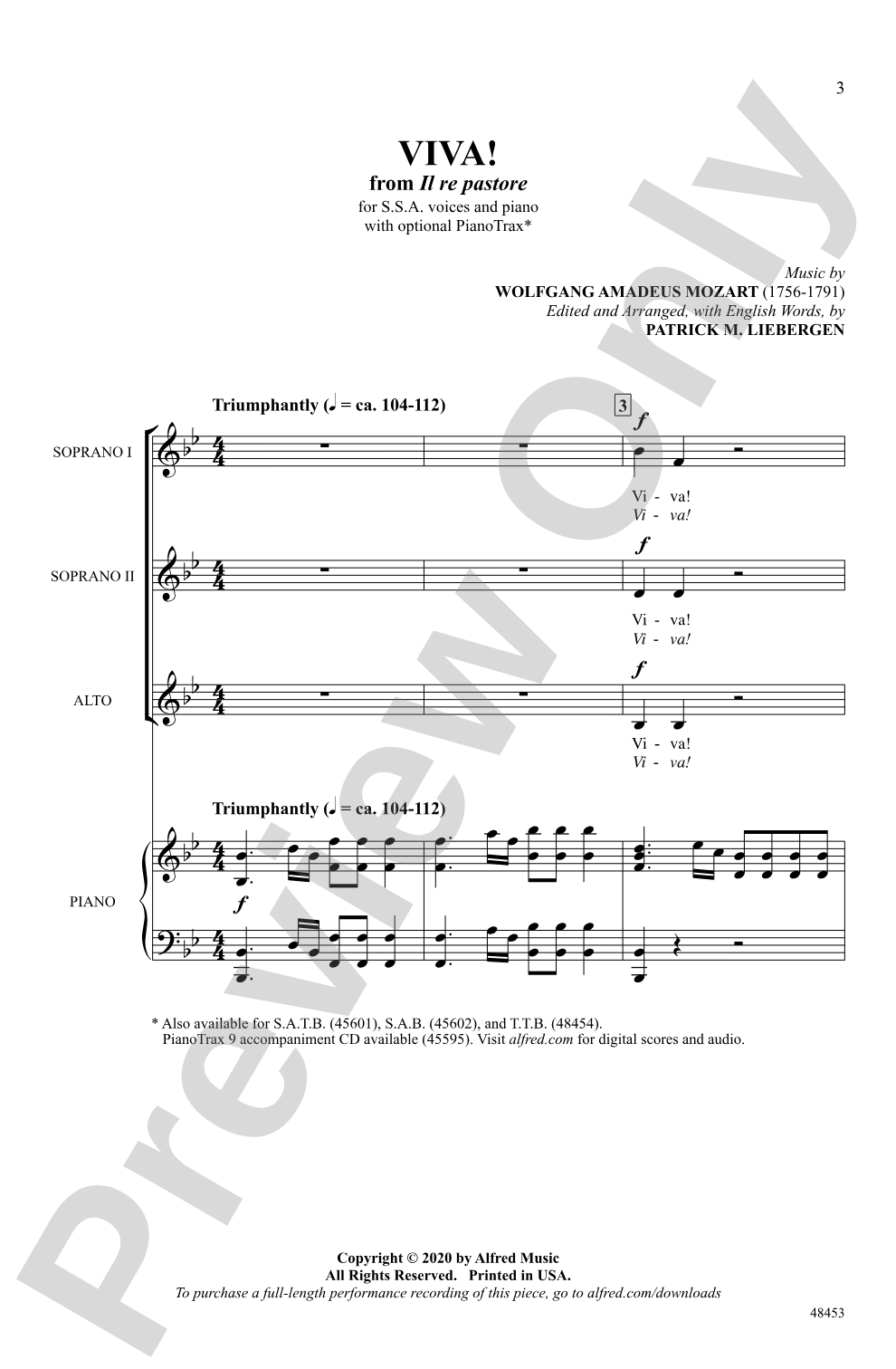
Music by Wolfgang Amadeus Mozart / ed. and arr., with English words, by Patrick M. Liebergen
Item: 00-PO-0006430
$2.05
Minimum order quantity: 20 copies
Pickup currently not available
Related Items
Viva!: PianoTrax Digital Download |
$9.99
|
View | |
Viva!: SATB Choral Octavo |
$2.05
|
View | |
Viva!: SAB Choral Octavo |
$2.05
|
View | |
Viva!: TTB Choral Octavo |
$2.05
|
View | |
Viva!: SATB Choral Octavo |
$2.05
|
View | |
Viva!: SAB Choral Octavo |
$2.05
|
View | |
Viva!: SSA Choral Octavo |
$2.05
|
View | |
Viva!: TTB Choral Octavo |
$2.05
|
View |
Description
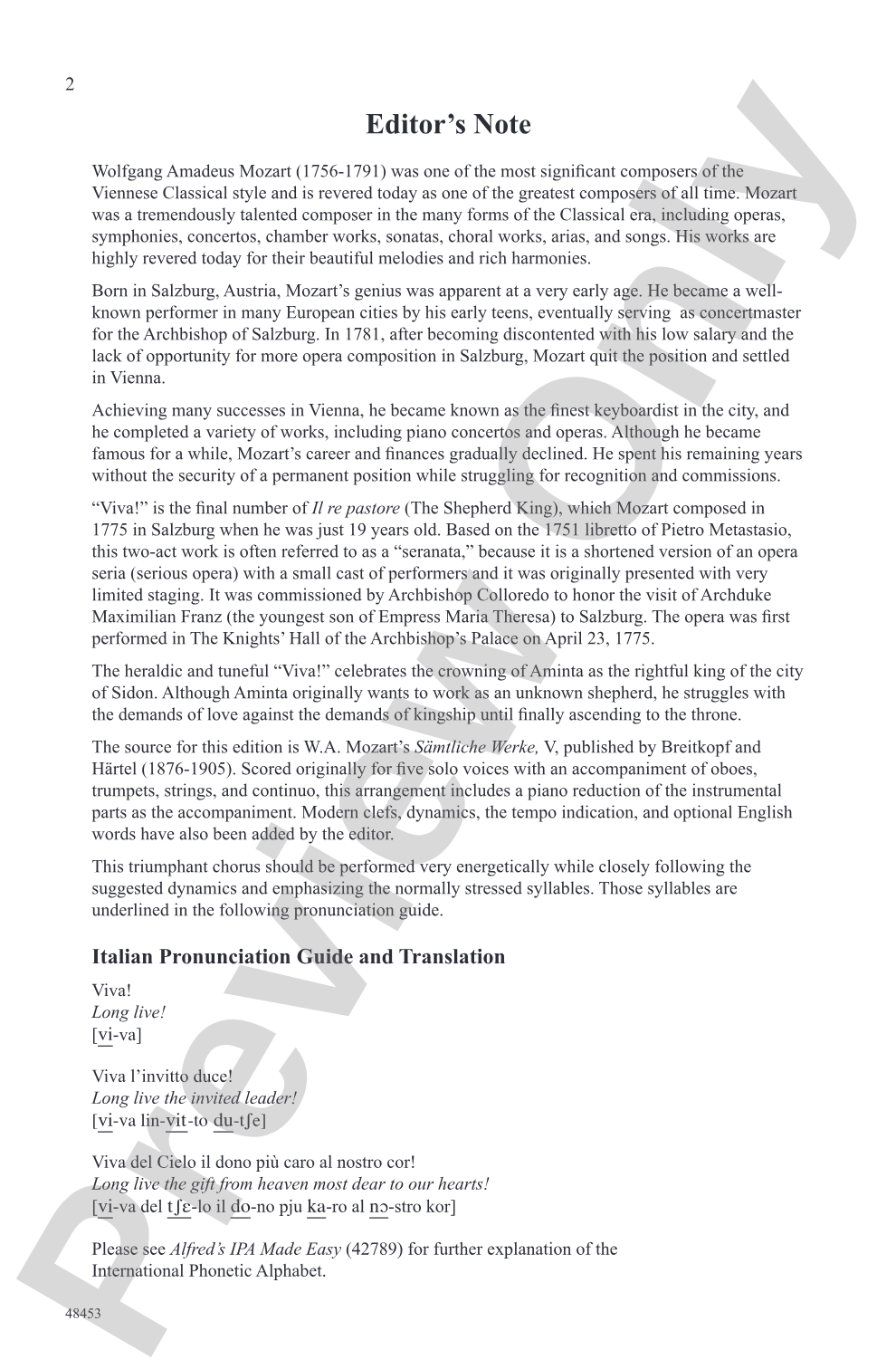
A triumphant Mozart masterwork for today's choirs! This joyful opera finale opens and closes with a boisterous choral fanfare, sandwiches a brief expressive vocal duet in the middle, features robust Italian lyrics (optional English text and IPA pronunciation guide included), and incorporates a thrilling dig-in piano accompaniment---all in just two minutes. Not necessarily familiar, but undeniably fantastic!


Viva!: SSA Choral Octavo isn't in MakeMusic Cloud just yet...but it could be. Let us know you'd like to see it, and you'll help shape what comes next. In the meantime, start a free trial and dive into thousands of interactive titles your students can play along with today.
Request This Title
Tell us you want it.
Start Your Free Trial
Explore everything that's ready to play right now.
Sample Audio
1
Audio File
--:--
0:00
0:00
Sample Video
Additional Details
Series:
Alfred Choral Designs
Publisher:
Alfred Music
Page Count:
12
SKU:
00-PO-0006430
More about this title
About the Composer: Wolfgang Amadeus Mozart
Wolfgang Amadeus Mozart (1756-1791) composed over 600 works across every major genre during his brief but astonishingly productive life. His operas remain cornerstones of the repertoire, celebrated for their melodic invention, dramatic clarity, and profound humanity. In the choral music education world, Mozart's works offer students direct access to Classical elegance: clean part-writing, memorable lines, and the satisfying architecture of formal structures.
Mozart's genius lay in his ability to write idiomatically for singers while maintaining harmonic sophistication. His choral excerpts work beautifully in educational settings because they reward careful ensemble work without demanding extreme technical display, making them ideal for building musicianship across vocal range levels.
Why we love this
This arrangement gives you a concert closer that lands with genuine theatrical flair. The structure is smart: open with energy, shift into an intimate duet that lets your ensemble breathe, then return to that infectious fanfare with even more punch. Two minutes of Mozart that feels substantial, not compressed.
What to expect
Exuberant and bright, with the theatrical confidence of a Classical opera house. The opening choral fanfare radiates joy and spectacle, the central duet pulls inward with warmth and expressivity, and the final reprise returns with even greater momentum. You're conducting genuine Mozart wit and craftsmanship, not an imitation of it.
Who it's for
SSA and SSAA choirs ready for a piece that combines accessible range with genuine musical substance. This works well for upper-level high school ensembles, college choirs, and community groups seeking repertoire that impresses without overwhelming.
How to get the most out of it
- Secure the rhythmic precision of the opening fanfare in rehearsal before layering in dynamic contrast; the piece depends on tight ensemble articulation to sparkle.
- Balance the duet section carefully so soloists can phrase naturally without the SSA voices underneath obscuring their text or emotional arc.
- Use the recorded accompaniment to establish tempo security in the faster passages; the piano part moves decisively and will help lock down your singers' confidence.
- Shape the Italian text with purposeful diction; the optional English version exists if needed, but the original language carries Mozart's rhythmic intent more directly.
How to use it
Program this as a finale to send audiences out energized. Its two-minute duration makes it perfect as a concert-closing encore or as the final piece in a thematic program exploring opera and musical theater. The mixture of choral power and vocal intimacy also pairs naturally with other Mozart choral selections or other Classical-era works in a same-concert context.
Skills your students will build
- Performing with dramatic expression and theatrical presence in choral singing
- Balancing foreground (duet soloists) and background (SSA ensemble) within a single piece
- Italian diction and lyrical phrasing in a Classical style
- Ensemble precision in rhythmically active, homophonic choral writing
- Sustaining energy and musicality across a fast-paced two-minute arc