

Viva!: SATB Choral Octavo
from Il re pastore
Music by Wolfgang Amadeus Mozart / ed. and arr., with English words, by Patrick M. Liebergen
Item: 00-PO-0005496

$2.05
Minimum order quantity: 20 copies
Pickup currently not available
Related Items
Viva!: PianoTrax Digital Download |
$9.99
|
View | |
Viva!: SAB Choral Octavo |
$2.05
|
View | |
Viva!: SSA Choral Octavo |
$2.05
|
View | |
Viva!: TTB Choral Octavo |
$2.05
|
View | |
Viva!: SATB Choral Octavo |
$2.05
|
View | |
Viva!: SAB Choral Octavo |
$2.50
|
View | |
Viva!: SSA Choral Octavo |
$2.05
|
View | |
Viva!: TTB Choral Octavo |
$2.05
|
View |
Description
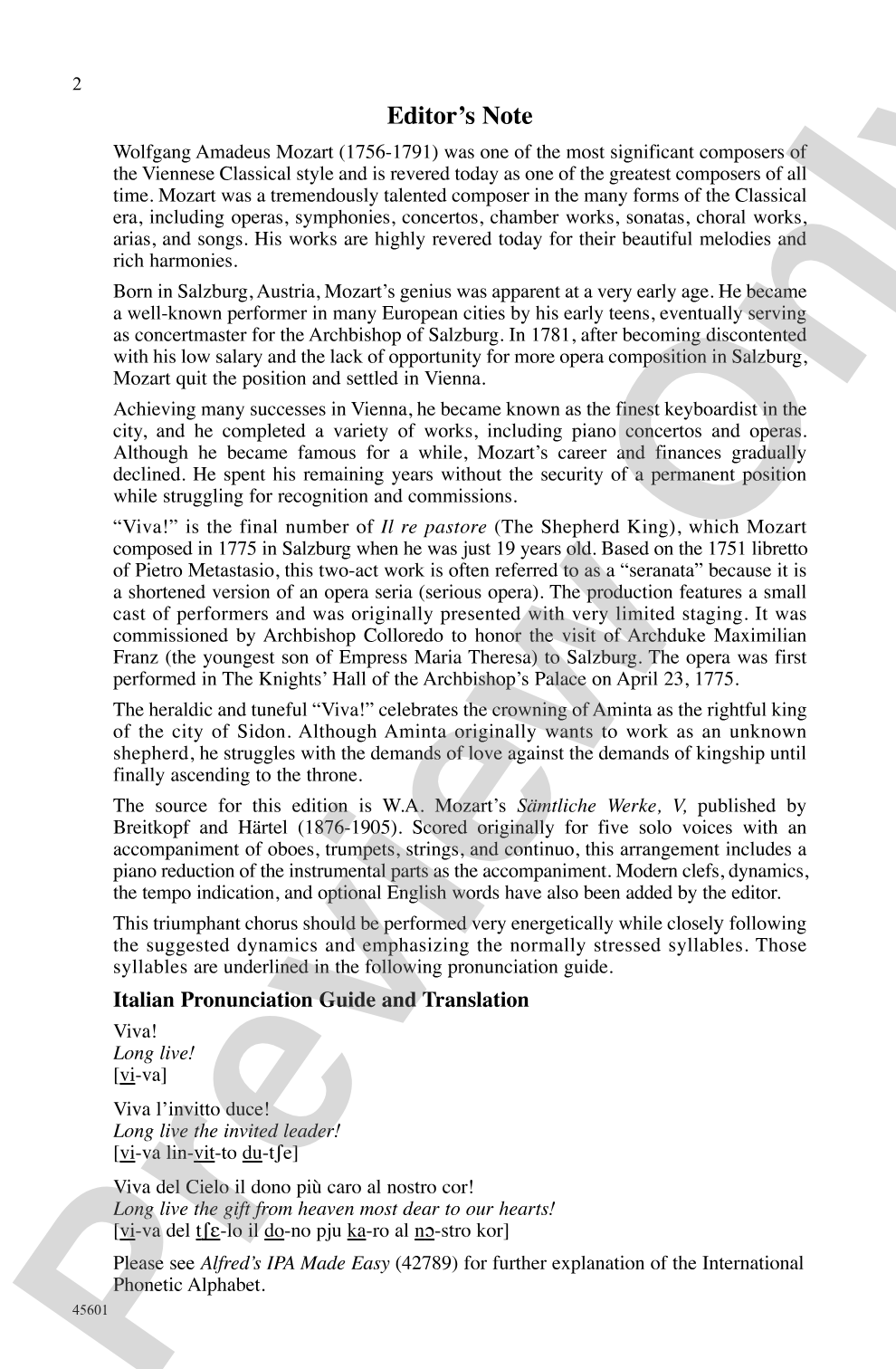
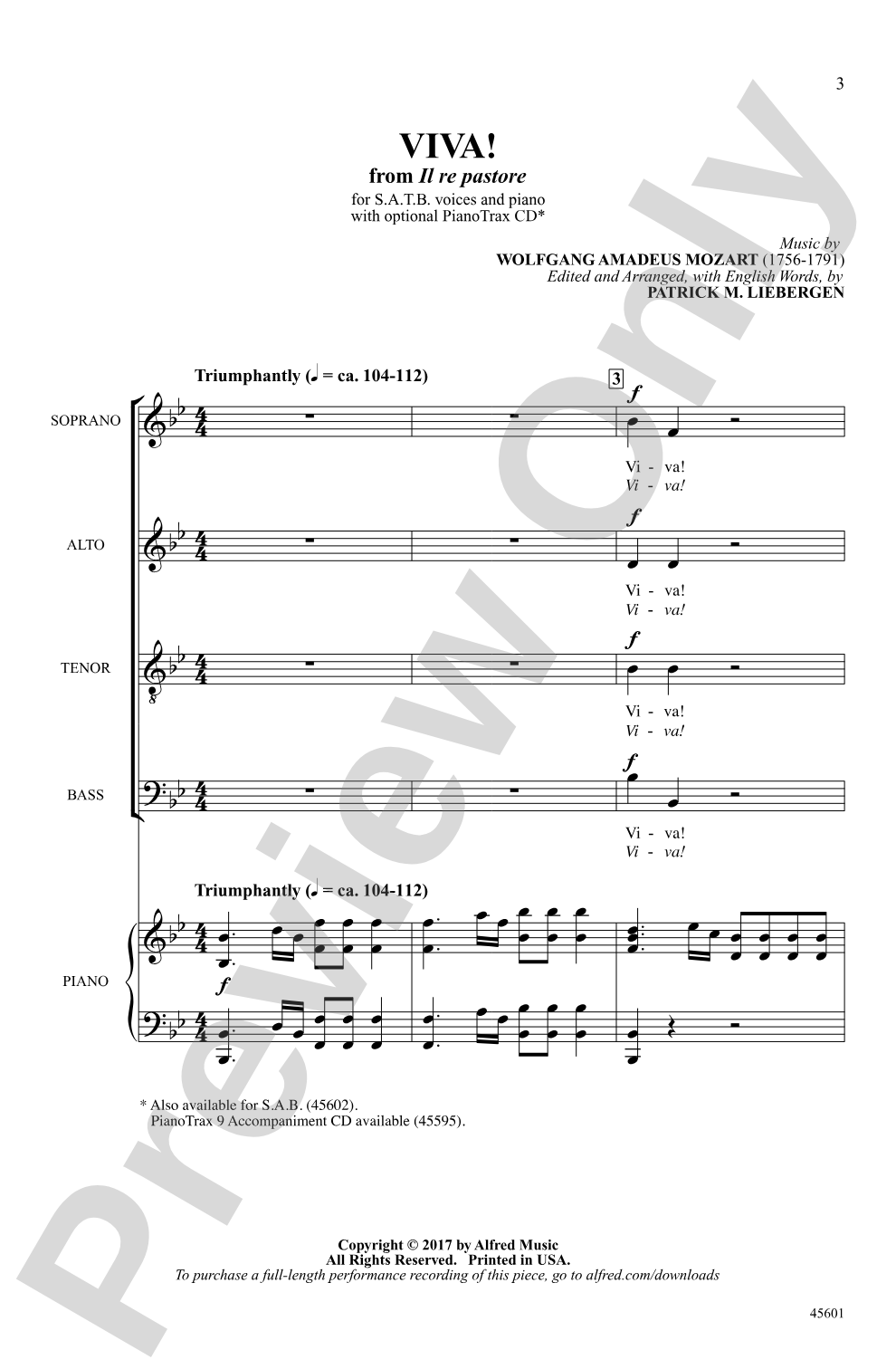
A triumphant Mozart masterwork for today's choirs! This joyful opera finale opens and closes with a boisterous choral fanfare, sandwiches a brief expressive vocal duet in the middle, features robust Italian lyrics (optional English text and IPA pronunciation guide included), and incorporates a thrilling dig-in piano accompaniment---all in just two minutes. Not necessarily familiar, but undeniably fantastic!


Don't just read it, hear it, play along with it, and watch your students grow with it. In MakeMusic Cloud, Viva!: SATB Choral Octavo comes alive with professional accompaniment, adjustable tempo, and built-in practice tools that turn solo practice into real progress.
Open in the Player
Jump straight in and assign it today.
Start Your Free Trial
Open this title and explore the full library in minutes.
Sample Audio
1
Audio File
--:--
0:00
0:00
Sample Video
Additional Details
Series:
Alfred Choral Designs
Publisher:
Alfred Music
Page Count:
12
SKU:
00-PO-0005496
More about this title
About the Composer: Wolfgang Amadeus Mozart
Wolfgang Amadeus Mozart (1756-1791) composed over 600 works across every major genre of his time, from symphonies and concertos to operas and chamber music. His output was staggering in both volume and quality; he died at 35 having already shaped the trajectory of Western classical music. For choirs, Mozart's vocal writing remains a masterclass in clarity, elegant phrasing, and the marriage of text to melody.
Mozart's operas in particular showcase his gift for theater and dramatic momentum. The finales of his great comic operas contain some of music history's most exuberant choral writing, where ensembles and soloists interact with surgical precision and infectious energy. This excerpt captures that theatrical genius in miniature, delivering operatic sophistication within rehearsal and performance constraints that fit real choir schedules.
Why we love this
This arrangement distills the theatrical vitality of Mozart's opera writing into a self-contained, high-impact concert piece. The architecture is clean: explosive openings and closings frame an intimate duet, keeping the piece memorable and structurally satisfying without requiring your singers to memorize a sprawling score. The included pronunciation guide and optional English text remove barriers to performance while honoring Mozart's Italian original.
What to expect
Jubilant and spirited, with moments of genuine tenderness. The piece opens with a burst of celebratory energy, then softens into the intimate duet before surging back to that same infectious exuberance. Mozart's writing feels alive and conversational; there is nothing stiff or academic about it, even though the musicianship required is substantial.
Who it's for
Choirs at the intermediate to advanced level who want to add a substantial concert piece without committing to a lengthy multi-movement work. This octavo appeals to directors seeking repertoire with theatrical flair and immediate audience appeal, particularly those competing in festivals or looking to refresh their programming with authentic Mozart.
How to get the most out of it
- The bookend fanfares need clarity and rhythmic precision. Count the rests carefully in those opening and closing moments; the excitement comes from ensemble cohesion, not from rushing.
- Balance the duet so it reads as a genuine moment of intimacy within the larger choral context. The soloists should sing as if sharing a private exchange, not projecting to the back of the hall.
- The piano part drives the piece forward. Work closely with your accompanist on tempo consistency and articulation in the fanfare sections; a crisp, energetic touch in the keyboard will elevate the whole ensemble's sense of purpose.
- Attend to text clarity in Italian. The pronunciation guide is your tool; use it in warm-ups so the language sits naturally in your singers' mouths and the words land clearly for your audience.
How to use it
Place this as a concert opener to establish energy and goodwill with your audience, or use it as a finale to send people out on an optimistic note. It pairs effectively with other classical choral works at your ensemble's level, or as a standalone showpiece within a varied program that includes instrumental selections.
Skills your students will build
- singing Italian text with accurate pronunciation and clear articulation
- balancing ensemble rhythmic precision with expressive phrasing in fanfare sections
- negotiating rapid harmonic changes and close intervals in SATB writing
- sustaining vocal stamina through repeated choral passages
- ensemble listening and blend in four-part writing with overlapping rhythmic figures