

Velvet Shoes: SATB Choral Octavo
Text adapted from the poem by Elinor Wylie, music and additional words by Andy Beck
Item: 00-PO-0006646

$2.05
Minimum order quantity: 20 copies
Pickup currently not available
Related Items
Velvet Shoes: PianoTrax Digital Audio Download |
$9.99
|
View | |
Velvet Shoes: SAB Choral Octavo |
$2.05
|
View | |
Velvet Shoes: 2-Part / SSA Choral Octavo |
$2.05
|
View | |
Velvet Shoes: SATB Choral Octavo |
$2.05
|
View | |
Velvet Shoes: SAB Choral Octavo |
$2.05
|
View | |
Velvet Shoes: 2-Part / SSA Choral Octavo |
$2.05
|
View |
Description
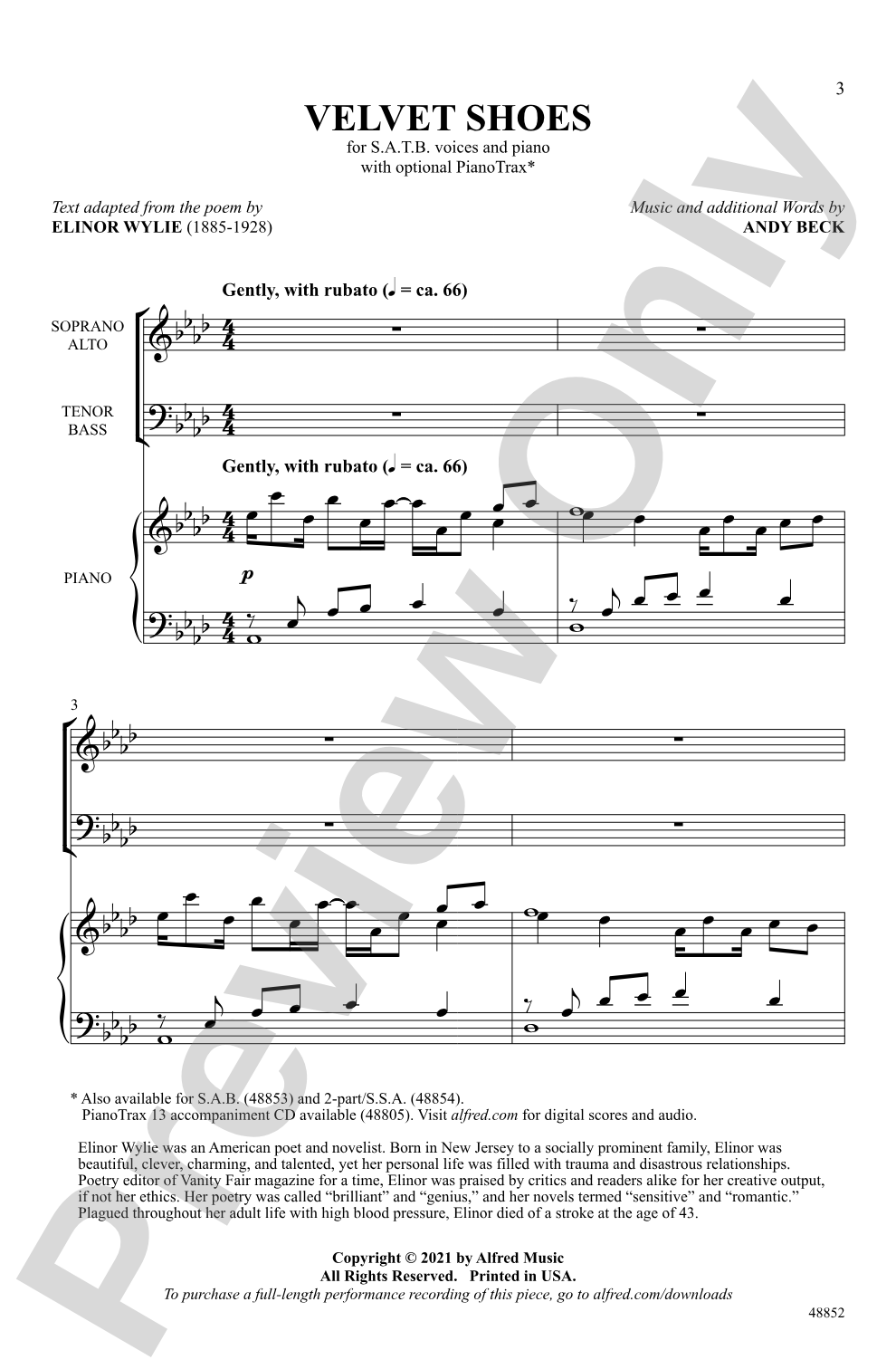
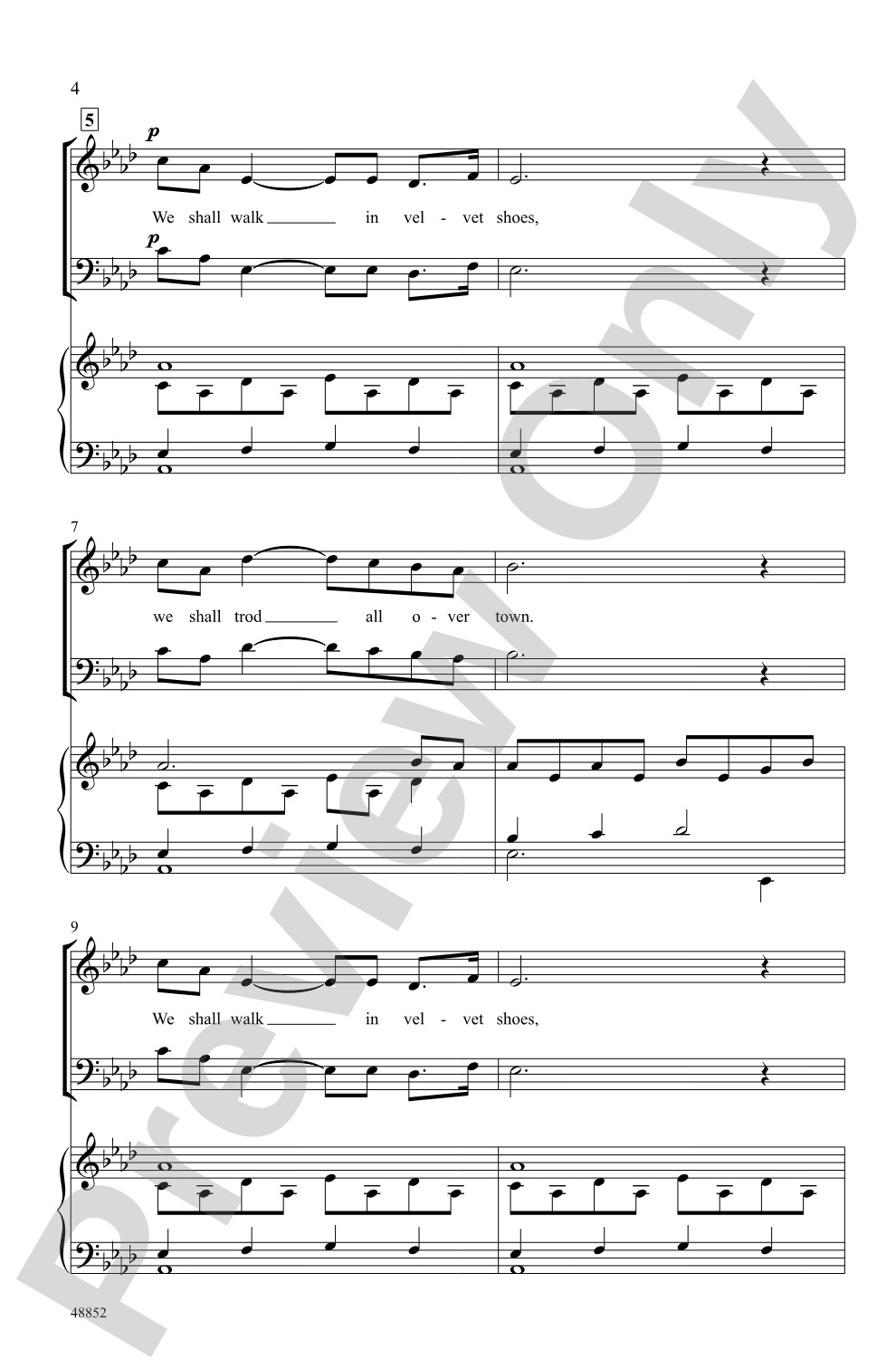
Andy Beck brings his gift for vivid text painting, evocative piano motives, and tuneful melodies to a favorite wintertime poem. Though not a word-for-word setting, the themes of the Elinor Wylie's words are evident from the snow-covered introduction, winding melody, and expressive andante, to the silken harmonic palette and lacy choral layers. Choose this piece with the confidence that it has been carefully constructed to encourage musicality and artistry from any ensemble. Program the eloquent concert and contest work from fall to spring, anytime there might be snow on the ground. "We shall walk in velvet shoes . . . under a veil of lace." This title is available in MakeMusic Cloud.


Don't just read it, hear it, play along with it, and watch your students grow with it. In MakeMusic Cloud, Velvet Shoes: SATB Choral Octavo comes alive with professional accompaniment, adjustable tempo, and built-in practice tools that turn solo practice into real progress.
Open in the Player
Jump straight in and assign it today.
Start Your Free Trial
Open this title and explore the full library in minutes.
Sample Audio
1
Audio File
--:--
0:00
0:00
Sample Video
1 / 2
Additional Details
Series:
Alfred Choral Designs
Publisher:
Alfred Music
Page Count:
12
SKU:
00-PO-0006646
More about this title
About the Composer: Andy Beck

Andy Beck directs choral publications at Alfred Music and has composed and arranged over 450 choral works now in active publication. His output spans concert repertoire, vocal resources, and children's musicals, alongside foundational sight-singing resources that have shaped how many ensembles build literacy and technique. Beck holds degrees in music education from Ithaca College and Northwest Missouri State University, and he has served as guest conductor, clinician, and adjudicator for honor choirs and all-state groups across the country.
Beyond his publishing role, Beck remains an active musician and educator. He performs as a tenor, directs musical theatre, and sings with the North Carolina Master Chorale Chamber Choir. His dual commitment to composition and music education is reflected in both his own writing and the careful curation of Alfred's choral catalog. A YouTube search confirms his music reaches singers worldwide.
Why we love this
Beck's text painting here is precise without becoming overwrought. The snow-covered introduction and silken harmonic palette match Elinor Wylie's language so naturally that singers grasp the imagery without commentary. This is writing that trusts your ensemble to be musicians first; the careful layering and evocative piano work make the piece rewarding to prepare and a standout addition to any winter or spring concert.
What to expect
Walking through snow in half-light. The piece opens with quiet, crystalline texture and unfolds through winding melody and expressive harmonic shifts, creating an atmosphere both contemplative and luminous. Beck's restraint and careful voice leading feel less like decoration and more like genuine artistic conviction.
Who it's for
This octavo suits intermediate to advanced SATB choirs seeking repertoire that rewards sustained musicality and artistry. It works equally well in concert and festival settings, making it ideal for ensembles balancing performance opportunities with artistic development.
How to get the most out of it
- Attend closely to the piano introduction and its recurrence throughout. That snowy texture sets the emotional landscape; rehearse it with your accompanist so the ensemble hears it as an equal partner, not mere background.
- Shape the melody through the andante section with long, connected phrasing. Resist the urge to breathe at every bar line; let the silken harmonies underneath carry the line forward.
- Balance the lacy choral layers by rehearsing parts separately first, then adding texture gradually. Each voice should blend into the whole rather than stand apart.
- Use silence and restraint as expressive tools. This piece rewards careful dynamic control; even softer moments require clarity and presence.
How to use it
This concert and contest work thrives in fall through spring programming, particularly when winter remains present or is evoked thematically. Pair it with other literary-based pieces or use it as a centerpiece for a program exploring poetry in song. Its eloquence and moderate difficulty make it suitable for both festival submission and general concert performance.
Skills your students will build
- Balancing independent voice lines within a harmonic texture
- Shaping longer melodic phrases across multiple measures
- Responding to text painting through harmonic and tonal choice
- Blending sustained vowels in controlled dynamic environments