

Vanitas Canon: SSA Choral Octavo
Music by J. P. Sweelinck / arr. Russell Robinson
Item: 00-PO-0006340
$2.05
Minimum order quantity: 20 copies
Pickup currently not available
Description
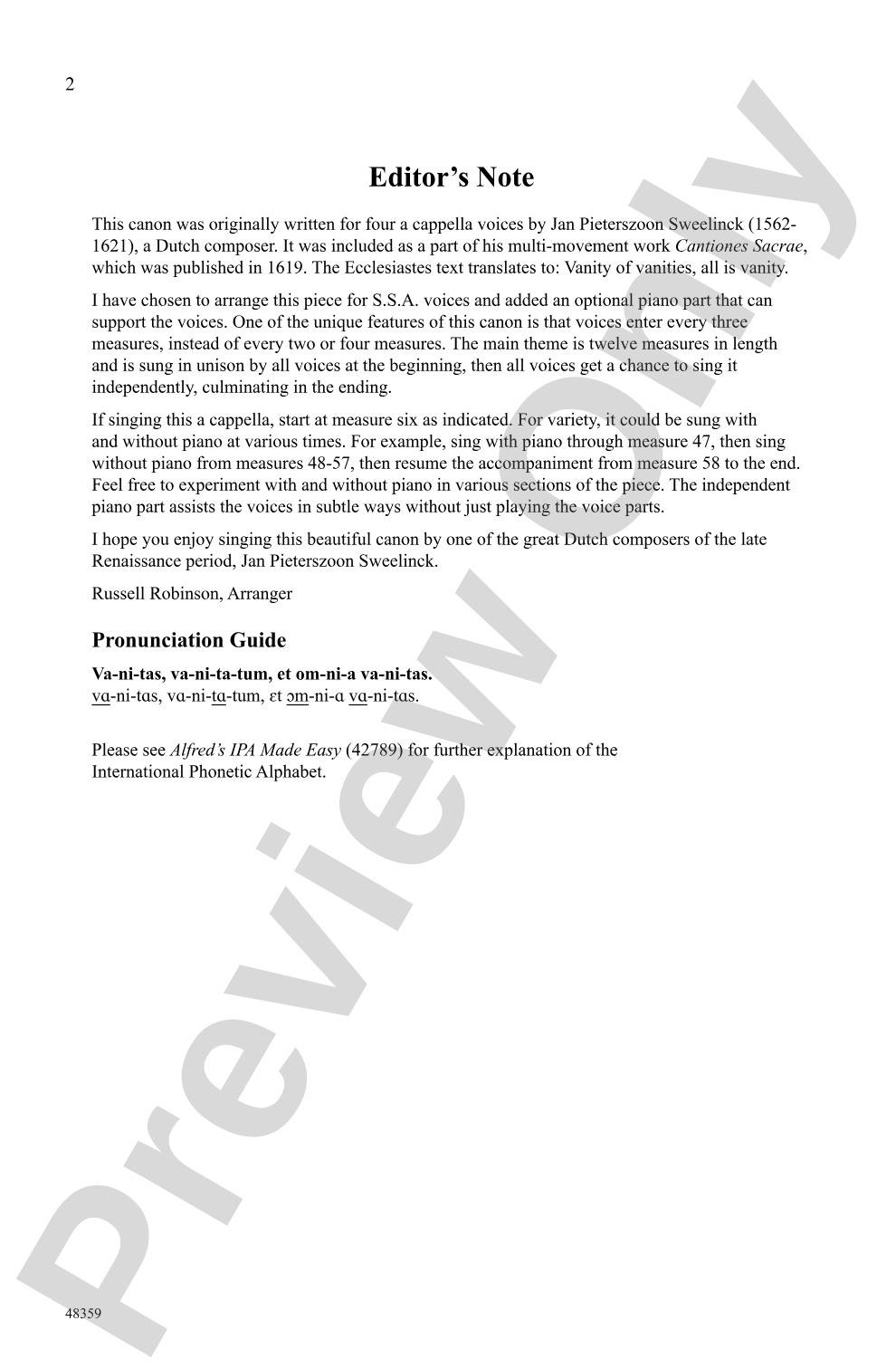
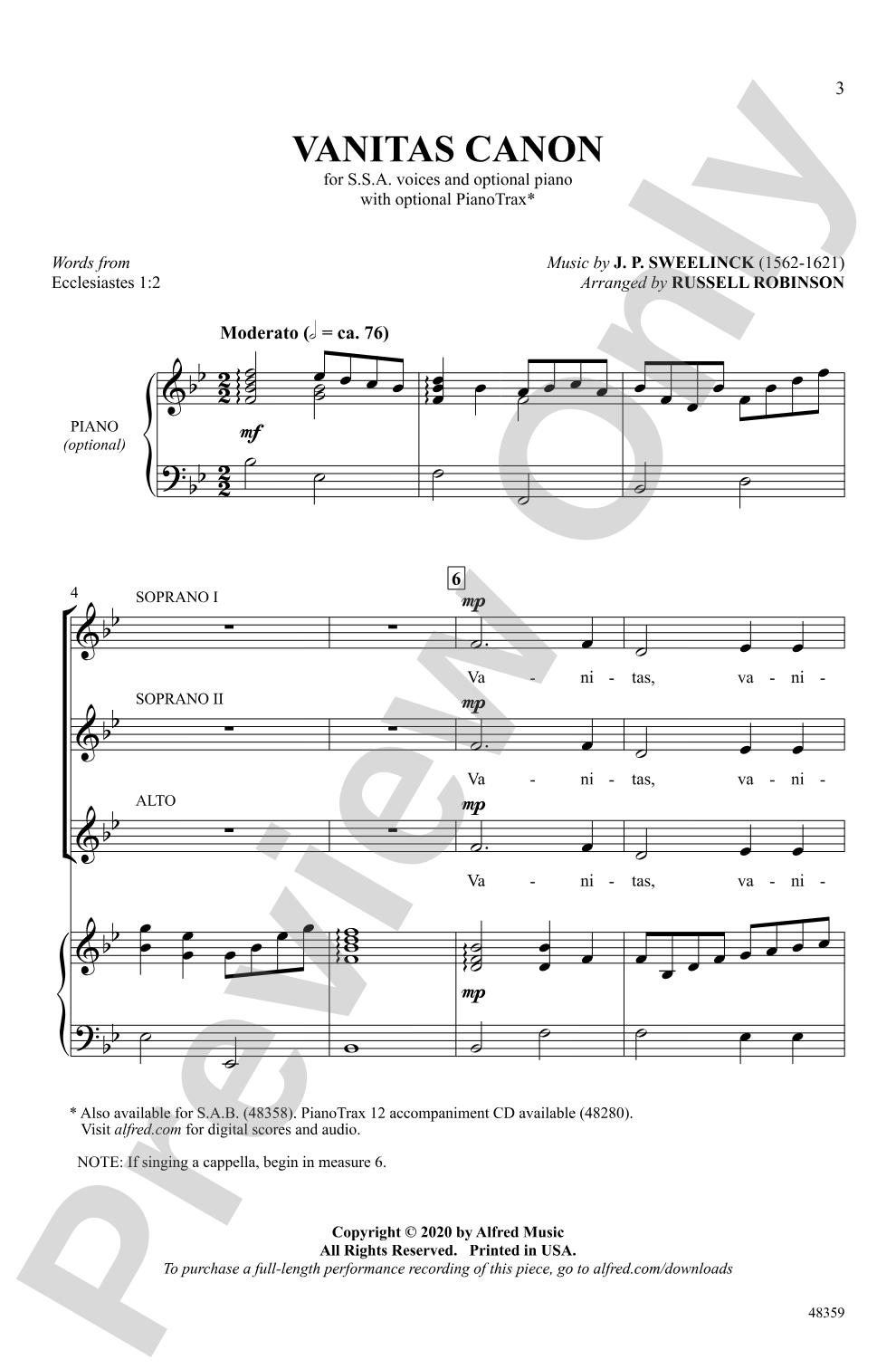
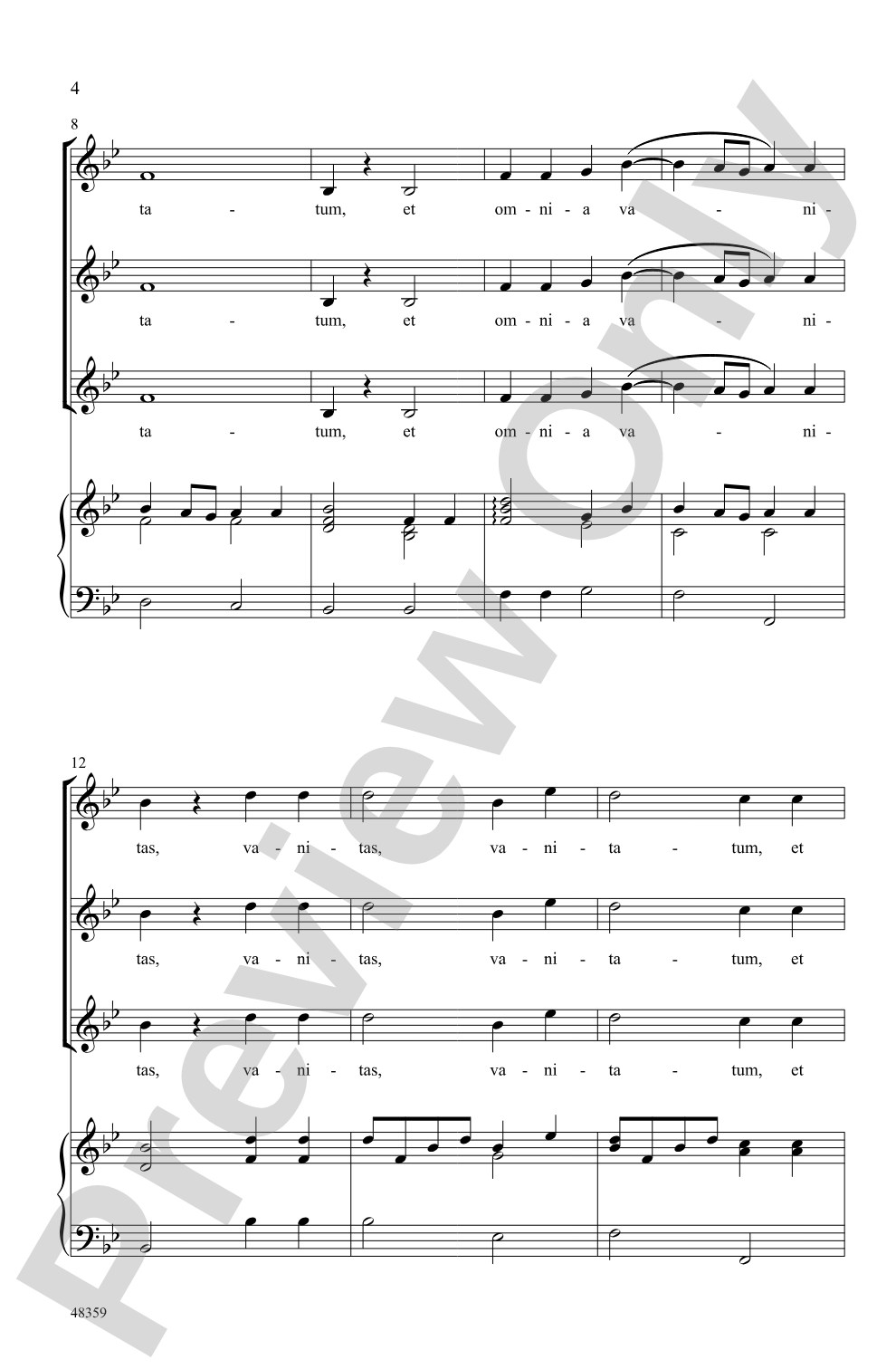
Originally part of his longer work Cantiones Sacrae, the canon on the famous text from Ecclesiastes ("Vanity, vanity, all is vanity") was published by Dutch composer Jan Pieterszoon Sweelinck in 1619. This arrangement features three equal voices and may be performed with or without the supportive piano accompaniment.


Vanitas Canon: SSA Choral Octavo isn't in MakeMusic Cloud just yet...but it could be. Let us know you'd like to see it, and you'll help shape what comes next. In the meantime, start a free trial and dive into thousands of interactive titles your students can play along with today.
Request This Title
Tell us you want it.
Start Your Free Trial
Explore everything that's ready to play right now.
Sample Audio
1
Audio File
--:--
0:00
0:00
Sample Video
No sample videos found.
Additional Details
Series:
Alfred Choral Designs
Publisher:
Alfred Music
Page Count:
12
SKU:
00-PO-0006340
More about this title
About the Composer: J. P. Sweelinck
Jan Pieterszoon Sweelinck (1562-1621) was a Dutch organist and composer whose sacred vocal music shaped the development of Protestant church music in Northern Europe. Working primarily in Amsterdam, he bridged Renaissance polyphony and early Baroque forms, creating works that combined intellectual rigor with spiritual depth. His Cantiones Sacrae collections established him as a master of the Latin motet and canon, influencing composers across Europe.
Why we love this
Russell Robinson's arrangement makes this 17th-century masterwork genuinely singable for modern SSA choirs without sacrificing its intellectual and spiritual weight. The equal-voice texture sidesteps the typical soprano-dominated imbalance, giving every singer a moment in the musical conversation. It's the kind of piece that sounds more complex than it is, building impressive musical literacy while remaining accessible for mid-level ensembles.
What to expect
The piece balances intellectual architecture with meditative calm. Sweelinck's canon unfolds like a gentle argument with itself, each voice shadowing the others while the text on vanity and transience creates an undercurrent of contemplation. There's a quality of acceptance in the writing, neither dark nor celebratory, but thoughtfully resigned.
Who it's for
SSA choirs seeking sacred repertoire with historical substance and modern accessibility. This works equally well for high school and early college ensembles that have developed secure intonation and can handle independent voice lines. It's an ideal choice for directors building choral literacy through music that rewards close study.
How to get the most out of it
- Emphasize the canon's contrapuntal clarity by bringing out each voice's entrance with subtle dynamic shaping. The text repetition becomes the piece's driving force once listeners grasp the imitative structure.
- Test both versions during rehearsal: with piano accompaniment for fuller rehearsal sound and support, then a cappella to develop the ensemble's sense of internal balance and intonation.
- Shape the overall arc by allowing the piece to build momentum through successive voice entries, then ease slightly into the final statements of the text to let the meaning settle with the listener.
How to use it
Pair this with other Renaissance or early Baroque sacred works to create a concert arc that spans centuries of choral tradition. Its modest length and moderate difficulty make it a natural encore or bridge piece between larger works. It also serves as a bridge repertoire selection for concert themes centered on mortality, reflection, or the spiritual role of music.
Skills your students will build
- Independent voice leading in imitative counterpoint
- Maintaining accurate intonation across sustained entries and overlapping phrases
- Balance and blend in three-part equal-voice textures
- Text interpretation in Latin sacred music
- Performance options and arrangement choices (with or without accompaniment)