

Vanitas Canon: SAB Choral Octavo
Music by J. P. Sweelinck / arr. Russell Robinson
Item: 00-PO-0006339
$2.05
Minimum order quantity: 20 copies
Pickup currently not available
Description
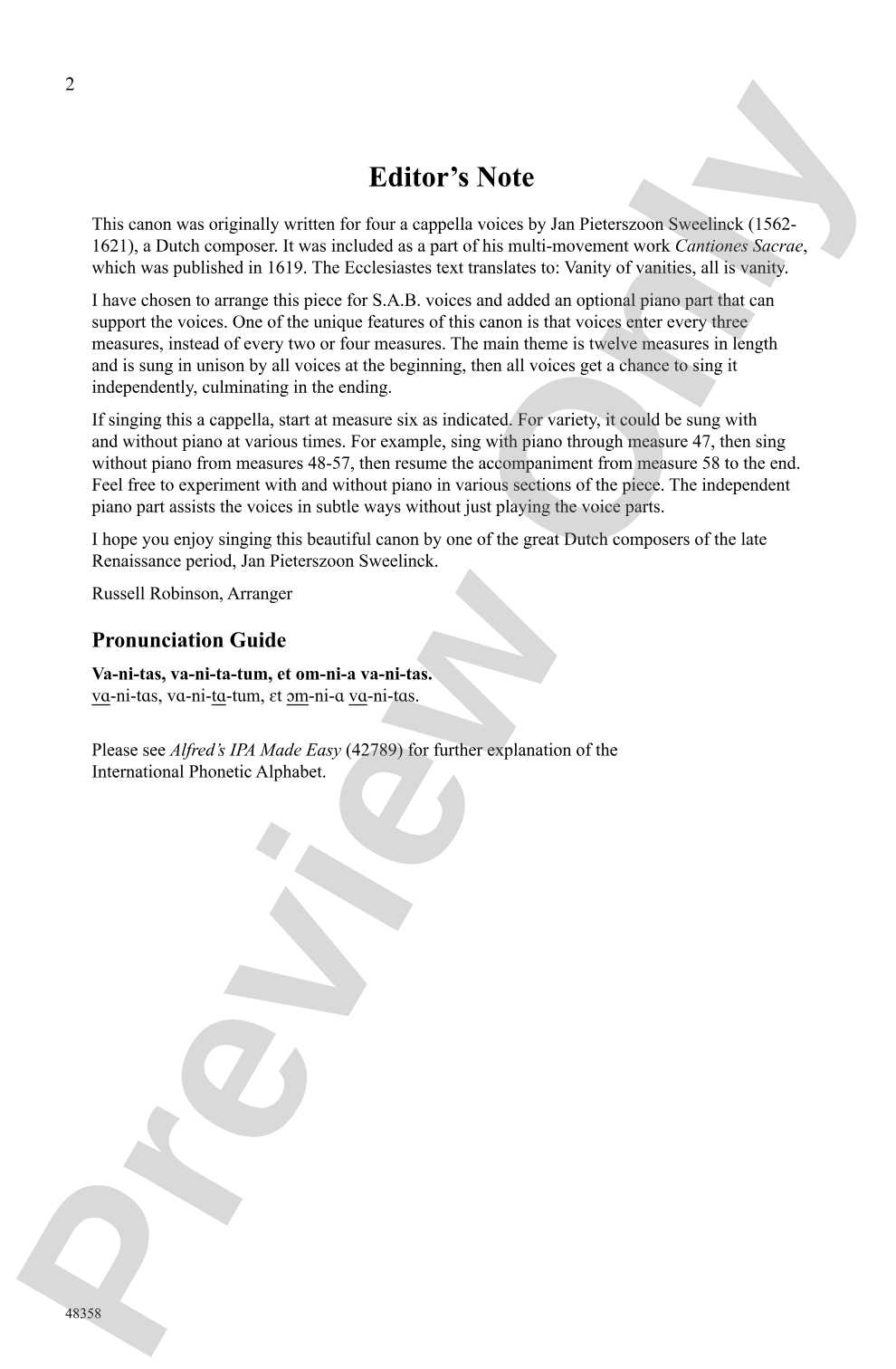
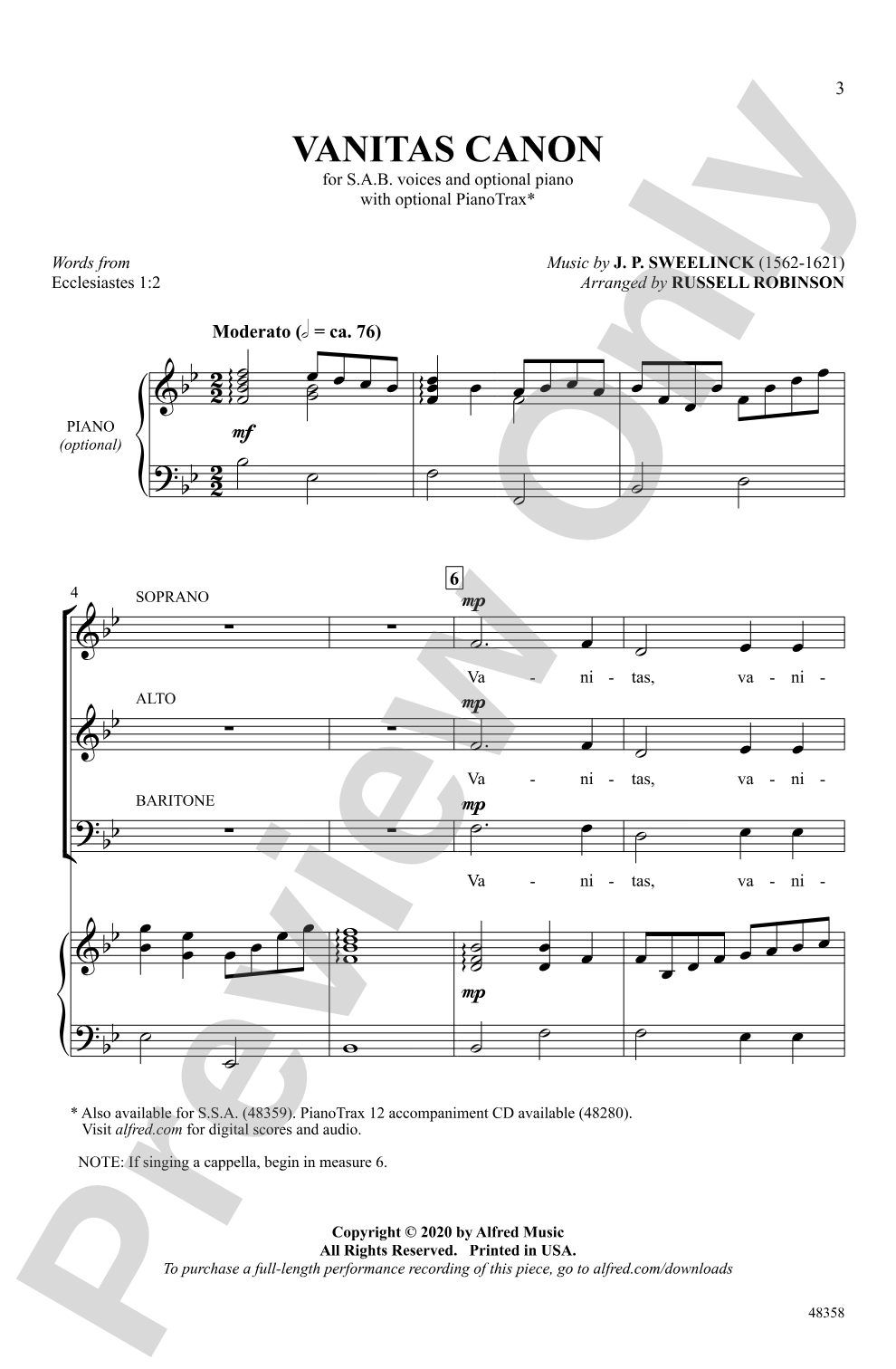
Originally part of his longer work Cantiones Sacrae, the canon on the famous text from Ecclesiastes ("Vanity, vanity, all is vanity") was published by Dutch composer Jan Pieterszoon Sweelinck in 1619. This arrangement features three equal voices and may be performed with or without the supportive piano accompaniment.


Vanitas Canon: SAB Choral Octavo isn't in MakeMusic Cloud just yet...but it could be. Let us know you'd like to see it, and you'll help shape what comes next. In the meantime, start a free trial and dive into thousands of interactive titles your students can play along with today.
Request This Title
Tell us you want it.
Start Your Free Trial
Explore everything that's ready to play right now.
Sample Audio
1
Audio File
--:--
0:00
0:00
Sample Video
Additional Details
Series:
Alfred Choral Designs
Publisher:
Alfred Music
Page Count:
12
SKU:
00-PO-0006339
More about this title
About the Composer: J. P. Sweelinck
Jan Pieterszoon Sweelinck (1562-1621) was the most celebrated Dutch composer of the Renaissance and a towering figure in keyboard music. Based in Amsterdam for most of his career, he synthesized Italian madrigal traditions with northern European polyphonic techniques, creating works of unusual expressive depth and technical sophistication.
Sweelinck's sacred vocal music, including the Cantiones Sacrae from which this canon originates, demonstrates his gift for setting devotional texts with both harmonic richness and clear part-writing. His influence extended across Europe through his students and published works, establishing him as a bridge between Renaissance and early Baroque musical practice.
Why we love this
Russell Robinson's arrangement strips this 1619 canon to its essential brilliance: three equal voices trading the meditation on vanity with crystalline clarity. The text from Ecclesiastes carries weight that modern arrangements often miss, and this version lets that theological gravity rest entirely on the singers. It reads as both historically grounded and surprisingly contemporary.
What to expect
The canon creates a haunting meditation on impermanence and human futility. Three voices spiraling through the same text create both textural richness and an almost hypnotic quality, as if the singers are reinforcing an unavoidable truth. The work is contemplative without being heavy, intellectual without coldness.
Who it's for
This octavo belongs in the repertoire of high school and collegiate choirs seeking substantial sacred works at moderate vocal difficulty. It also suits festival and contest programs where artistic depth and historical authenticity matter as much as technical display.
How to get the most out of it
- Shape the text naturally through phrase breathing rather than strict harmonic pacing. Singers often hold words too long when the part feels "important"; let the meaning dictate release points.
- Balance the three parts as true equals. SAB voicing can default to soprano dominance; here, each line states the text with equal authority and projection.
- Explore the optional piano accompaniment in rehearsal to solidify pitch and part security, then consider performing a cappella for closer engagement with the text and each other.
- Attend to the canon's architecture: singers entering at different moments need confidence in their individual line so the cumulative effect feels inevitable rather than accidental.
How to use it
Pair this with other Renaissance or early Baroque sacred music for a thematic program on mortality, faith, and musical architecture. Alternatively, use it as an opening or closing work in a diverse concert where its historical pedigree and emotional restraint provide ballast among larger-scale pieces. The piece works particularly well in liturgical settings or concert seasons focused on chamber choral music.
Skills your students will build
- Singing in independent lines while tracking entrances in canon form
- Interpreting Renaissance-era polyphony with stylistically appropriate phrasing
- Balancing three equal vocal parts without hierarchical dominance
- Setting Latin ecclesiastical text with historical awareness and contemporary expressiveness