

Uji River: 2-Part Choral Octavo
Anonymous Japanese Poem
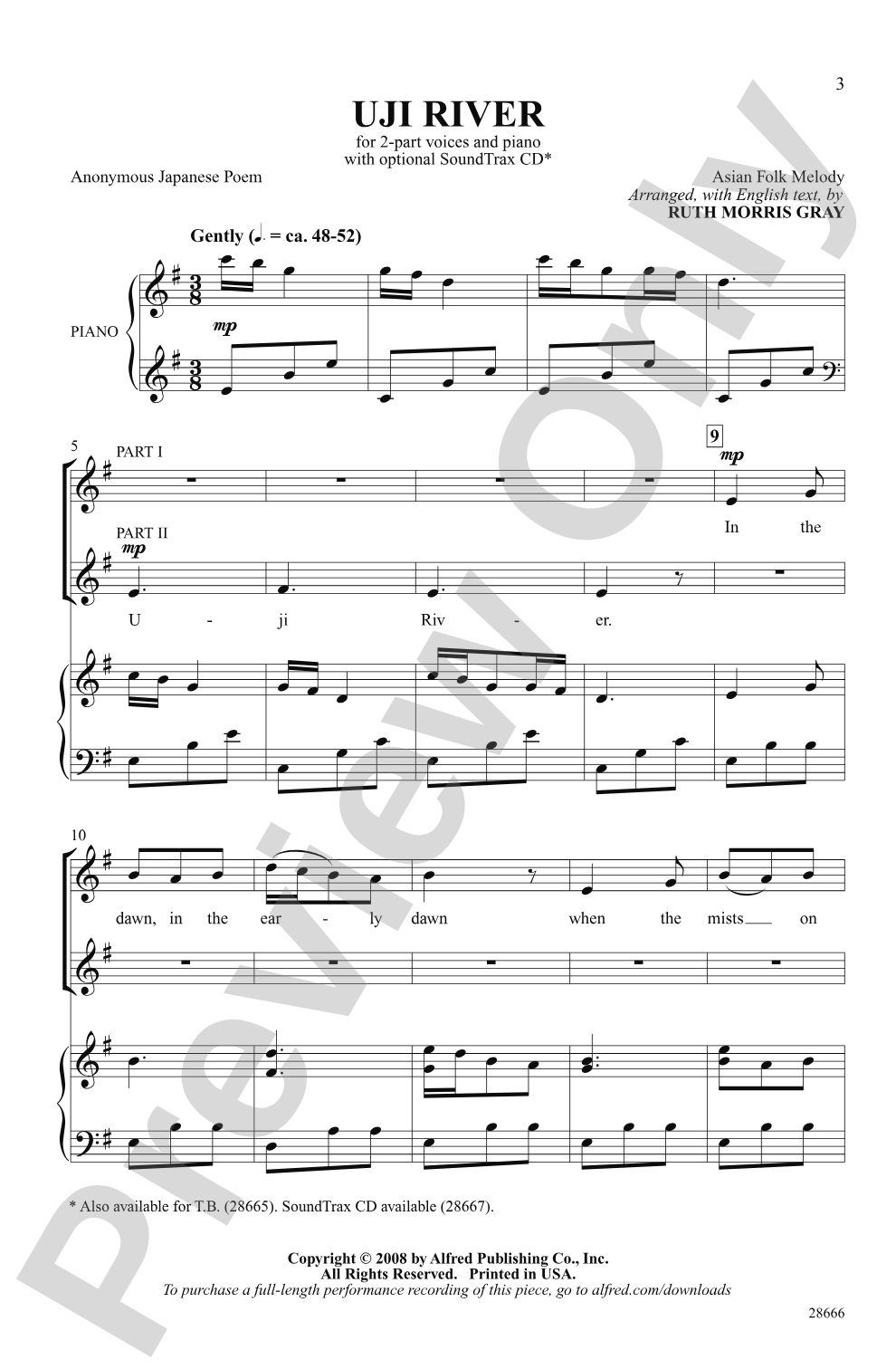
Asian Folk Melody, arr. with English text, by Ruth Morris Gray
Item: 00-PO-0000527

$1.75
Minimum order quantity: 20 copies
Pickup currently not available
Description
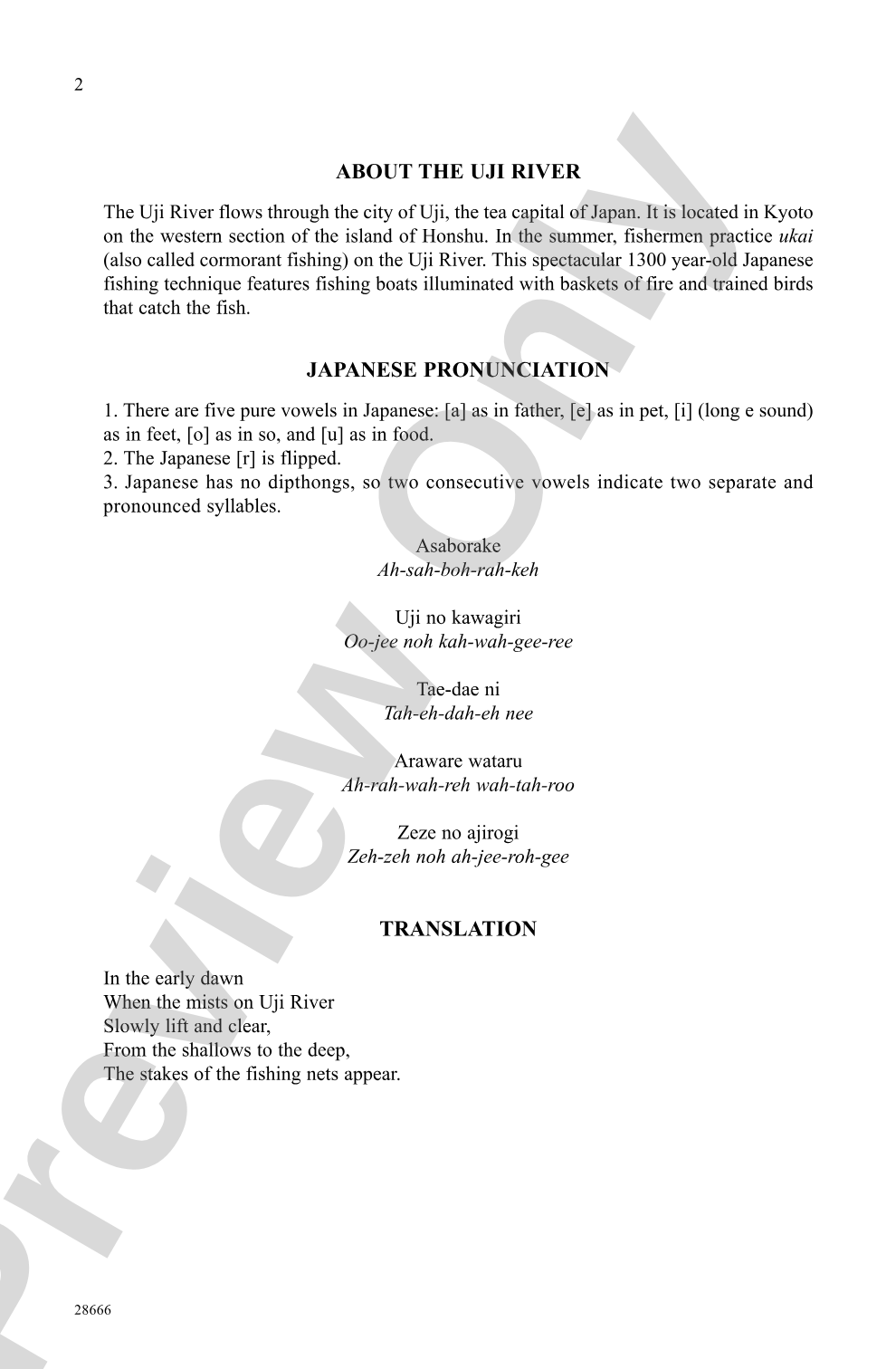
The most unique multicultural piece you will sing this year. A primarily English text tells the spectacular story of an ancient Japanese fishing tradition on the Uji River. And a traditional Asian folk melody floats above a gentle koto-like piano or SoundTrax accompaniment. Magical for treble voices, and highly effective when TB singers sound like fishermen.


Don't just read it, hear it, play along with it, and watch your students grow with it. In MakeMusic Cloud, Uji River: 2-Part Choral Octavo comes alive with professional accompaniment, adjustable tempo, and built-in practice tools that turn solo practice into real progress.
Open in the Player
Jump straight in and assign it today.
Start Your Free Trial
Open this title and explore the full library in minutes.
Sample Audio
1
Audio File
--:--
0:00
0:00
Sample Video
No sample videos found.
Additional Details
Series:
Alfred Choral Designs
Publisher:
Alfred Music
Page Count:
8
SKU:
00-PO-0000527
More about this title
About the Arranger: Ruth Morris Gray

Ruth Morris Gray has directed choirs at Rosemead High School in California since 2004, where she also teaches piano. Her compositional output exceeds 100 published works for choir, reflecting decades of experience writing music that connects singers to meaningful texts and cross-cultural traditions.
Gray holds a Bachelor of Music in Piano Performance and Composition from Biola University and a Master of Arts in Music Composition from UC Santa Barbara. She earned her California Single Subject Music Credential from Cal State Northridge. Beyond her work as composer, director, and performer, Gray is an avid traveler and outdoor enthusiast.
Why we love this
Gray's arrangement succeeds because it trusts the poetry and melody to do their work without overcomplicating the voicing. The koto-like accompaniment texture anchors singers in an authentic soundscape while keeping the focus on storytelling, making this piece memorable for audiences who rarely hear Japanese tradition explored in choral repertoire. It's the kind of programming choice that stays with listeners long after the concert ends.
What to expect
Serene yet purposeful, like witnessing an ancient ritual unfold. The gentle piano accompaniment evokes the river itself, while the melody carries the story of generations of fishermen with quiet dignity and grace. There's magic in how the Western text and Eastern melody coexist so naturally.
Who it's for
This octavo works beautifully for treble choirs seeking repertoire that challenges singers musically while introducing them to non-Western musical traditions. It also serves mixed or tenor-bass ensembles looking for a piece that invites dramatic interpretation and cultural authenticity.
How to get the most out of it
- Shape the narrative arc of the English text first, then let the Asian melody enhance rather than compete with those words. Clear diction in the storytelling passages makes the cultural context land.
- If using tenor/bass singers, encourage them to embody the character of the fishermen. A slight grittiness or earthiness in tone (not roughness) honors the tradition and adds theatrical dimension.
- Balance the two-part voicing so that neither line dominates. The melody and supporting part are equally important to the piece's musical integrity.
- Explore the recorded accompaniment early in rehearsal to help singers hear how their voices sit within the koto texture. This context shapes phrasing and articulation choices.
How to use it
Program this alongside other world music selections to build a concert theme around cultural traditions and storytelling. Its modest eight-page length and accessible two-part writing make it ideal for mid-year concerts or festival programming, where it can anchor a set exploring music from different cultures.
Skills your students will build
- Singing with inflection and character within a folk melody idiom
- Balancing ensemble texture when parts have different dramatic weight
- Responding to accompaniment that uses non-Western instrumental colors
- Sustaining clear English text articulation across phrases
- Reading and interpreting cultural and historical context in music