

Uji River: TB Choral Octavo
Anonymous Japanese Poem
Asian Folk Melody, arr. with English text, by Ruth Morris Gray
Item: 00-PO-0000526

$1.75
Minimum order quantity: 20 copies
Pickup currently not available
Description
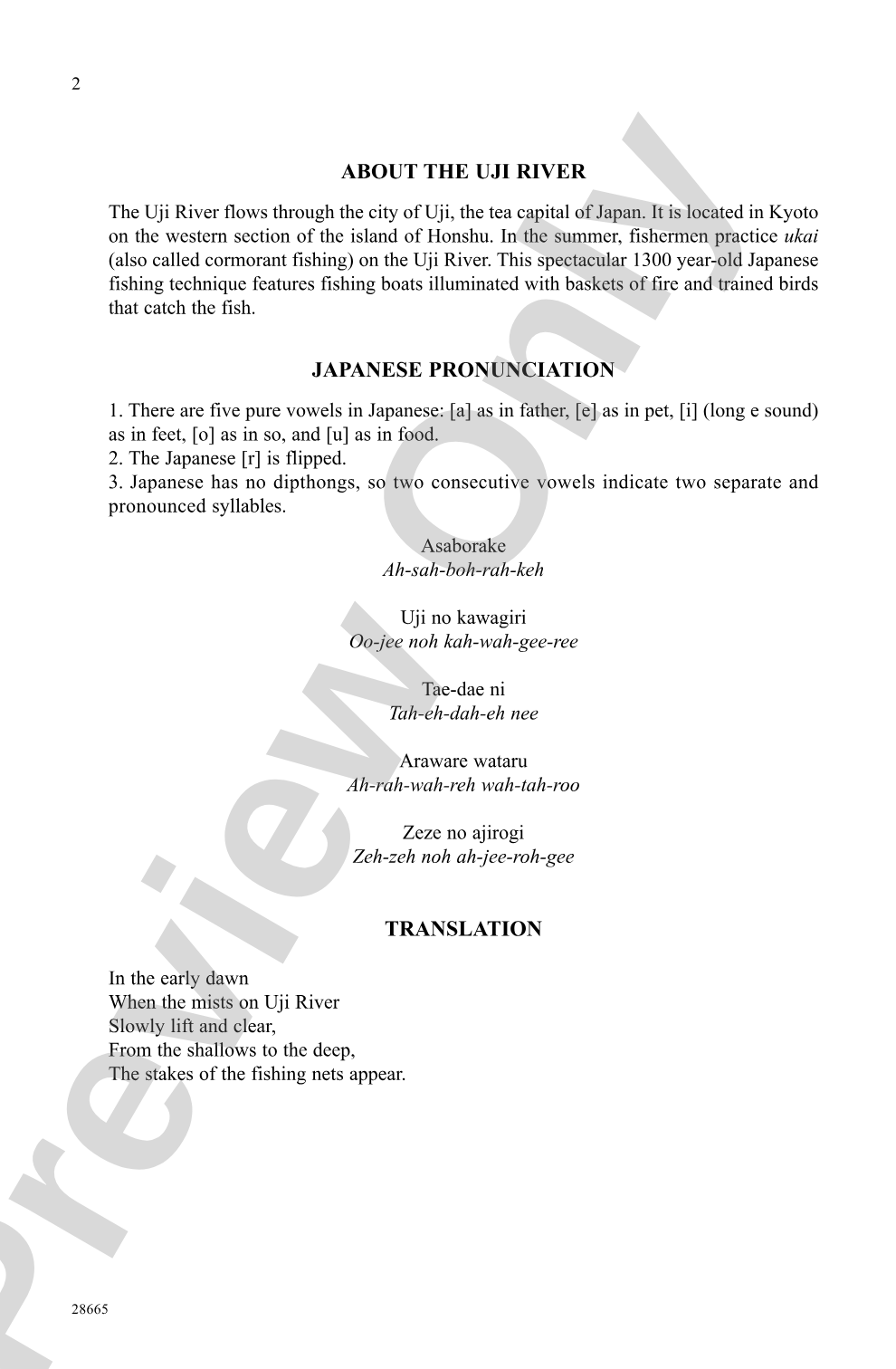
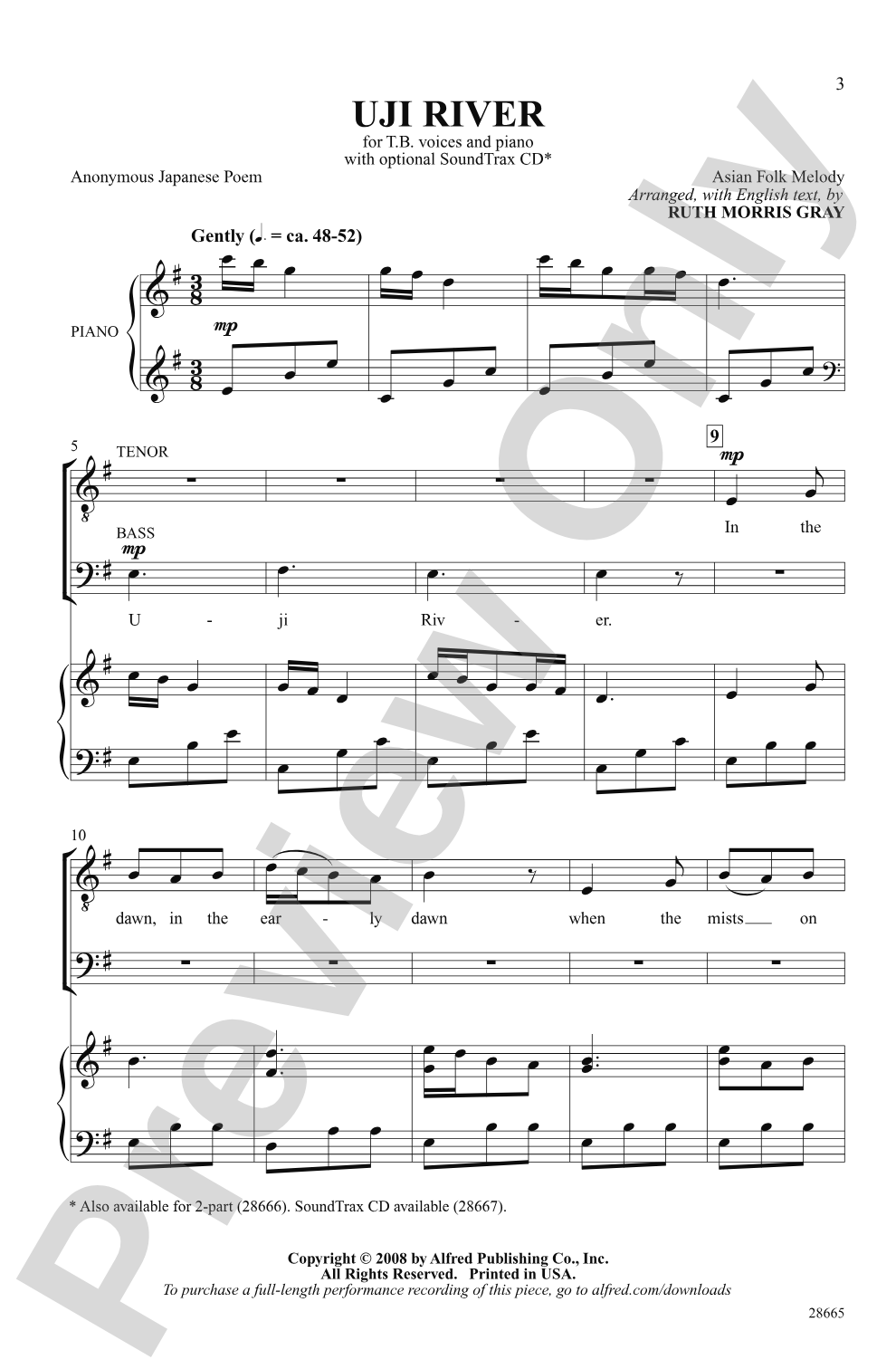
The most unique multicultural piece you will sing this year. A primarily English text tells the spectacular story of an ancient Japanese fishing tradition on the Uji River. And a traditional Asian folk melody floats above a gentle koto-like piano or SoundTrax accompaniment. Magical for treble voices, and highly effective when TB singers sound like fishermen.


Don't just read it, hear it, play along with it, and watch your students grow with it. In MakeMusic Cloud, Uji River: TB Choral Octavo comes alive with professional accompaniment, adjustable tempo, and built-in practice tools that turn solo practice into real progress.
Open in the Player
Jump straight in and assign it today.
Start Your Free Trial
Open this title and explore the full library in minutes.
Sample Audio
1
Audio File
--:--
0:00
0:00
Sample Video
No sample videos found.
Additional Details
Series:
Alfred Choral Designs
Publisher:
Alfred Music
Page Count:
8
SKU:
00-PO-0000526
More about this title
About the Arranger: Ruth Morris Gray

Ruth Morris Gray has directed choirs at Rosemead High School in California since 2004, where she also teaches piano. She holds a Bachelor of Music in Piano Performance and Composition from Biola University and a Master of Arts in Music Composition from UC Santa Barbara, along with a California Single Subject Music Credential from Cal State Northridge.
Gray has published over 100 choral compositions across a wide range of styles and voicings. Beyond her work as a composer, arranger, and conductor, she is an active performer and brings her passion for travel and cultural exploration into her musical writing.
Why we love this
Ruth Morris Gray captures the poetry of an ancient fishing tradition without resorting to shallow exoticism. The interplay between English narrative and traditional Asian melody creates genuine musical intrigue, and the opportunity to have singers embody the sound of fishermen at work grounds an otherwise ethereal piece in human storytelling. This is exactly the kind of culturally informed arrangement that reminds singers why they started making music together.
What to expect
Ethereal and grounded at once. A traditional Asian melody drifts above gentle, koto-like accompaniment while English words anchor the listener in a specific moment in history. The piece draws you into an ancient riverside scene, honest and unrushed, with a contemplative beauty that lingers after the final note.
Who it's for
This octavo engages treble-voiced choirs (TB/TTB/TBB/TTBB voicings) looking for repertoire that honors cultural traditions with musical integrity. It works equally well for high school concert choirs, community ensembles, and festival programming where directors want repertoire that surprises audiences and teaches singers something genuine about music beyond their own tradition.
How to get the most out of it
- Let the piano or SoundTrax accompaniment establish the koto sonority before voices enter; this sets the magical atmosphere and gives singers a clear tonal center before the storytelling begins.
- Encourage singers to imagine themselves as fishermen on the river. The text and melody work best when grounded in physical imagery and genuine narrative connection rather than performed as abstract sound.
- Balance the English text clarity with the floating quality of the traditional melody. Diction matters for the story, but the melodic line should feel unhurried and atmospheric.
How to use it
Program this as an unexpected emotional pivot in a concert—place it where you want audiences to lean in and listen differently. Its multicultural narrative and accessible melodic content make it ideal for spring concerts, festival competitions, or community showcases celebrating diverse musical heritages. The eight-page format fits comfortably into most concert programs without dominating a set.
Skills your students will build
- Singing with cultural sensitivity and historical awareness
- Blending English text clarity with floating melodic lines
- Reading and performing traditional Asian-influenced melodies
- Creating ensemble sound inspired by extramusical imagery (fishermen, river, tradition)
- Balancing narrative storytelling with musical atmosphere