
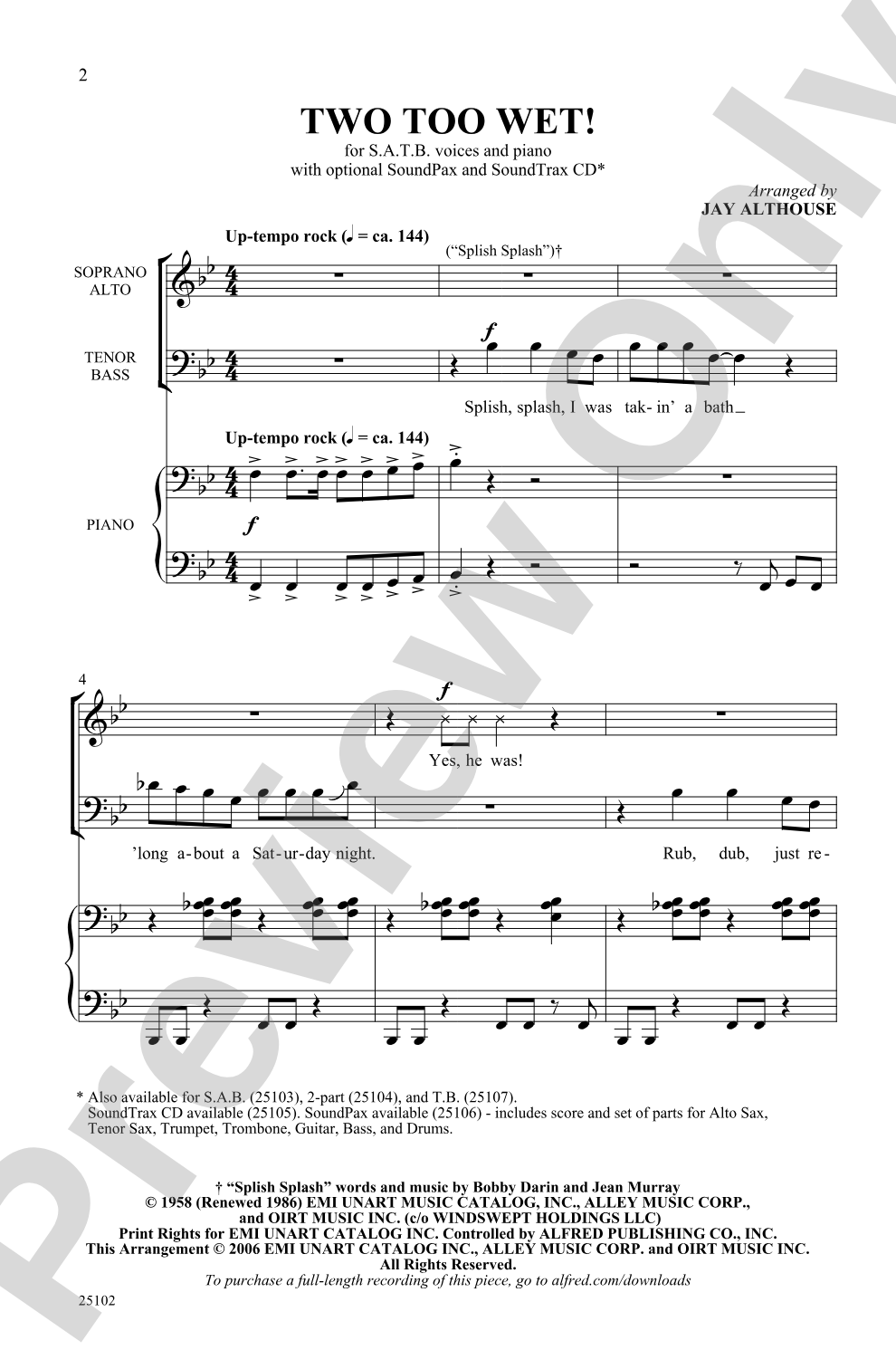
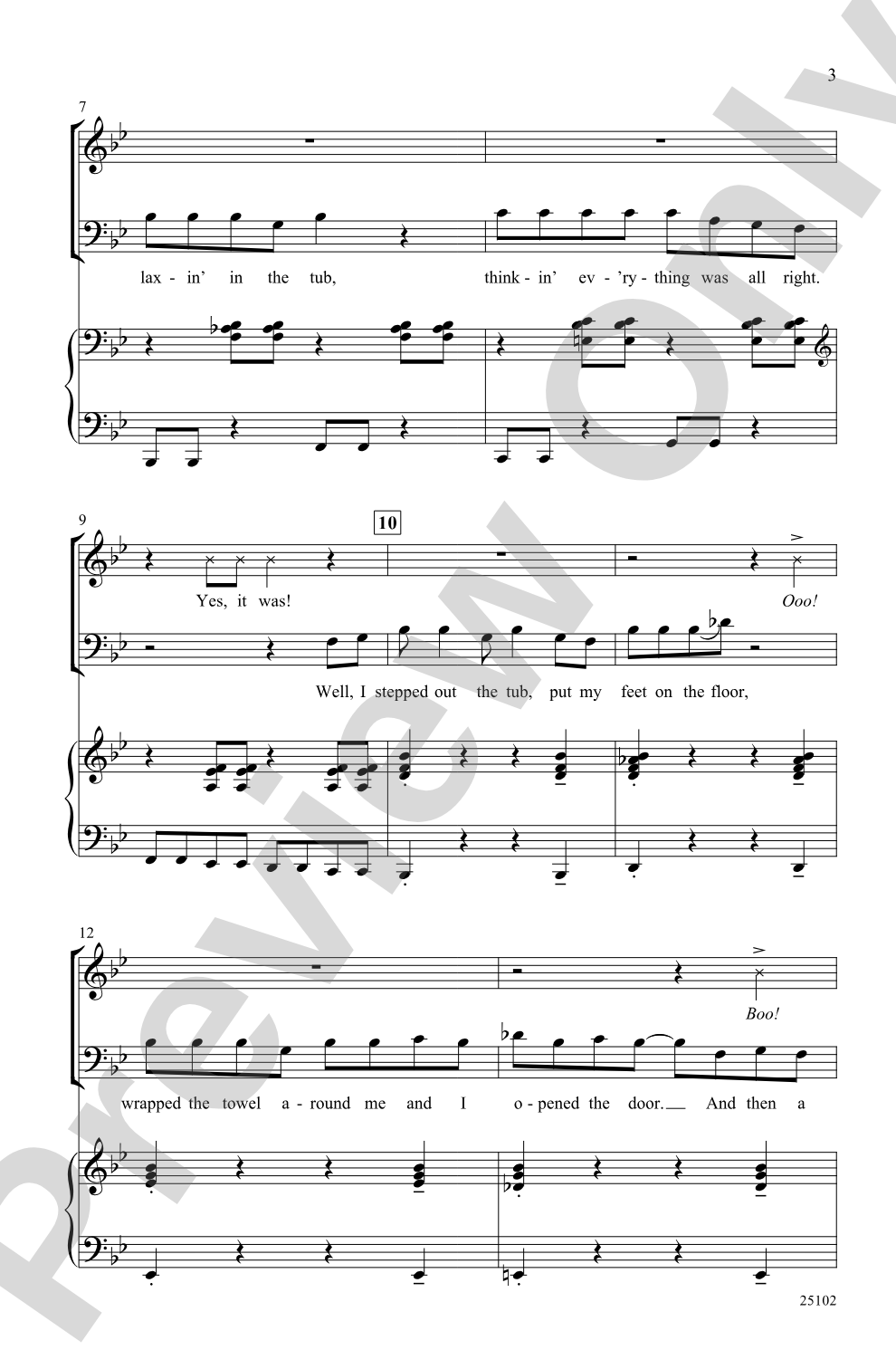

Two Too Wet!: SATB Choral Octavo
Splish Splash / Sea Cruise
By Bobby Darin, Jean Murray, and Huey Smith / arr. Jay Althouse
Item: 00-PO-0004355
$2.25
Minimum order quantity: 20 copies
One moment…
Related Items
Two Too Wet!: SoundTrax Digital Audio Download |
$22.95
|
View | |
Two Too Wet!: Choral SoundPax |
$30.00
|
View | |
Two Too Wet!: SATB Choral Octavo |
$2.25
|
View | |
Two Too Wet!: SAB Choral Octavo |
$1.75
|
View | |
Two Too Wet!: TB Choral Octavo |
$1.75
|
View | |
Two Too Wet!: 2-Part Choral Octavo |
$1.75
|
View | |
Two Too Wet!: Choral Octavo SoundTrax CD |
$22.95
|
View | |
Two Too Wet!: Choral SoundPax |
$30.00
|
View |
Description
Bring back the golden age of rock 'n' roll with this wet and wonderful duo of pop hits: "Splish Splash" (written by the legendary Bobby Darin) and "Sea Cruise" (by New Orleans legend Huey "Piano" Smith). It's fun, it's singable, and, well, it's a blast from the past. Don't miss the extra-special TB arrangement. Featured on "That's Entertainment" choreography DVD 00-24120.


Two Too Wet!: SATB Choral Octavo isn't in MakeMusic Cloud just yet...but it could be. Let us know you'd like to see it, and you'll help shape what comes next. In the meantime, start a free trial and dive into thousands of interactive titles your students can play along with today.
Request This Title
Tell us you want it.
Start Your Free Trial
Explore everything that's ready to play right now.
Sample Audio
1
Audio File
--:--
0:00
0:00
Sample Video
No sample videos found.
Additional Details
Series:
Alfred Archive Edition: Alfred Pop Choral Series
Publisher:
Alfred Music
Page Count:
12
SKU:
00-PO-0004355
More about this title
About the Composer: Bobby Darin
Bobby Darin (1936-1973) was a versatile entertainer who dominated the late 1950s and early 1960s with his energetic performances and charismatic stage presence. Beyond "Splish Splash," he recorded jazz standards, country songs, and Broadway material, proving himself a genuine musician rather than a one-hit wonder. His influence on pop music and his ability to connect with audiences across multiple genres made him a model for the modern crossover artist.
Darin's approach to performance emphasized joy and accessibility. He understood how to craft melodies that stuck in listeners' heads and arrangements that showcased both technical skill and entertainment value. For choral educators, his work represents a golden age when pop music could be genuinely fun without sacrificing musicality.
Why we love this
Jay Althouse has arranged these two rock 'n' roll classics with a lightness that keeps the energy bouncing without overwhelming young or developing singers. The piece honors the original recordings' infectious spirit while opening the door to choreography and theatrical presentation. A choir that learns this octavo won't just sight-read; they'll smile through rehearsals and audiences will remember the concert.
What to expect
Water, sunshine, and unbridled joy. These arrangements capture the carefree exuberance of 1950s and 60s pop at its most irresistible, with singable melodies and harmonic colors that let the original charm shine through. The rhythm section drives forward with an infectious bounce that makes even the slowest rehearsal feel like a beach party.
Who it's for
This octavo works for high school and adult choirs seeking repertoire that engages audiences and singers alike. It's an ideal choice for programs that want to include pop standards without sacrificing musical substance or vocal development. Directors programming lighter concert segments or variety shows will find both pieces immediately appealing to mixed ensembles.
How to get the most out of it
- Lock in the rhythmic groove early. These songs live or die by their forward momentum and crisp articulation on the backbeat.
- Don't let the "pop" label fool you into looseness. The harmonic movement still requires blend and balance, especially in the SATB passages.
- Use the recorded accompaniment to establish tempo and feel, then gradually reduce reliance on it during rehearsals so singers internalize the groove.
- Take advantage of the extra TB arrangement for variety within your concert or rehearsal. It can serve as a powerful contrast to the full SATB version.
How to use it
Pair these pieces as an intentional contrast to your concert's more serious fare. They work equally well as an opening number to set a festive tone or as a closer that leaves audiences grinning. If you're building a program around choreography or multimedia elements, both songs offer natural opportunities for visual storytelling.
Skills your students will build
- Maintaining rhythmic precision in syncopated pop styles
- Blending and balancing SATB voicing in a contemporary idiom
- Responding to recorded accompaniment cues
- Performing with theatrical confidence and energy
- Interpreting classic pop songs with respect to their historical context