Two Short Pieces for Trombone and Piano Cover Image

Two Short Pieces for Trombone and Piano: Trombone Solo Book

$4.95 USD
Sale price  $4.95 USD Regular price 
Skip to product information
Two Short Pieces for Trombone and Piano Cover Image

Two Short Pieces for Trombone and Piano: Trombone Solo Book

By Edmund J. Siennicki

Grade: 2

Item: 36-10530404

$4.95
Shipped

One moment…

Description
These two pieces written for the young musicians include VOCALISE, a singing andante in 4/4, and DANCE, an allegro with opportunities to transition between some easy meter changes. Versions for bass clarinet, bassoon, baritone saxophone, trombone, baritone, mallet percussion (no accompaniment), and cello are available from the publisher.

Two Short Pieces for Trombone and Piano: Trombone Solo Book isn't in MakeMusic Cloud just yet...but it could be. Let us know you'd like to see it, and you'll help shape what comes next. In the meantime, start a free trial and dive into thousands of interactive titles your students can play along with today.

Sample Pages

No sample pages found.

Sample Audio
No sample audio found.
Sample Video
Additional Details
Series: LudwigMasters Brass Series
Publisher: Keiser Productions, Inc.
ISBN10: 1-63-887124-8
ISBN13: 978-1-63-887124-8
UPC: 735816019839
SKU: 36-10530404
Instrumentation: Trombone Solo and Piano

More about this title

About the Composer: Edmund J. Siennicki
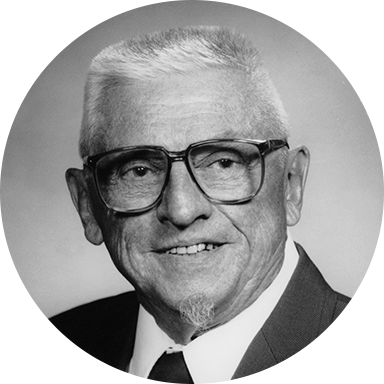
Edmund J. Siennicki

Edmund J. Siennicki grew up in Cleveland, Ohio, and at age 12 had a formative conversation with pianist Ignacy Jan Paderewski that shaped his musical direction for life. He earned his Bachelor's degree from Kent State University, where he composed Fight On for KSU, a march still performed at university football games. In 1994, Kent State honored him with the Distinguished Alumnus Award from the School of Music.

Siennicki's formal training in composition came through studies with Herbert Elwell and Vincent Persichetti at Teachers College, Columbia University, alongside electronic music study with Sergio Barroso. He built a dual career as a performing musician on bassoon and piano while composing prolifically; his works have won prizes in National School Orchestra composition contests and earned him two residencies at the MacDowell Colony. Teaching junior high school students in Cleveland served as the foundation of his career, though he also held faculty positions at Michigan and Kent State University. With approximately 200 compositions published and two decades of consecutive ASCAP awards, Siennicki continues to compose and conduct clinics in schools.

Why we love this

Siennicki writes with the ear of someone who spent his career in junior high school rehearsals; these pieces sit comfortably on the instrument without pretense, yet they demand genuine musicality. VOCALISE and DANCE together offer young trombonists a manageable yet satisfying concert pair that demonstrates contrasting characters without overwhelming technical demands.

What to expect

VOCALISE invites introspection and singing tone; its unhurried andante creates space for the trombonist to breathe musically and shape long lines. DANCE snaps to life with contrasting energy and playful meter shifts that feel fresh without becoming fussy.

Who it's for

Young trombonists at the early intermediate level who are ready for their first solo recital piece or student concerto opportunity. These works suit players who have solid tone production and basic rhythmic skills but are still building confidence with musical expression.

How to get the most out of it

  • Shape VOCALISE's phrases as you would a vocal line, breathing naturally at logical phrase endings and keeping the tone warm throughout the andante tempo.
  • Approach the meter changes in DANCE with rhythmic confidence by rehearsing the transitions separately before combining them with the piano part.
  • Balance your dynamic control in VOCALISE to avoid early fatigue; young trombonists often push harder than necessary, which flattens expressive singing.
  • Let the allegro energy of DANCE propel the piece forward, but maintain clear articulation through faster note passages rather than rushing the tempo.

How to use it

Present both pieces as a recital unit to create a cohesive solo performance, pairing the lyrical opening with a bright, energetic close. Alternatively, use VOCALISE alone in a chamber concert or student showcase where a brief, expressive work is needed.

Skills your students will build

  • Singing tone production in legato passages
  • Shaping extended phrases with dynamic control
  • Reading meter changes (4/4 transitions in the allegro section)
  • Musical interpretation beyond notation
  • Solo performance confidence at an early level

You May Also Like