Two Scenes from Kinderstucke Cover Image

Two Scenes from Kinderstucke: String Orchestra Conductor Score

$5.00 USD
Sale price  $5.00 USD Regular price 
Skip to product information
Two Scenes from Kinderstucke Cover Image

Two Scenes from Kinderstucke: String Orchestra Conductor Score

Arranged by Robert D. McCashin

Grade: 2.5

Item: 98-ST6246S

$5.00
Shipped

One moment…

Description
This delightful two-movement arrangement is drawn from the longer work Sechs Kinderstücke (Six Pieces for Children), by Felix Mendelssohn. McCashin's arrangement of the first and third movements exemplify Mendelssohn's preference for short "character pieces" toward the end of his life. A wonderful way to infuse your program with some lighter selections while exposing your students to the work of a master composer.

Two Scenes from Kinderstucke: String Orchestra Conductor Score isn't in MakeMusic Cloud just yet...but it could be. Let us know you'd like to see it, and you'll help shape what comes next. In the meantime, start a free trial and dive into thousands of interactive titles your students can play along with today.

Sample Pages

Sample Audio
No sample audio found.
Sample Video
Additional Details
Series: FJH Developing Strings
Publisher: The FJH Music Company, Inc.
UPC: 241444564240
SKU: 98-ST6246S

More about this title

About the Arranger: Robert D. McCashin
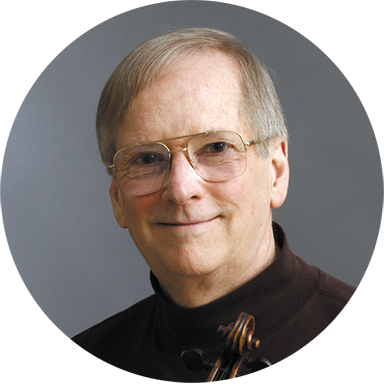
Robert D. McCashin

Robert D. McCashin holds a DMA in conducting from the University of Arizona and spent 43 years in higher education, most recently as Professor Emeritus and former Director of Orchestras at James Madison University. He earned his Bachelor and Master degrees in violin performance from Louisiana State University and was honored with JMU's Distinguished Teacher Award in 2015.

McCashin's career spans both the podium and the page. As conductor, he led the JMU Symphony, Chamber Orchestra, and Opera Orchestras from 1992 through 2016 while teaching orchestral conducting across the university's master's and doctoral programs. As a composer and arranger, he has published nearly 80 works across educational levels Grade 1 through 5, many of which have become standard selections in school orchestra programs. Before joining JMU, he taught at the University of Texas at Arlington and Texas Wesleyan University, performed with regional orchestras including the Fort Worth Symphony, and founded the Arlington Youth Symphony.

Why we love this

McCashin captures the essence of Mendelssohn's character pieces while making them fully accessible to young orchestras. The arrangement sits comfortably at Grade 2.5, which means your students can focus on musical line and expression rather than wrestling with technical demands. Programming two contrasting movements from a masterwork signals serious musicianship without requiring the maturity a full concerto demands.

What to expect

Mendelssohn's character pieces are intimate and reflective, built on memorable melodic ideas that unfold naturally across eight or sixteen bars. These two movements preserve that charm while McCashin's orchestration keeps the textures transparent, allowing young players to experience the composer's gift for melody and harmonic grace without overwhelming complexity.

Who it's for

String orchestra directors preparing students for festival competition or a concert program that values musical substance without excessive technical difficulty. This arrangement works equally well in the classroom as an introduction to Mendelssohn's compositional voice and in performance settings where you want to demonstrate your ensemble's musicianship.

How to get the most out of it

  • Balance the arrangement so that melodic lines remain audible across the string sections; young players often need reminding that accompanying figures should sit behind the primary voice.
  • Shape each movement with clear phrase architecture. Mendelssohn's character pieces thrive on gentle momentum and natural breathing, not metronomic evenness.
  • Use the two-movement structure to your advantage in rehearsal. Work them separately before combining, treating each as a self-contained study in style and articulation.

How to use it

Pair these movements as a unit to provide lyrical contrast in a concert otherwise filled with heavier repertoire or contemporary pieces. They also serve well as a bridge between your ensemble's technical studies and more ambitious works, introducing Mendelssohn's aesthetic without the demands of longer developmental forms.

Skills your students will build

  • Sustained phrasing and musical line across eight and sixteen-bar structures
  • Balancing melody and accompaniment within string textures
  • Articulation choices that shape character and mood
  • Ensemble response to expressive conducting and dynamic shaping
  • Understanding of the character piece as a musical form

You May Also Like