Two Scenes from Kinderstucke Cover Image

Two Scenes from Kinderstucke: String Orchestra Conductor Score & Parts

$50.00 USD
Sale price  $50.00 USD Regular price 
Skip to product information
Two Scenes from Kinderstucke Cover Image

Two Scenes from Kinderstucke: String Orchestra Conductor Score & Parts

Arranged by Robert D. McCashin

Grade: 2.5

Item: 98-ST6246

makemusic Cloud badge

Need it now?

Buy Digital Version
$50.00
Shipped

One moment…

Description
This delightful two-movement arrangement is drawn from the longer work Sechs Kinderstücke (Six Pieces for Children), by Felix Mendelssohn. McCashin's arrangement of the first and third movements exemplify Mendelssohn's preference for short "character pieces" toward the end of his life. A wonderful way to infuse your program with some lighter selections while exposing your students to the work of a master composer.

Don't just read it, hear it, play along with it, and watch your students grow with it. In MakeMusic Cloud, Two Scenes from Kinderstucke: String Orchestra Conductor Score & Parts comes alive with professional accompaniment, adjustable tempo, and built-in practice tools that turn solo practice into real progress.

Sample Pages

Sample Audio
0:00
0:00
Sample Video
Additional Details
Series: FJH Developing Strings
Publisher: The FJH Music Company, Inc.
UPC: 674398228560
SKU: 98-ST6246

More about this title

About the Arranger: Robert D. McCashin
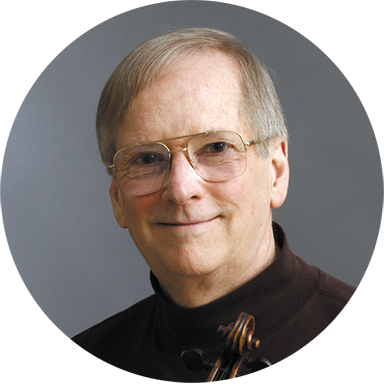
Robert D. McCashin

Robert D. McCashin holds a Doctor of Musical Arts degree in conducting from the University of Arizona and earned both his Bachelor and Master of Music degrees in violin performance from Louisiana State University. He spent 43 years in higher education, serving as Professor Emeritus and former Director of Orchestras at James Madison University, where he conducted the Symphony, Chamber Orchestra, and Opera Orchestras from 1992 through 2016. In 2015, he received JMU's Distinguished Teacher Award for the College of Visual and Performing Arts.

As a violinist and accomplished arranger, McCashin has published nearly 80 educational works spanning Grades 1 through 5, many of which have become bestsellers and Editors' Choice selections. Before joining JMU, he taught at the University of Texas at Arlington and Texas Wesleyan University, where he also founded the Arlington Youth Symphony and maintained an active private studio. He is co-author of the widely used string class methods New Directions for Strings and A Scale in Time.

Why we love this

McCashin's ear for orchestration shines in this pairing of Mendelssohn movements; the arrangement sits comfortably within Grade 2.5 range without sacrificing the composer's elegant voice. Programming these lighter character pieces gives your students a direct encounter with a major composer while adding welcome variety to your concert, and the modest forces required make this accessible to developing orchestras.

What to expect

Mendelssohn's Kinderstücke sparkle with intimate charm and melodic grace. These two selections capture the composer's gift for miniature forms; they move with lightness and clarity, inviting players into the world of 19th-century salon music reimagined for the orchestra.

Who it's for

This arrangement serves developing string orchestras at the intermediate level who are ready to tackle arranged masterworks with musical sophistication. It works well for ensembles looking to build their students' familiarity with canonical composers without requiring advanced technical facility.

How to get the most out of it

  • Shape each movement with attention to Mendelssohn's preference for clear, songlike phrases; resist the urge to rush through lighter passages, as they benefit from gentle articulation and breathing room.
  • Balance the first violins carefully against the inner voices, which often carry important harmonic color in these character pieces.
  • Use the two-movement structure to explore contrasting moods within your rehearsal; mark the transition between pieces clearly so the ensemble understands the shift in character.

How to use it

Pair these movements with contemporary or contrasting repertoire to highlight their historical voice and offer programming balance. They work beautifully in spring concerts or chamber festival settings where lighter fare is welcome, and they make an excellent introduction to Mendelssohn for younger orchestral musicians.

Skills your students will build

  • Balancing sustained harmonic parts with melodic lines
  • Conducting and performing in articulate, song-like phrasing
  • Reading orchestral textures typical of 19th-century salon music
  • Understanding character and mood contrast across related movements

You May Also Like
