
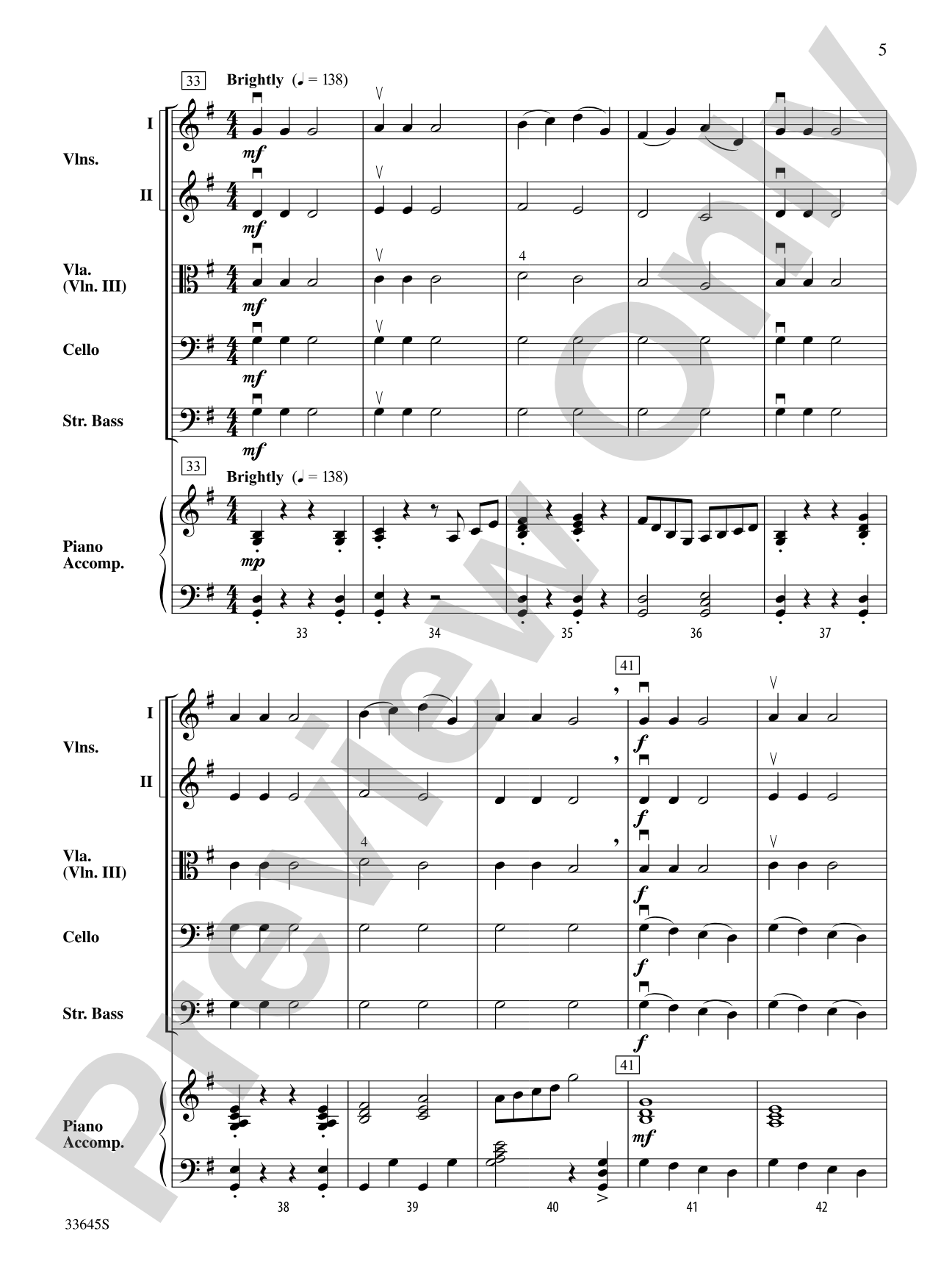
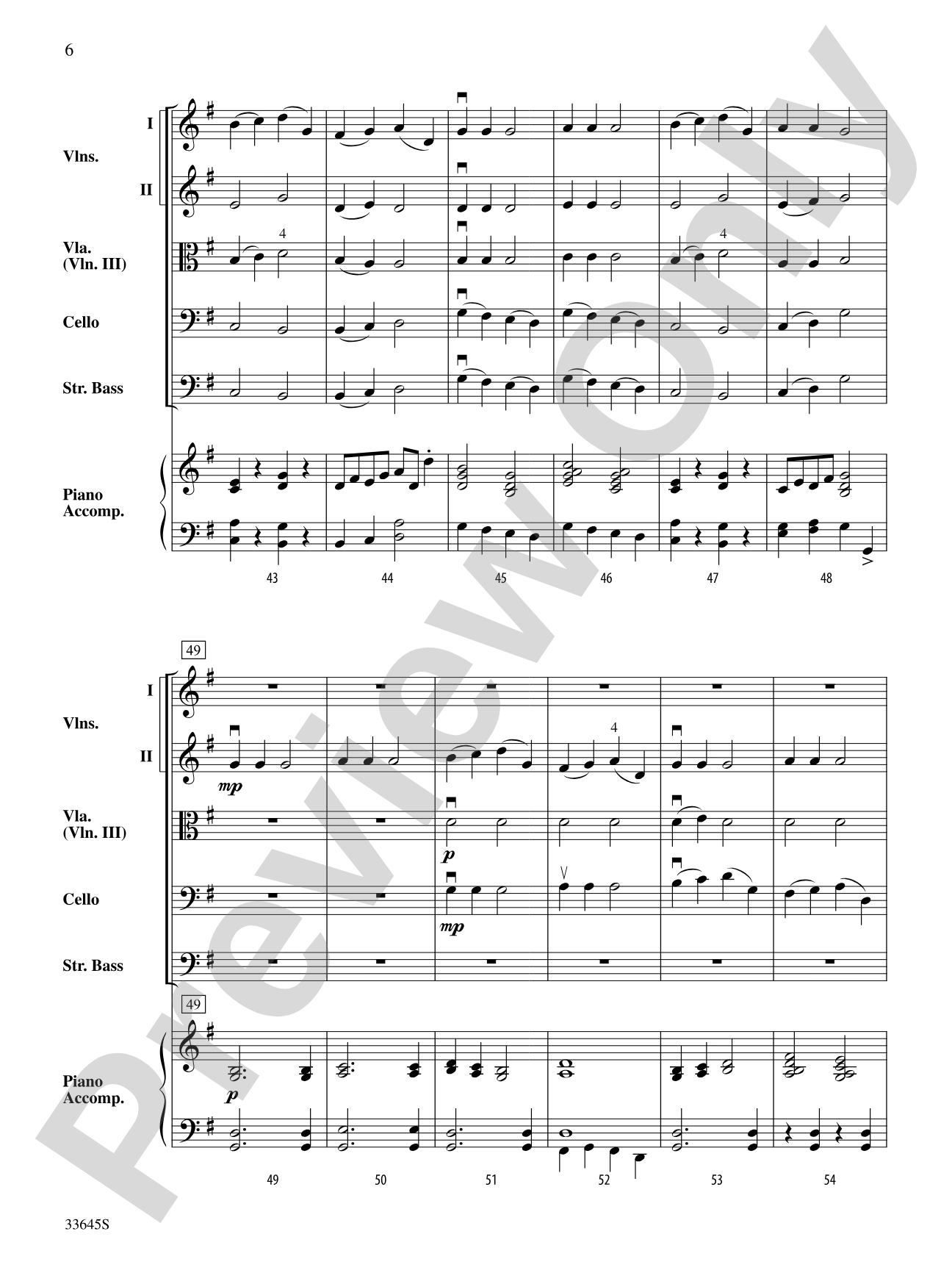
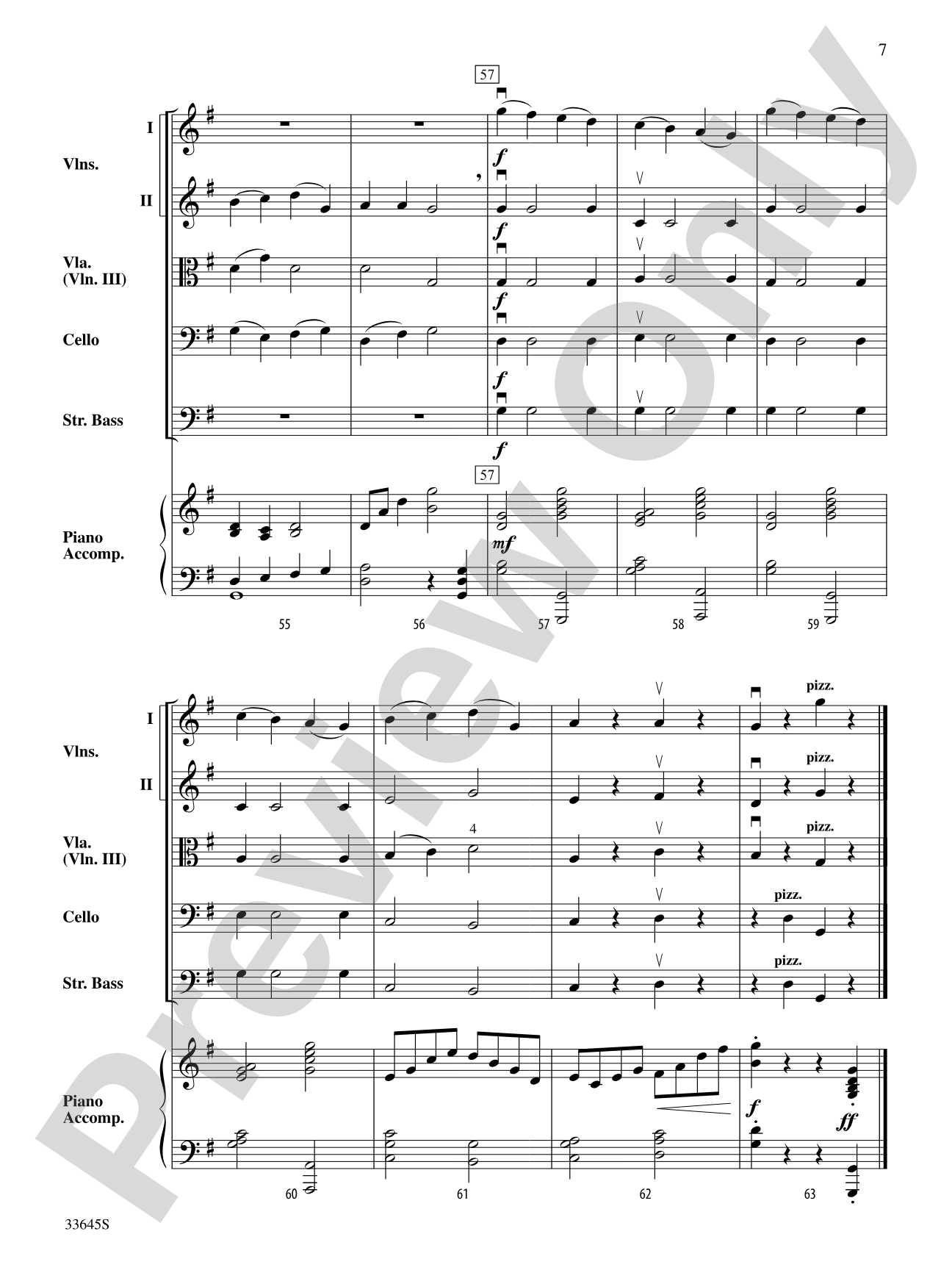


Two French Folk Tunes: String Orchestra Conductor Score & Parts
Traditional / arr. Douglas E. Wagner
Grade: 1.5
Item: 00-PK-0004143

$40.00
Pickup currently not available
Buy Extra Parts (Digital PDF Download)
| Product | Price | Quantity |
|---|---|---|
| Two French Folk Tunes: Score | $6.00 | |
| Two French Folk Tunes: 1st Violin | $5.99 | |
| Two French Folk Tunes: 2nd Violin | $5.99 | |
| Two French Folk Tunes: 3rd Violin (Viola [TC]) | $5.99 | |
| Two French Folk Tunes: Viola | $5.99 | |
| Two French Folk Tunes: Cello | $5.99 | |
| Two French Folk Tunes: String Bass | $5.99 | |
| Two French Folk Tunes: Piano Accompaniment | $5.99 |
Parts Added to Cart!
Related Items
Two French Folk Tunes: String Orchestra Conductor Score & Parts |
$40.00
|
View |
Description
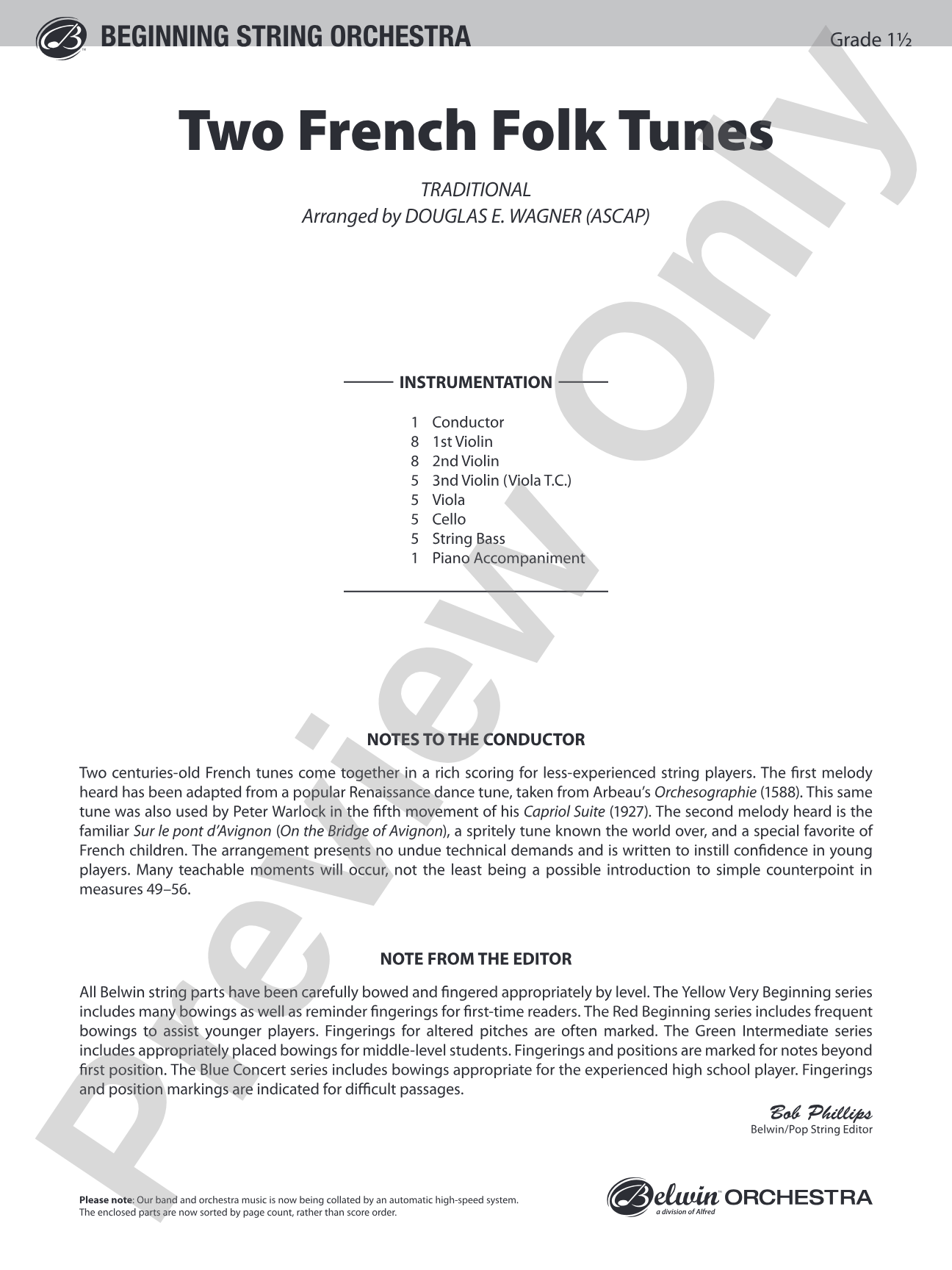
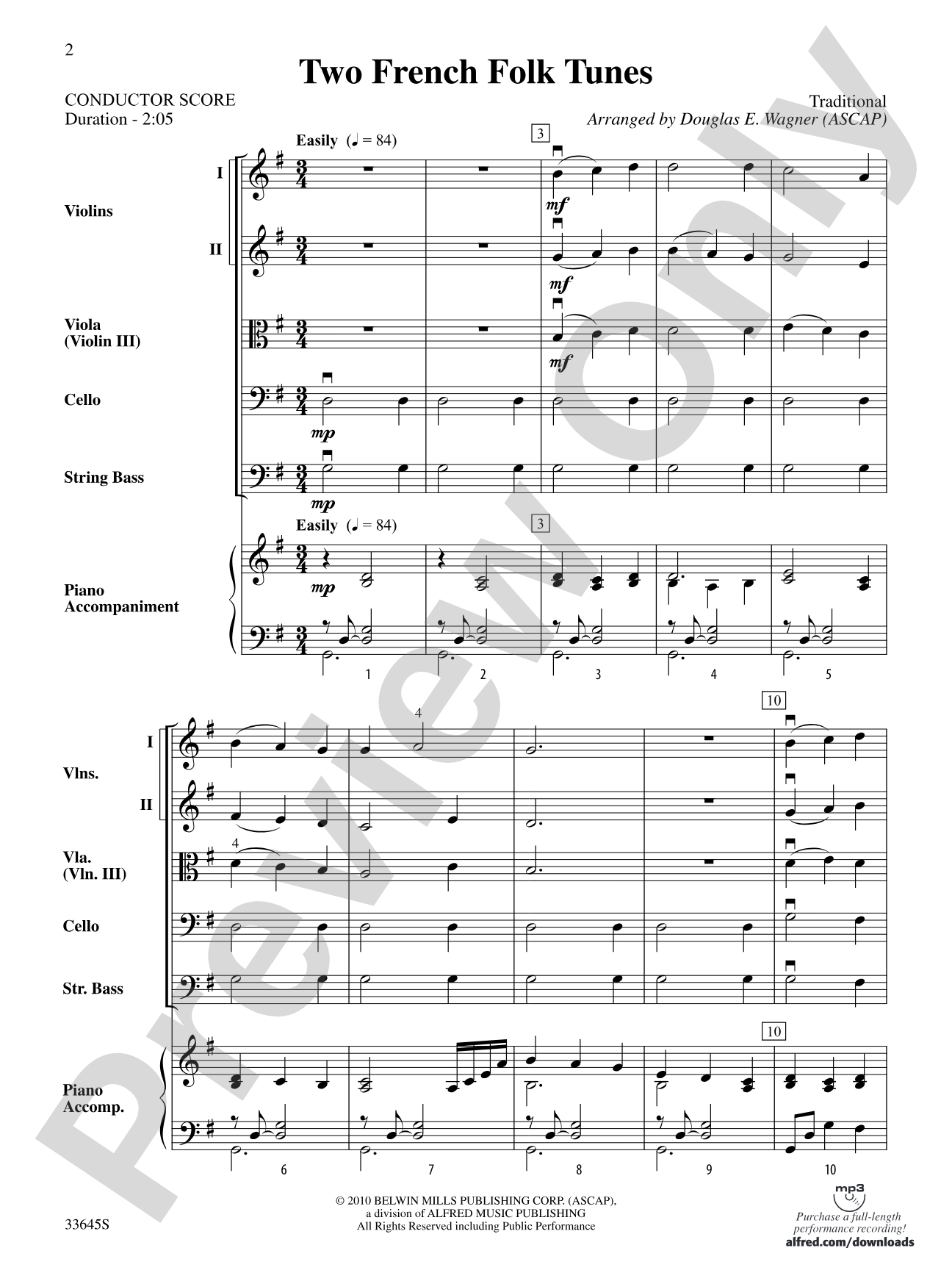
Teachable moments abound in the rich scoring of this arrangement, written to instill confidence in young players. The first melody is an ancient tune adapted from a popular Renaissance dance tune and used in Warlock's "Capriol Suite." The second piece is the much beloved, "On the Bridge of Avignon."


Don't just read it, hear it, play along with it, and watch your students grow with it. In MakeMusic Cloud, Two French Folk Tunes: String Orchestra Conductor Score & Parts comes alive with professional accompaniment, adjustable tempo, and built-in practice tools that turn solo practice into real progress.
Open in the Player
Jump straight in and assign it today.
Start Your Free Trial
Open this title and explore the full library in minutes.
Sample Audio
1
Audio File
--:--
0:00
0:00
Sample Video
No sample videos found.
Additional Details
Series:
Belwin Beginning String Orchestra
Publisher:
Alfred Music
Page Count:
76
SKU:
00-PK-0004143
More about this title
About the Arranger: Douglas E. Wagner

Douglas E. Wagner studied music at Butler University, earning both undergraduate and graduate degrees before spending three decades as a high school music educator and administrator. Since transitioning to full-time composition in the 1970s, he has become one of the most prolific arrangers in American music education, with over 3,500 published works spanning choral, band, orchestral, handbell, organ, piano, and vocal literature.
Wagner's compositions and arrangements have circulated globally through concert performances, radio and television broadcasts, and classroom use. More than seventeen million copies of his music have been purchased by educators and students worldwide. He currently lives in Indianapolis, Indiana.
Why we love this
Wagner's arrangement meets beginning string orchestras exactly where they are, with clear textures and smart voice leading that build ensemble confidence without sacrificing musical integrity. The pairing of two contrasting folk melodies gives your program a complete concert moment while remaining accessible at 1.5 grade level. Audience connection is immediate with "On the Bridge of Avignon," while the Renaissance-derived first tune opens conversations about musical history and arrangement choices.
What to expect
Both pieces carry the warmth of European folk tradition, with the first tune evoking Renaissance grace and the second bringing the playful charm of the Rhône Valley. The scoring creates a feeling of gentle confidence, where young musicians discover they can shape folk melodies with expression and style.
Who it's for
Young string orchestras at the beginning of their musical journey who need repertoire that sounds complete and satisfying without overwhelming developing technique. This arrangement works equally well for beginning high school orchestras looking for concert material that builds musicianship through quality writing rather than complexity.
How to get the most out of it
- Shape the opening melody with a gentle crescendo into the phrase peak, then let it subside naturally rather than holding a dynamic flat throughout.
- Balance the second violin and viola accompaniment so they support without overpowering the first violin line; these voices need clarity to show off the arrangement's craft.
- Maintain rhythmic precision in the ensemble parts during the accompaniment figures; cleaner attacks here make the melody soar.
- Bring out any brief solos or counter-melodic moments in lower voices, especially in the bridge sections, to reveal the full arrangement.
How to use it
Open a concert with these two contrasting folk tunes to establish a relaxed, engaging atmosphere for an audience of families and community members. The pairing also makes sense as part of a world music or folk tradition themed concert, or as confident programming for young orchestras performing at festival competitions.
Skills your students will build
- Sustaining long melodic lines with consistent tone and intonation
- Balancing a melodic voice against accompanying figuration
- Shaping phrases with dynamic contour rather than playing mechanically
- Articulating and executing rhythmic accompaniment patterns cleanly and precisely
- Understanding how arrangers adapt historical material for modern ensembles