
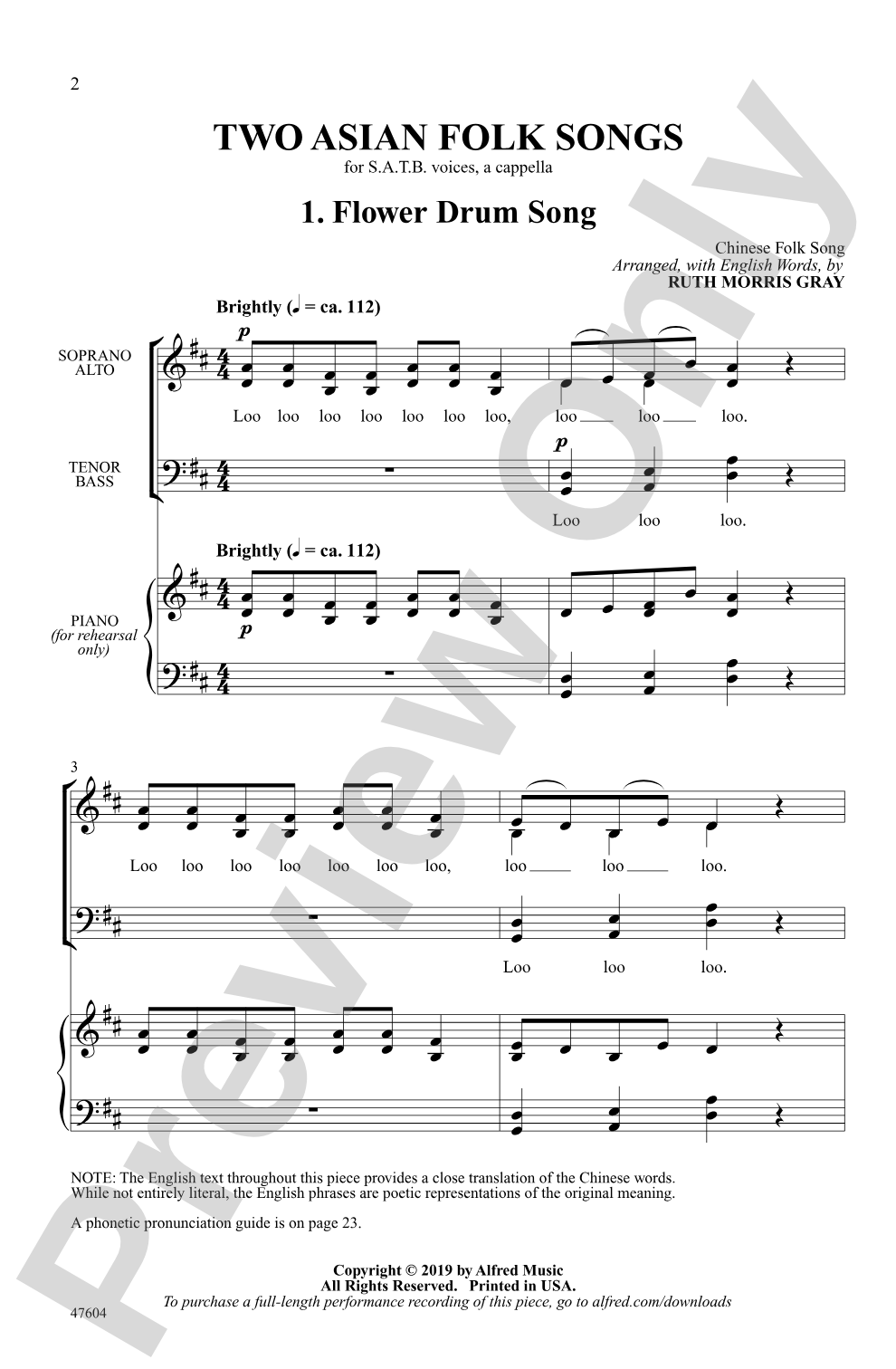

Two Asian Folk Songs: SATB, a cappella Choral Octavo
1. Flower Drum Song 2. High Green Mountain
Arr., with English words, by Ruth Morris Gray
Item: 00-PO-0005956
$2.45
Minimum order quantity: 20 copies
Pickup currently not available
Related Items
Two Asian Folk Songs: SATB, a cappella Choral Octavo |
$2.45
|
View |
Description
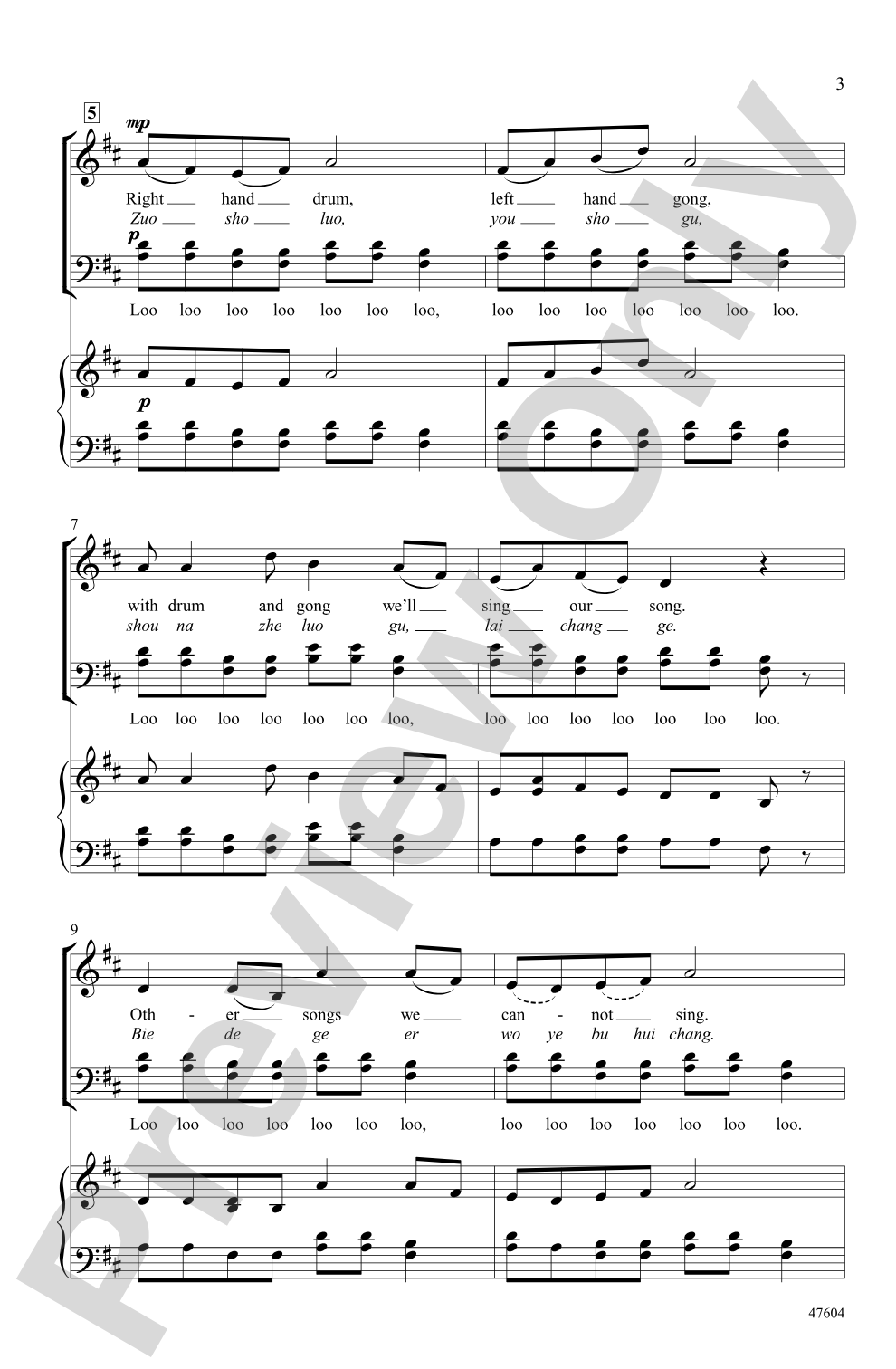
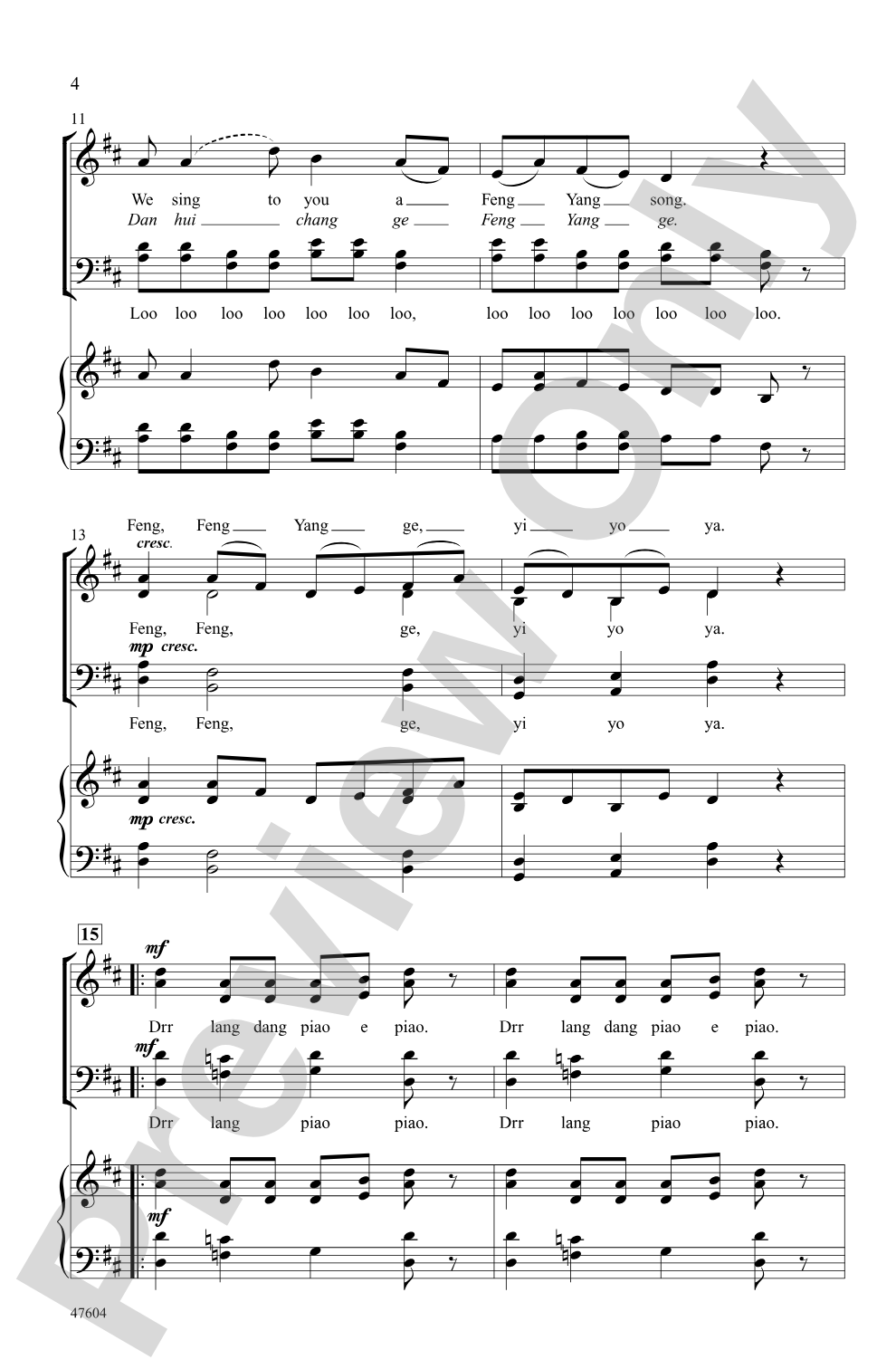
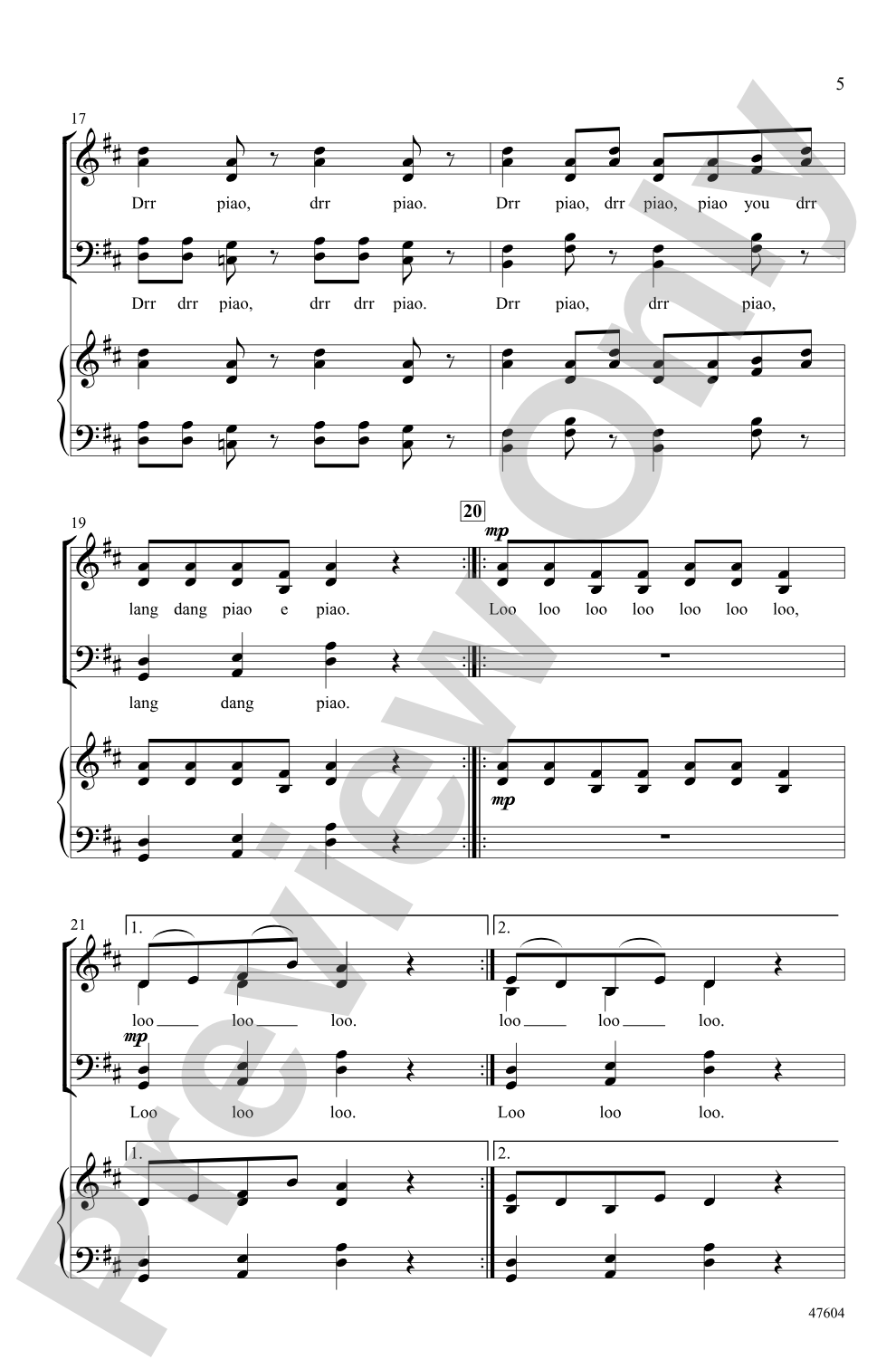
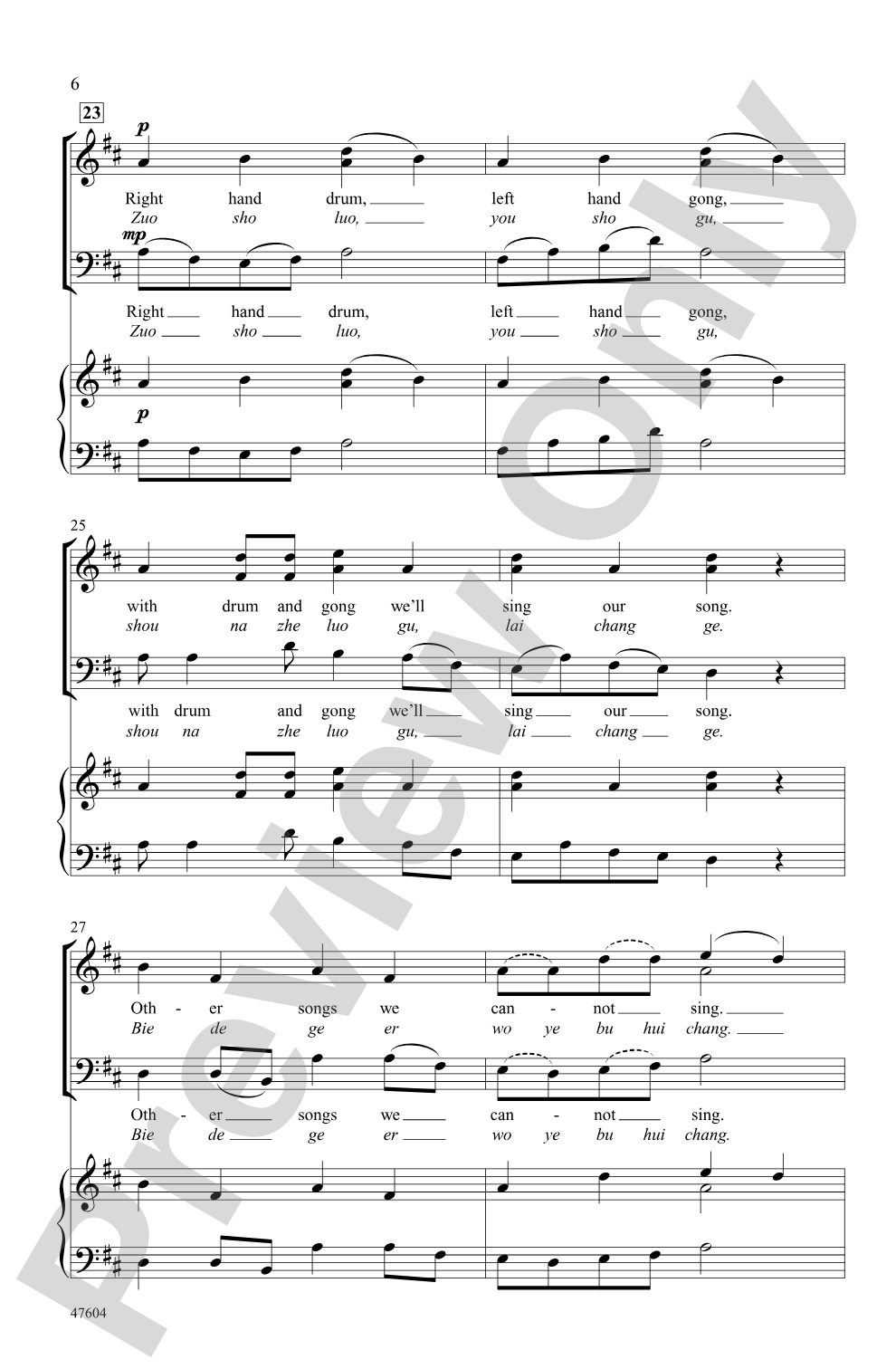
Perform this pair of authentic Asian folk songs separately or as a world music set. Singers will embrace imitating percussion instruments in the Chinese “Flower Drum Song,” and adore echoing the lyrical pentatonic tune of “High Green Mountain” from Taiwan. Evolving ostinatos create the sense of accompaniment within the context of both a cappella settings. Pronunciation guides are included, making it easy to sing in the original language, in English, or a combination of both.


Two Asian Folk Songs: SATB, a cappella Choral Octavo isn't in MakeMusic Cloud just yet...but it could be. Let us know you'd like to see it, and you'll help shape what comes next. In the meantime, start a free trial and dive into thousands of interactive titles your students can play along with today.
Request This Title
Tell us you want it.
Start Your Free Trial
Explore everything that's ready to play right now.
Sample Audio
1
Audio File
--:--
0:00
0:00
Sample Video
Additional Details
Series:
Alfred Choral Designs
Publisher:
Alfred Music
Page Count:
24
SKU:
00-PO-0005956
More about this title
Why we love this
The ostinato-driven arrangements ingeniously transform a cappella singing into something that sounds orchestrated, giving your singers the satisfaction of creating their own accompaniment. The contrasting character between the percussive energy of 'Flower Drum Song' and the flowing lyricism of 'High Green Mountain' makes this pair work beautifully as a complete set or as individual pieces throughout the year.
What to expect
Sing 'Flower Drum Song' and you're inside the celebratory energy of a street festival, your voices creating the rhythmic pulse that might otherwise come from percussion. By contrast, 'High Green Mountain' invites introspection through its pentatonic beauty, allowing singers to experience how a simple melodic shape and sustained harmonic support can convey profound emotion.
Who it's for
SATB choirs ranging from high school through adult levels will find these pieces accessible yet musically substantial. Ensembles seeking authentic world music selections for festival programming, concert diversification, or cultural appreciation units will appreciate having two contrasting Asian traditions in one purchase.
How to get the most out of it
- Build rhythmic precision in 'Flower Drum Song' by having singers vocalize the drum patterns independently before combining them with the melody. Clean articulation on these imitative percussion sounds becomes the glue that holds the texture together.
- In 'High Green Mountain,' shape the pentatonic melody with attention to the natural breath points within the folk tune rather than imposing Western phrasing conventions. Let the tune's inherent contour guide your interpretive choices.
- Use the pronunciation guides to establish accurate vowel sounds and consonant placement before worrying about blend. Authentic sound production in the original language builds cultural respect and deepens singer engagement.
- Rehearse the two pieces separately so each can develop its own sonic identity before considering them as a pair. This prevents the more rhythmic first piece from overshadowing the lyrical qualities of the second.
How to use it
Open a concert with 'Flower Drum Song' to energize the audience and establish a world music theme, then follow with 'High Green Mountain' to shift the mood and deepen the listening experience. These pieces also work well within a cultural studies concert, a spring pops program incorporating folk traditions, or as standalone selections for festival competitions.
Skills your students will build
- Singing authentic Asian language texts with accurate pronunciation and cultural sensitivity
- Creating rhythmic ostinatos as harmonic foundation in a cappella settings
- Imitating and sustaining percussive vocal sounds with precision and unanimity
- Singing in pentatonic scales and modal contexts outside Western major and minor tonality
- Balancing lyrical melody with rhythmic accompaniment within SATB texture
- Shaping folk melody using cultural phrasing conventions rather than standard classical approaches