
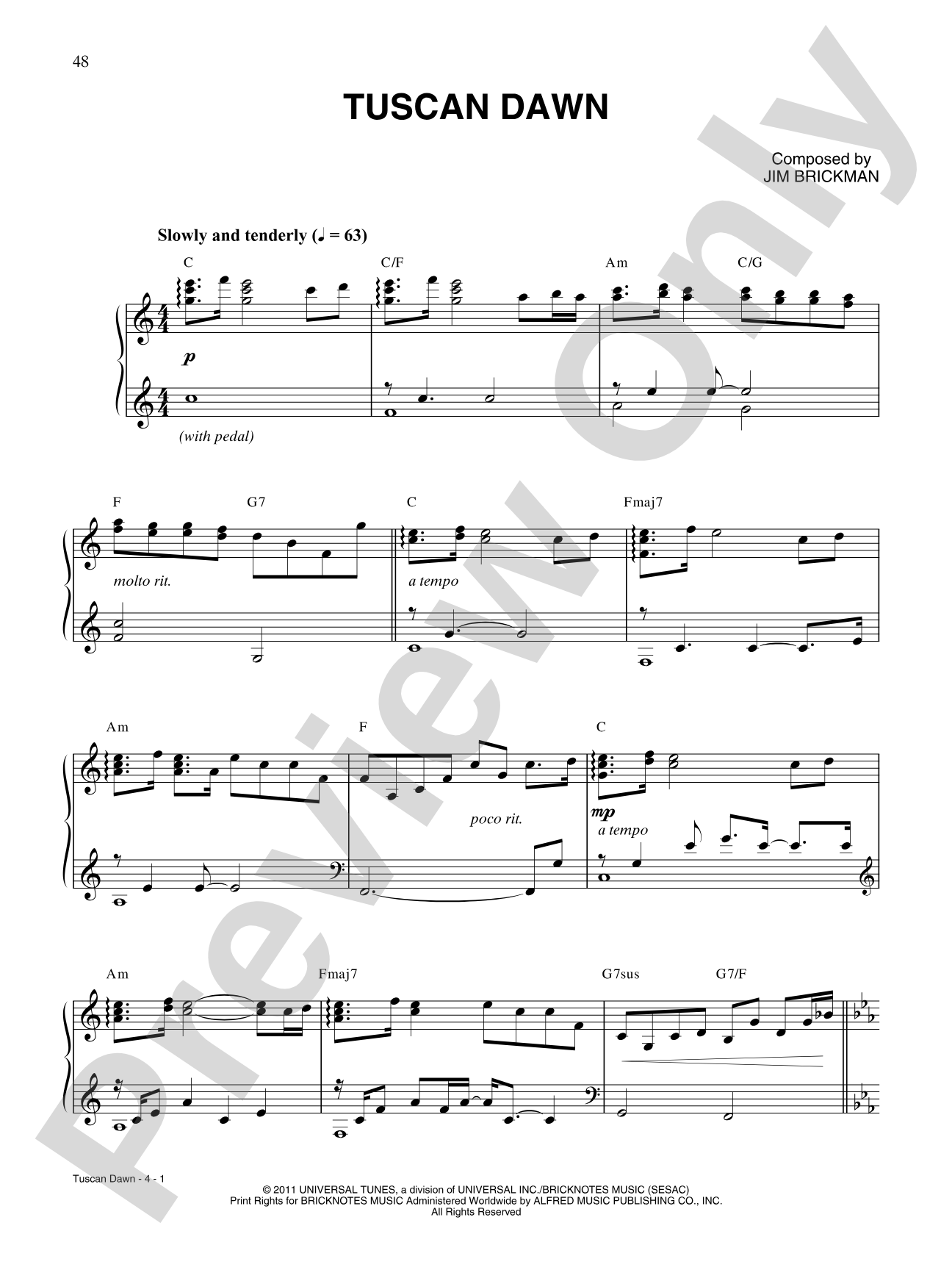

Tuscan Dawn: Piano
Jim Brickman
Item: 00-XS-0000519
$4.99
Pickup currently not available
Related Items
Romanza: Piano |
$4.99
|
View | |
Amalfi Rain: Piano |
$4.99
|
View | |
Starry Night: Piano |
$4.99
|
View | |
Venezia: Piano |
$4.99
|
View | |
Three Wishes: Piano |
$4.99
|
View | |
Ave Maria: Piano |
$5.99
|
View | |
Misterioso: Piano |
$5.99
|
View | |
Italian Waltz: Piano |
$4.99
|
View | |
Miles Apart: Piano |
$4.99
|
View | |
Lost in the Shadows: Piano |
$4.99
|
View | |
Café Amore: Piano |
$4.99
|
View | |
Jim Brickman: Romanza: Piano/Vocal/Guitar Book |
$19.99
|
View |
Description
Jim Brickman transports us to romantic Italy with lush interpretations of classic pieces and original, inspiring songs. The arrangements are very playable and truly Brickman-esque!


Tuscan Dawn: Piano isn't in MakeMusic Cloud just yet...but it could be. Let us know you'd like to see it, and you'll help shape what comes next. In the meantime, start a free trial and dive into thousands of interactive titles your students can play along with today.
Request This Title
Tell us you want it.
Start Your Free Trial
Explore everything that's ready to play right now.
Sample Audio
No sample audio found.
Sample Video
No sample videos found.
Additional Details
Publisher:
Alfred Music
Page Count:
84
SKU:
00-XS-0000519
More about this title
About the Composer: Jim Brickman
Jim Brickman stands as the best-selling solo pianist of his generation, having built a career on crafting accessible yet sophisticated instrumental music that resonates with broad audiences. His piano compositions and arrangements are marked by a signature lyricism and emotional directness that have helped establish him as a major force in contemporary instrumental music.
Brickman's compositional philosophy centers on music as a vehicle for life's significant moments. He writes deliberately to evoke specific emotional responses—comfort, hope, celebration, connection—and believes that melody and clarity serve these purposes far more effectively than technical complexity. His live performances and prolific catalog have demonstrated that instrumental music can command mainstream attention and commercial success when crafted with genuine melodic conviction.
Why we love this
Brickman's arrangements strike a rare balance between genuine musicality and real playability. Rather than simplifying beloved classical pieces into harmonic skeletons, he reimagines them through his own harmonic language while keeping the piano writing accessible enough that skilled intermediate pianists can realize his full vision without oversimplification. His original songs feel equally at home in this collection, giving pianists repertoire that audiences actually want to hear.
What to expect
Brickman creates soundscapes suffused with warmth and romantic longing. The collection evokes Italian landscapes and Italian heritage through harmonic language that feels simultaneously modern and timeless, painting intimate emotional portraits rather than grand gestures. Textures remain transparent enough that individual voices and chord progressions remain audible and intentional.
Who it's for
Pianists with intermediate to advanced technique who seek contemporary repertoire with genuine emotional substance. This collection works equally well for recital performers building a sophisticated mixed program and for studio pianists looking to expand beyond classical-only material into music with broader appeal.
How to get the most out of it
- Shape the accompaniment figures rhythmically and with dynamic intent; Brickman's seemingly understated left-hand patterns drive the harmonic and emotional arc of each piece, so resist the temptation to play them mechanically
- Lean into the slower tempos to allow space for the melodic lines to breathe; rushing these pieces undermines their reflective character and your ability to shape longer musical phrases
- Honor the harmonic colors in his arrangements by listening to how chords resolve and shift, which often matters as much as the melody itself for capturing his romantic sensibility
How to use it
These pieces work beautifully as transition or closing selections in mixed recitals, where their accessibility and emotional directness provide respite between more demanding classical or contemporary works. They also serve programs exploring the intersection of classical tradition and modern popular music, or concert themes centered on travel, romance, or reflection.
Skills your students will build
- Harmonic voice-leading through contemporary jazz and pop idioms
- Managing rubato and tempo flexibility in non-metered contexts
- Layering simple melodic lines with independent accompaniment figures
- Interpreting chord symbols and implied harmonic extensions
- Shaping longer lyrical phrases with strategic dynamic contour rather than constant motion