
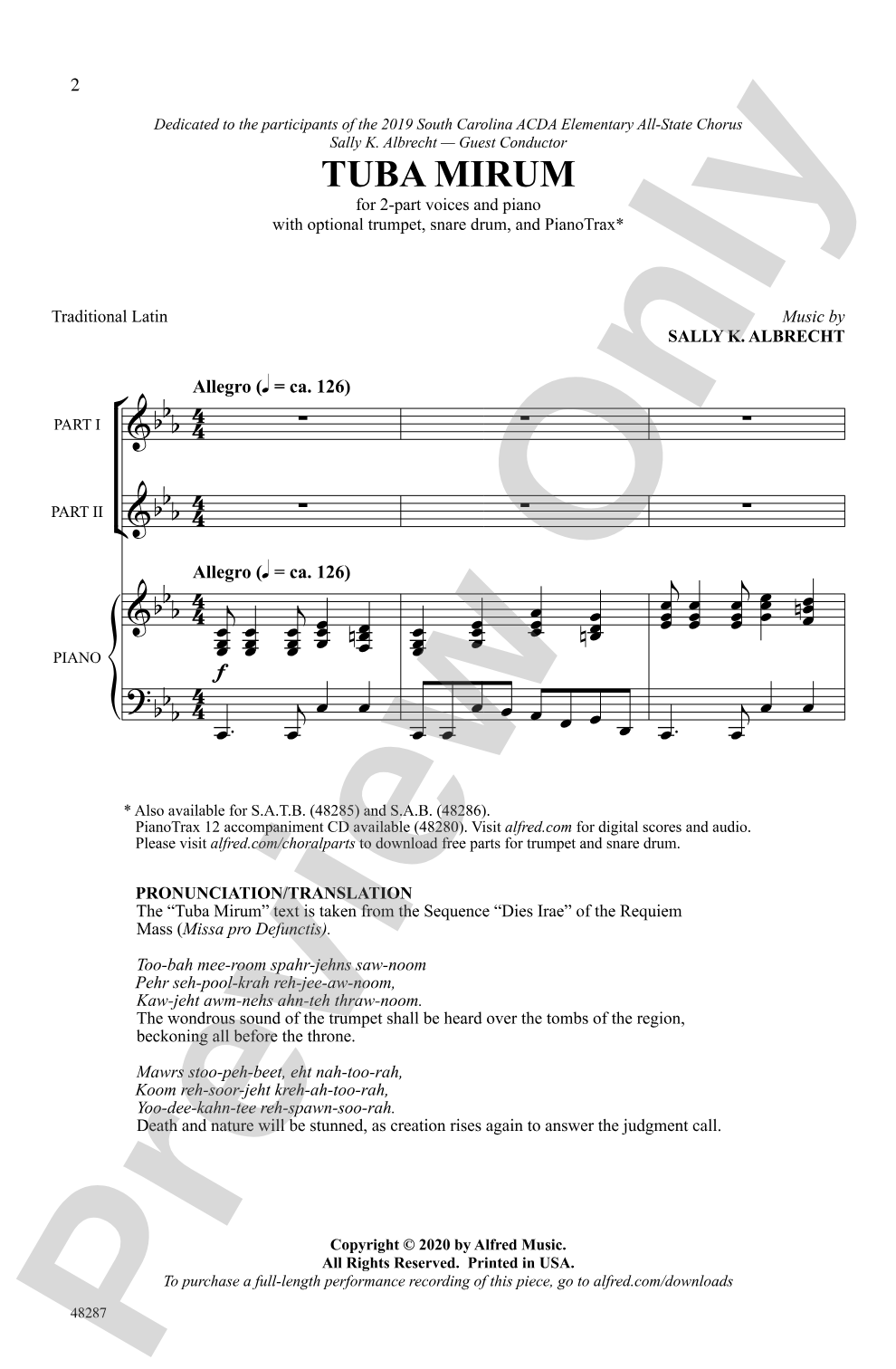

Tuba Mirum: 2-Part Choral Octavo
By Sally K. Albrecht
Item: 00-PO-0006292
$2.05
Minimum order quantity: 20 copies
Pickup currently not available
Description
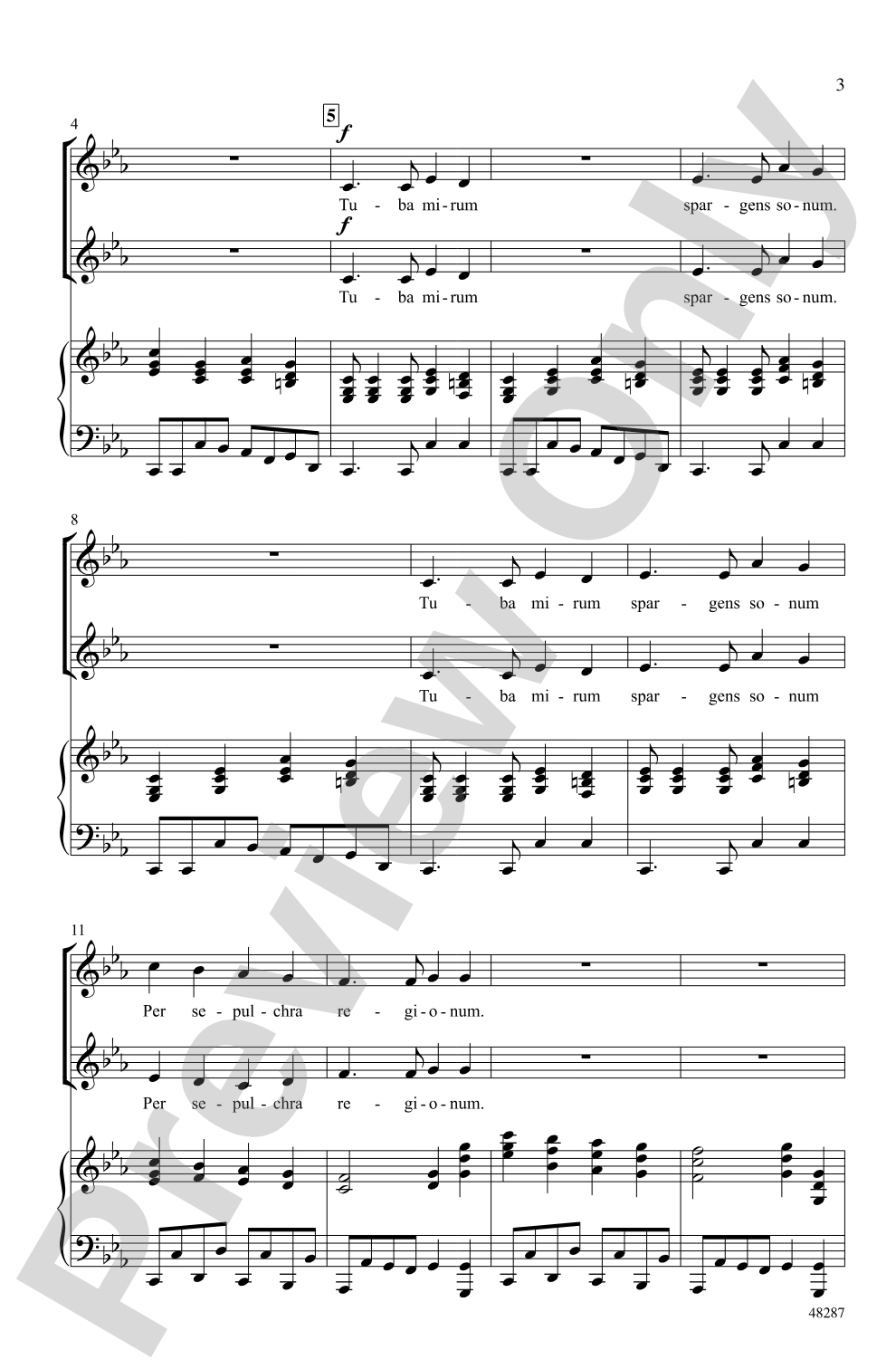
One of the most dramatic Latin texts from the Requiem Mass, powerfully rendered! The minor melody gradually unfolds before being traded antiphonally between voices. Optional trumpet and snare drum parts heighten the mood. Riveting in any voicing.


Tuba Mirum: 2-Part Choral Octavo isn't in MakeMusic Cloud just yet...but it could be. Let us know you'd like to see it, and you'll help shape what comes next. In the meantime, start a free trial and dive into thousands of interactive titles your students can play along with today.
Request This Title
Tell us you want it.
Start Your Free Trial
Explore everything that's ready to play right now.
Sample Audio
1
Audio File
--:--
0:00
0:00
Sample Video
Additional Details
Series:
Alfred Choral Designs
Publisher:
Alfred Music
Page Count:
8
SKU:
00-PO-0006292
More about this title
About the Composer: Sally K. Albrecht

Sally K. Albrecht has shaped American choral music for over four decades, building a catalog of more than 600 published works while maintaining an active schedule as a conductor and clinician. Her contributions to the field have been consistently recognized through annual ASCAP Special Music Awards since 1987, and she has led honor choirs at some of the nation's most prestigious venues, including Lincoln Center, Carnegie Hall, and The Kennedy Center. Her expertise in choral movement and accessible writing has made her a trusted voice in music education.
Albrecht spent more than thirty years directing school choral and vocal publications for major educational publishers, most notably Alfred Music, where she shaped the development of repertoire for young singers. She holds degrees from Rollins College (B.A. in Music and Theater) and the University of Miami (M.A. in Drama and M.M. in Accompanying), and she has taught at Oakland University, Jersey City State College, and Meredith College. Her contributions to music education leadership extend beyond the page; she has served as Chair of the Board of Trustees for the Omicron Delta Kappa National Leadership Honor Society and was named a Distinguished Alumna by both the University of Miami Frost School of Music and Rollins College in 2021.
Why we love this
Albrecht captures the raw emotional power of the Tuba Mirum text without overcomplicating the voicing, making this accessible for developing ensembles while still delivering genuine dramatic impact. The antiphonal writing gives both parts meaningful musical moments rather than relegating one voice to accompaniment. The optional trumpet and snare drum parts provide flexible options for concert programs with varying instrumental resources.
What to expect
The opening unfolds with contemplative intensity, establishing a minor tonality that feels inevitable rather than imposed. As the minor melody is traded between voices, the piece gains forward momentum while maintaining its dignified, solemn character, with the optional percussion reinforcing a sense of ceremony and finality.
Who it's for
2-part choirs looking to program substantial sacred literature that challenges developing singers without requiring advanced harmonic reading. This works equally well for youth choirs, community ensembles, and school programs seeking repertoire with concert and festival appeal.
How to get the most out of it
- Let the unfolding minor melody establish the text's gravity before the antiphonal exchange begins; resist rushing the opening to build anticipation for the back-and-forth dialogue.
- Balance the two parts so the melodic exchange remains clear and conversational rather than competitive; this may require different dynamic levels depending on your voice distribution.
- If using the optional trumpet and snare drum parts, rehearse them separately first so they enhance the Latin text's weight without overshadowing the choral line.
How to use it
Place this as a centerpiece of a sacred music program or as a concert opener that immediately commands audience attention. It pairs naturally with other Latin texts or requiem settings, and its dramatic arc makes it memorable in festival competitions where emotional commitment matters.
Skills your students will build
- Reading and sustaining minor tonalities
- Antiphonal singing with clear phrase boundaries
- Coordinating vocal parts with optional instrumental parts
- Interpreting Latin sacred text with appropriate phrasing and diction