

Tshepa Thapelo: 3-Part, a cappella Choral Octavo
Sotho Folk Song / arr. Ruth Morris Gray
Item: 00-PO-0003248
$1.90
Minimum order quantity: 20 copies
Pickup currently not available
Related Items
Tshepa Thapelo: SATB, a cappella Choral Octavo |
$1.90
|
View | |
Tshepa Thapelo: SSA, a cappella Choral Octavo |
$1.90
|
View | |
Tshepa Thapelo: SATB, a cappella Choral Octavo |
$1.90
|
View | |
Tshepa Thapelo: 3-Part, a cappella Choral Octavo |
$1.90
|
View | |
Tshepa Thapelo: SSA, a cappella Choral Octavo |
$1.90
|
View |
Description
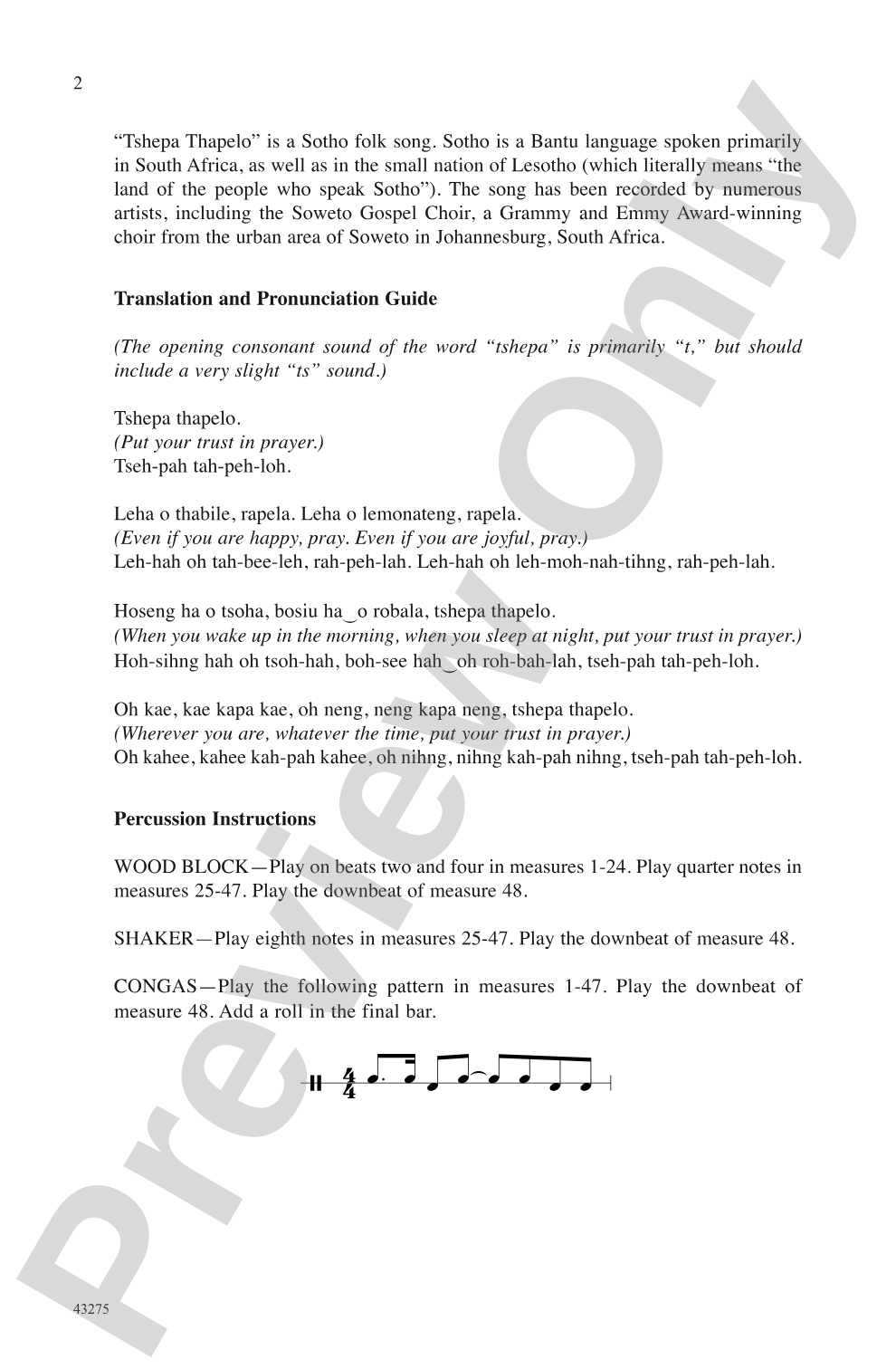
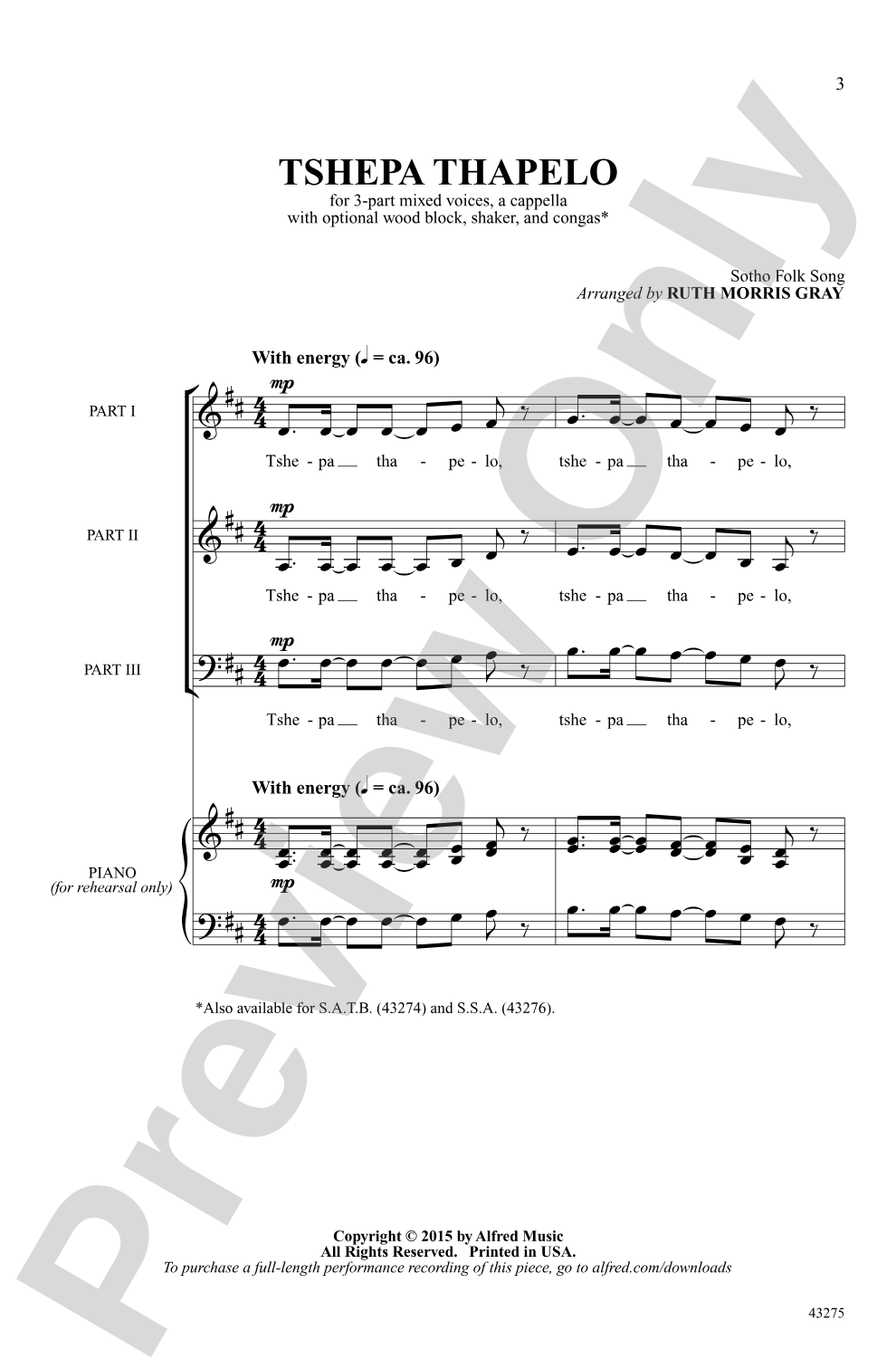
An irresistible a cappella arrangement of the authentic Sotho folk song! Solid choral harmonies and infectious rhythms (supported with optional percussion patterns) create a backdrop for special features by the basses and sopranos. A rarely-heard slow African groove.


Tshepa Thapelo: 3-Part, a cappella Choral Octavo isn't in MakeMusic Cloud just yet...but it could be. Let us know you'd like to see it, and you'll help shape what comes next. In the meantime, start a free trial and dive into thousands of interactive titles your students can play along with today.
Request This Title
Tell us you want it.
Start Your Free Trial
Explore everything that's ready to play right now.
Sample Audio
1
Audio File
--:--
0:00
0:00
Sample Video
No sample videos found.
Additional Details
Series:
Alfred Choral Designs
Publisher:
Alfred Music
Page Count:
12
SKU:
00-PO-0003248
More about this title
About the Arranger: Ruth Morris Gray

Ruth Morris Gray directs choirs at Rosemead High School in California, where she has shaped the program since 2004. She holds a Bachelor of Music in Piano Performance and Composition from Biola University and a Master of Arts in Music Composition from UC Santa Barbara, along with her California Single Subject Music Credential from Cal State Northridge.
With more than 100 published choral works to her credit, Gray brings both compositional depth and classroom experience to her arrangements. Beyond music, she is an accomplished pianist and performer who finds creative energy in travel, reading, and cycling.
Why we love this
Gray's arrangement taps into something genuine in the source material without flattening its character. The way she deploys solo moments for basses and sopranos against the group harmonies gives every voice part something interesting to do, and the optional percussion patterns invite your ensemble to explore rhythmic textures that feel rooted in the music's origins rather than grafted on.
What to expect
There is an unhurried confidence in this groove. The Sotho folk melody lands with clarity against warm, interlocking harmonies, and the rhythmic momentum feels inevitable rather than driven. When the sopranos and basses step into their featured moments, the texture opens in a way that feels earned, not sudden.
Who it's for
Directors seeking authentic world repertoire that sits comfortably in three-part voicing will find a performance-ready piece here. This works equally well for concert choirs exploring multicultural literature and for festival or competition programming where arrangers like Gray are valued for respectful, musically intelligent work.
How to get the most out of it
- Establish the groove first in rehearsal by having the ensemble tap or sing the rhythmic patterns before layering in the harmonic parts. This builds confidence in the infectious pulse that drives the piece.
- Balance the solo passages carefully. The featured sections for basses and sopranos should cut through clearly, but the supporting harmonies underneath keep the texture cohesive rather than receding into accompaniment.
- If you use the optional percussion, rehearse it independently at first, then bring it in only for the final run-throughs or performance. Let the a cappella foundation stand alone first so singers own the rhythms themselves.
- Shape the slower sections with attention to the rare groove quality mentioned in the arrangement. Resist the urge to rush; let the rhythm breathe and settle into its own pocket.
How to use it
Program this as a centerpiece in a concert focused on African or world music, or pair it with other folk arrangements from your repertoire to create a thematic set. The accessible three-part voicing and contest-friendly length make it a natural fit for festival programming, and its secular text and uplifting character suit spring concerts, cultural celebrations, or community performances.
Skills your students will build
- Singing syncopated rhythms and maintaining groove in a cappella contexts
- Balance and blend in three-part mixed voicing with layered rhythmic patterns
- Cultural awareness through arranging choices that honor folk traditions
- Solo confidence within an ensemble framework
- Rhythmic independence when optional percussion is introduced