

Too Darn Hot: SATB Choral Octavo
from Kiss Me, Kate
Words and music by Cole Porter / arr. Mark Hayes
Item: 00-PO-0006445
$2.25
Minimum order quantity: 20 copies
One moment…
Related Items
Too Darn Hot: SoundTrax Digital Audio Download |
$29.99
|
View | |
Too Darn Hot: SAB Choral Octavo |
$2.25
|
View | |
Too Darn Hot: SSA Choral Octavo |
$2.25
|
View | |
Too Darn Hot: TTBB Choral Octavo |
$2.25
|
View | |
Too Darn Hot: Choral SoundPax |
$50.00
|
View | |
Too Darn Hot: SATB Choral Octavo |
$2.25
|
View | |
Too Darn Hot: SAB Choral Octavo |
$2.25
|
View | |
Too Darn Hot: SSA Choral Octavo |
$2.25
|
View | |
Too Darn Hot: TTBB Choral Octavo |
$2.25
|
View | |
Too Darn Hot: Choral Octavo SoundTrax CD |
$29.99
|
View | |
Too Darn Hot: Choral SoundPax |
$50.00
|
View |
Description
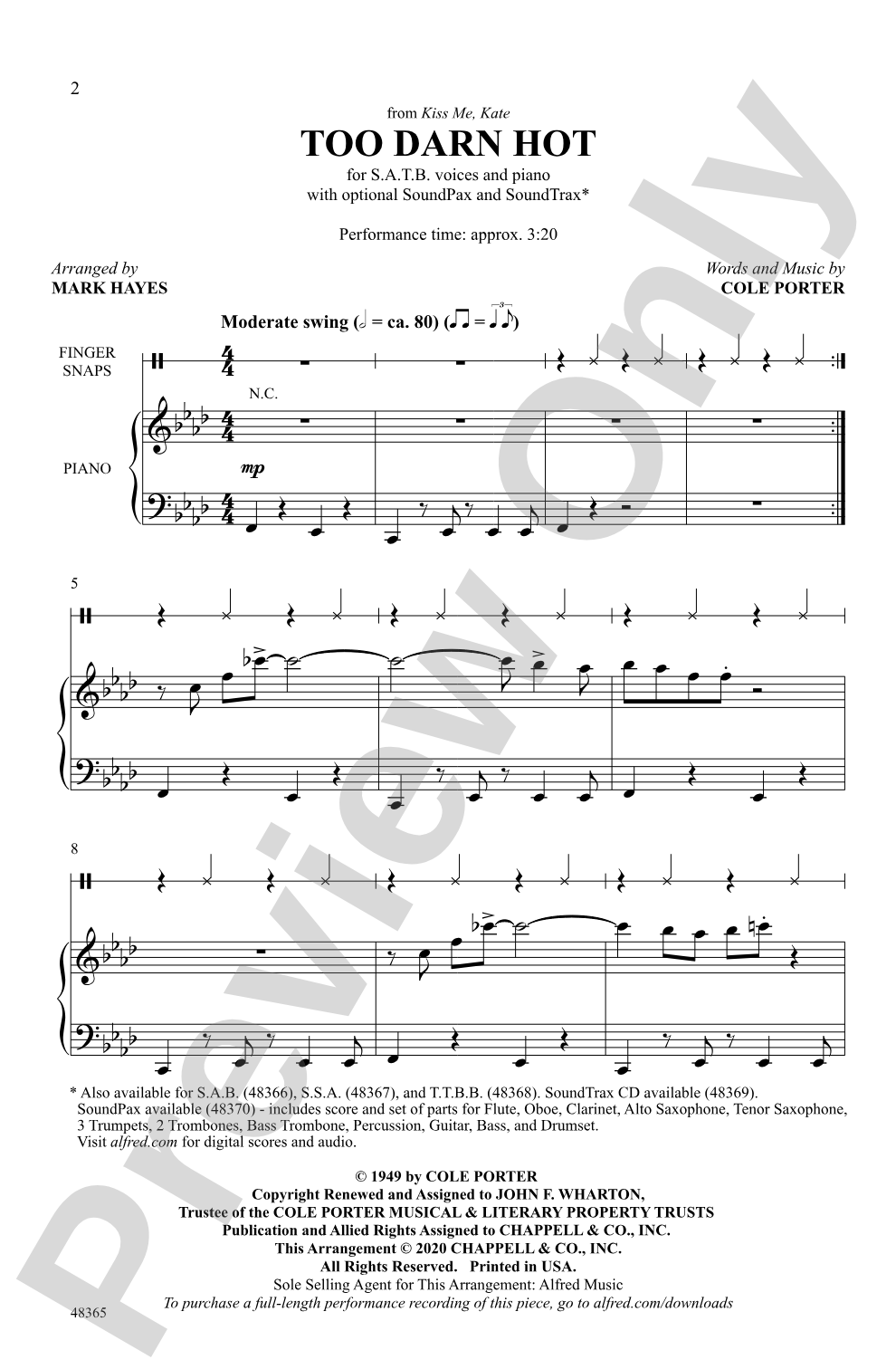
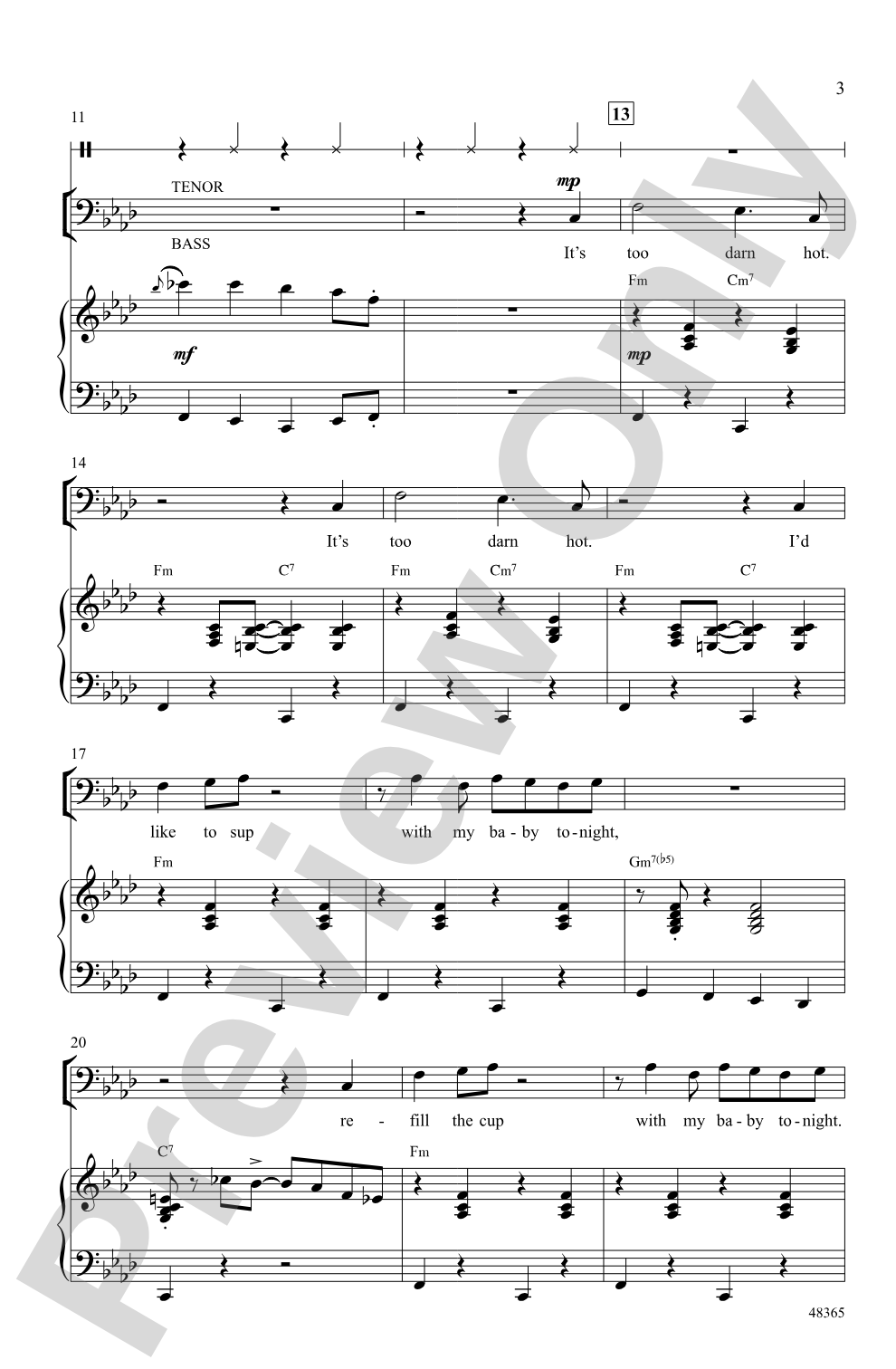
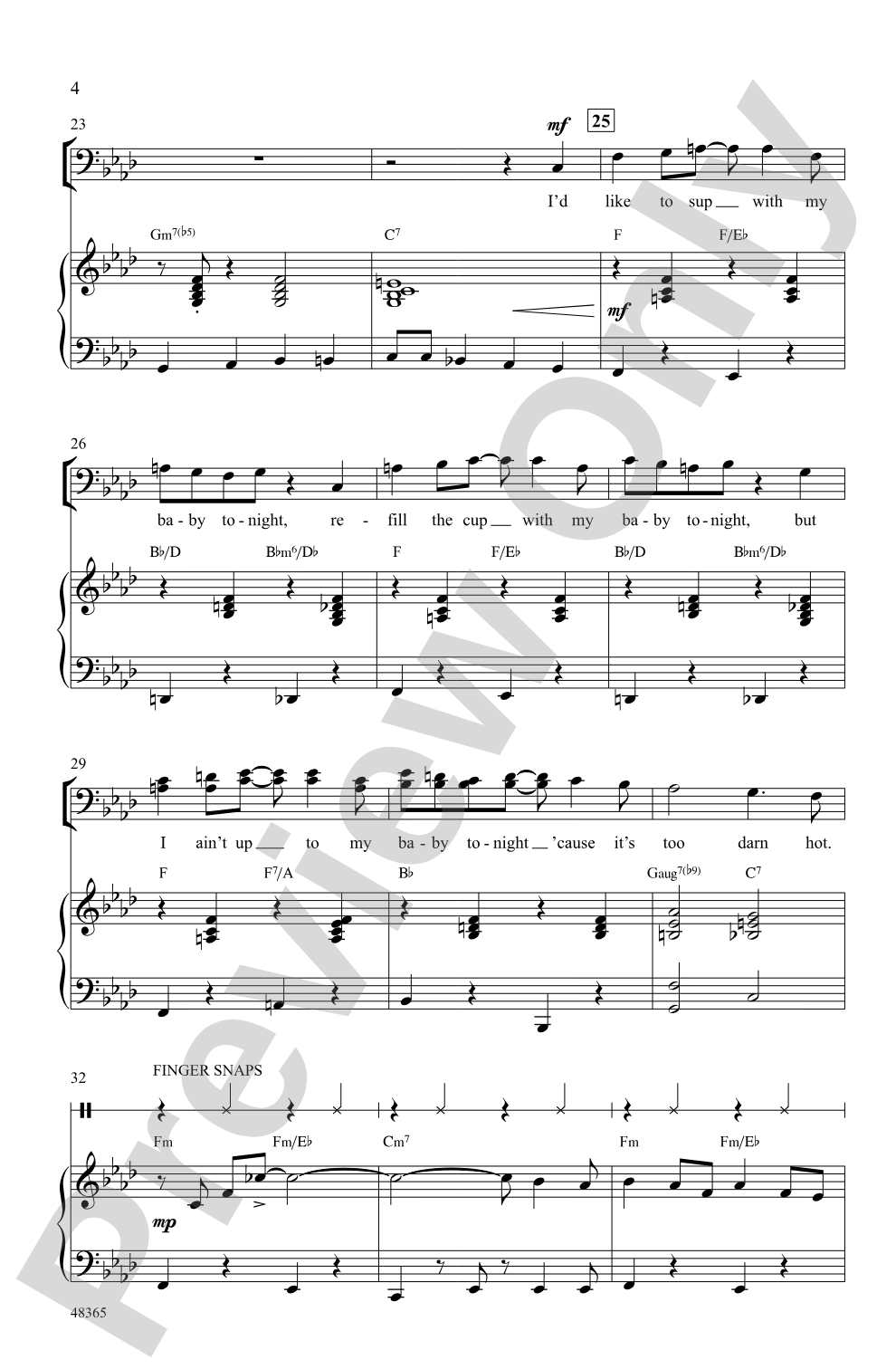
Originally written for Kiss Me Kate, this Cole Porter tune has become a treasured part of the Great American Songbook. A sultry bass line and finger snaps command attention right from the first sizzling measure. Clean jazz writing makes the harmonies jump right off the page. Add the optional SoundPax or SoundTrax to bring the sound of classic Broadway to your stage!


Too Darn Hot: SATB Choral Octavo isn't in MakeMusic Cloud just yet...but it could be. Let us know you'd like to see it, and you'll help shape what comes next. In the meantime, start a free trial and dive into thousands of interactive titles your students can play along with today.
Request This Title
Tell us you want it.
Start Your Free Trial
Explore everything that's ready to play right now.
Sample Audio
1
Audio File
--:--
0:00
0:00
Sample Video
1 / 2
Additional Details
Series:
Alfred Pop Choral Series
Publisher:
Alfred Music
Page Count:
16
SKU:
00-PO-0006445
More about this title
About the Composer: Cole Porter
Cole Porter (1891-1964) was an American composer and lyricist whose sophisticated harmonies and witty lyrics defined the golden age of Broadway musicals. His work combines jazz influences, unexpected chord progressions, and clever wordplay that challenge singers while remaining accessible to audiences. Porter's songs have endured because they balance technical complexity with genuine melodic appeal, making them ideal for choral arrangements that respect both the music and the performers.
Why we love this
Mark Hayes's arrangement captures the swagger and rhythmic drive of Porter's original while maintaining clarity in the four-part writing. The sultry bass line and finger snaps create immediate energy and character without requiring advanced vocal technique, making this an exciting choice for choirs that want to program something genuinely jazzy rather than pop-adjacent. This is the kind of piece that keeps audiences engaged from the downbeat and gives your singers a chance to inhabit a style and attitude.
What to expect
Sophisticated and playful, with a sleek nightclub atmosphere. The piece has real rhythmic swagger; the finger snaps and walking bass create momentum that pulls listeners into the groove, while Porter's jazz harmonies add harmonic seasoning that keeps things interesting for your musicians. There's confidence and style throughout, from the opening sizzle to the final snap.
Who it's for
Choirs with singers who enjoy jazz and Broadway styles and are comfortable with syncopated rhythms and contemporary harmonies. This works well for intermediate to advanced ensembles looking to program something recognizable yet musically substantial. It's equally at home in a concert setting, a musical theatre showcase, or a jazz-focused choral program.
How to get the most out of it
- Establish the finger snap groove first as a rhythmic anchor; have the entire ensemble lock into the pulse before adding vocal lines so the jazz feel lands naturally rather than feeling forced.
- Shape the bass line with slight dynamic emphasis on the offbeats to maximize the sultry character and keep the harmonic movement from sounding square.
- Balance the upper three voices so the alto and tenor lines emerge clearly; these parts carry important harmonic color that can disappear if sopranos dominate.
- Use the recorded accompaniment early in rehearsal to anchor the jazz idiom, then gradually reduce reliance on it so singers own the stylistic feel.
How to use it
Program this alongside other jazz standards or Broadway classics to create a choral set that celebrates American songwriting traditions. It's a natural pairing with lighter musical theatre repertoire or as a high-energy closer that leaves audiences smiling. Consider placing it later in your concert when audiences are warmed up and ready for rhythm-driven material.
Skills your students will build
- Jazz phrasing and swing feel
- Syncopated rhythm reading
- Jazz harmony awareness (seventh chords, chromaticism)
- Stylistic interpretation of popular music idioms
- Ensemble rhythm section awareness (supporting the bass line and percussion groove)