
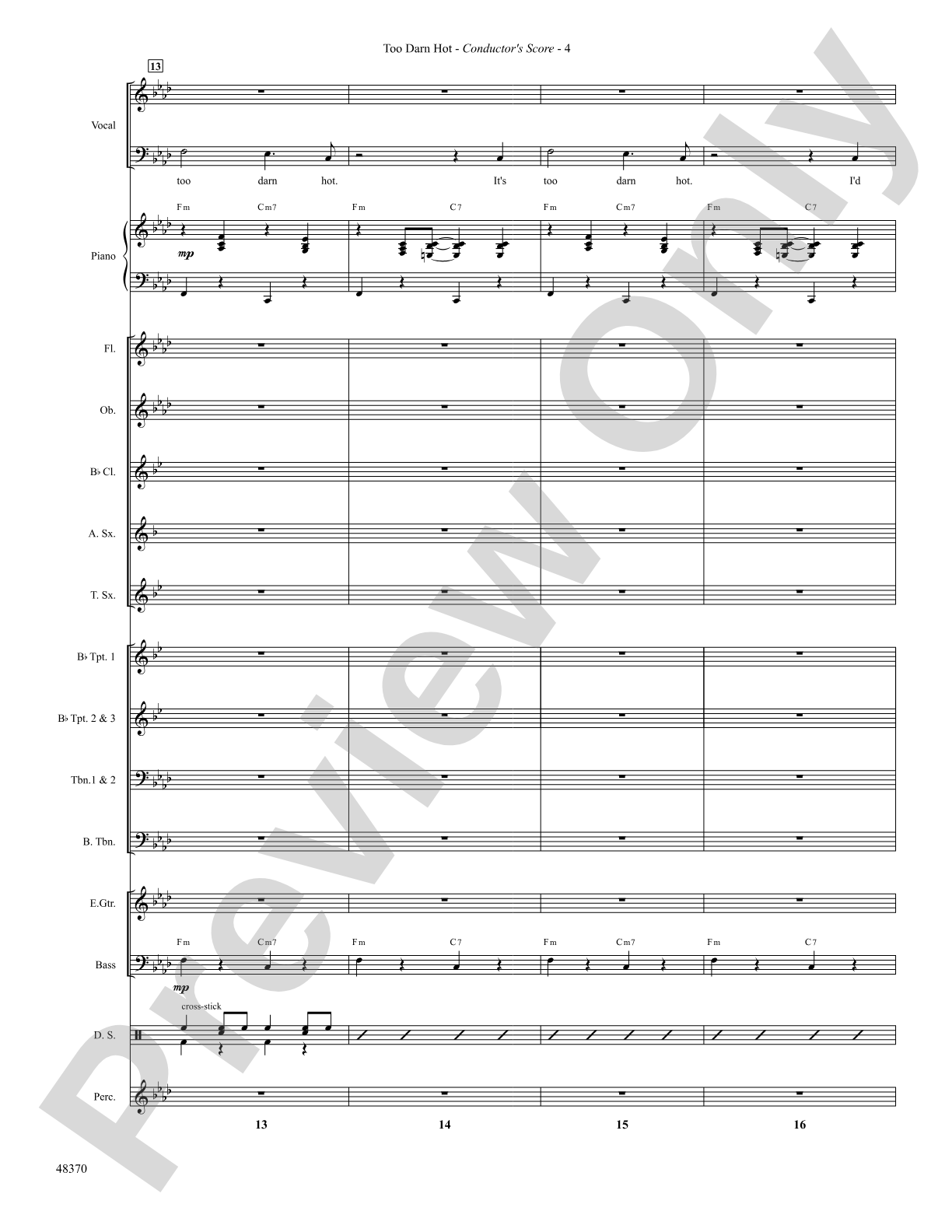
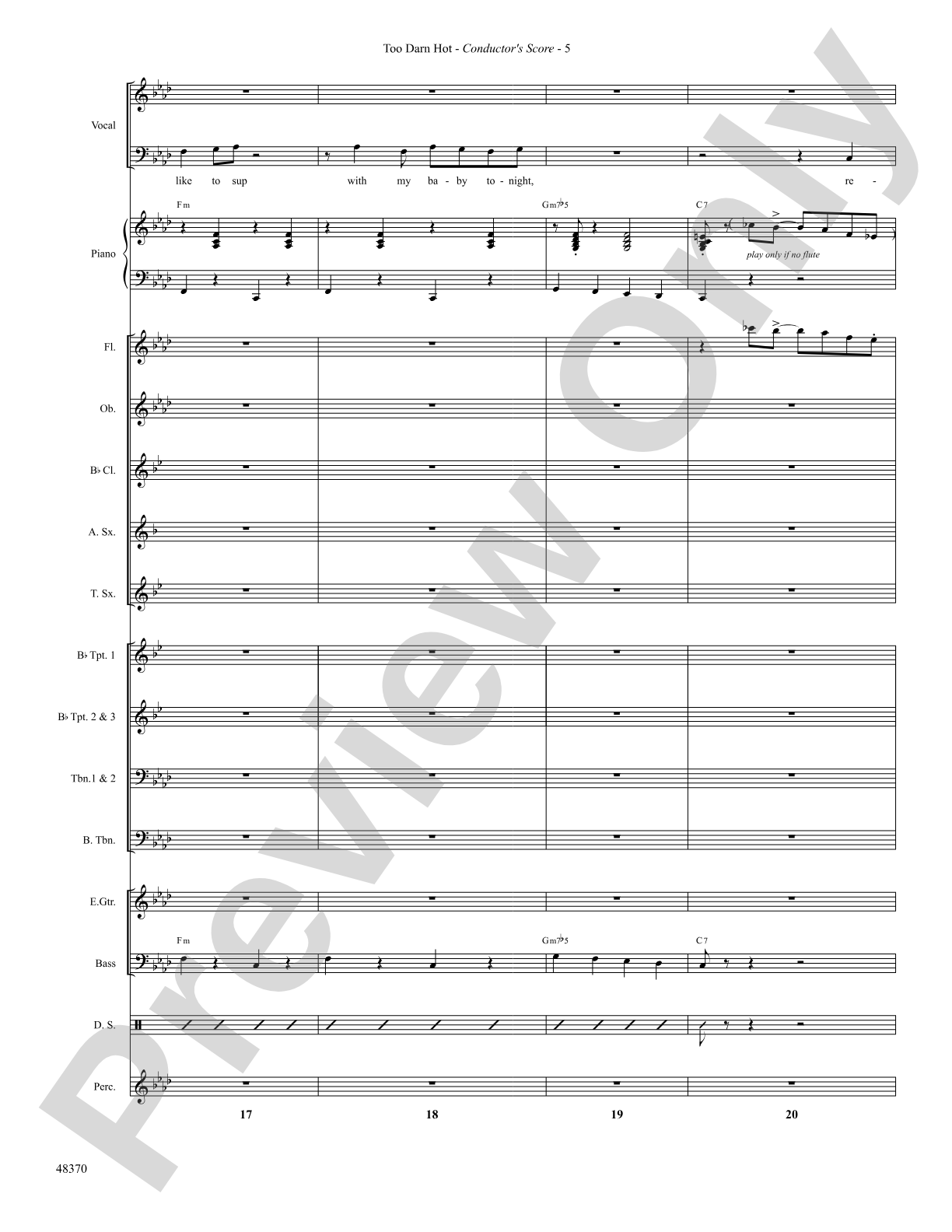
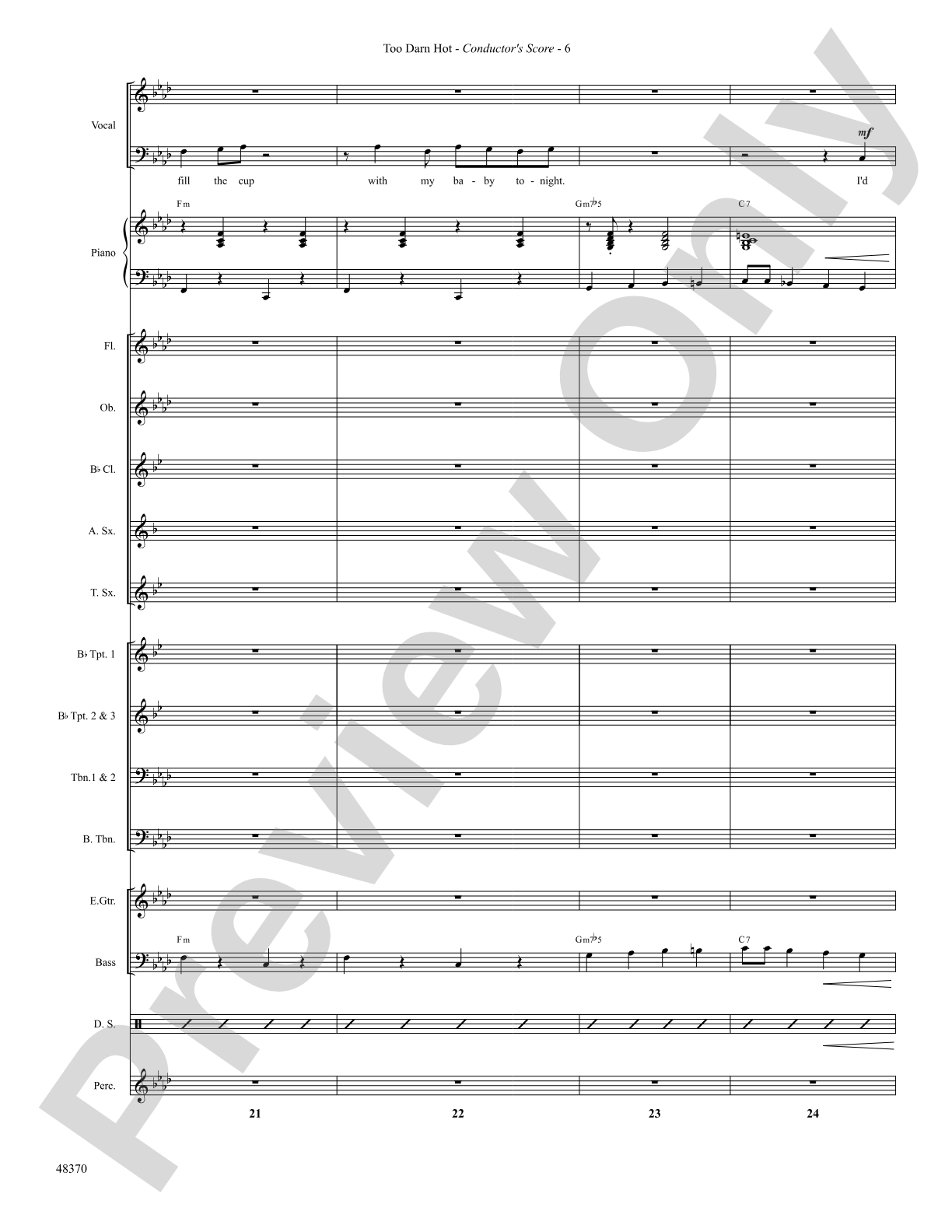
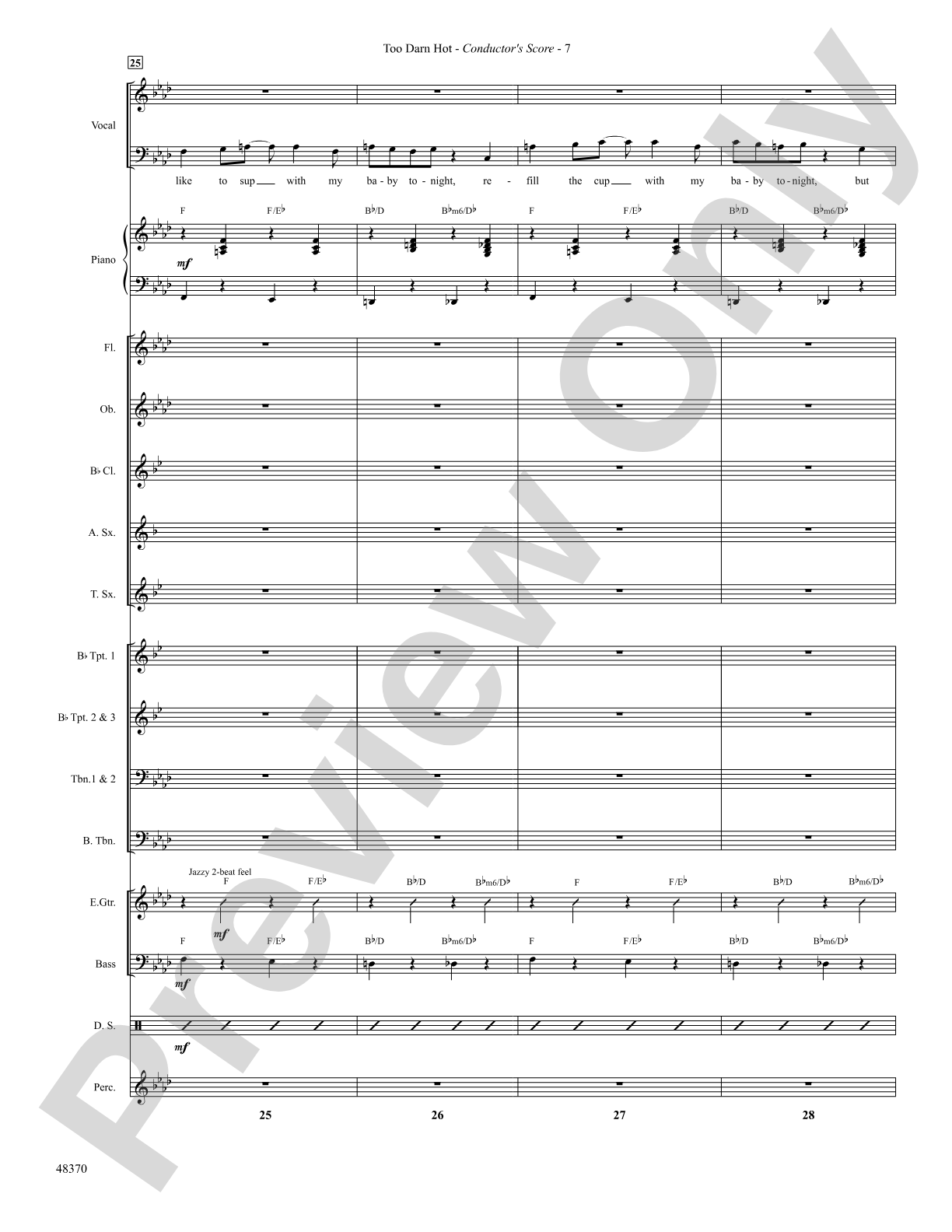
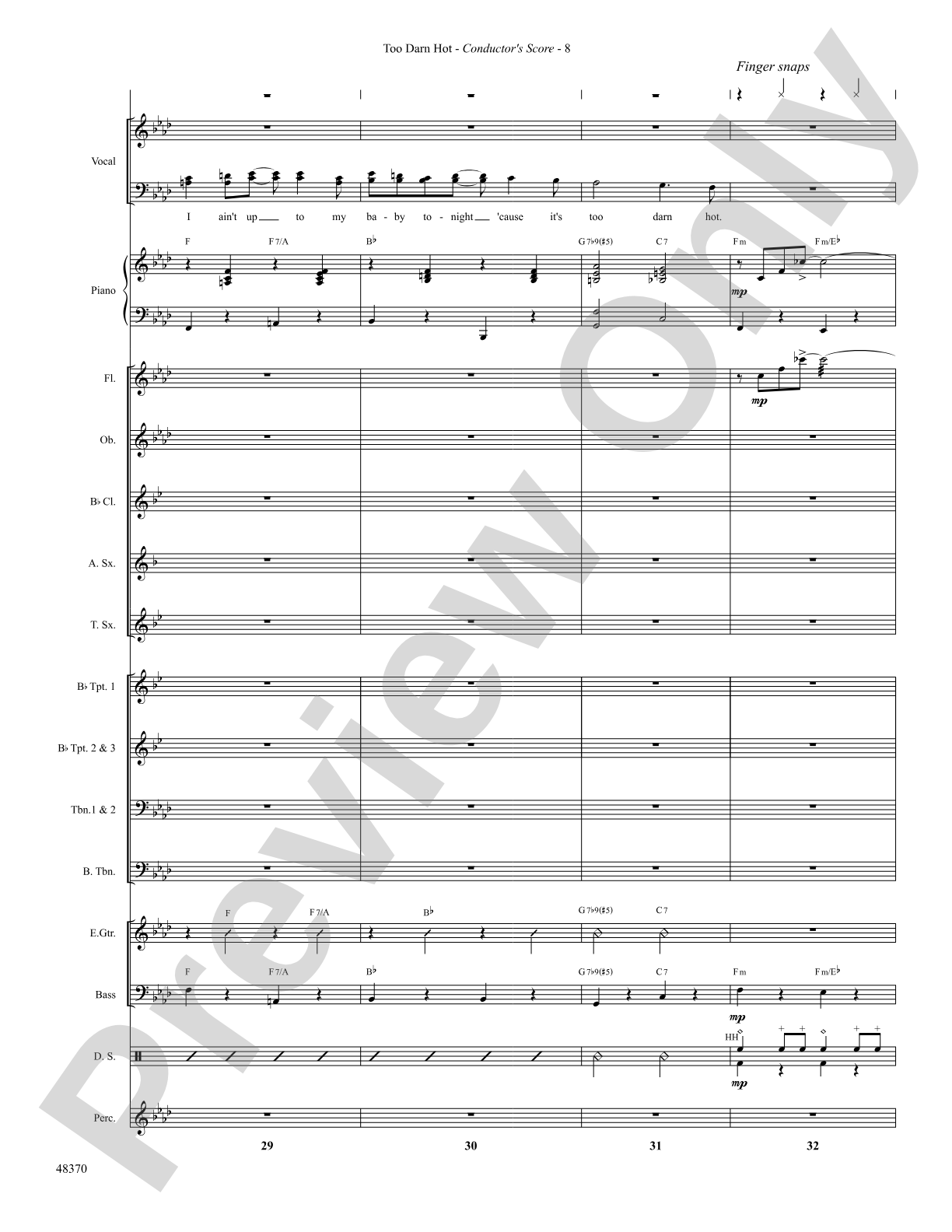
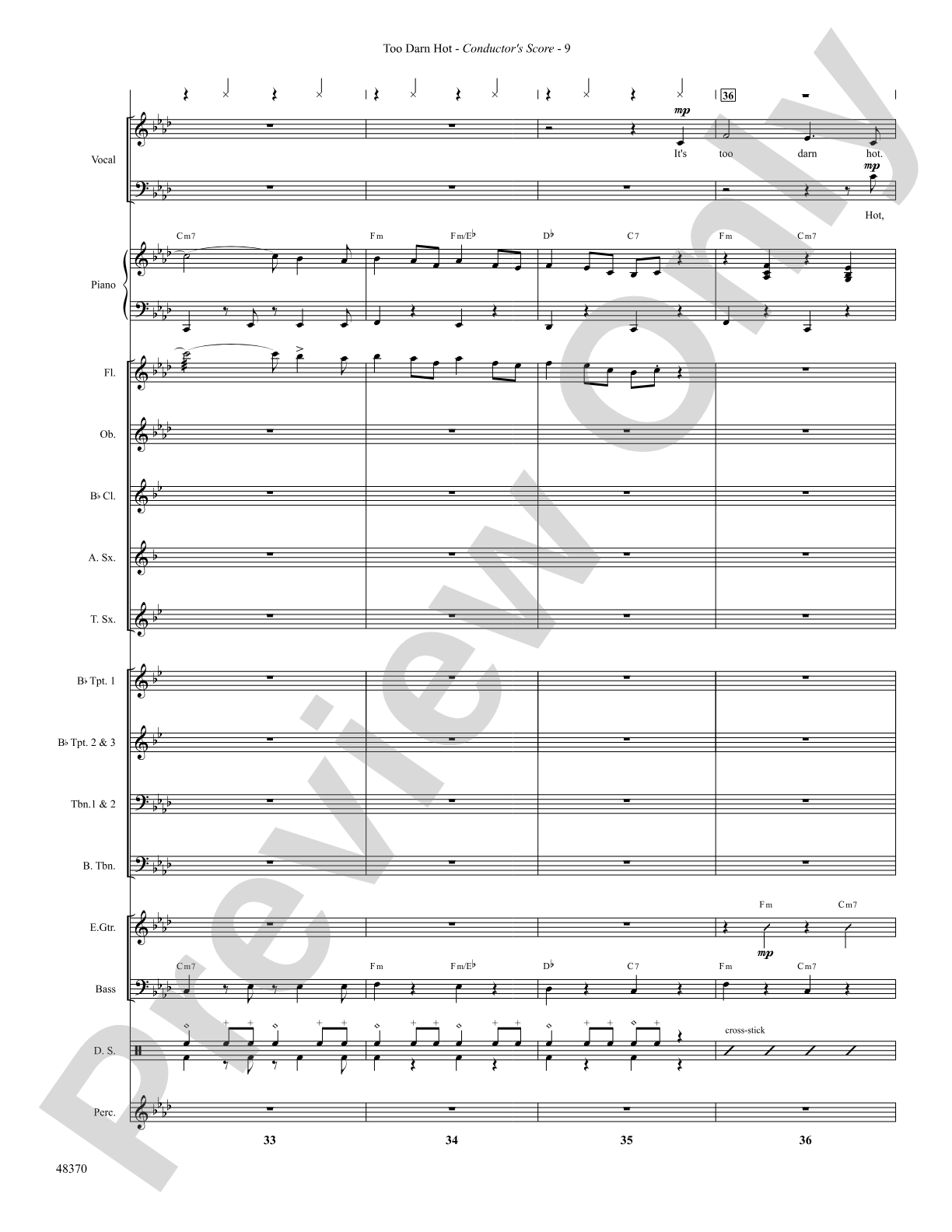
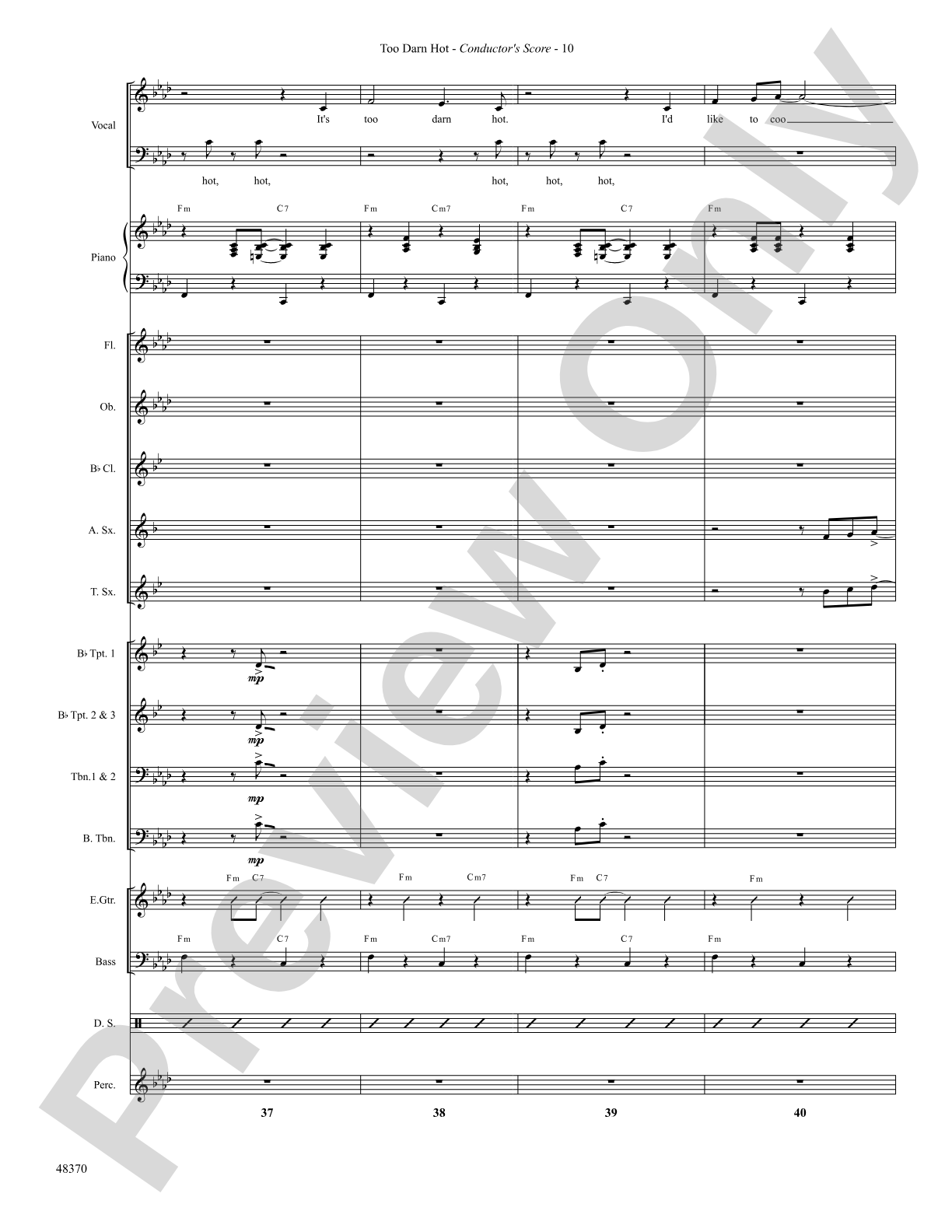
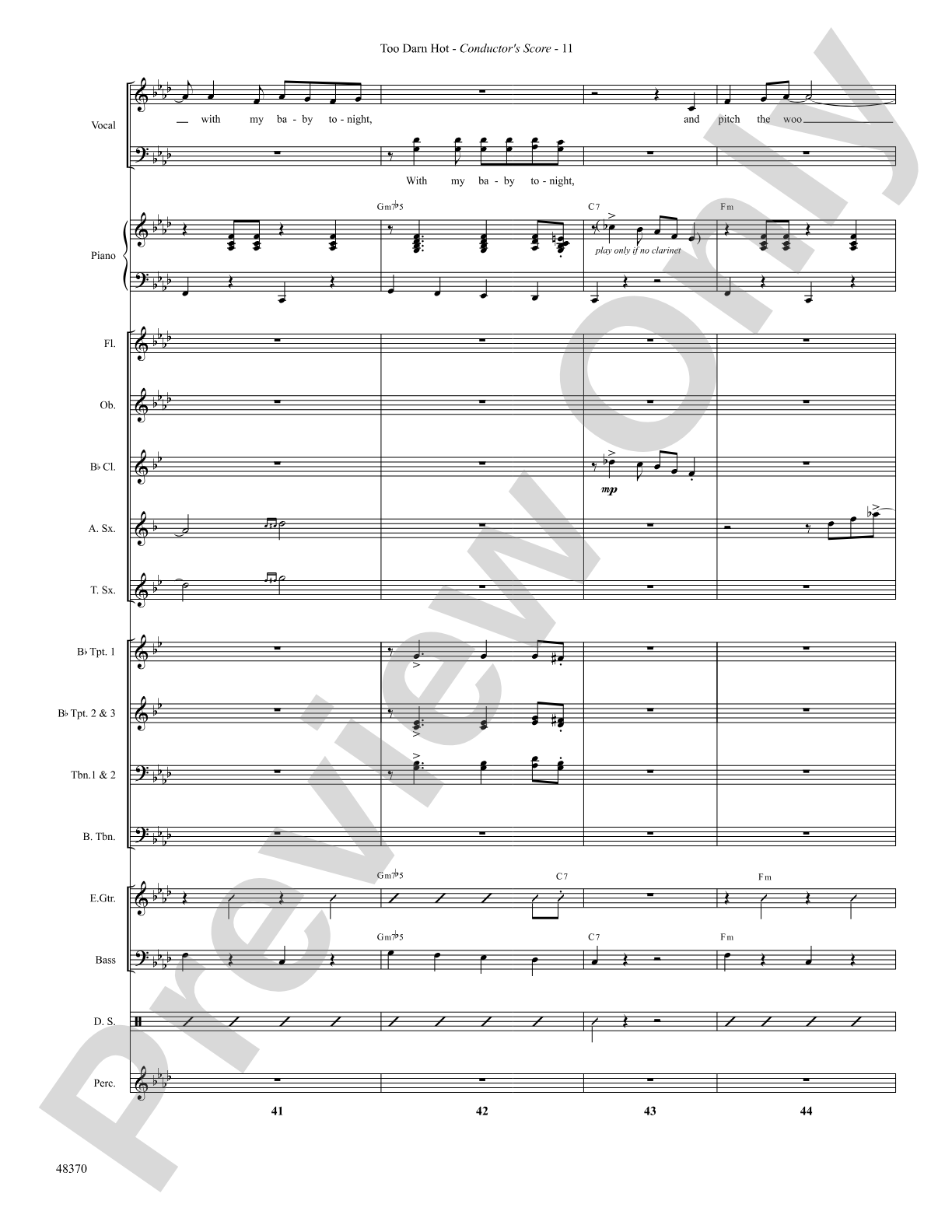
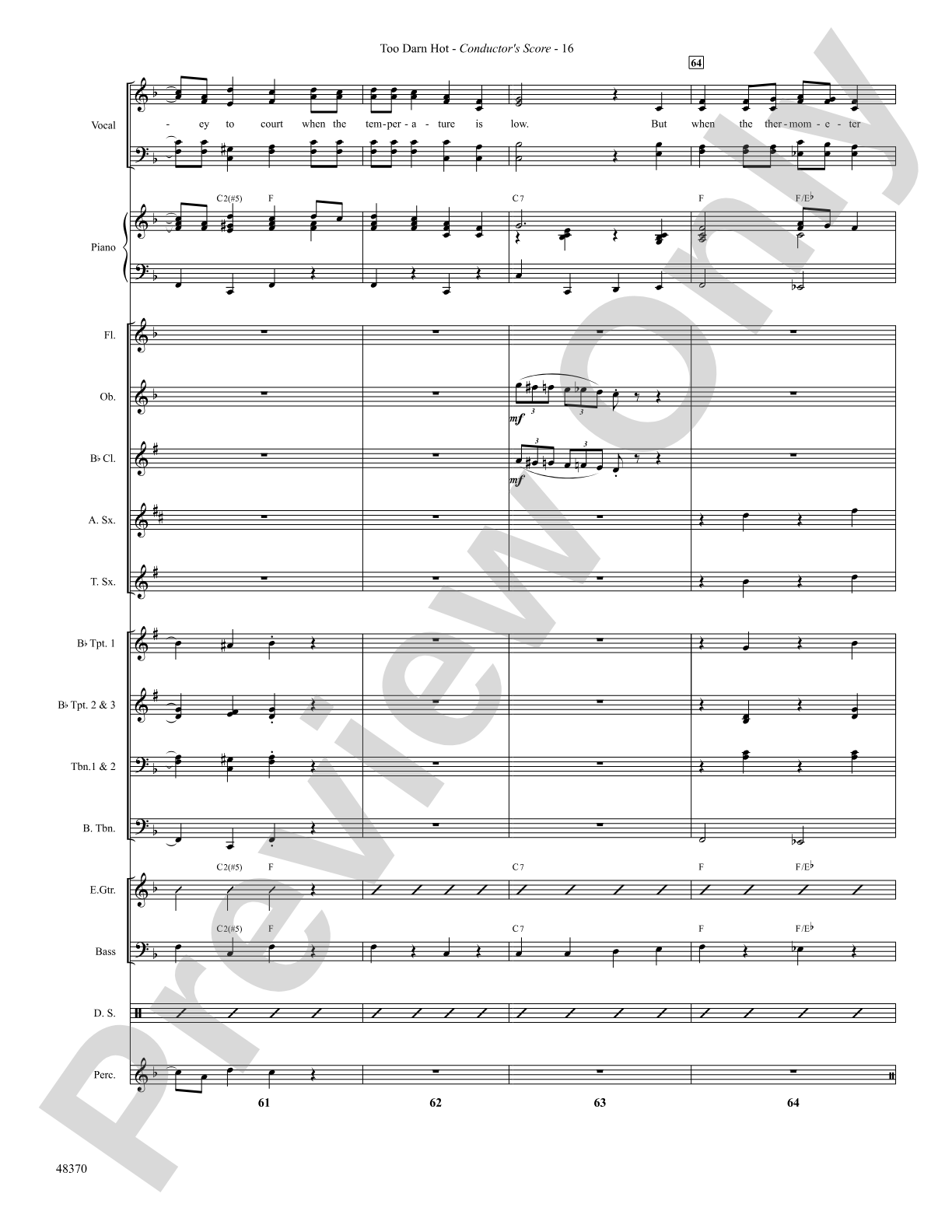
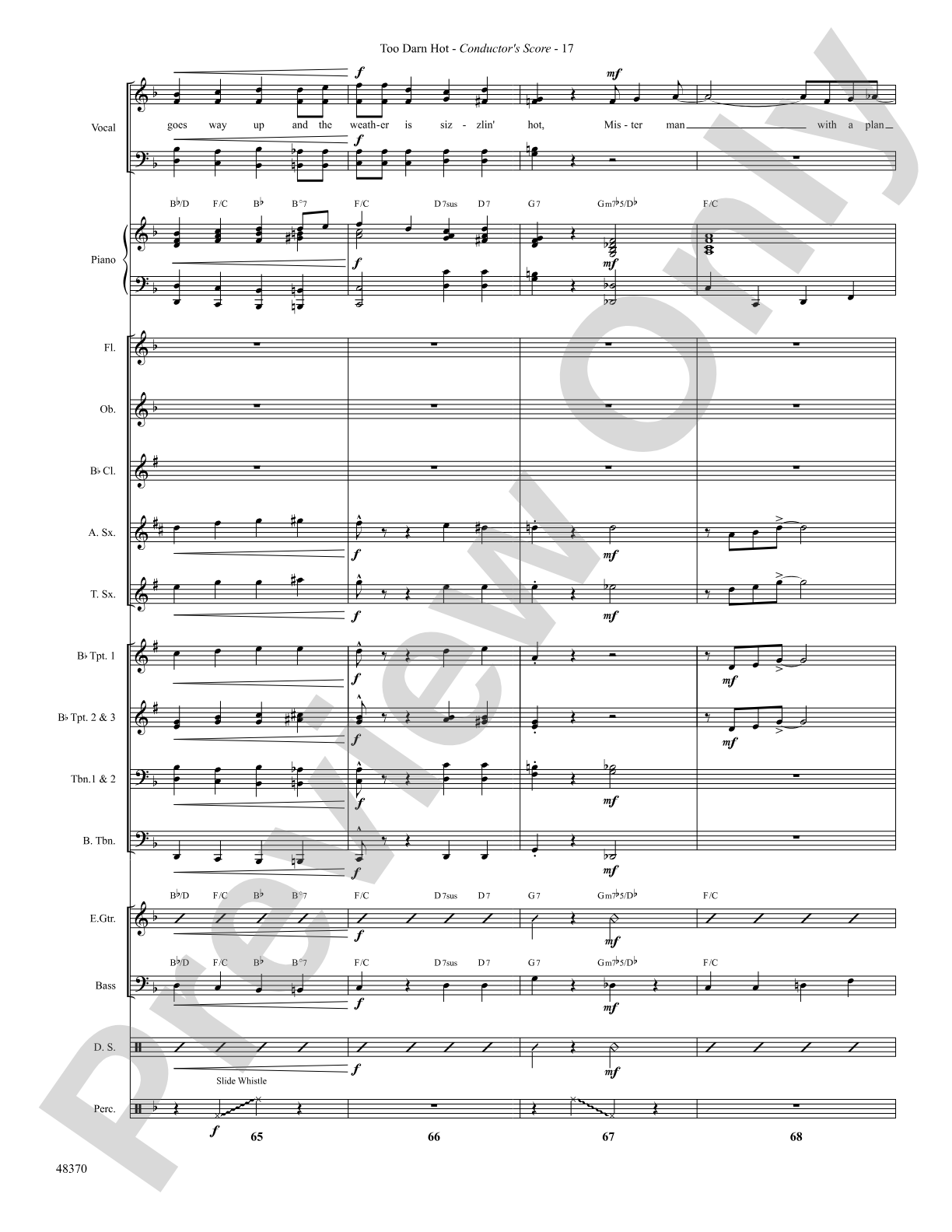
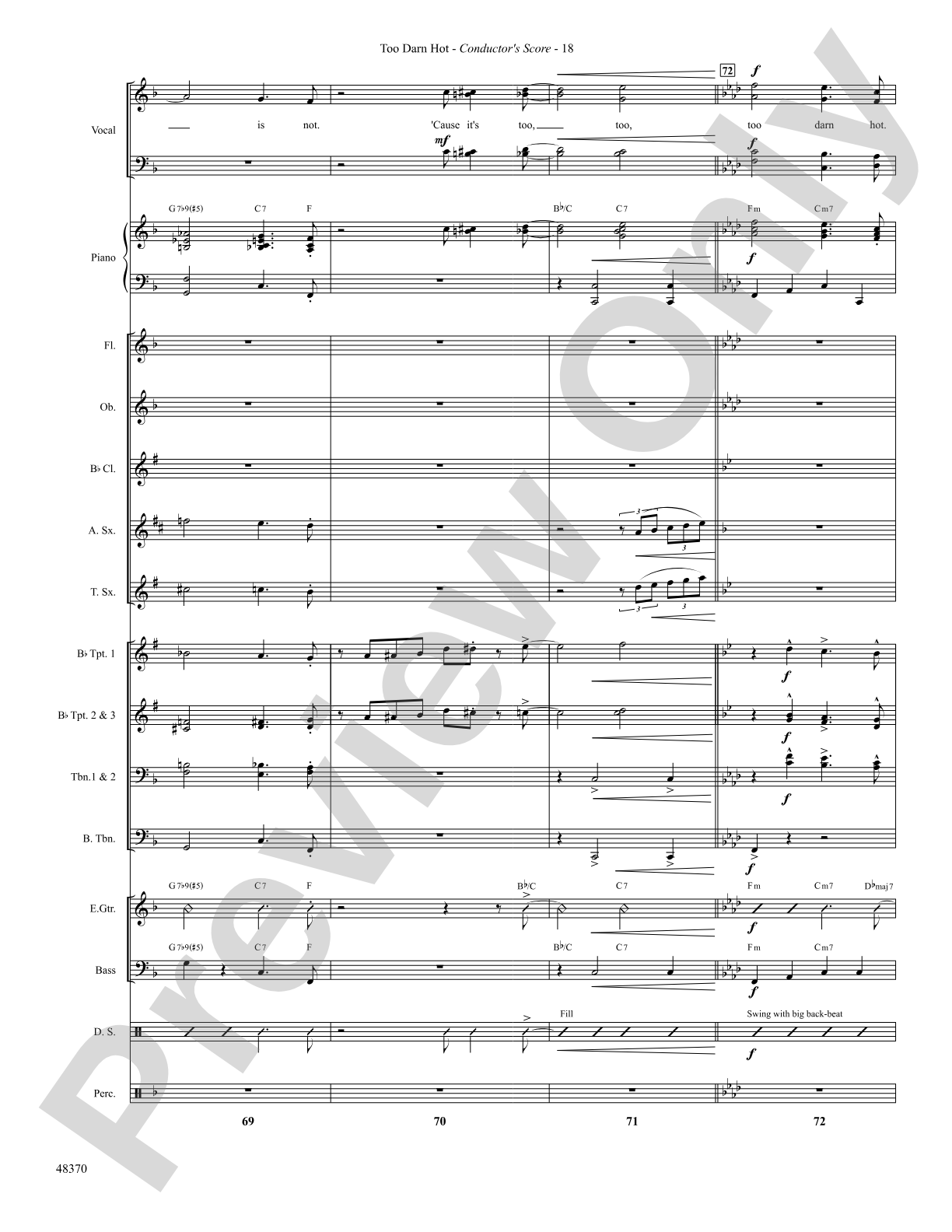
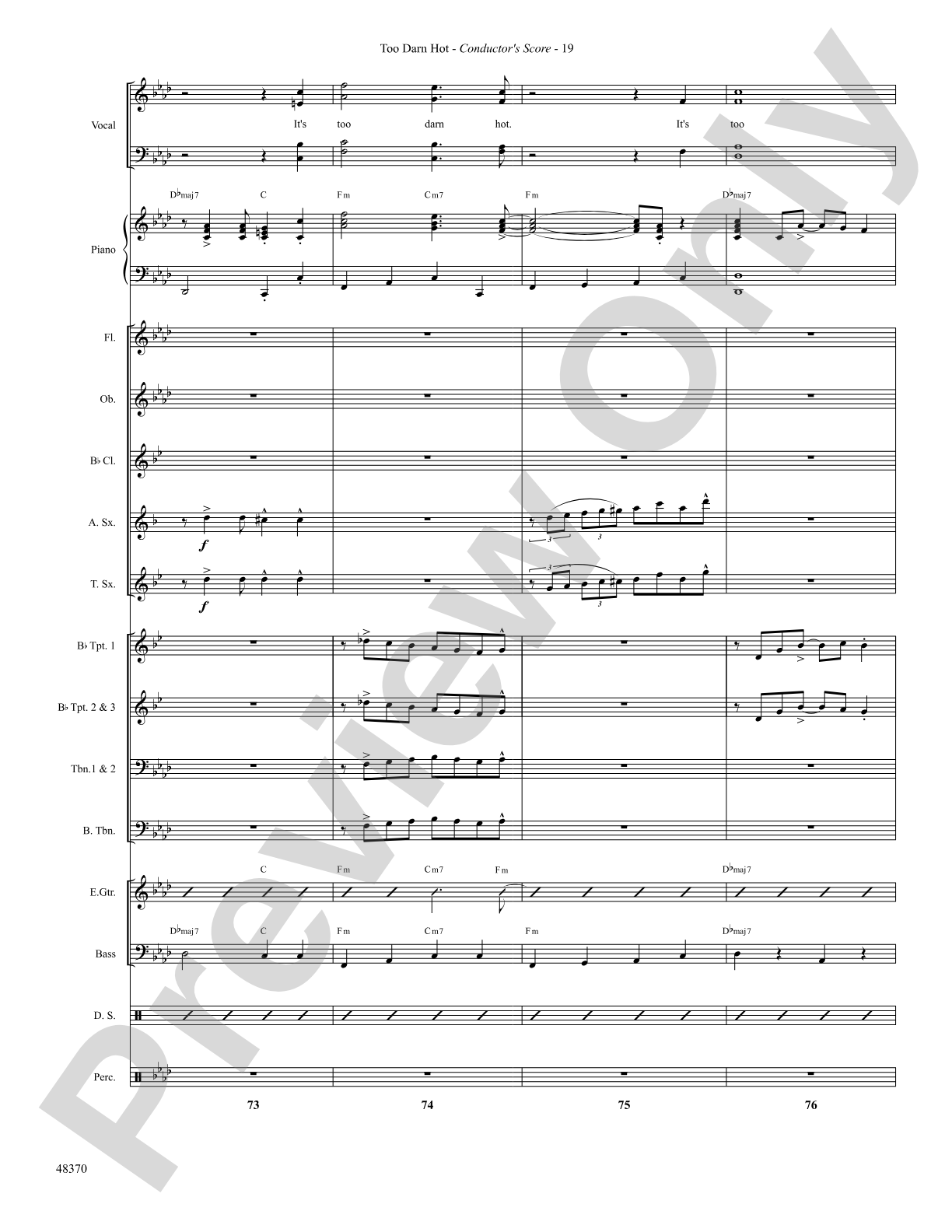
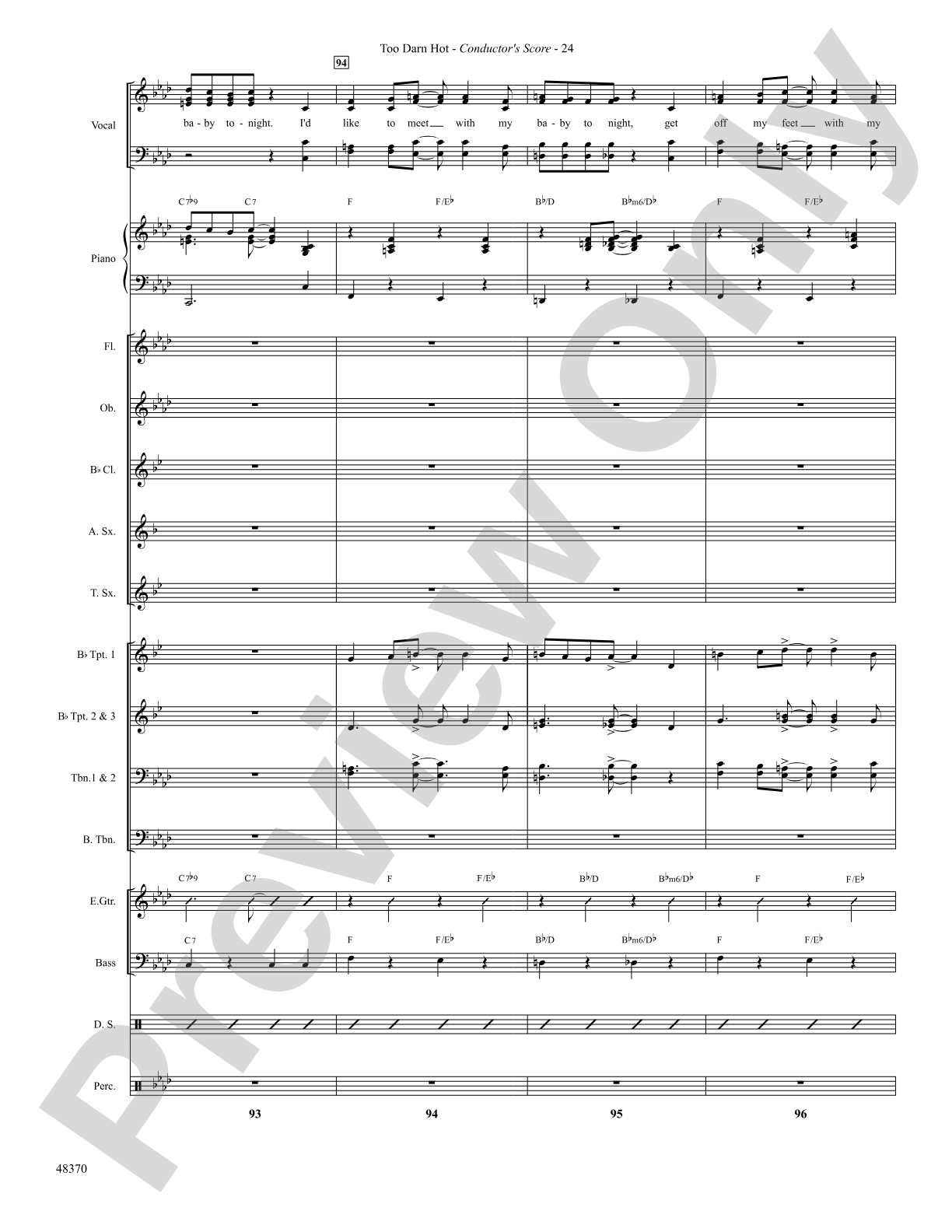
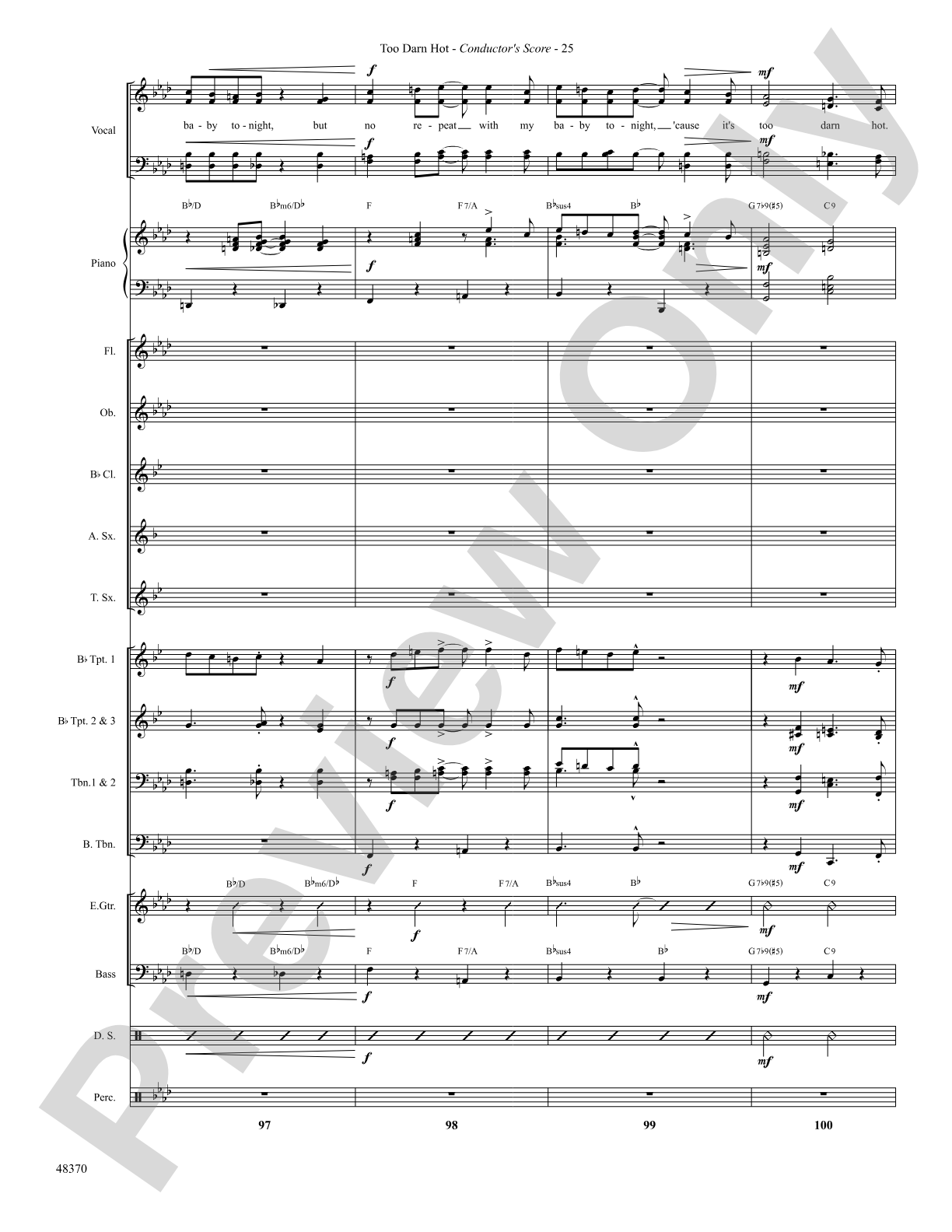
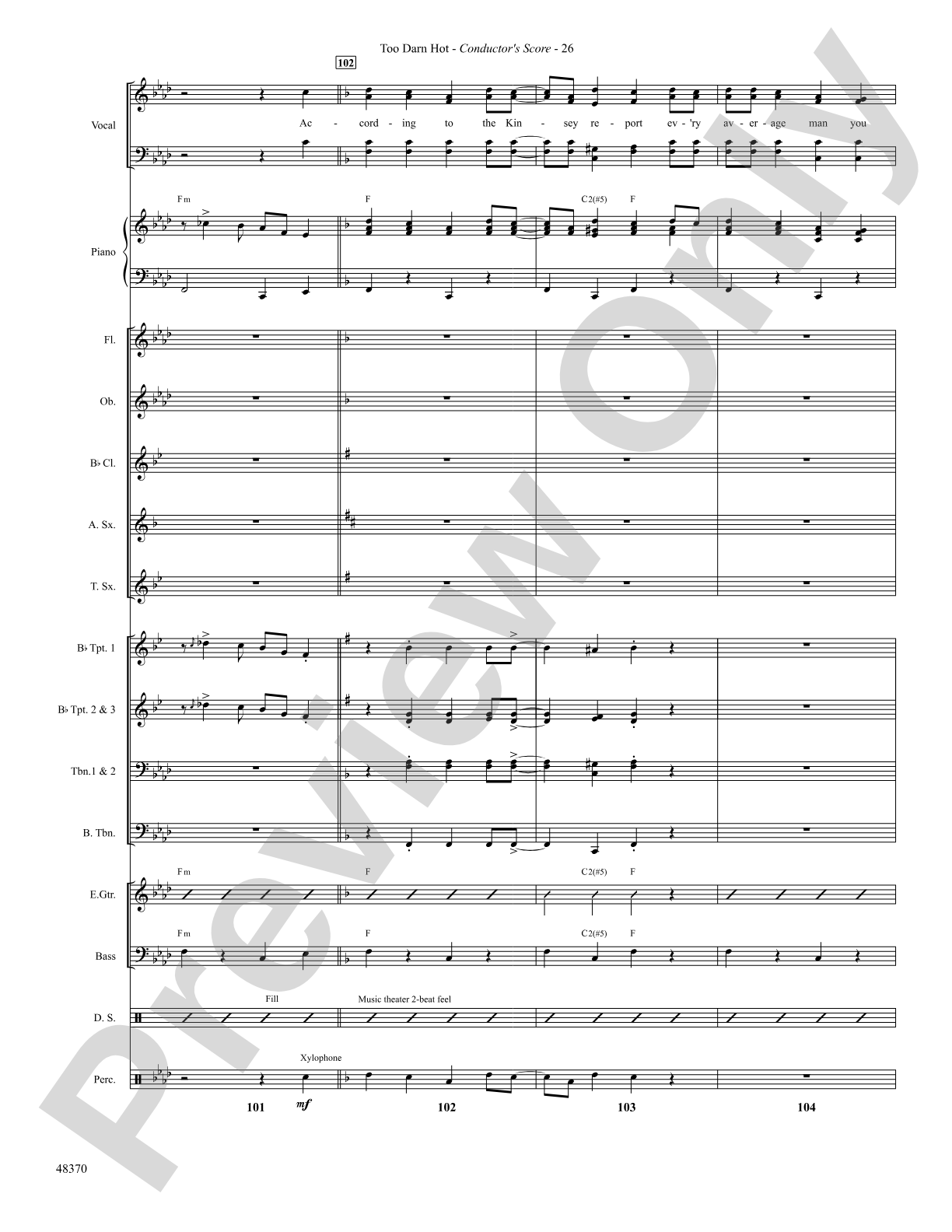
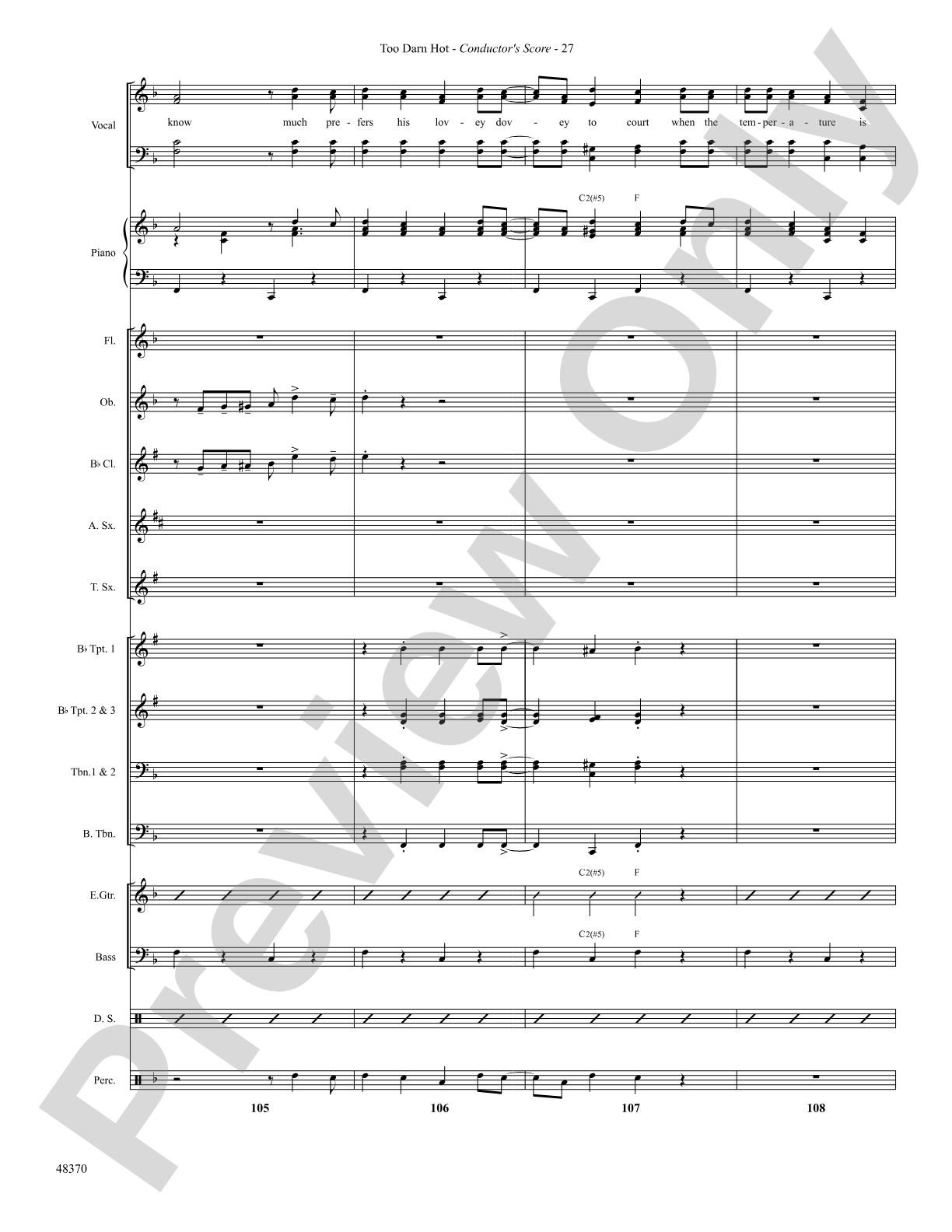
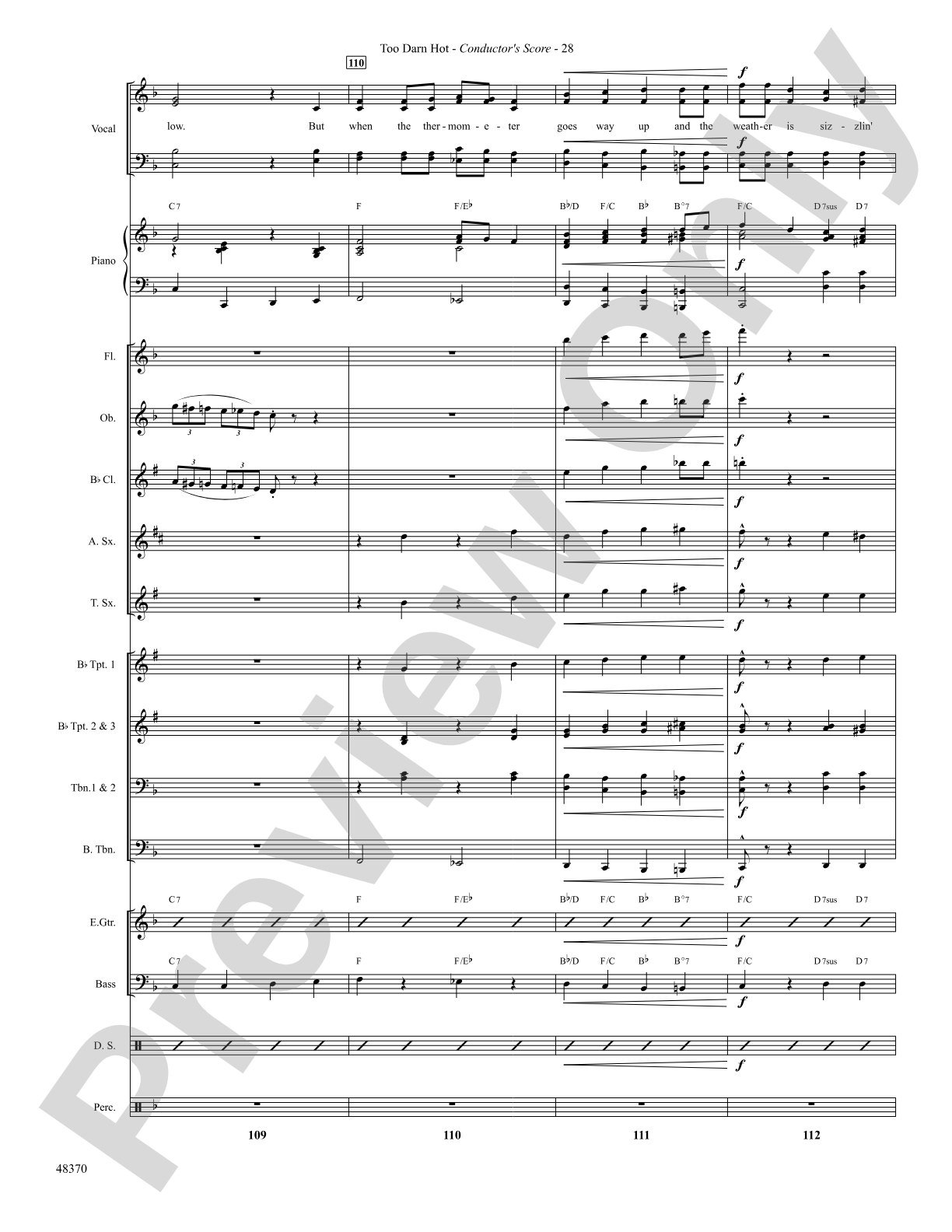
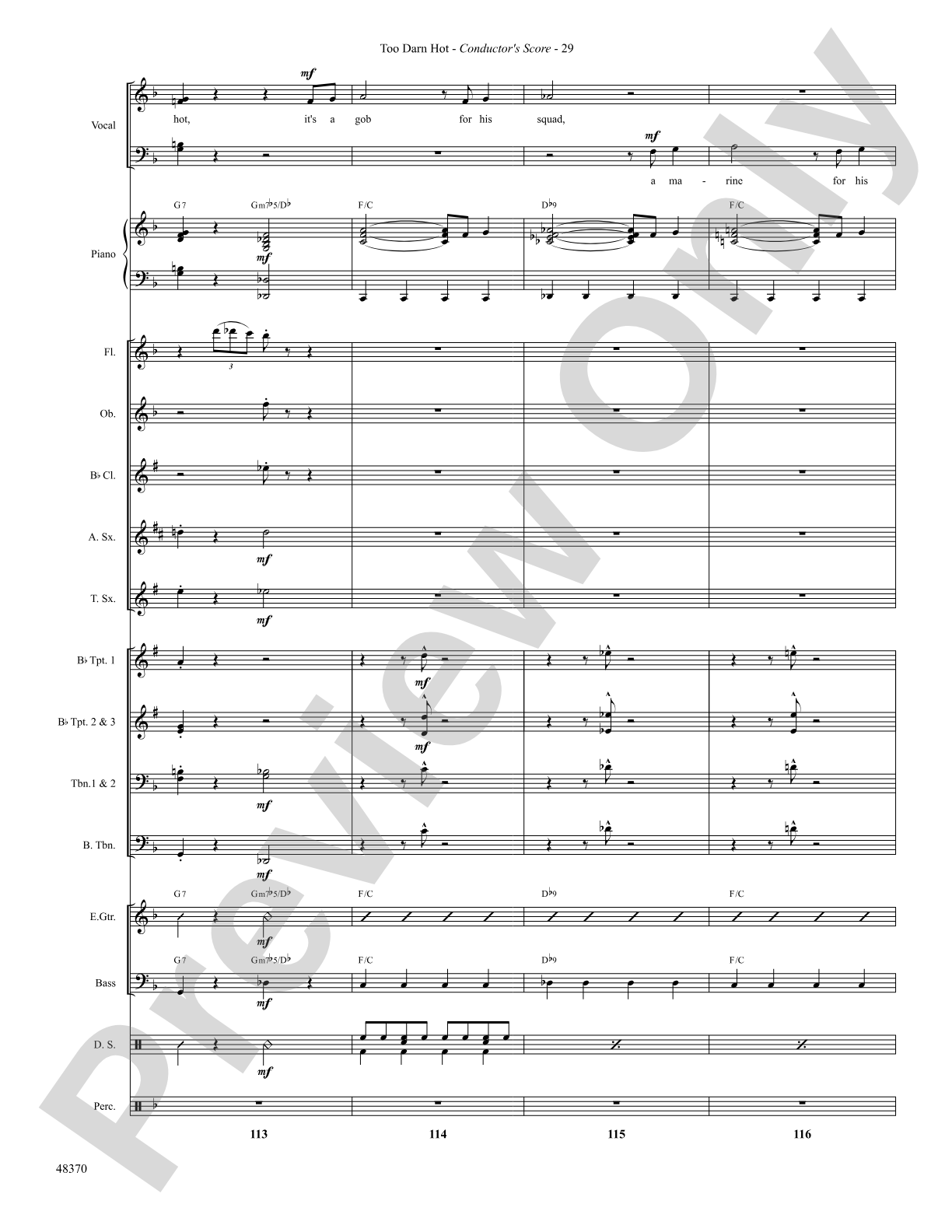
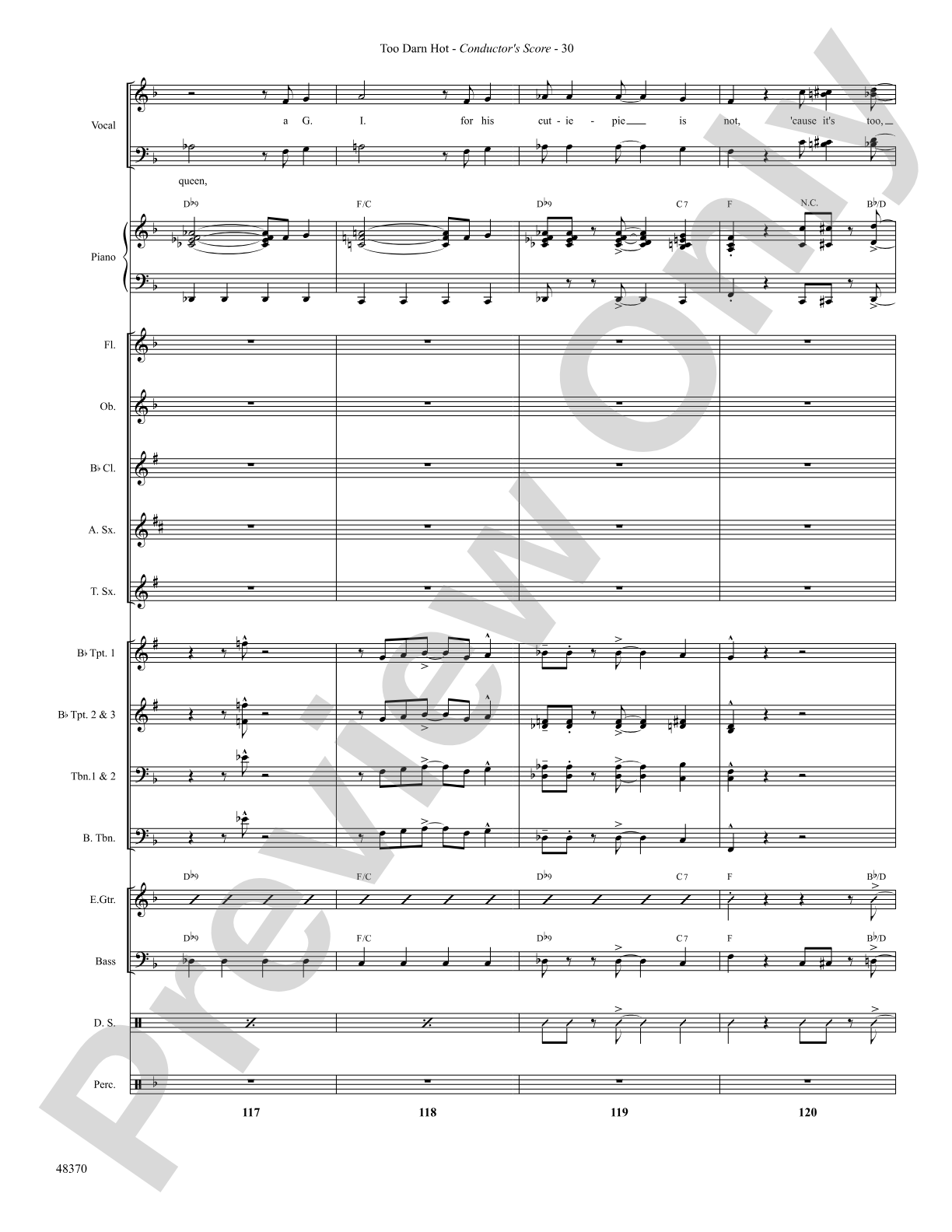
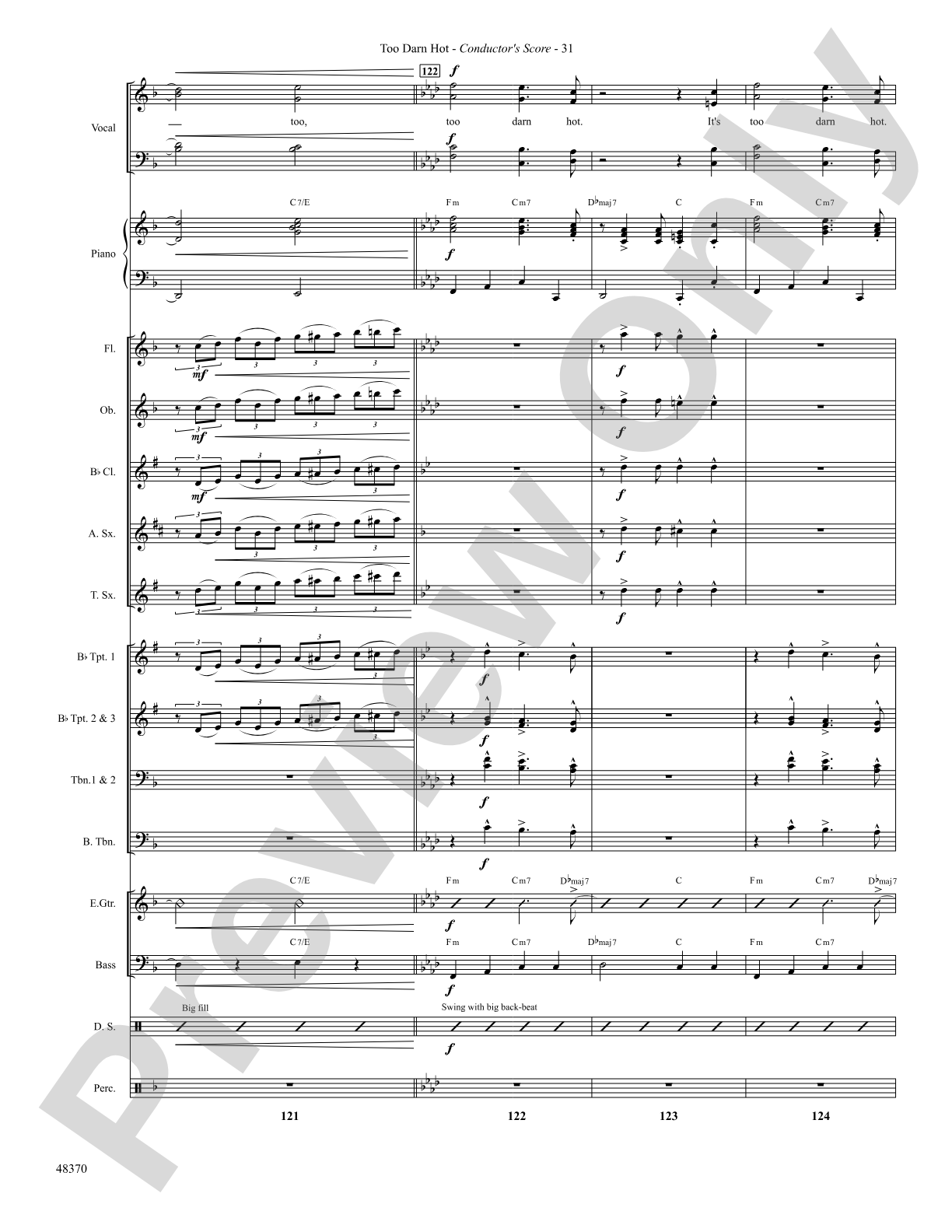

Too Darn Hot: Choral SoundPax
from Kiss Me, Kate
Words and music by Cole Porter / arr. Mark Hayes
Item: 00-PK-0008183

$50.00
One moment…
Related Items
Too Darn Hot: SoundTrax Digital Audio Download |
$29.99
|
View | |
Too Darn Hot: SATB Choral Octavo |
$2.25
|
View | |
Too Darn Hot: SAB Choral Octavo |
$2.25
|
View | |
Too Darn Hot: SSA Choral Octavo |
$2.25
|
View | |
Too Darn Hot: TTBB Choral Octavo |
$2.25
|
View | |
Too Darn Hot: SATB Choral Octavo |
$2.25
|
View | |
Too Darn Hot: SAB Choral Octavo |
$2.25
|
View | |
Too Darn Hot: SSA Choral Octavo |
$2.25
|
View | |
Too Darn Hot: TTBB Choral Octavo |
$2.25
|
View | |
Too Darn Hot: Choral Octavo SoundTrax CD |
$29.99
|
View | |
Too Darn Hot: Choral SoundPax |
$50.00
|
View |
Description
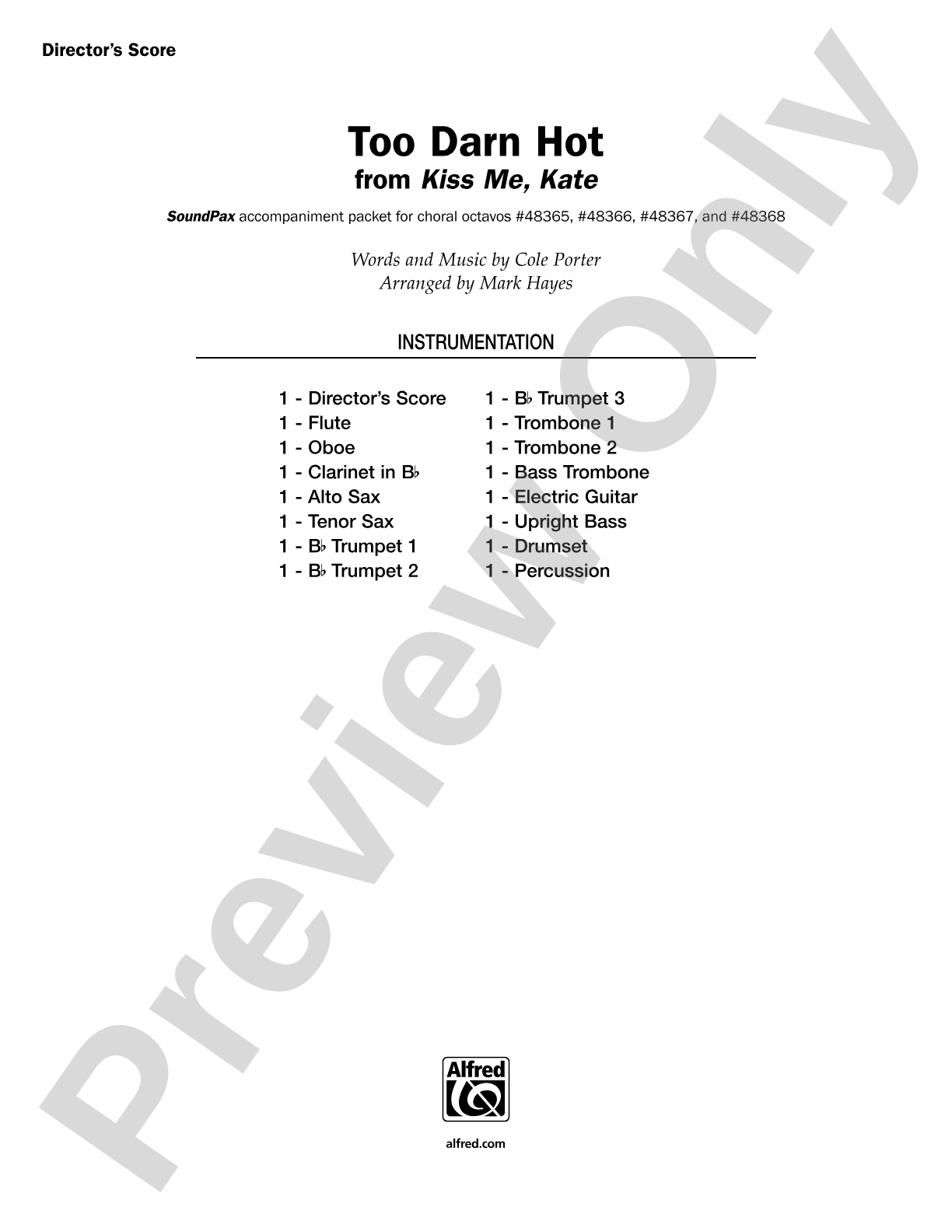
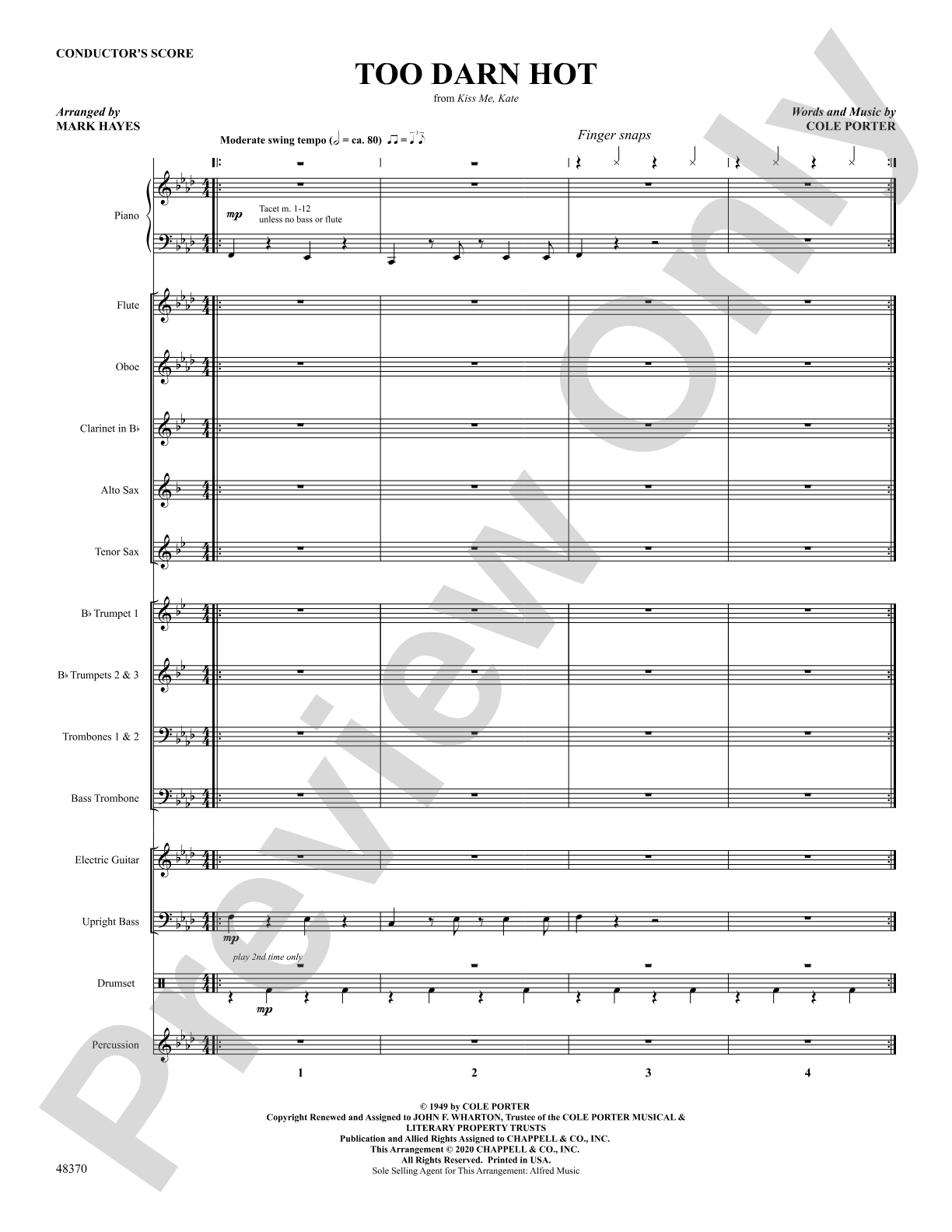
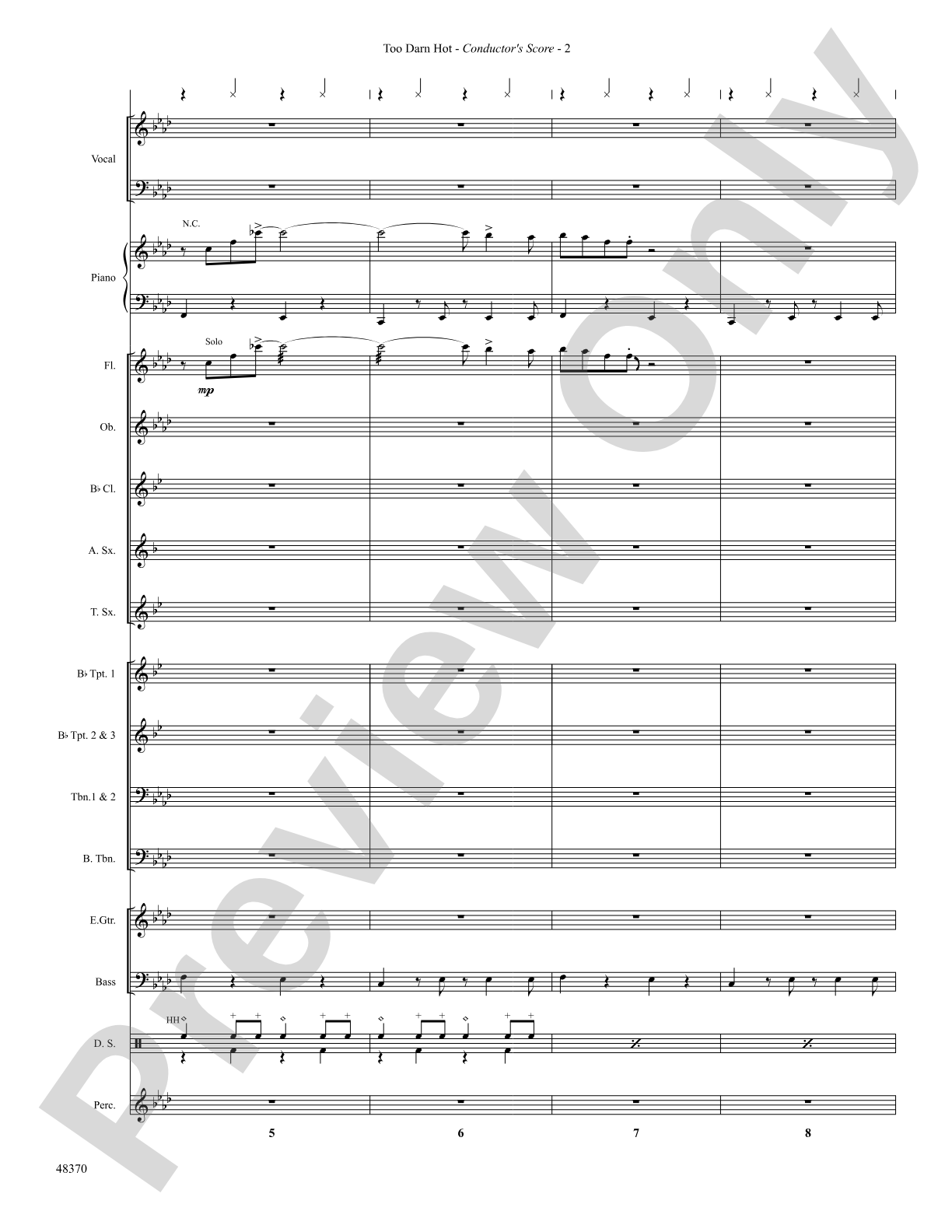
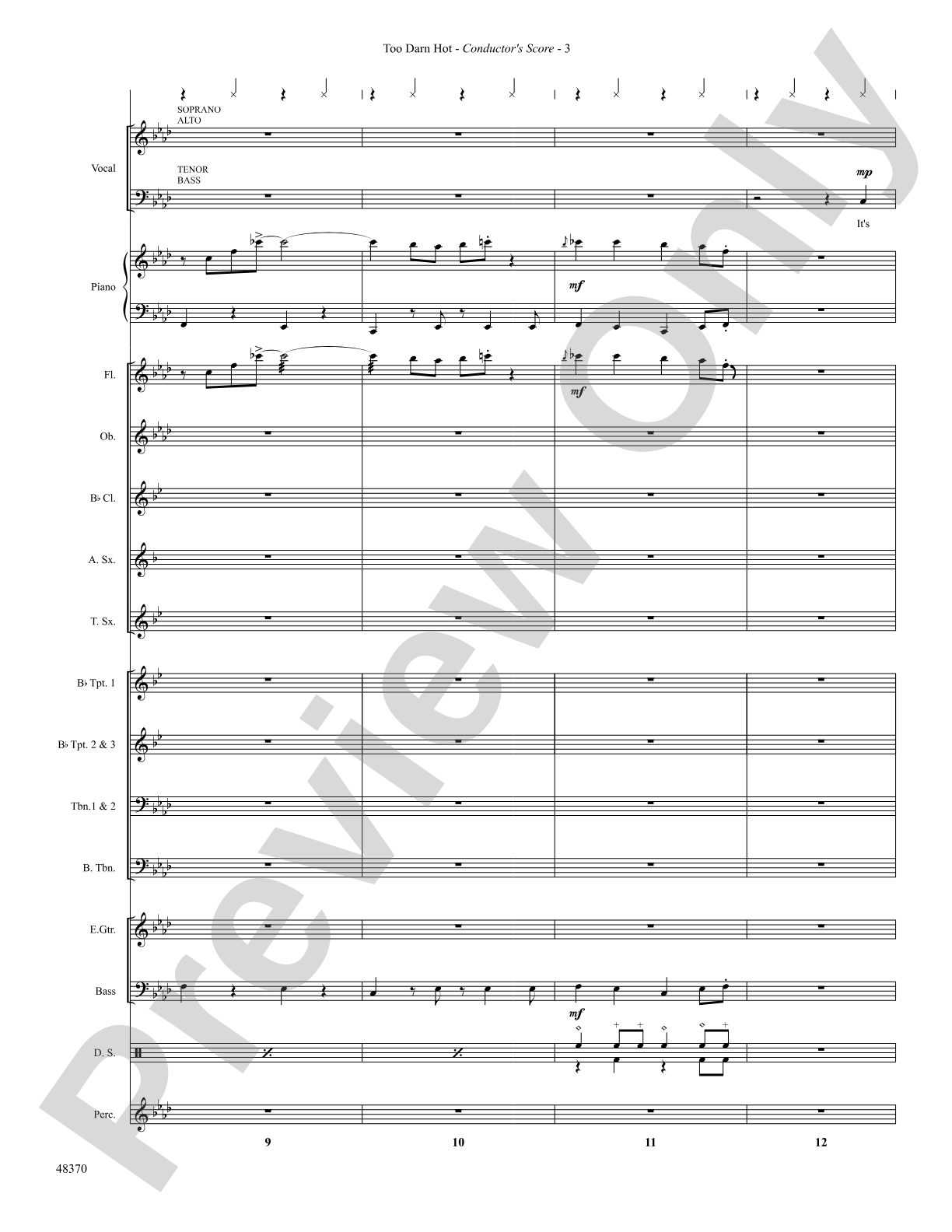
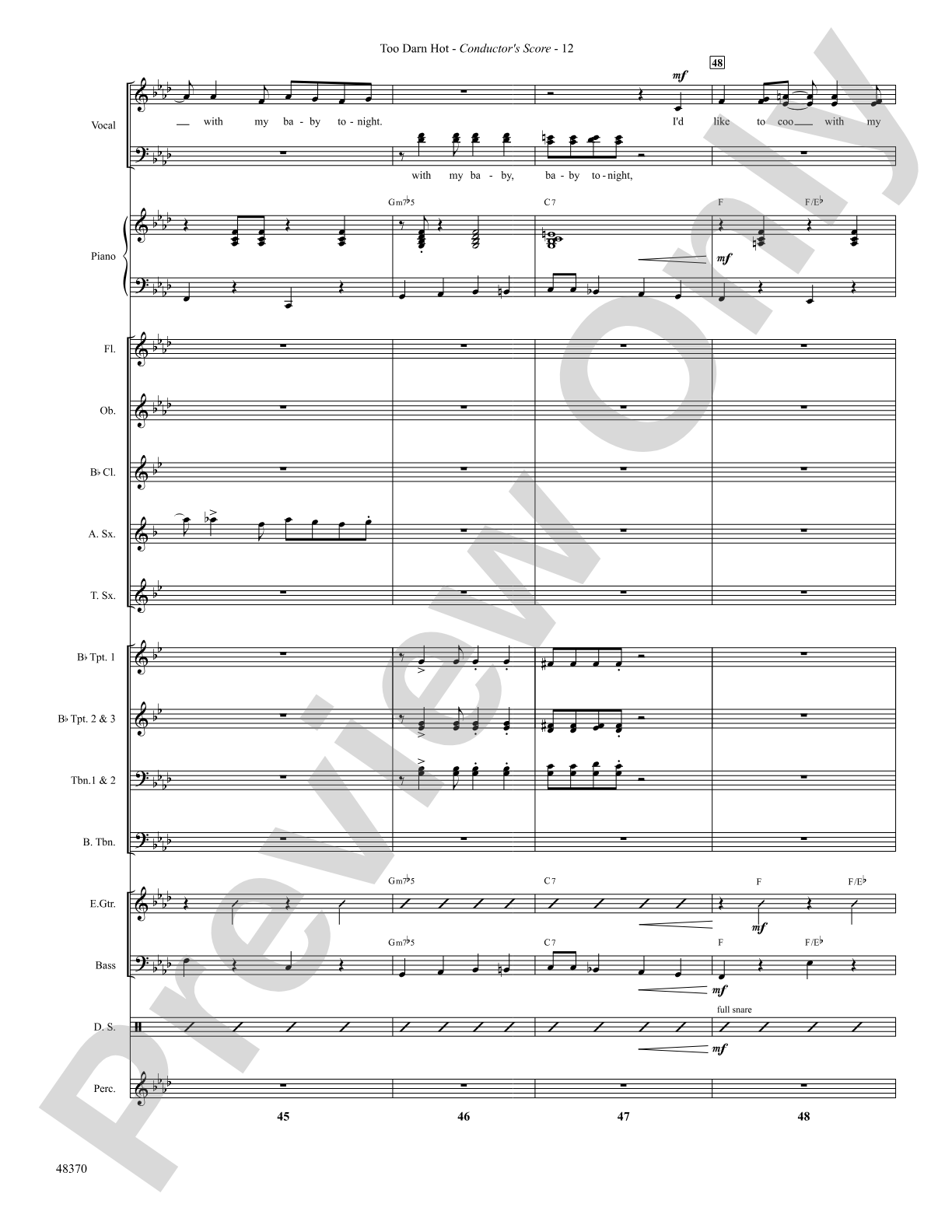
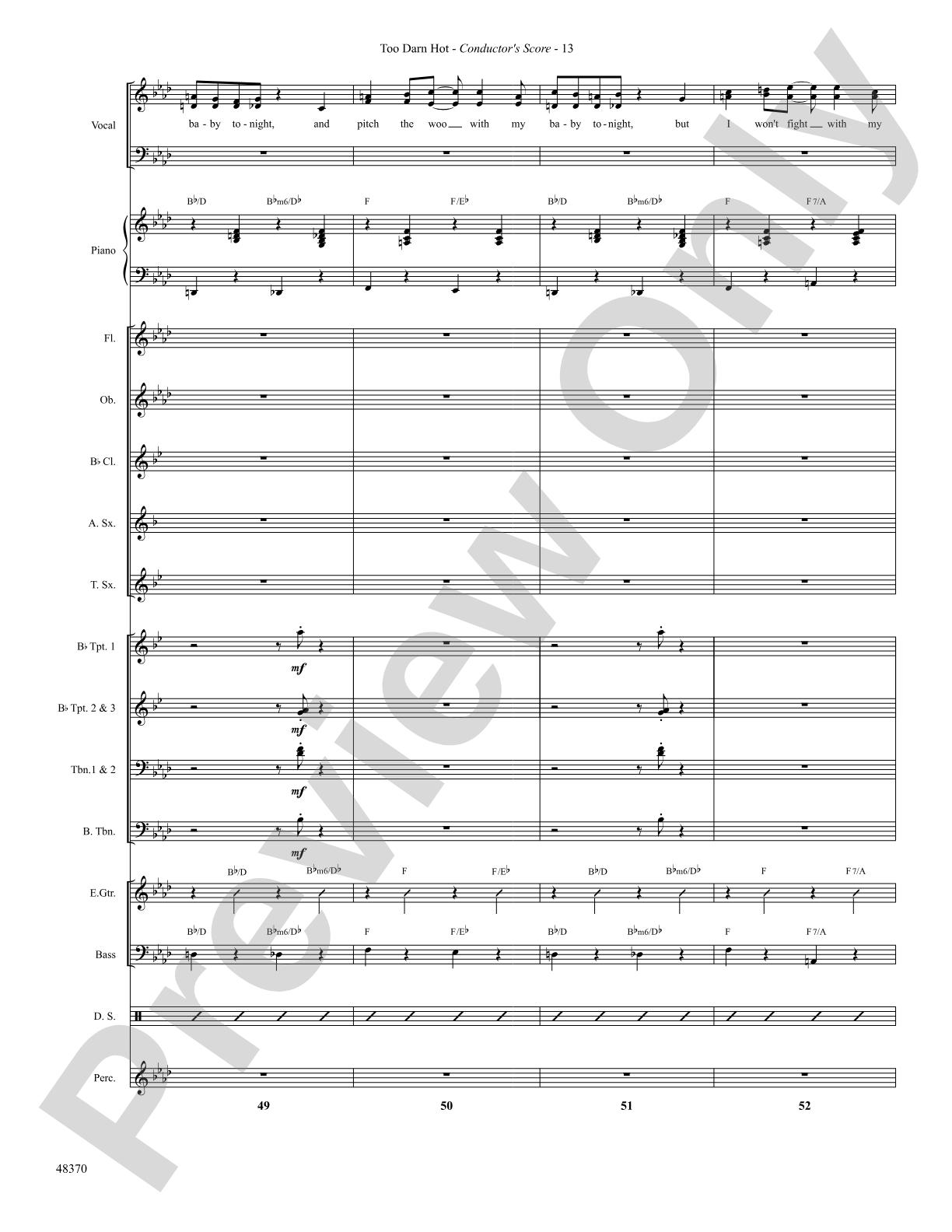
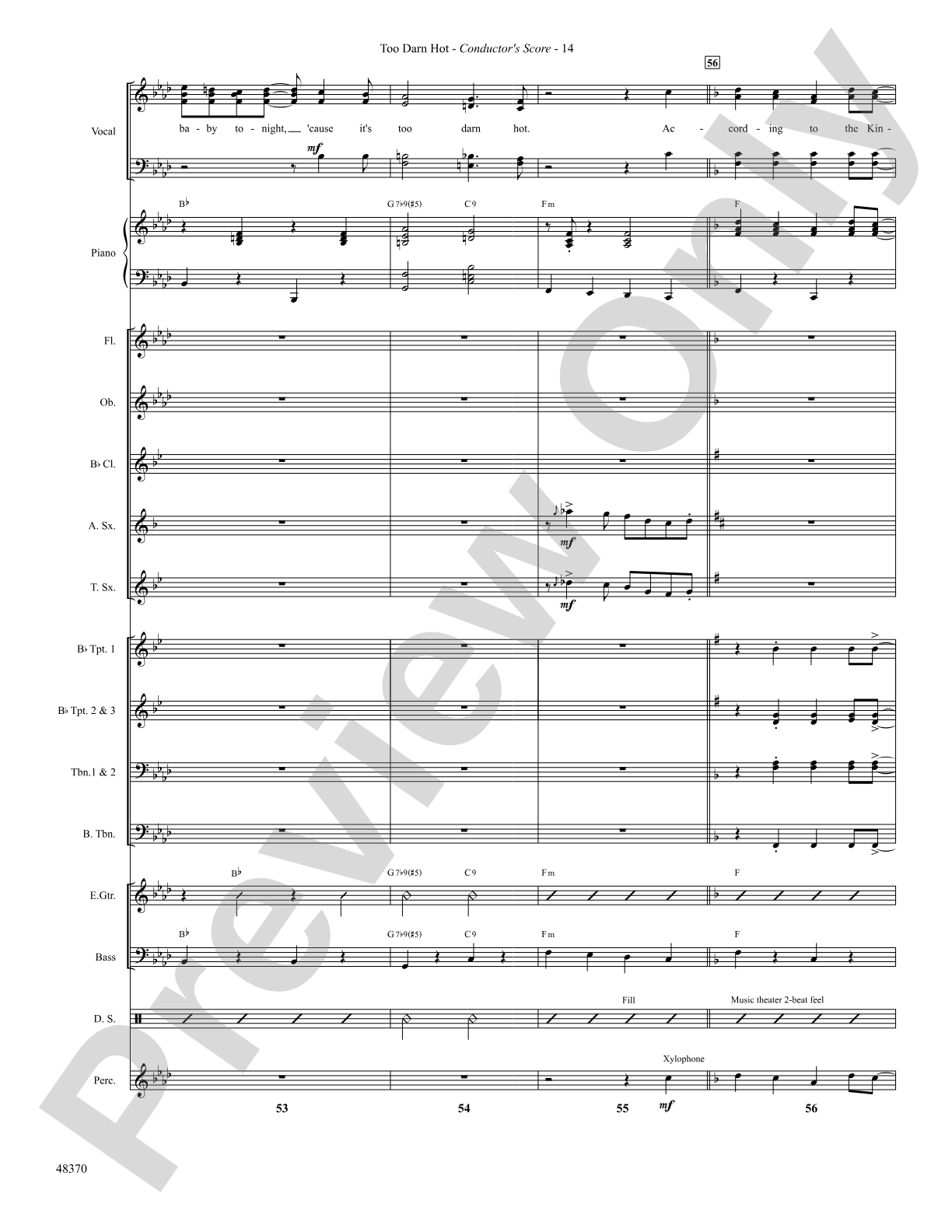
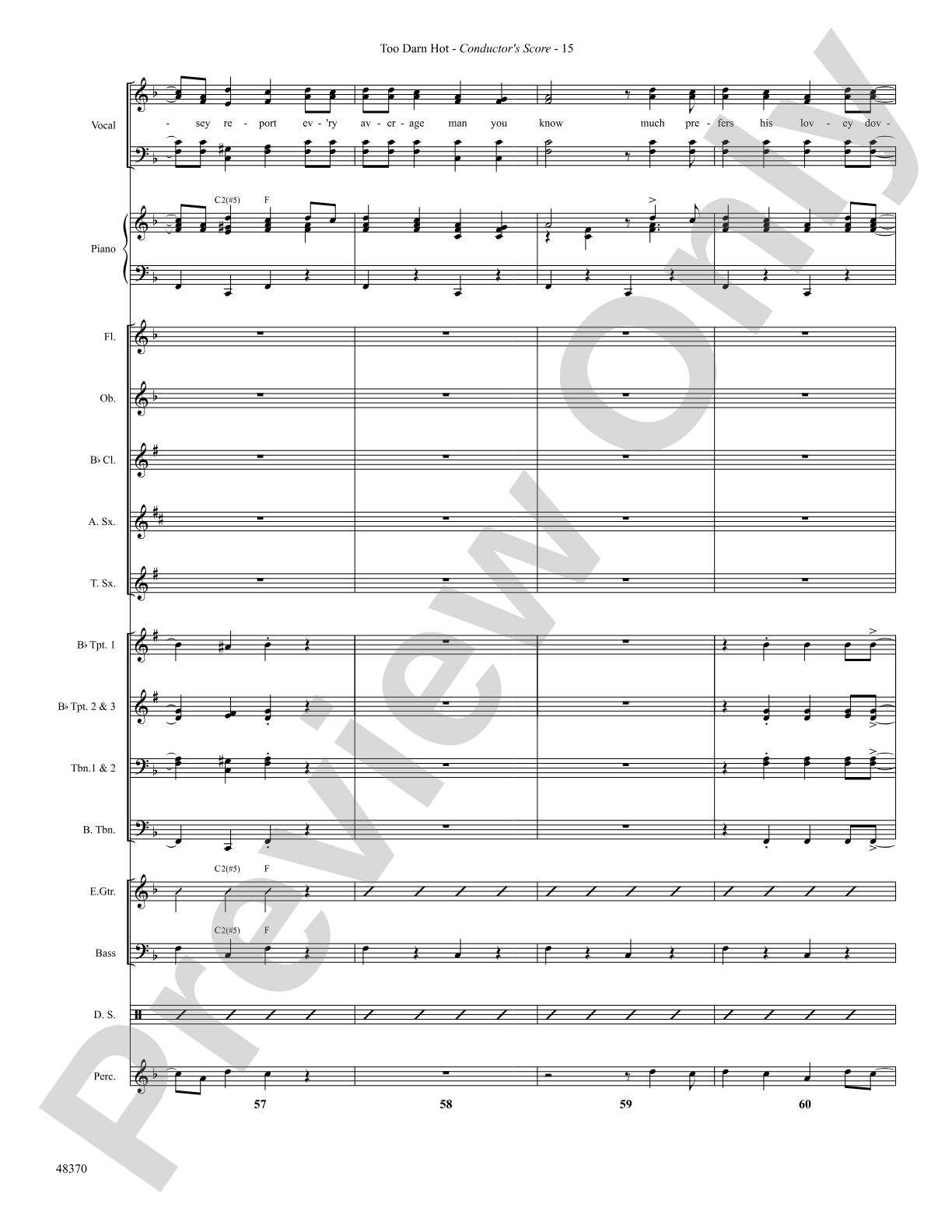
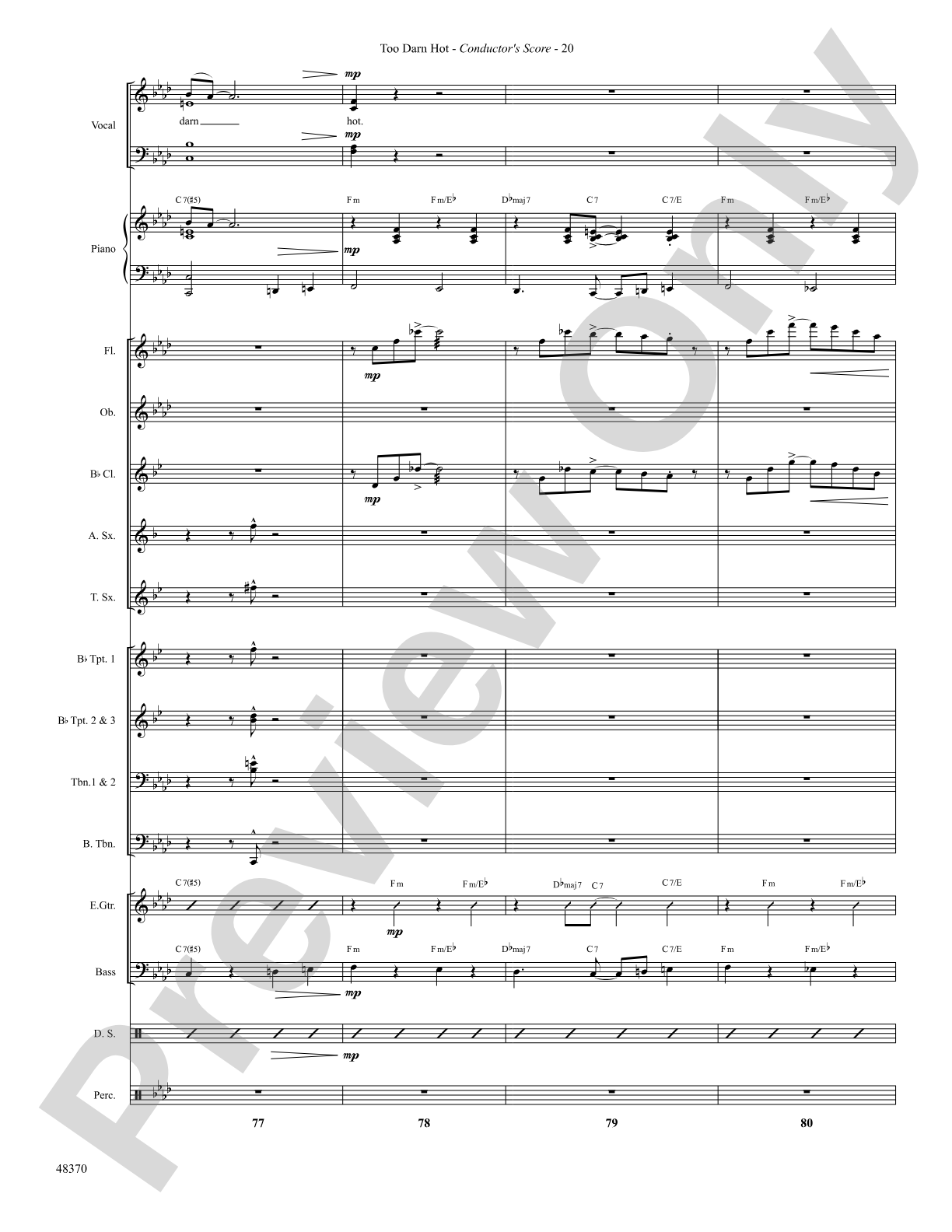
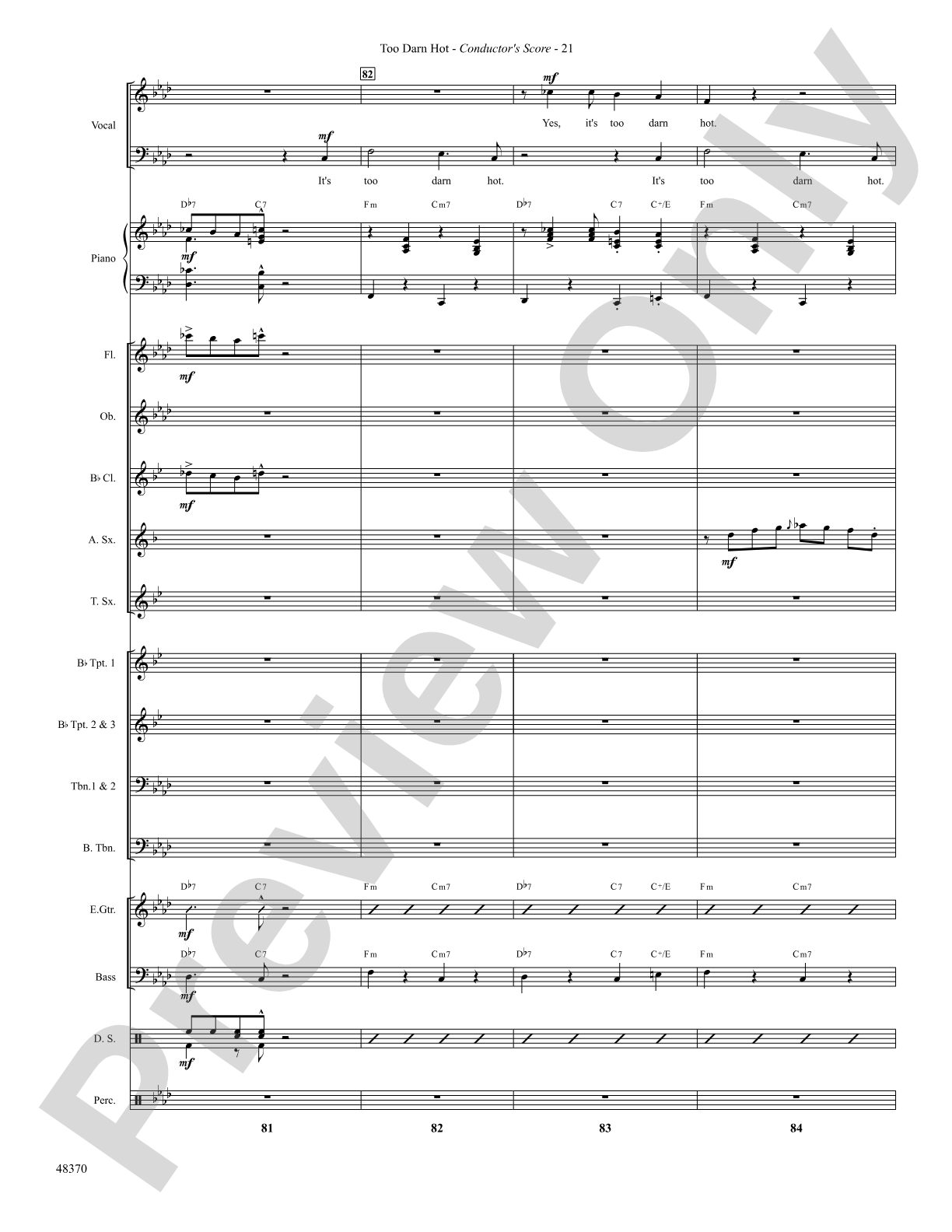
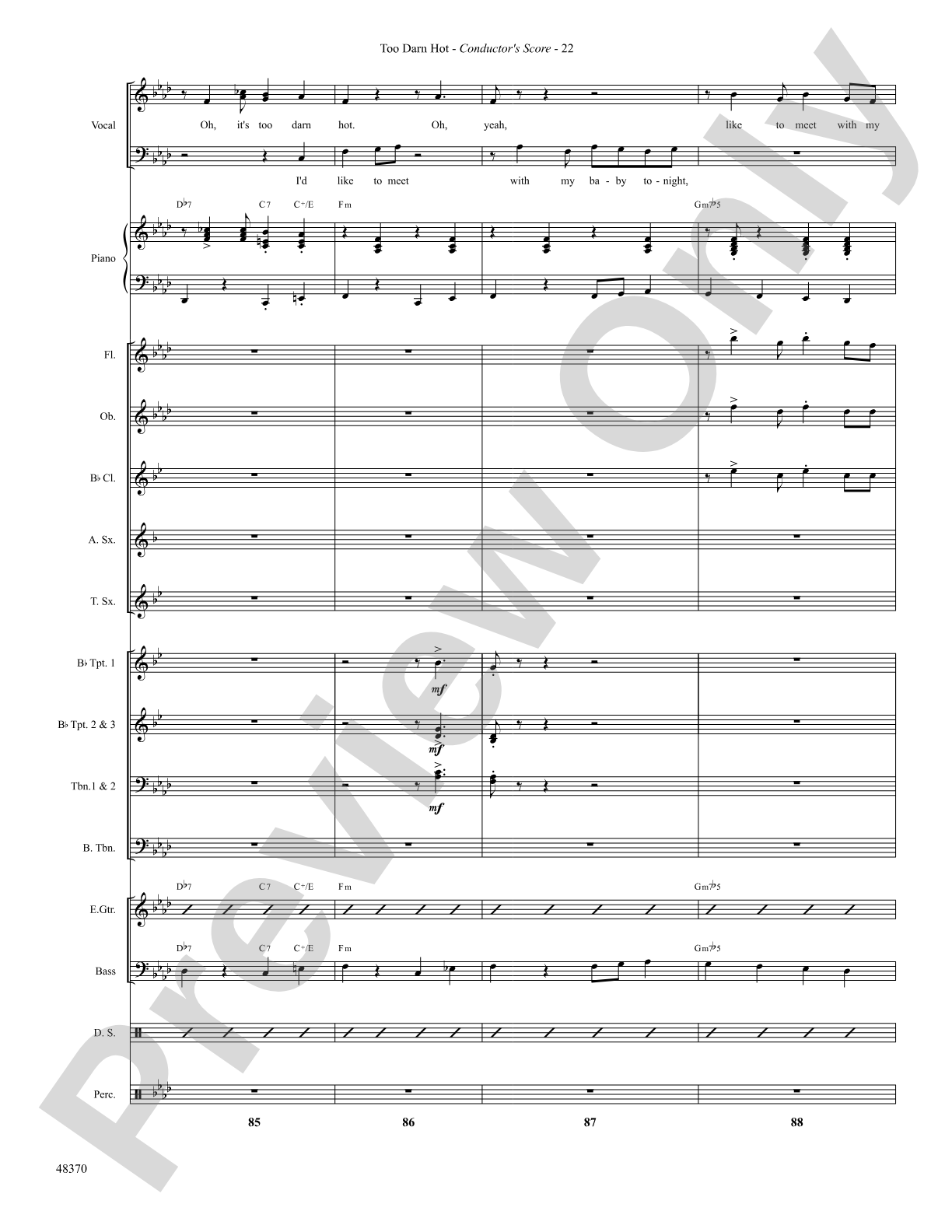
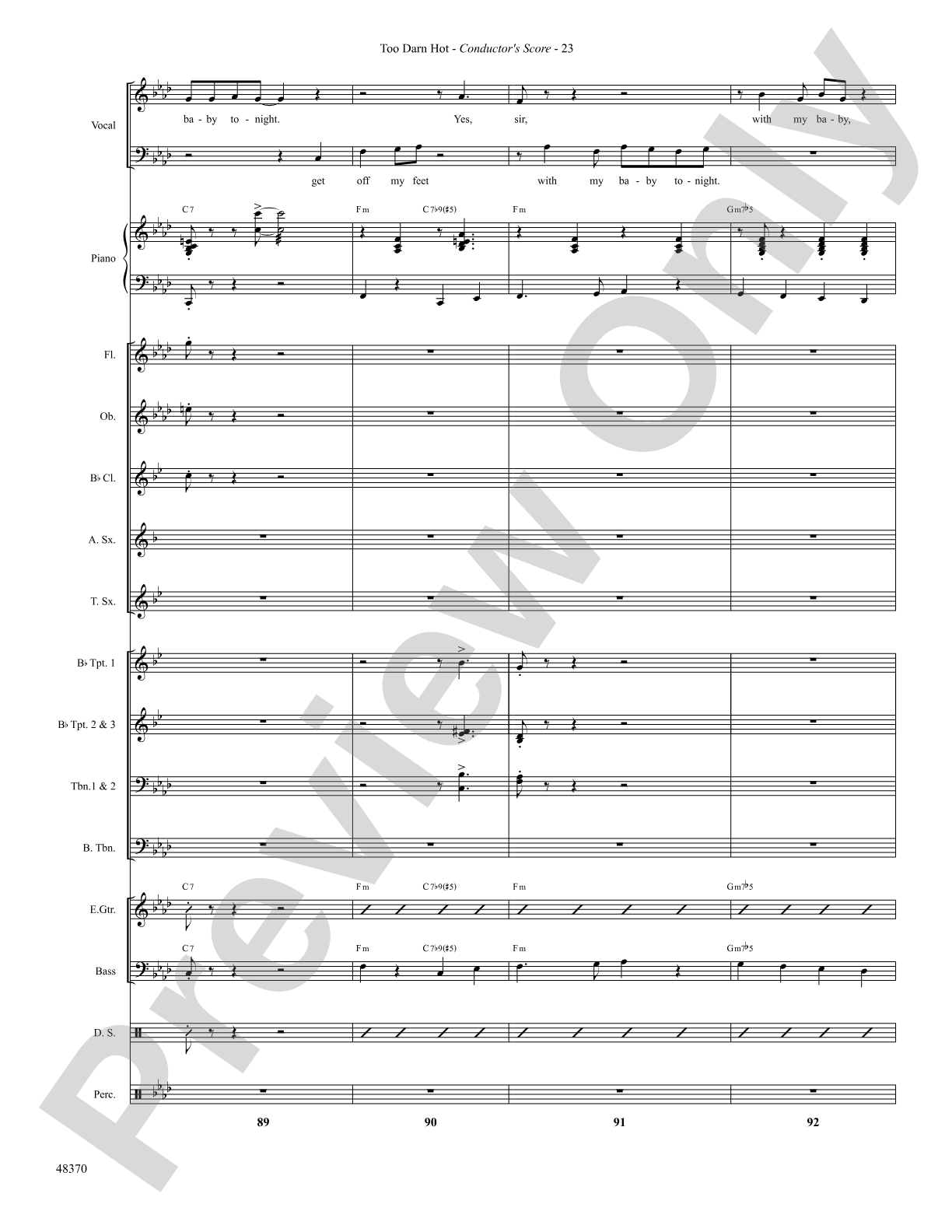
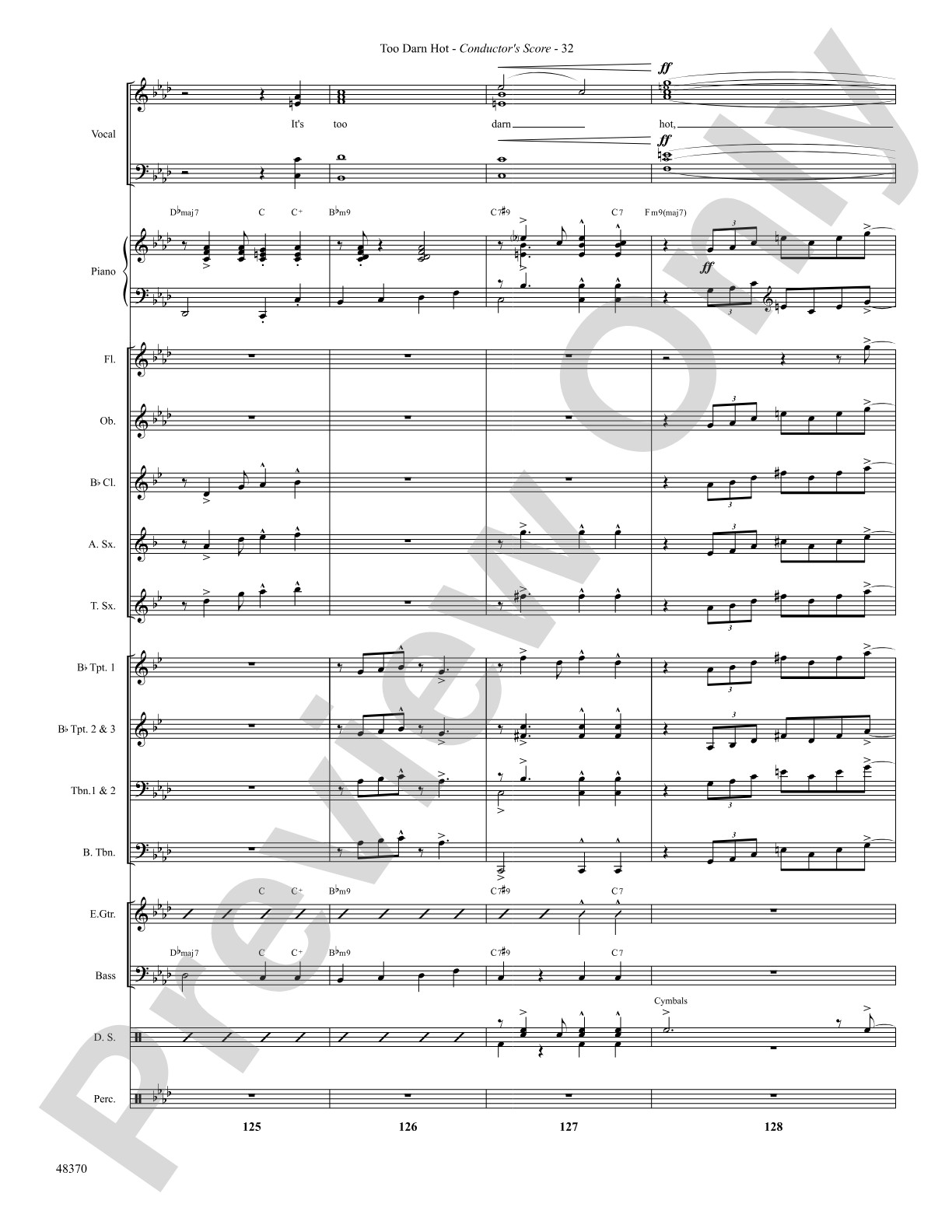
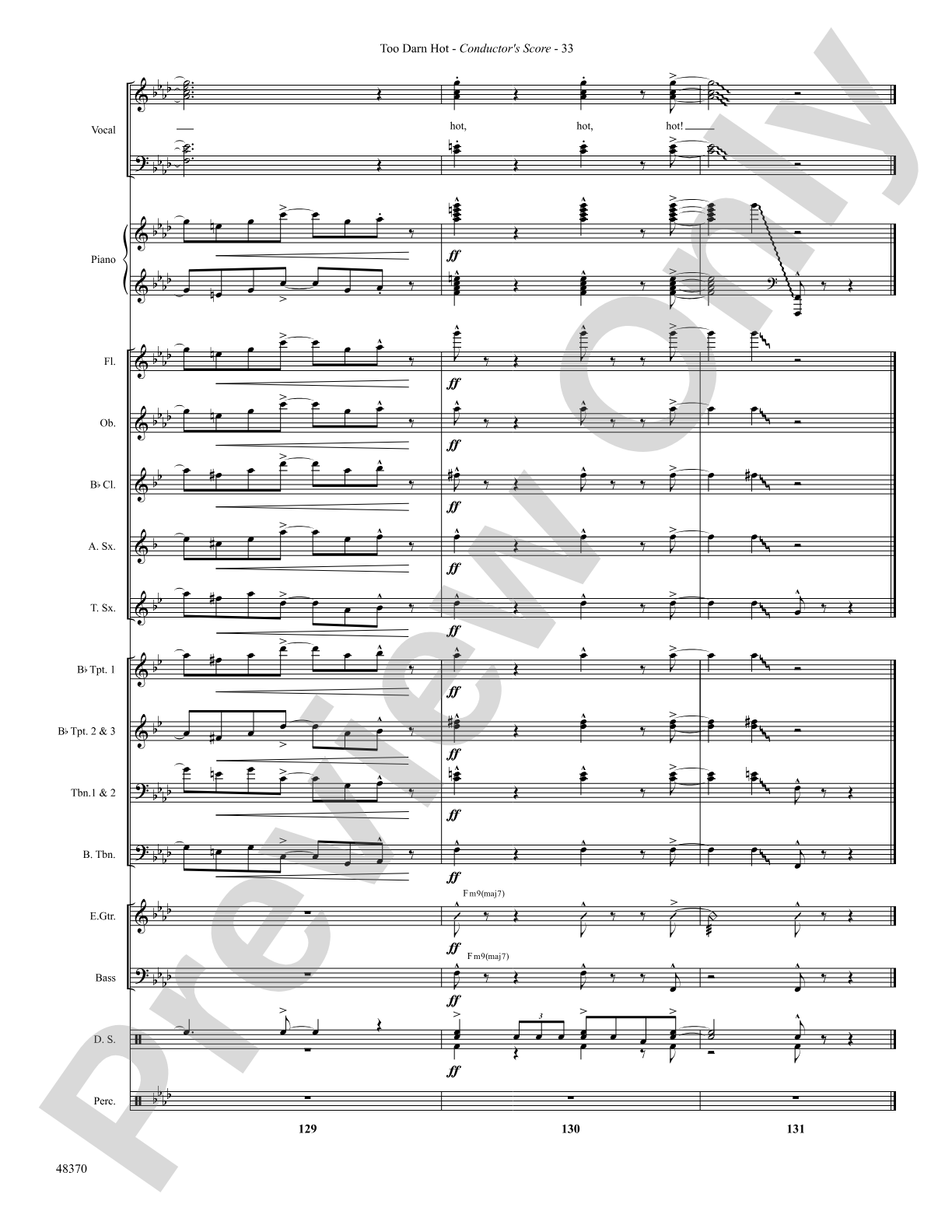
Originally written for Kiss Me Kate, this Cole Porter tune has become a treasured part of the Great American Songbook. A sultry bass line and finger snaps command attention right from the first sizzling measure. Clean jazz writing makes the harmonies jump right off the page. Add the optional SoundPax or SoundTrax to bring the sound of classic Broadway to your stage!


Don't just read it, hear it, play along with it, and watch your students grow with it. In MakeMusic Cloud, Too Darn Hot: Choral SoundPax comes alive with professional accompaniment, adjustable tempo, and built-in practice tools that turn solo practice into real progress.
Open in the Player
Jump straight in and assign it today.
Start Your Free Trial
Open this title and explore the full library in minutes.
Sample Audio
1
Audio File
--:--
0:00
0:00
Sample Video
No sample videos found.
Additional Details
Series:
Alfred Pop Choral Series
Publisher:
Alfred Music
Page Count:
54
SKU:
00-PK-0008183
More about this title
About the Composer: Cole Porter
Cole Porter (1891-1964) was an American composer and lyricist whose sophisticated wit and inventive harmonies defined the Golden Age of Broadway. Working across multiple decades, Porter created some of the most enduring standards in American musical theater, blending jazz idioms with classical training to produce songs that remain fresh and performable more than half a century after his death. His influence on American songwriting cannot be overstated; his melodies, harmonic language, and lyrical cleverness continue to challenge and delight singers and musicians at every level.
Why we love this
Mark Hayes's arrangement captures the sultry swagger of the original without losing the lyrical sophistication that makes this Porter standard so rewarding to sing. The clean jazz writing and responsive harmonies give ensemble singers real musical meat to work with, while the optional accompaniment lets you deliver full Broadway production value without needing a pit orchestra. This is a piece that audiences recognize instantly, which means your singers get the thrill of performing something genuinely famous.
What to expect
A room full of swagger and shimmer. The piece opens with that sultry bass line and finger snaps that immediately signal fun without losing elegance; the harmonies gleam with classic jazz color while the melody sits right in the pocket where it belongs. Singing this feels like being part of something genuinely stylish, a moment where your choir gets to deliver some real Broadway glamour.
Who it's for
Directors programming jazz and contemporary standards for mixed choirs of intermediate to advanced ability. Singers who enjoy the rhythmic snap and harmonic sophistication of jazz voicing will find this arrangement engaging and musical, whether they're performing for a concert audience or a more casual setting.
How to get the most out of it
- Lock the rhythm section (bass line and snaps) before bringing in the full ensemble. These elements are the song's heartbeat, and the rest of the voicing sits on top of that groove.
- Shape the phrase endings with intention rather than letting them drop. Jazz voicings like these demand slight lift and forward motion even in the most relaxed moments.
- Balance the soloists or featured sections against the tutti writing. The sultry character only works if listeners can follow the melodic line clearly.
- If using the recorded accompaniment, rehearse with it early and often. Your ensemble needs to internalize the groove so the performance feels conversational rather than locked-in.
How to use it
Pair this with other Porter standards or Golden Age repertoire for a concert celebrating American songbook traditions. It works equally well as a finale number that sends the audience out smiling or as a scene-stealer in a mixed program where you want a moment of pure entertainment value. The 54-page score accommodates larger ensembles and allows flexibility in how many voices you assign to each part.
Skills your students will build
- Jazz phrasing and rhythmic flexibility within a notated score
- Balancing ensemble blend with jazz voicing colors
- Reading and performing syncopated rhythms and swing subdivisions
- Interpreting stylistic articulation and dynamics specific to Broadway jazz idiom
- Ensemble coordination with rhythmic accompaniment and optional instrumental parts