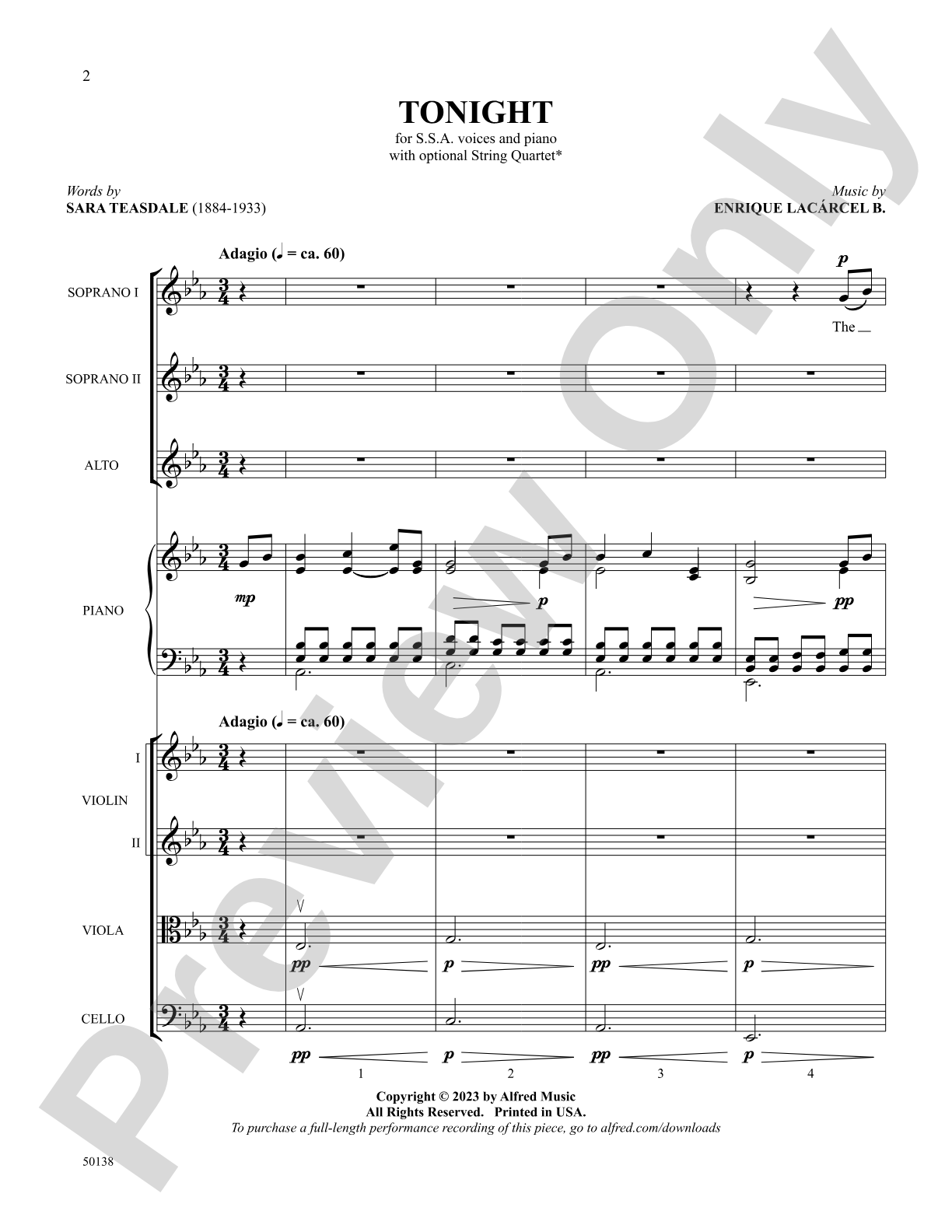
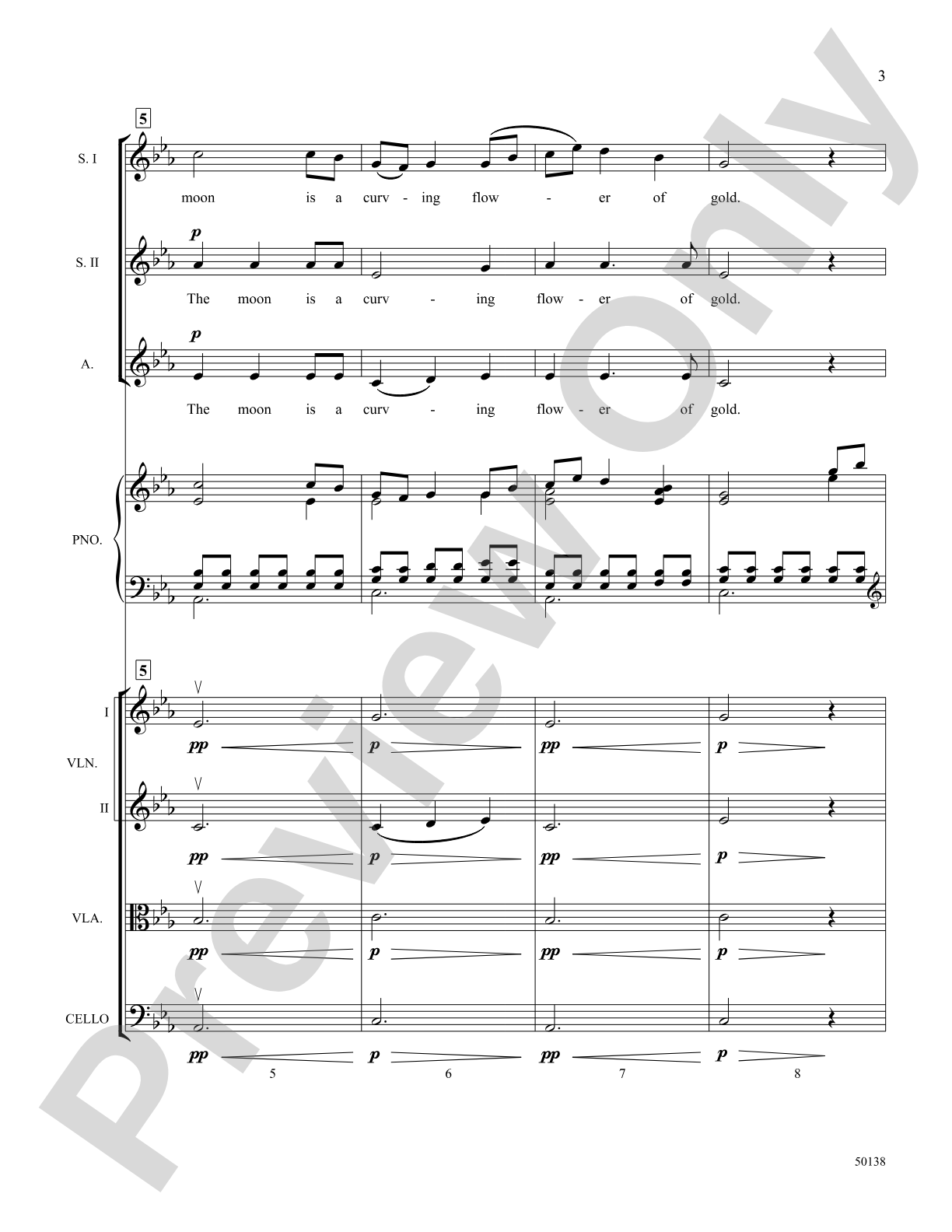
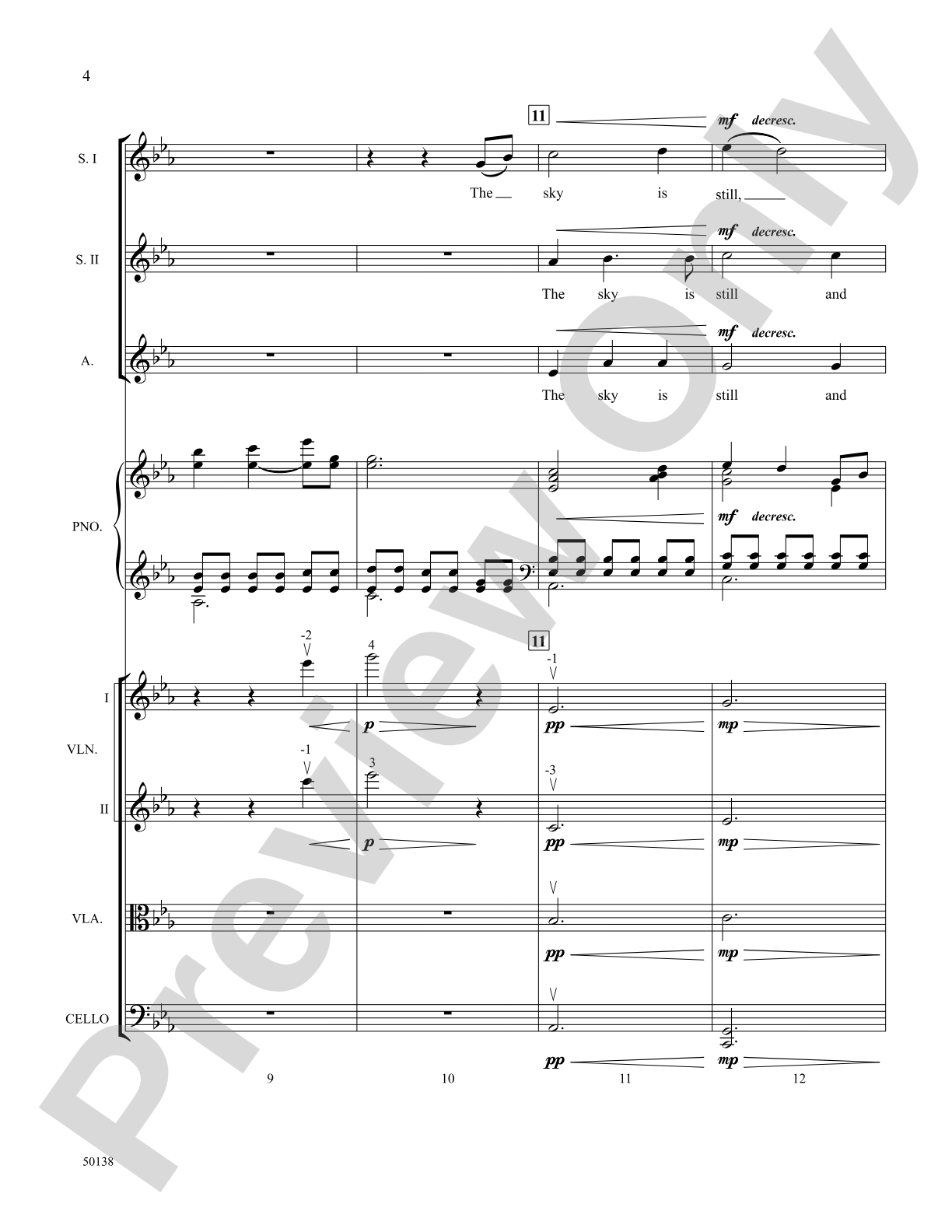
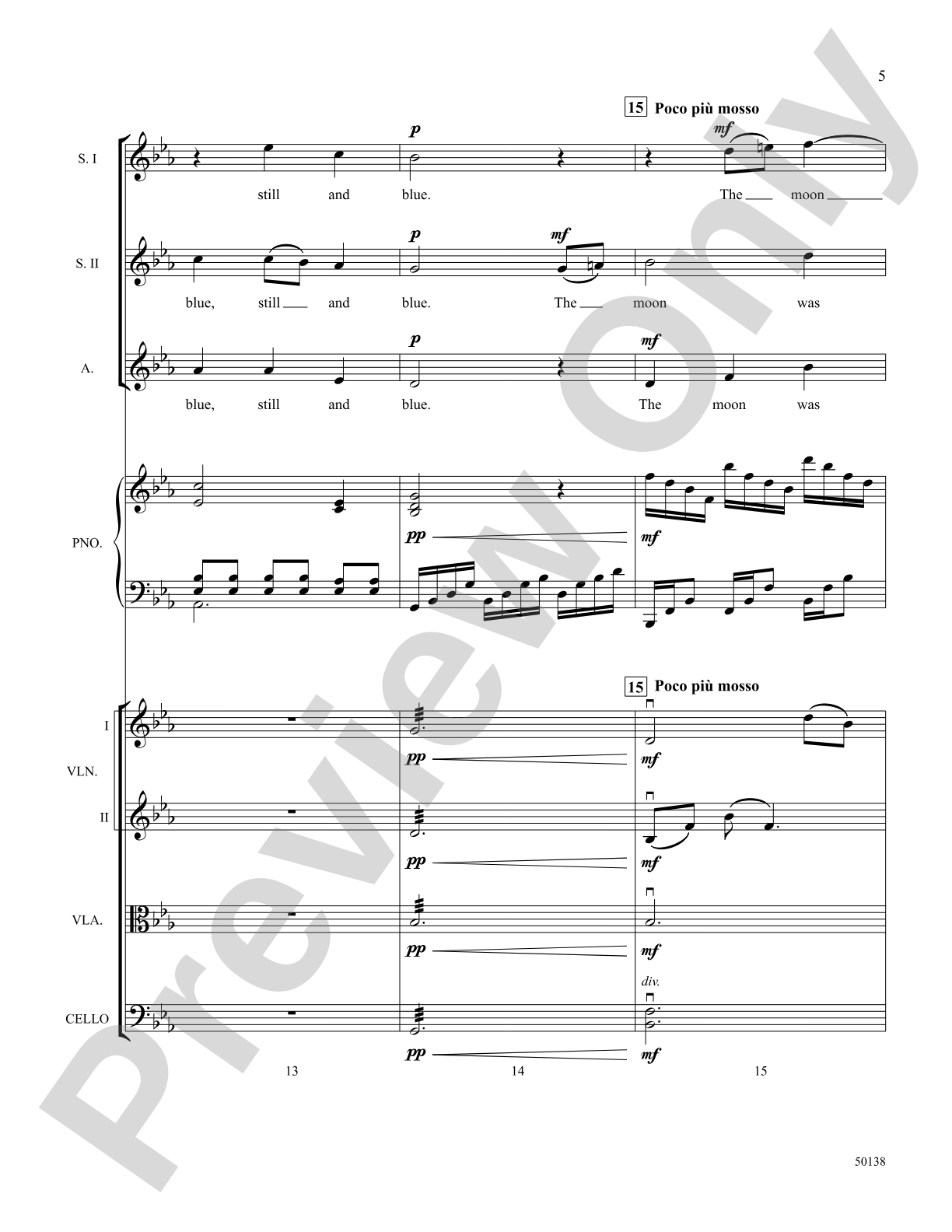
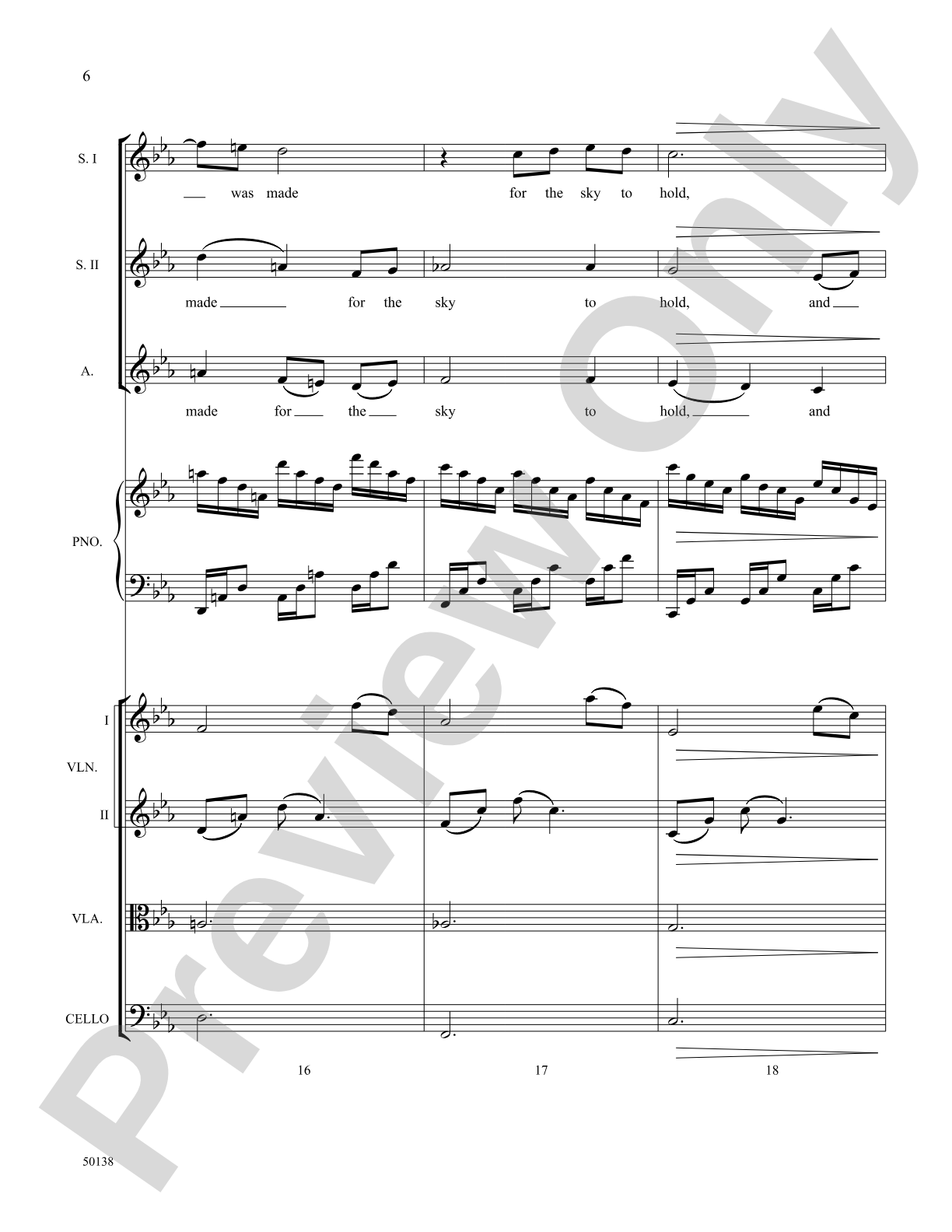
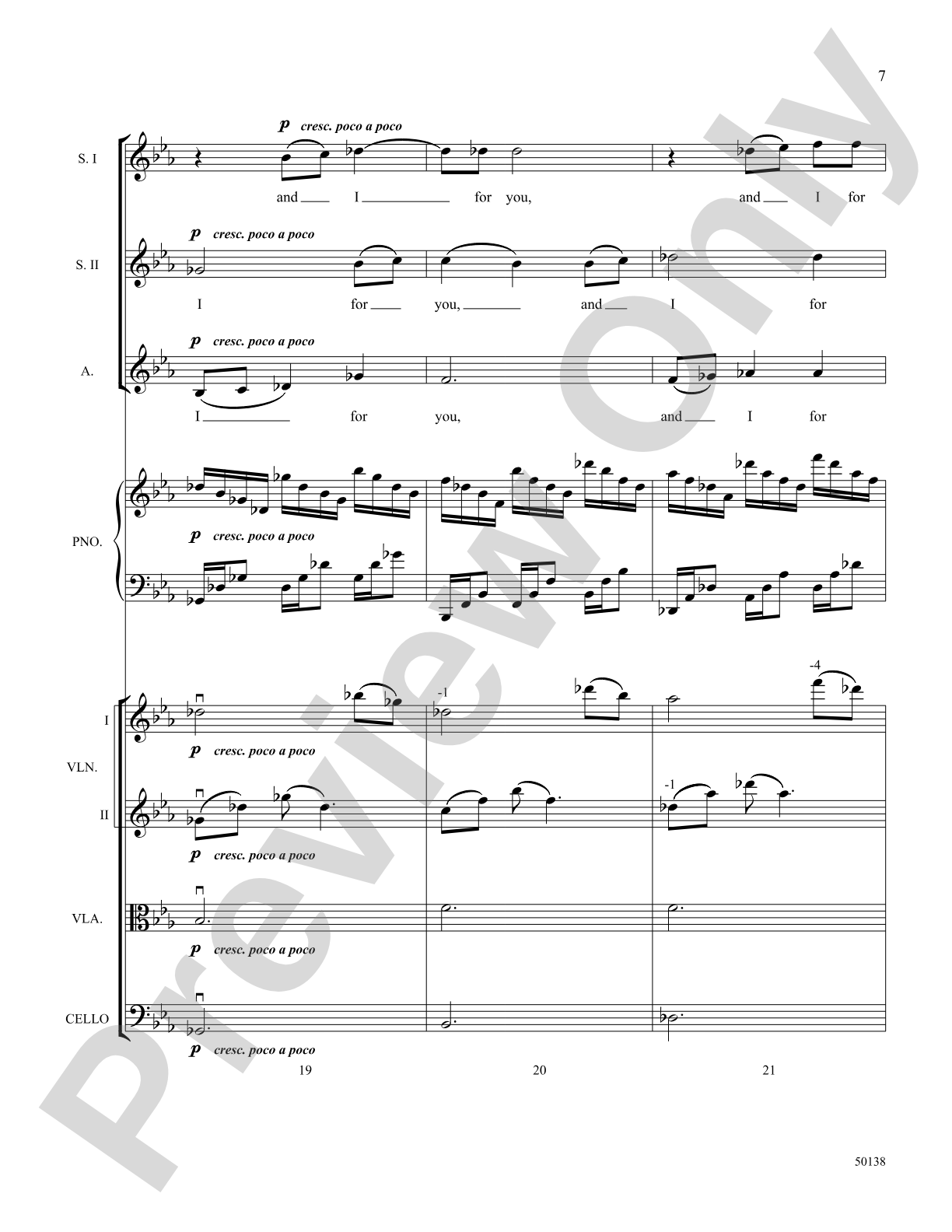
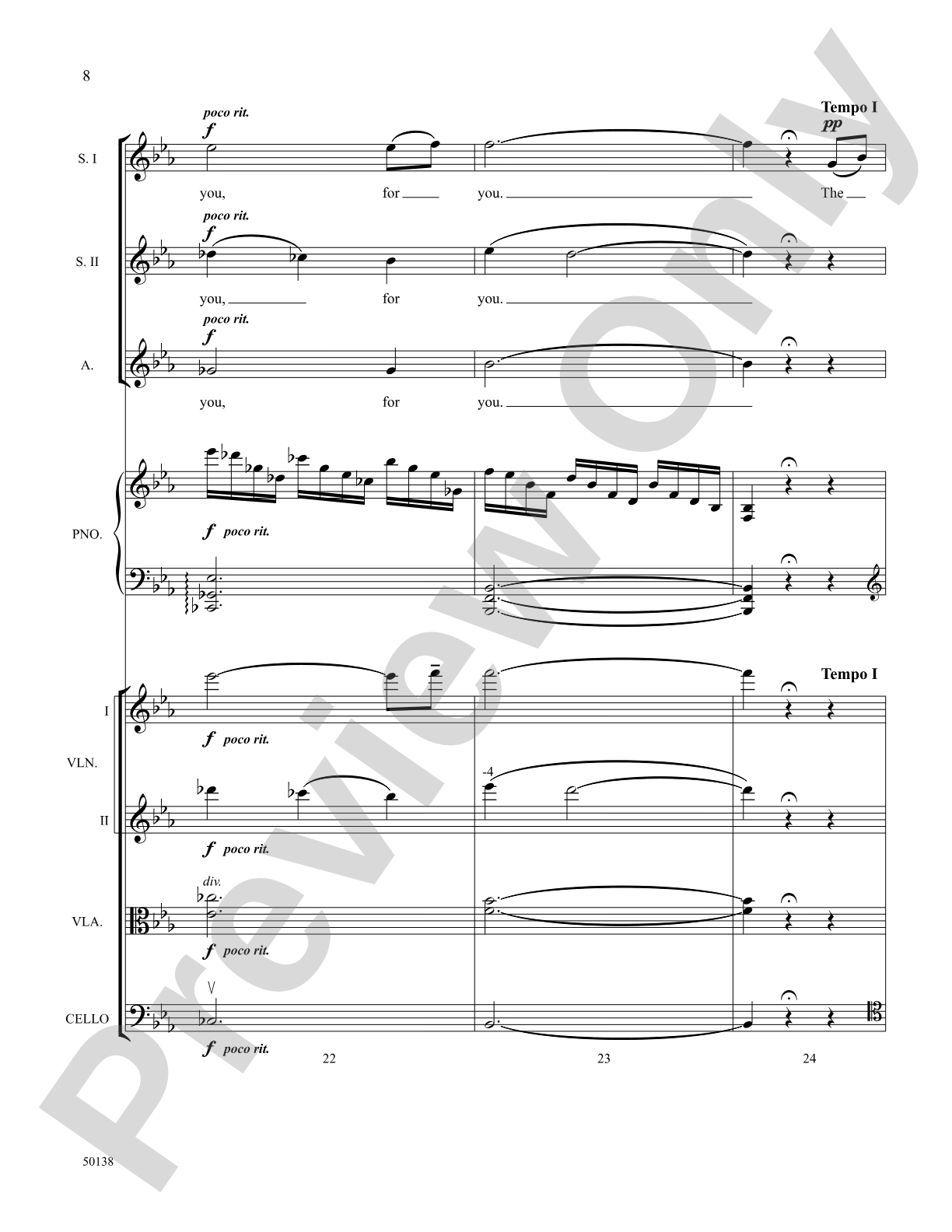
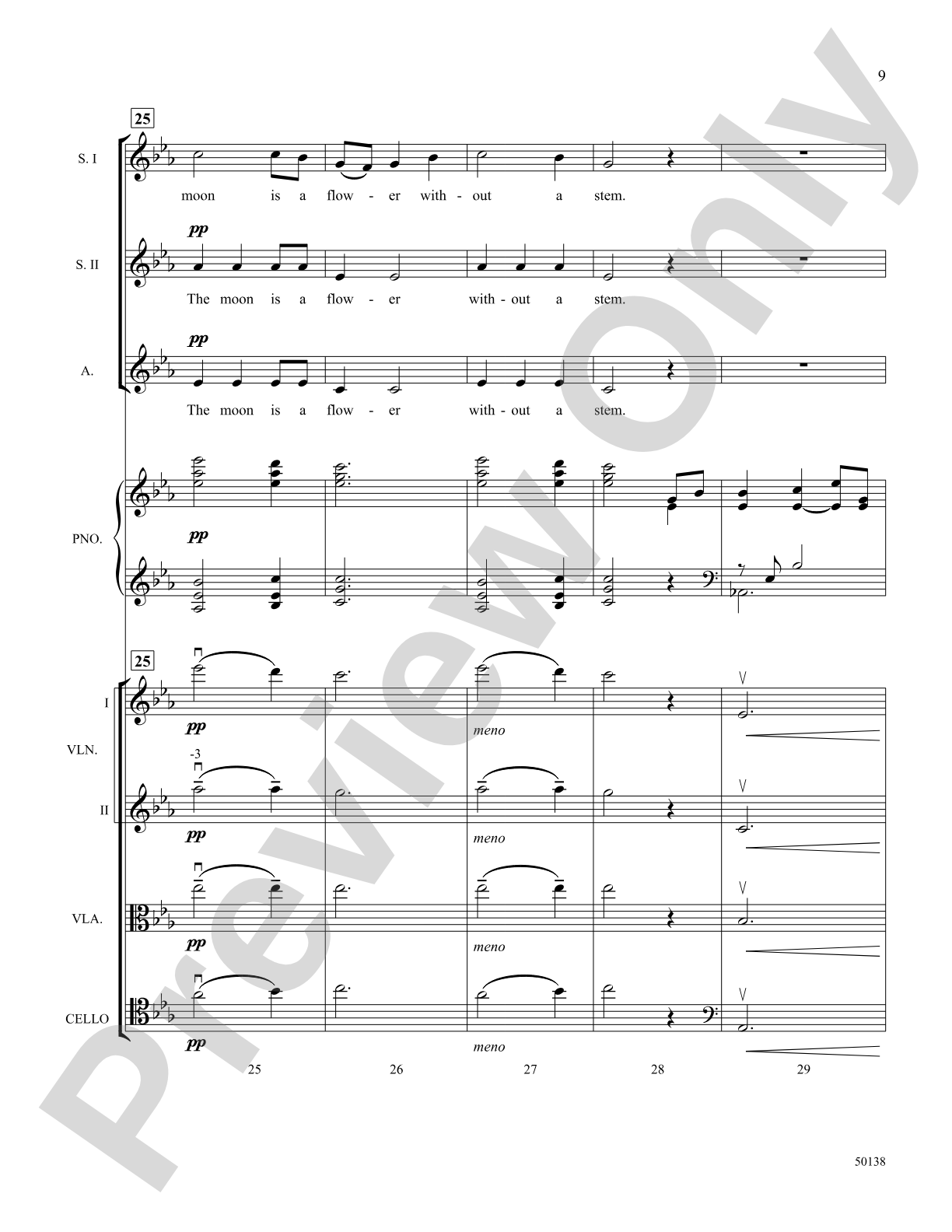
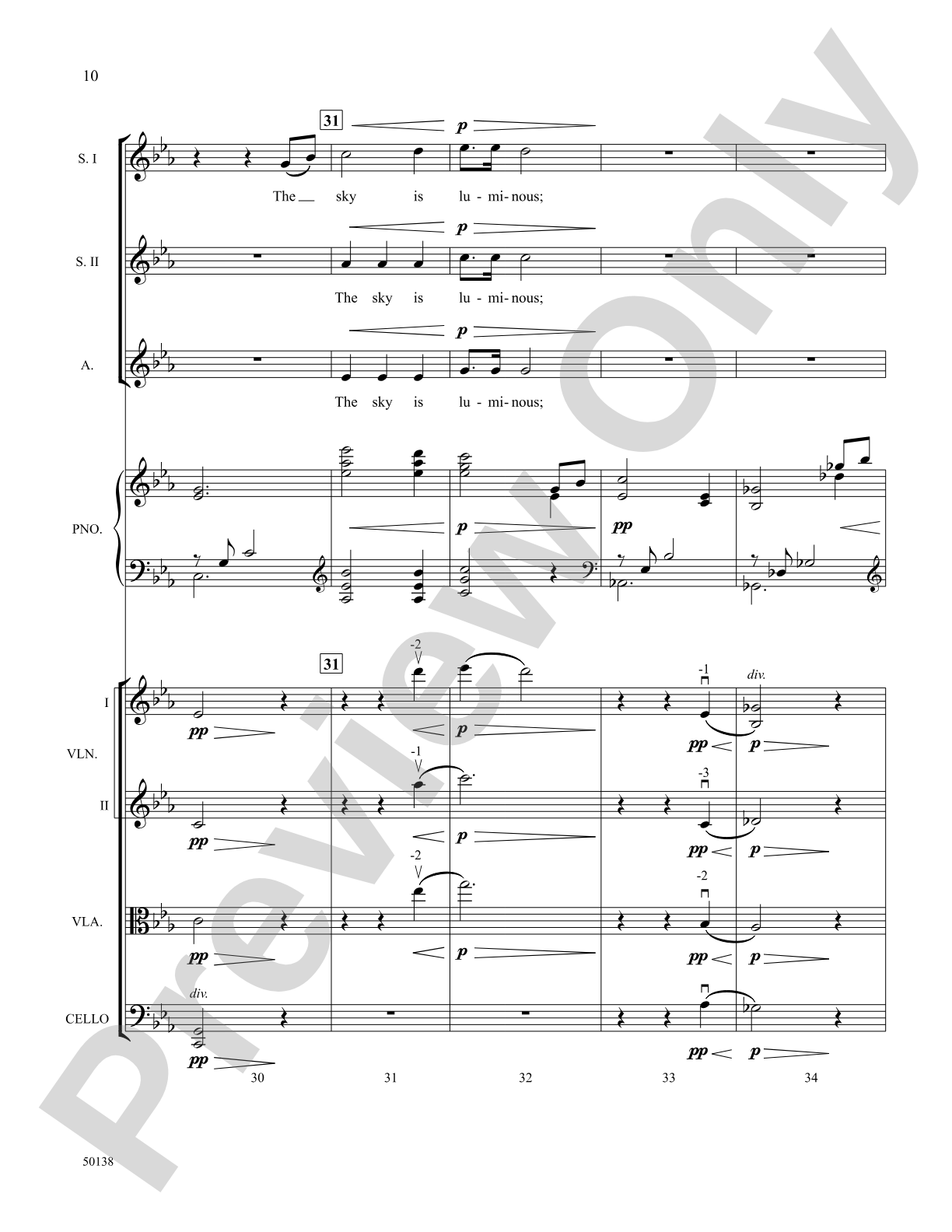
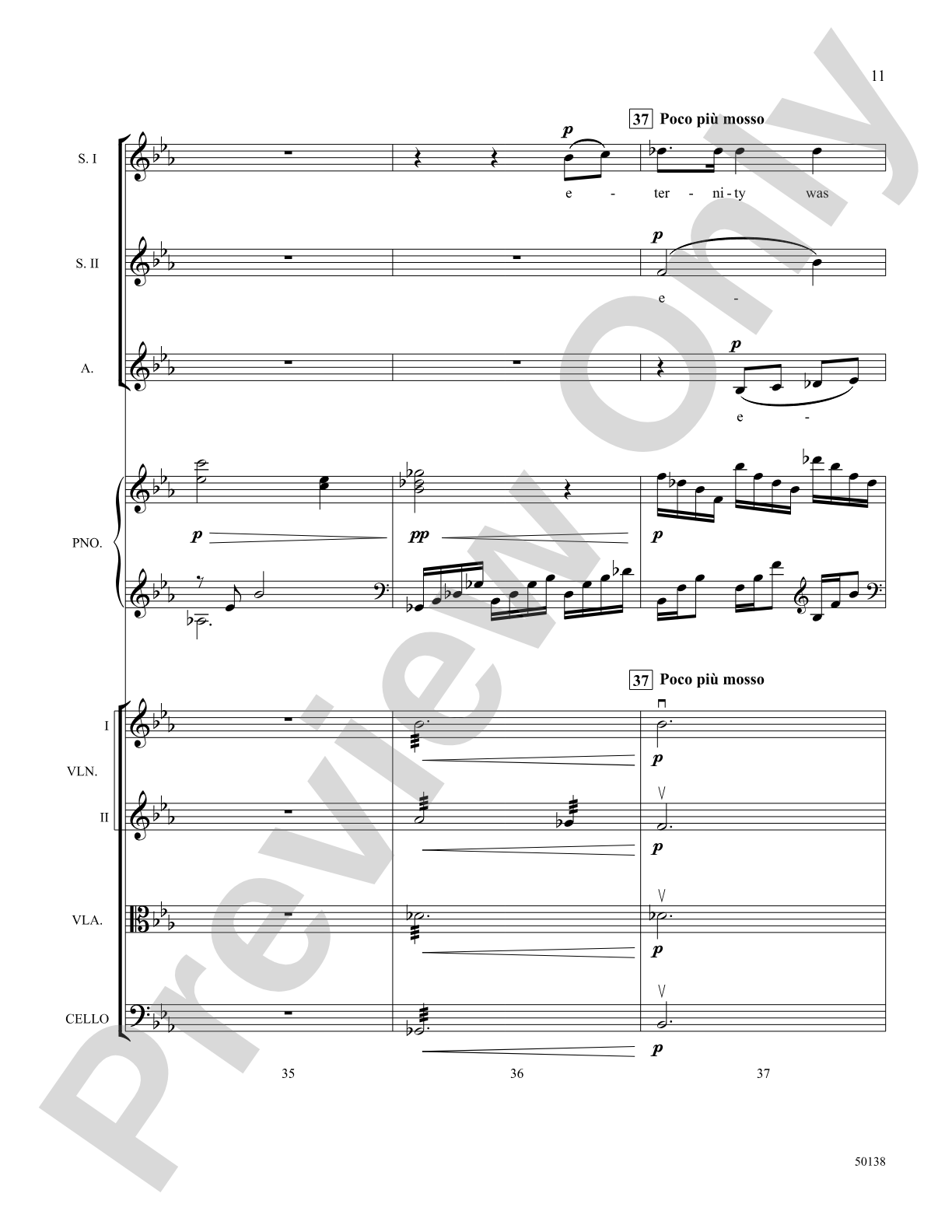
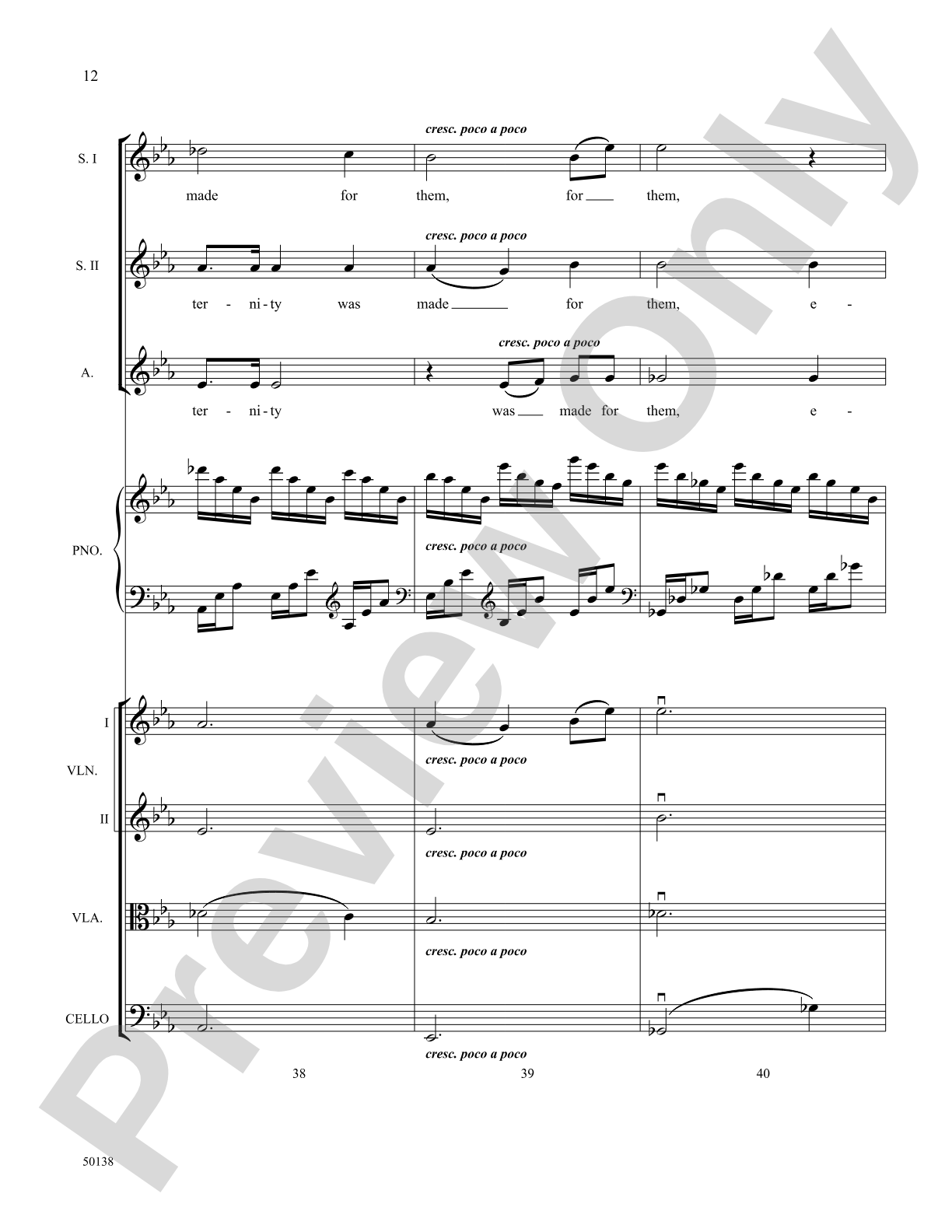
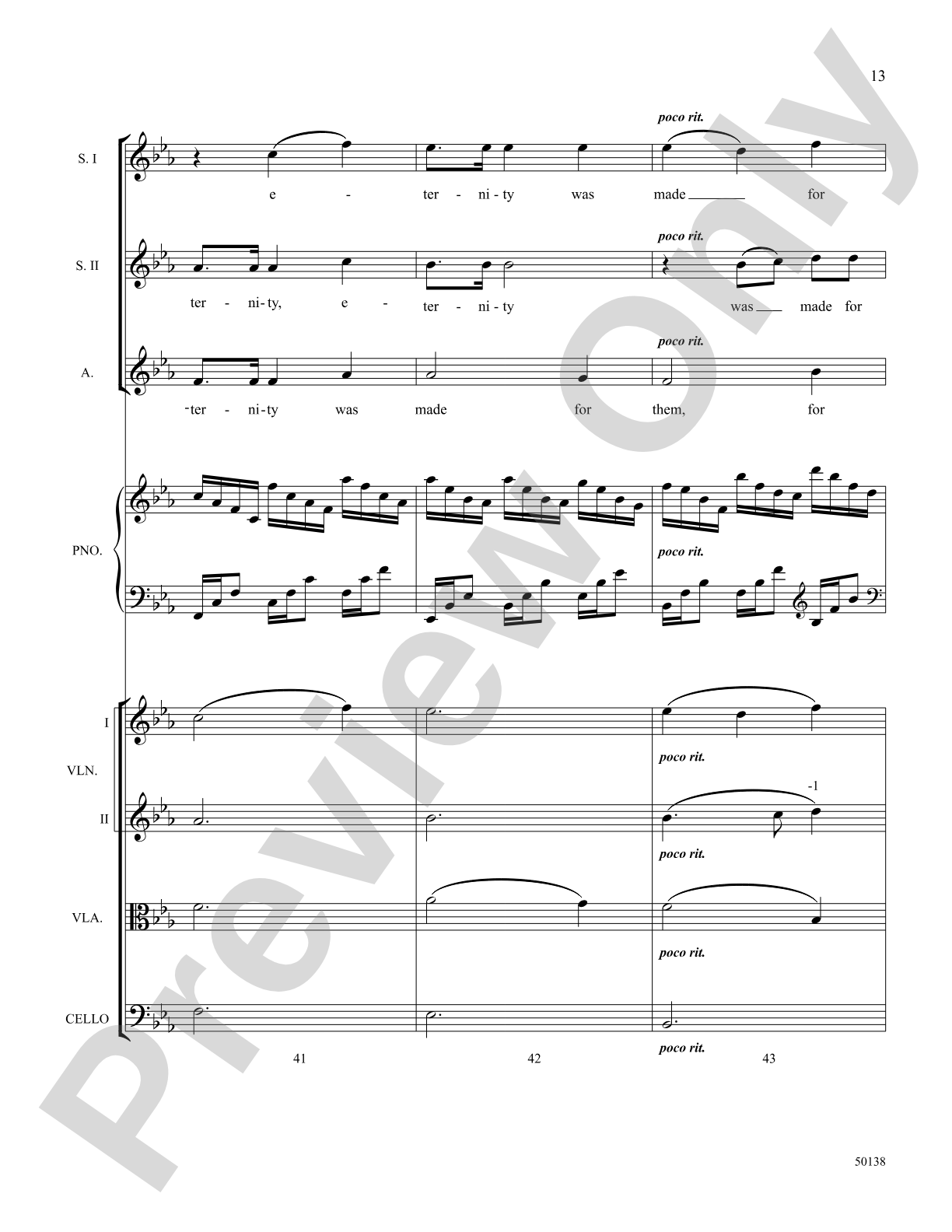
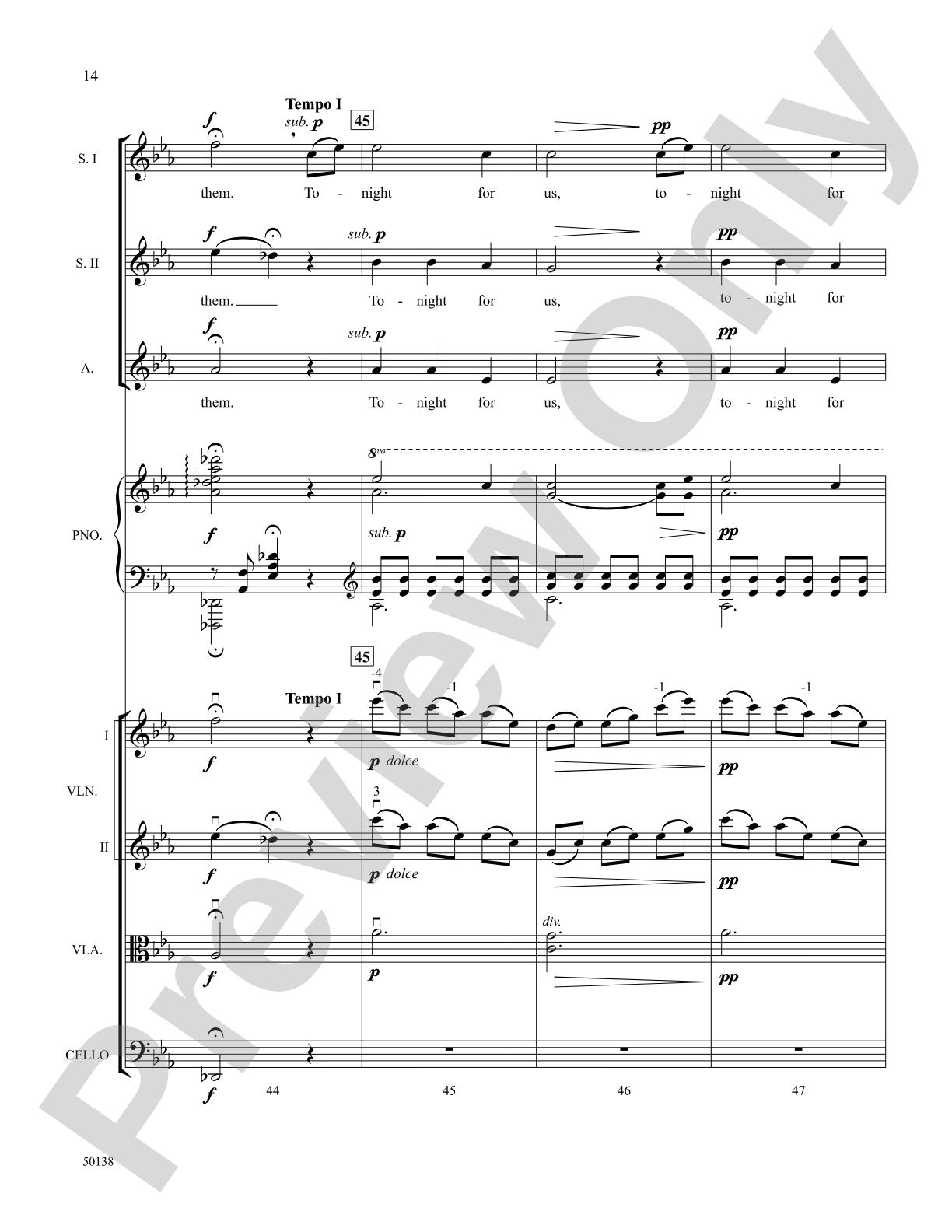
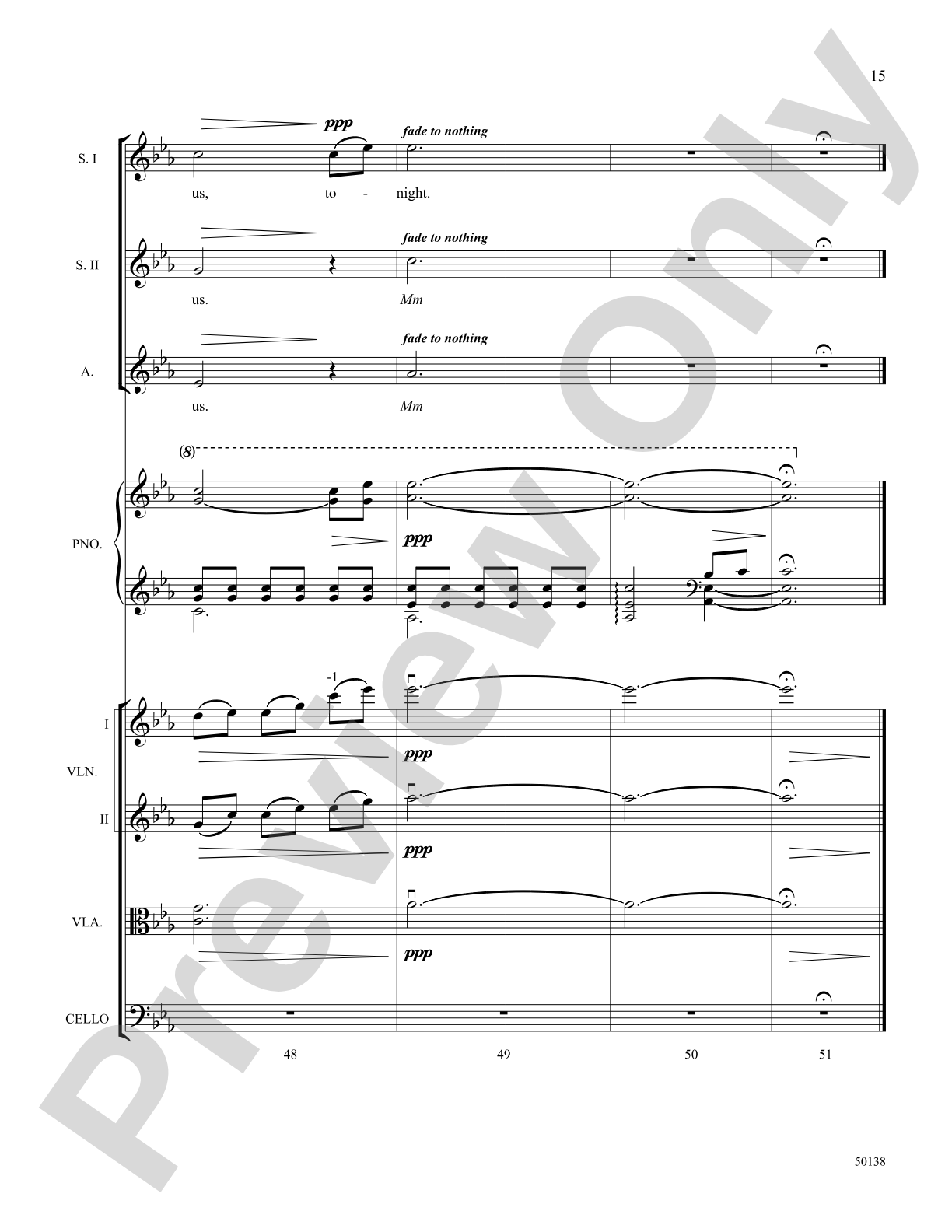
Sara Teasdale's ethereal poetry creates vivid sky-and-moon imagery that transports listeners to a starry night. Close treble triads and a colorful harmonic palette elevate this lush musical setting. An optional string quartet offers a shimmering accompaniment for this tender story of devotion. "Eternity was made for them; tonight for us." Breathtaking.
Discover MakeMusic Cloud: thousands of interactive titles your students can play along with today.
Lacárcel sets Teasdale's poem with remarkable harmonic sophistication while keeping the emotional core utterly accessible to singers. The close treble voicing demands precision but rewards it with that shimmering, intimate quality the text deserves. Adding optional strings transforms it into a concert showcase piece without requiring orchestration to land.
What to expect
Starlight through stained glass. The piece floats with nocturnal beauty, tender and unhurried, while the harmonic language keeps shifting unexpectedly beneath your feet. Devotion feels earned rather than declared.
Who it's for
Intermediate to advancing treble choirs with strong diction and harmonic awareness. This works beautifully for groups ready to tackle lush colors and poetic text painting, whether in a concert setting or festival competition.
How to get the most out of it
Balance the treble sonorities carefully; these close harmonies need clarity rather than blend. Each voice line should ring through.
If using the string quartet, rehearse with the recording until your singers feel the shimmer underneath them. It changes the whole acoustic.
Shape the phrasing around Teasdale's line breaks, not just the musical cadences. The poetry breathes differently than the harmony does.
Let the final statement "Eternity was made for them; tonight for us" have space. Resist rushing the ending.
How to use it
Pair this with other secular art song arrangements for a poetry-focused concert set, or program it as the emotional heart of a mixed program. The optional string quartet makes it substantial enough to anchor a second half or serve as a strong closing number.
Skills your students will build
Reading close treble voicings and maintaining independent lines in tight harmonic clusters
Coloring tone to support chromatic harmony changes
Phrasing by poetic text rather than musical syntax
Ensemble blend and balance in intimate a cappella settings
Coordination with string accompaniment when parts are added
You May Also Like
Scan to Complete Your Purchase
Use your phone's camera to scan the code below
You'll log in on your phone and the order will be added to your account