

Tomorrow: SSAB Choral Octavo
(from Annie)
Words by Martin Charnin, music by Charles Strouse / arr. Greg Gilpin
Item: 00-PO-0007600
$2.45
Minimum order quantity: 20 copies
Pickup currently not available
Description
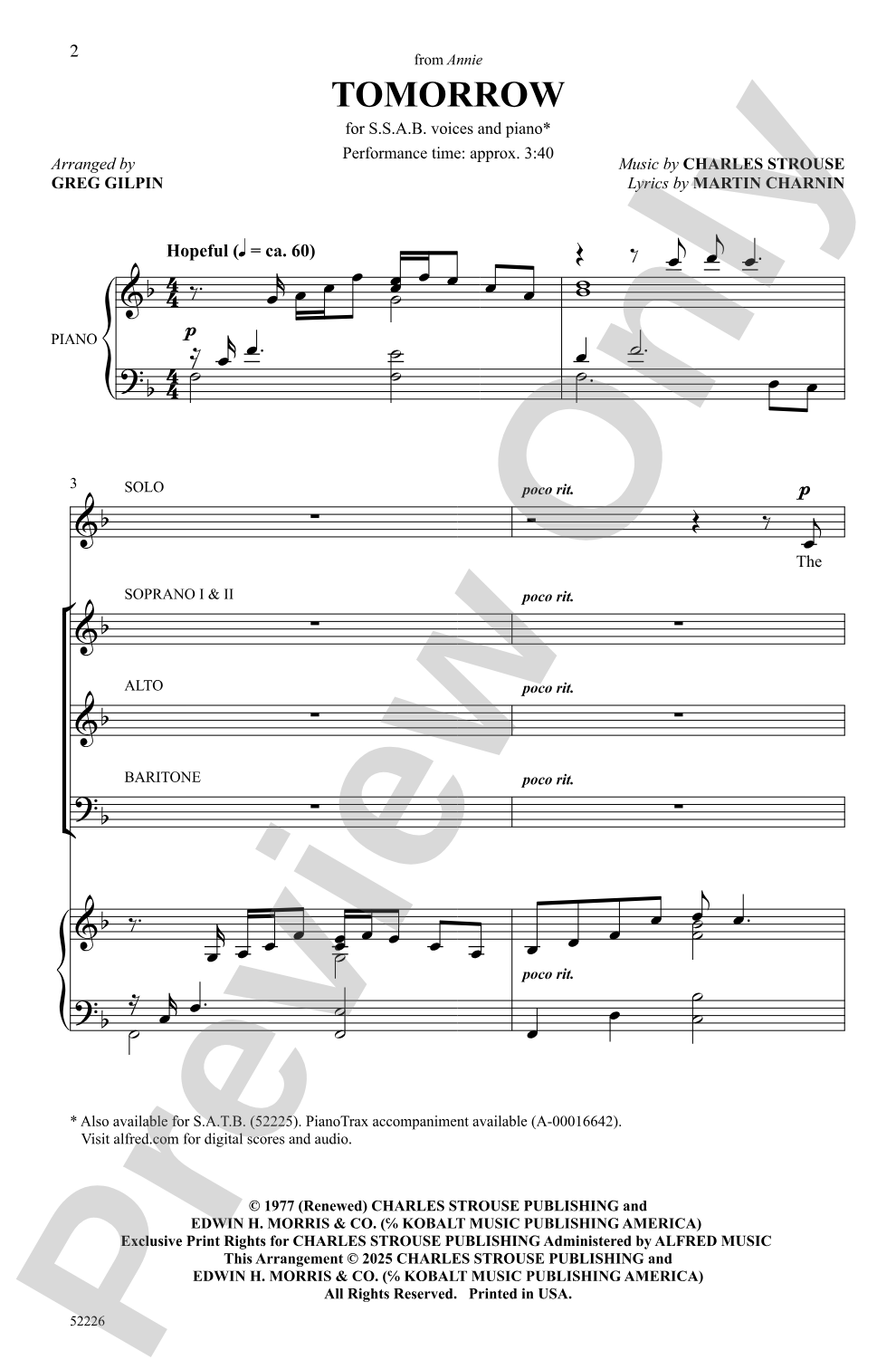
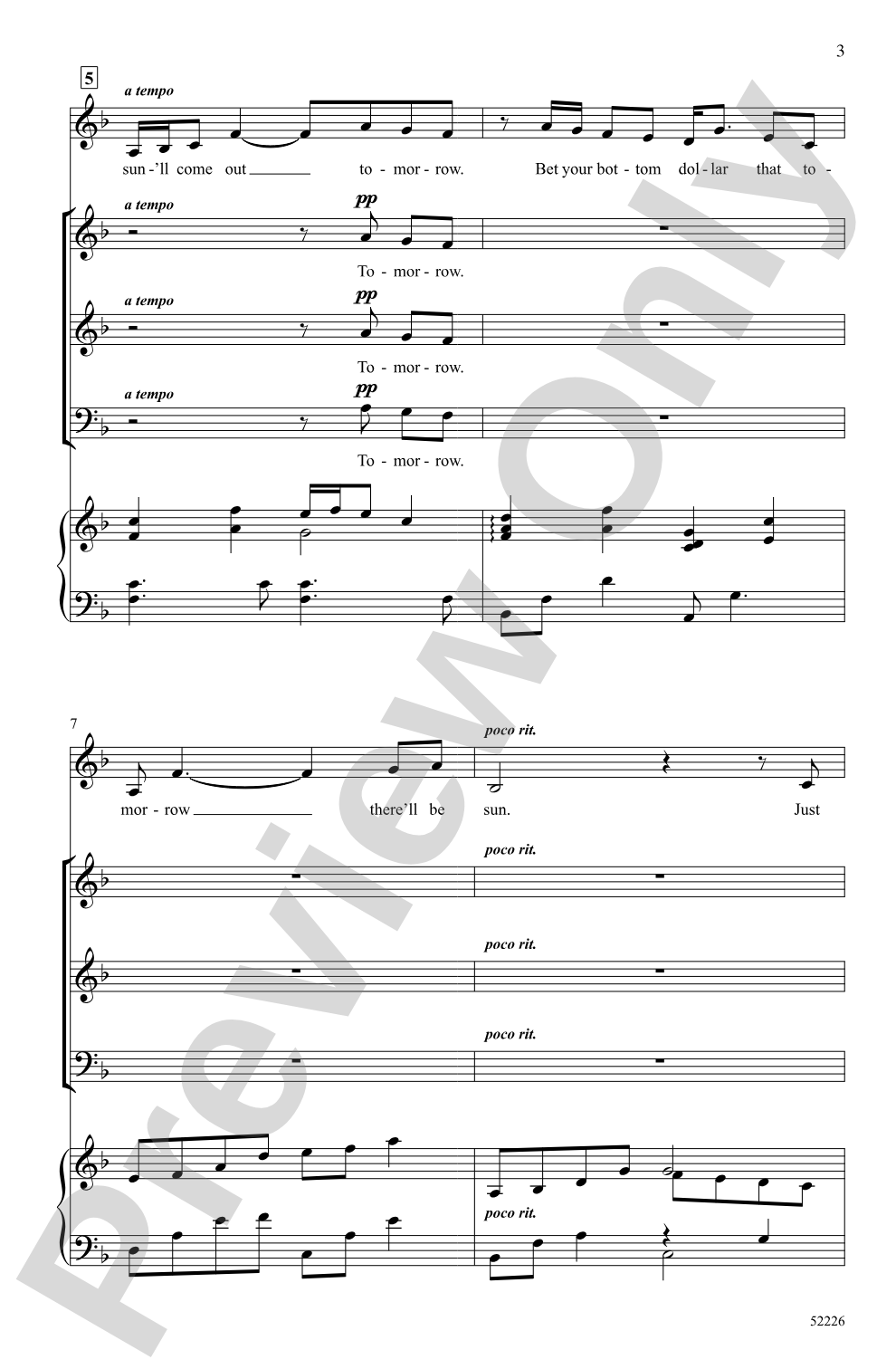
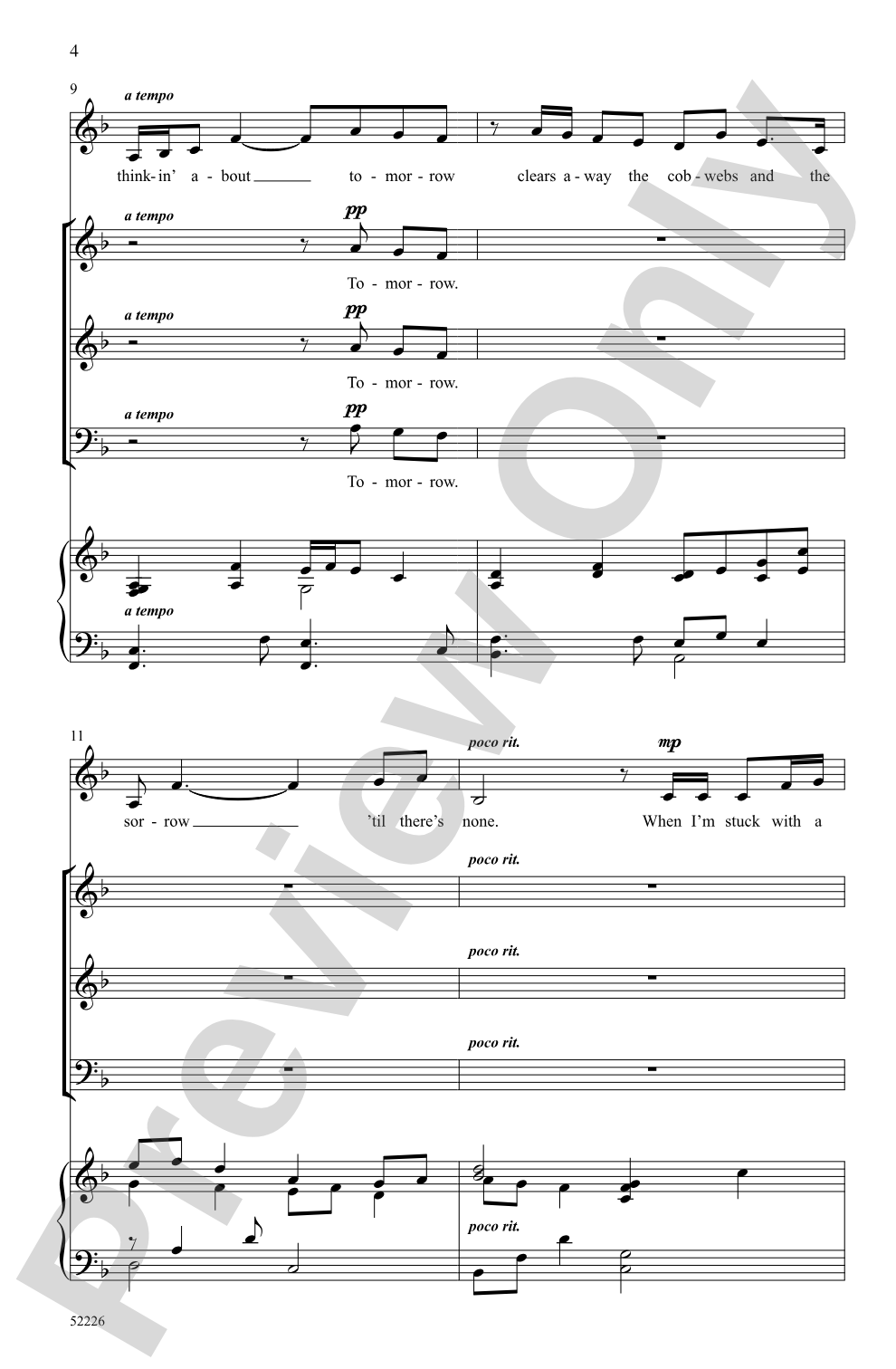
The signature song from the musical Annie is given a fresh treatment in this elevated concert setting. The choir supports an opening soloist before moving into lush harmony on the second verse of this enduring classic from the Charles Strouse library. From the sparkling piano introduction to the climactic key change, Greg's tasteful arranging takes us on a musical journey that delivers a timeless message of hope and optimism.


Discover MakeMusic Cloud: thousands of interactive titles your students can play along with today.
Sample Audio
1
Audio File
--:--
0:00
0:00
Sample Video
Additional Details
Series:
Alfred Pop Choral Series
Publisher:
Alfred Music
Page Count:
12
SKU:
00-PO-0007600
More about this title
About the Composer: Charles Strouse
Charles Strouse composed the scores for some of Broadway's most beloved musicals, including Annie, Bye Bye Birdie, and Applause. His gift for writing memorable melodies that resonate across generations has made his work a cornerstone of American musical theater. Strouse's compositions are celebrated in music education for their singability, emotional directness, and theatrical vitality.
As a composer, Strouse understood how to craft songs that work equally well in concert halls and on stages. His melodies are generous and accessible without sacrificing harmonic sophistication, making his music ideal for choral arrangements that challenge developing singers while remaining engaging for audiences.
Why we love this
Greg Gilpin's arrangement honors the original's emotional simplicity while creating something sophisticated enough for concert programming. The addition of lush harmonies and a key change gives choirs the chance to build genuine theatrical drama, and the opening solo passage ensures a moment of vulnerability before the ensemble joins. This is the kind of arrangement that feels fresh without losing what made the song unforgettable in the first place.
What to expect
There's an immediate warmth to the sparkling piano introduction that sets a tone of gentle optimism. As the voices enter and harmonies deepen, the arrangement builds an embracing quality that feels less like nostalgia and more like a genuine affirmation. The key change arrives like sunrise breaking through clouds.
Who it's for
Choirs with solid blend and a comfortable soloist are the ideal fit for this arrangement. The piece works well for ensembles in upper middle school through adult settings that want to program a recognizable, emotionally accessible song alongside more demanding concert repertoire.
How to get the most out of it
- Balance the opening soloist carefully against the sparkling piano introduction. The piano should sparkle without overwhelming the singer, so clarity and restraint matter more than volume.
- Shape the harmonic movement in the second verse with awareness of where voices are moving internally. SSAB voicings can feel static if each part just sits; subtle dynamic shifts following the melodic contour keep the texture alive.
- Approach the key change as a moment of genuine lift, not just a technical modulation. Prepare it with a slight breath and mental reset so the higher key feels earned and energizing rather than abrupt.
- Use the recorded accompaniment in rehearsal to lock ensemble rhythms and intonation, then work without it in later rehearsals to deepen ownership and allow the choir to shape tempos expressively.
How to use it
This arrangement bridges popular music and concert programming without apology, making it an excellent closer for pops concerts or a centerpiece in a program exploring hope and resilience as themes. It also works beautifully as the anchor of a mixed repertoire concert, especially one that includes other American musical theater selections or contemporary choral works.
Skills your students will build
- Singing with stylistic awareness and emotional expression in a popular music context
- Blending SSAB voices into unified harmonic colors
- Executing key changes smoothly through preparation and focus
- Supporting and listening to a featured soloist while maintaining ensemble integrity
- Interpreting a tasteful, elevated arrangement of familiar material