
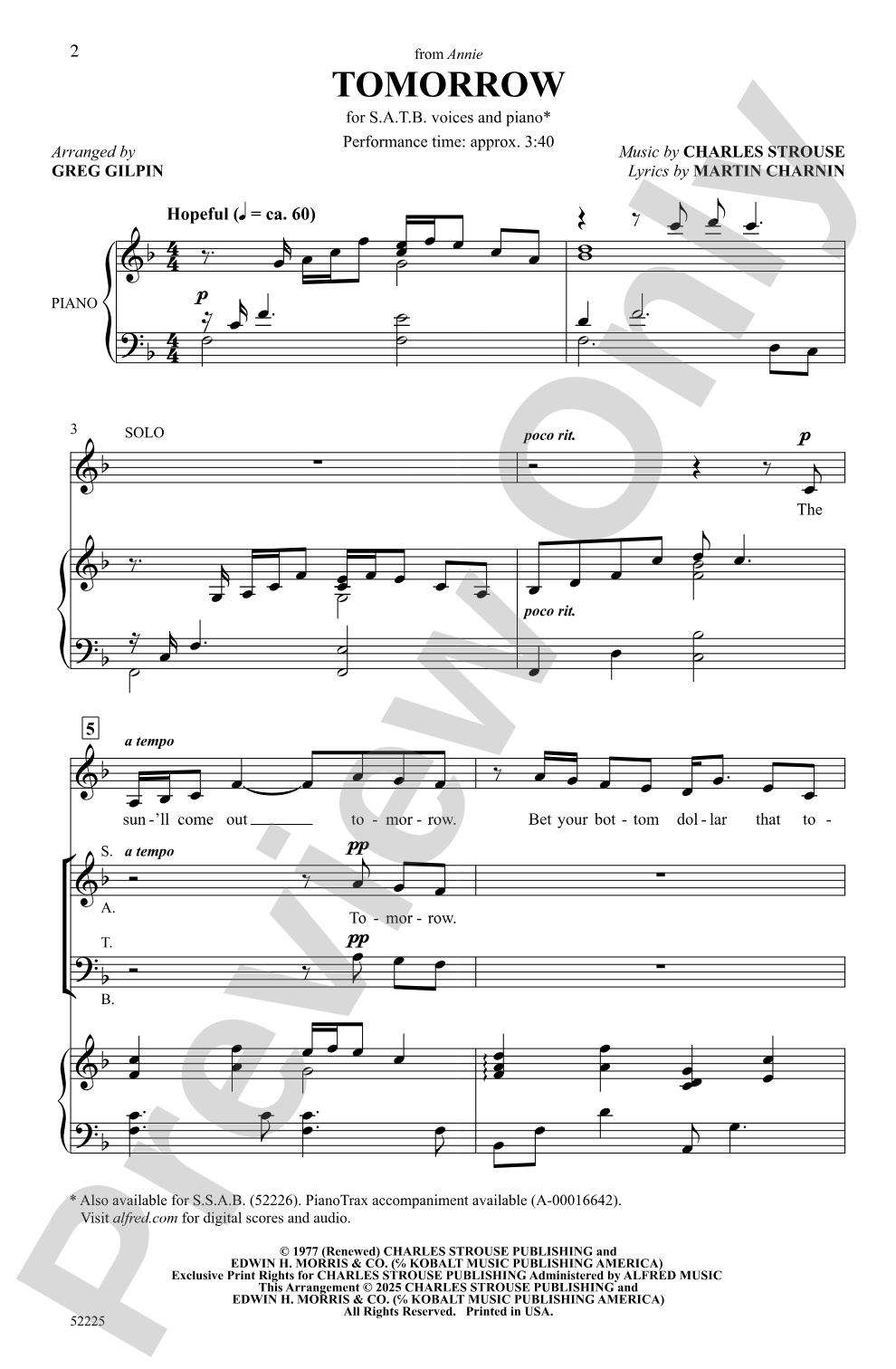

Tomorrow: SATB Choral Octavo
(from Annie)
Words by Martin Charnin, music by Charles Strouse / arr. Greg Gilpin
Item: 00-PO-0007599
$2.45
Minimum order quantity: 20 copies
Pickup currently not available
Description
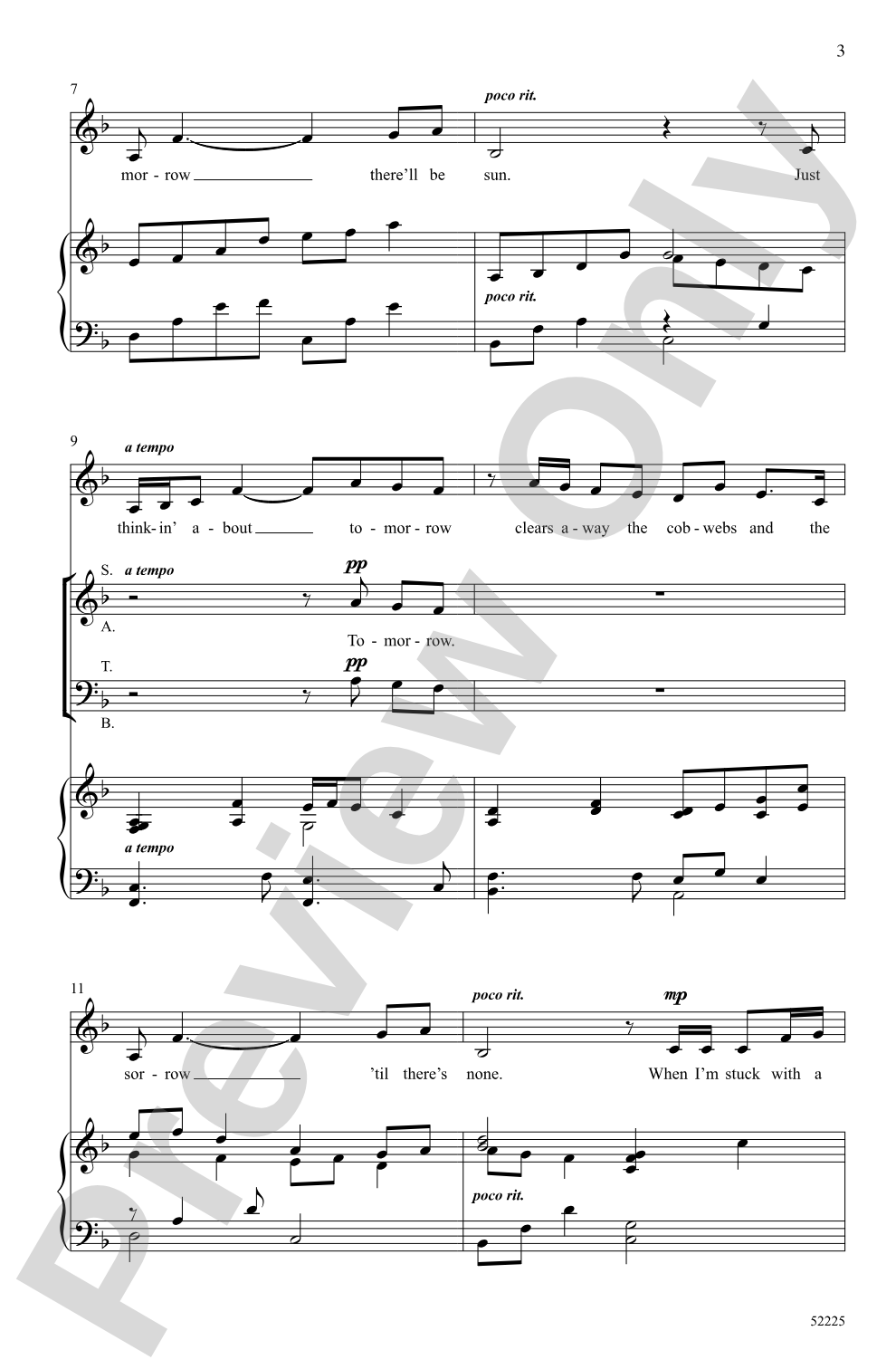
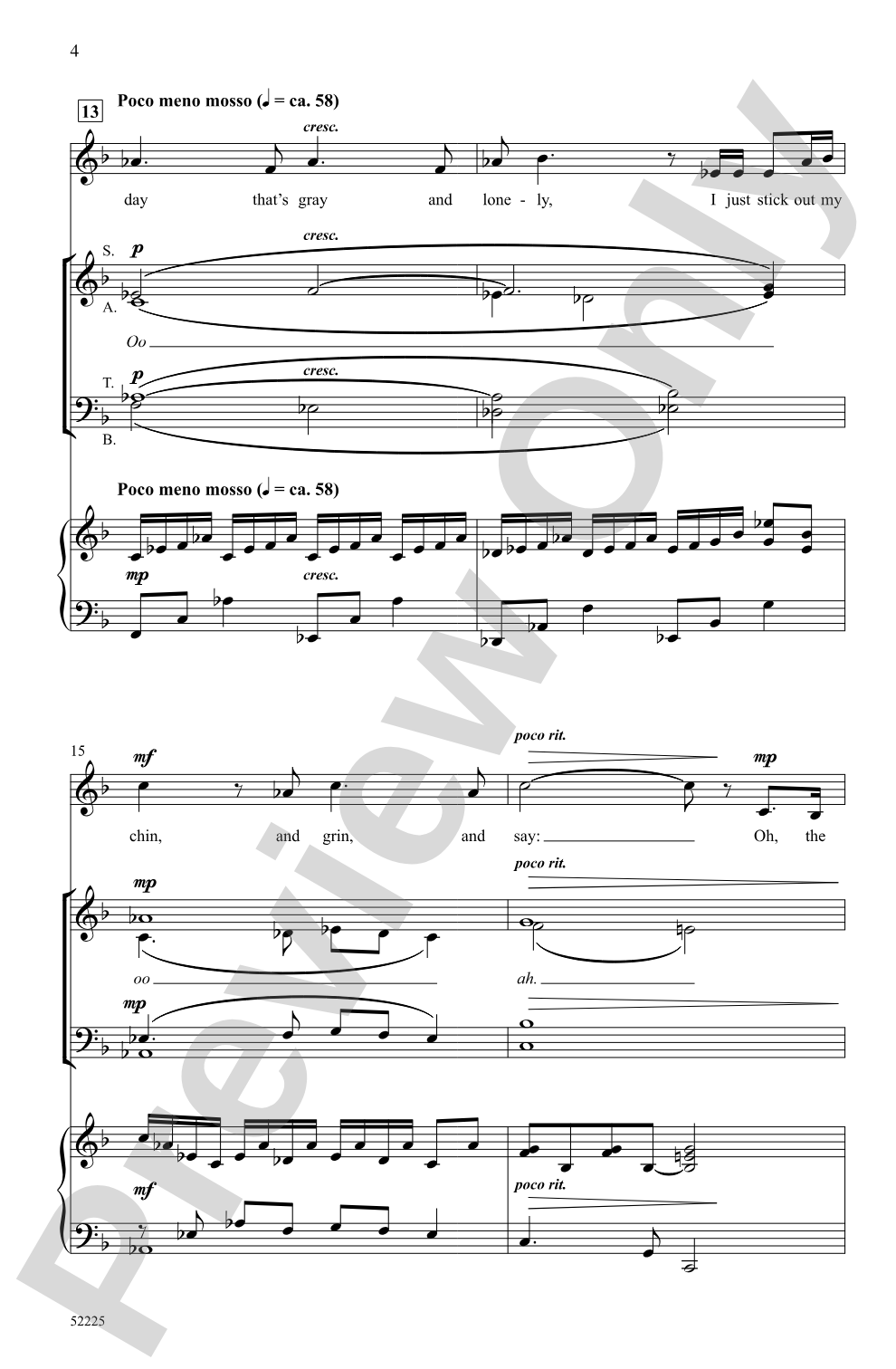
The signature song from the musical Annie is given a fresh treatment in this elevated concert setting. The choir supports an opening soloist before moving into lush harmony on the second verse of this enduring classic from the Charles Strouse library. From the sparkling piano introduction to the climactic key change, Greg's tasteful arranging takes us on a musical journey that delivers a timeless message of hope and optimism.


Discover MakeMusic Cloud: thousands of interactive titles your students can play along with today.
Sample Audio
1
Audio File
--:--
0:00
0:00
Sample Video
Additional Details
Series:
Alfred Pop Choral Series
Publisher:
Alfred Music
Page Count:
12
SKU:
00-PO-0007599
More about this title
About the Composer: Charles Strouse
Charles Strouse composed the score for Annie, the beloved 1977 musical that became a cultural phenomenon and remains a staple of American theater. His gift for writing memorable melodies with emotional depth earned him two Tony Awards and an Academy Award nomination, and his work spans Broadway, film, and concert music across five decades.
Why we love this
Greg Gilpin's arrangement honors the original melody while expanding its emotional range through sophisticated four-part writing and strategic harmonic movement. The scored solo entrance followed by full SATB harmony creates a dramatic arc that feels genuinely concert-worthy without losing the song's accessibility or its message of resilience.
What to expect
Strouse's melody rises with genuine optimism, and Gilpin's voicings give it room to soar. The movement from solo vulnerability to unified ensemble voice mirrors the song's own arc of hope, creating a moment that feels both familiar and newly discovered.
Who it's for
This octavo works for intermediate to advanced choirs seeking accessible repertoire with artistic depth. Concert choirs, community choirs, and select show choirs will find it a refreshing alternative to overused arrangements, and it suits programs that blend Broadway with legitimate concert music.
How to get the most out of it
- Balance the opening soloist carefully against the piano introduction; the accompaniment should support without overwhelming the lyrical line.
- Shape the second verse harmonies with attention to internal phrase breaks, allowing the lush chords to breathe rather than sustain mechanically.
- Approach the key change as a structural turning point, not just a pitch shift; adjust dynamics and articulation to signal the emotional lift.
- Use the recorded accompaniment to lock ensemble entrances and maintain steady momentum through longer held notes in the climax.
How to use it
Program this as an emotional centerpiece in a concert celebrating American musical theater, or place it strategically to provide an uplifting contrast in a program mixing classical and contemporary works. The piece also serves well as a showcase for a featured vocalist paired with ensemble support.
Skills your students will build
- Balancing solo and ensemble textures
- Singing through key modulations
- Executing four-part harmony with tonal blend
- Following dynamic and expressive cues in concert arrangements
- Performing with emotional intention in secular repertoire