

Toccatina - Piano Duo (2 Pianos, 4 Hands): Piano Duets & Four Hands
By E. L. Lancaster and Kenon D. Renfrow
Level: Early Intermediate
Item: 00-PB-0000828

$4.95
Pickup currently not available
Related Items
Toccatina: Piano Duo (2 Pianos, 4 Hands) Sheet (2 copies included) |
$4.95
|
View |
Description
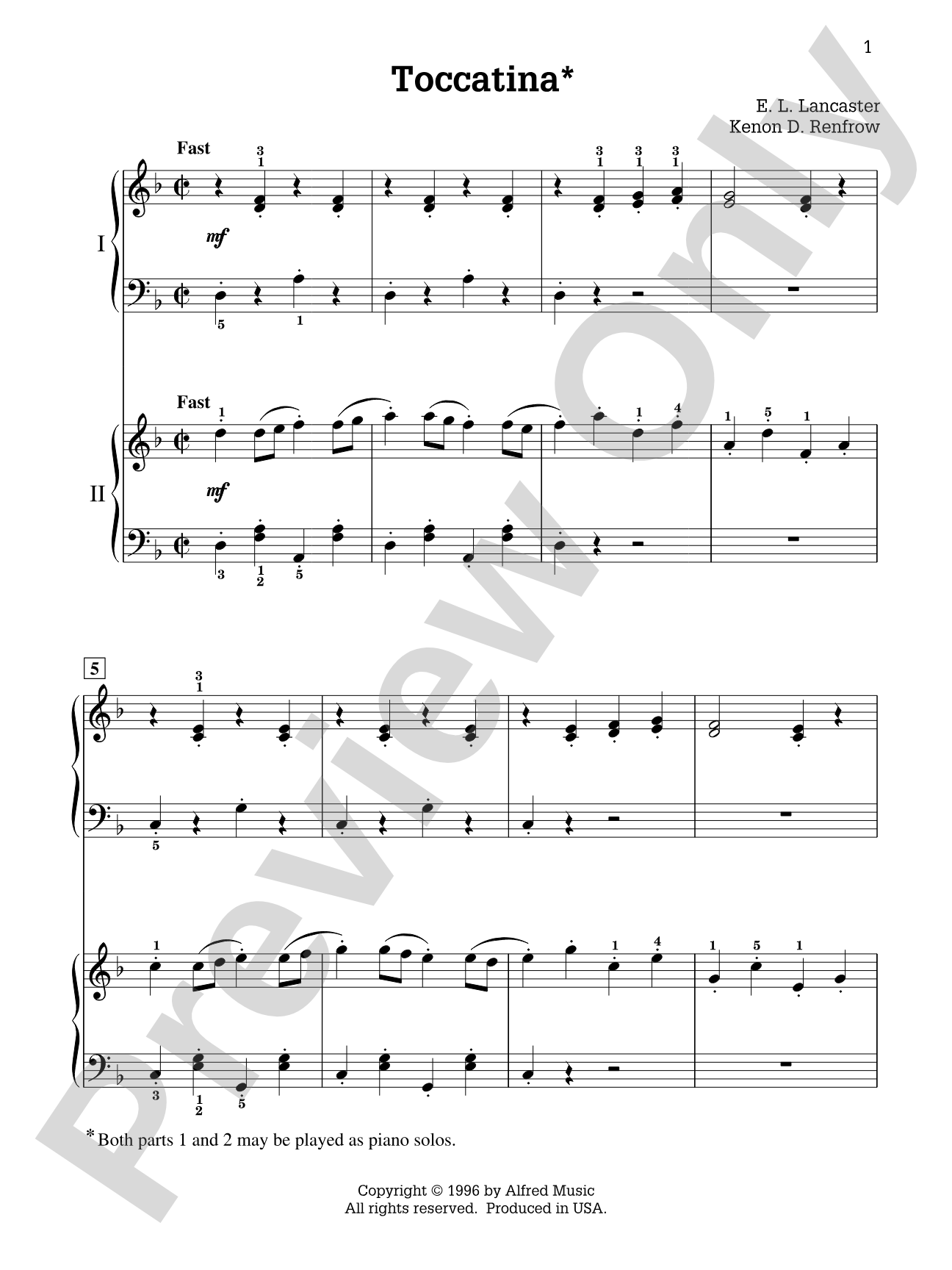
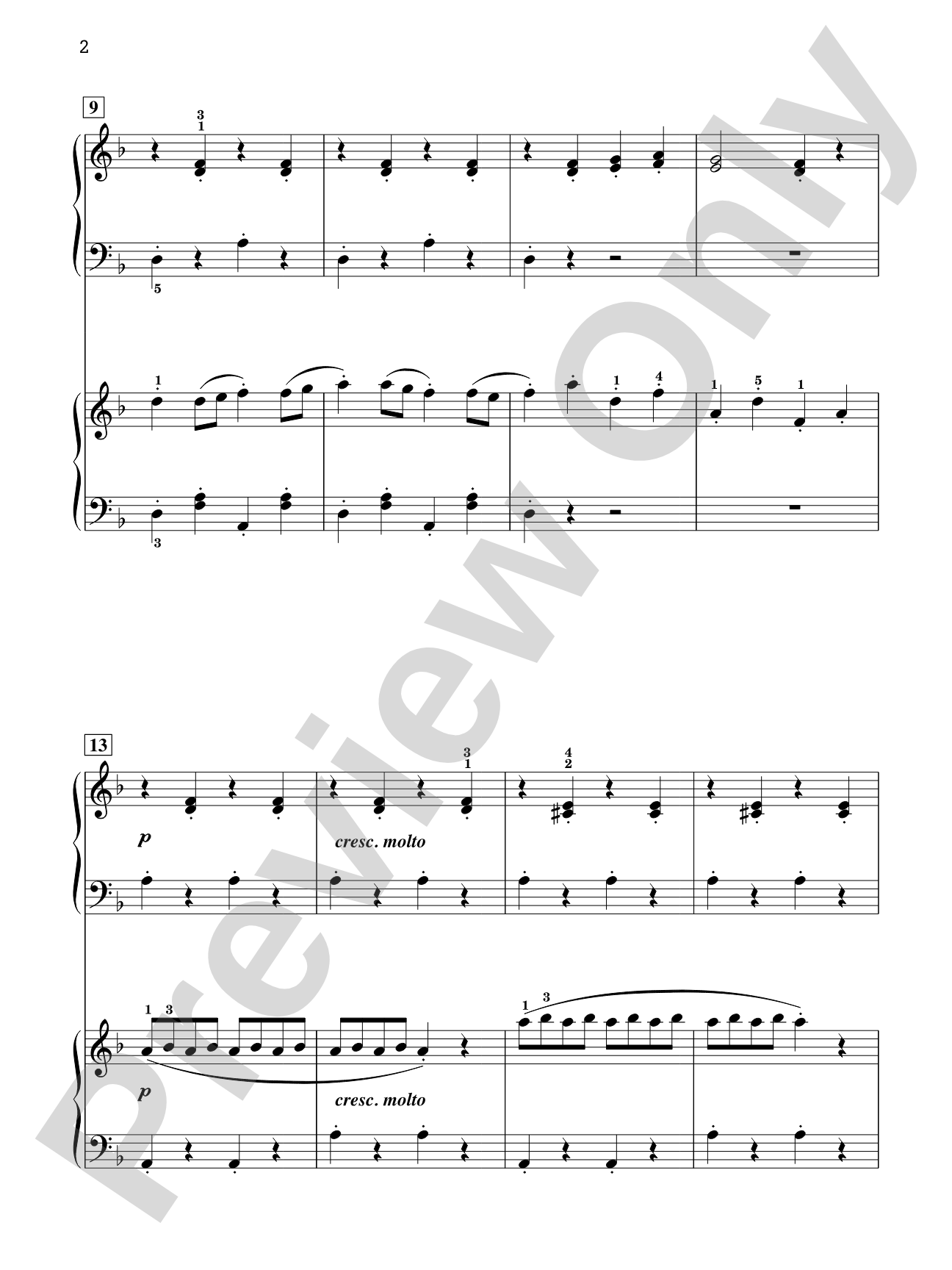
Written for "piano duo" which is 2 pianos and 2 performers, each pianist's part of this lively piece may also be performed as a solo! It is composed in D-minor, cut time, and is to be played "fast." There are staccato touch, drop-roll phrasing, and extreme shifts in dynamics. Two copies of the music are included in this one item. A Federation Festivals 2024-2028 selection.


Don't just read it, hear it, play along with it, and watch your students grow with it. In MakeMusic Cloud, Toccatina - Piano Duo (2 Pianos, 4 Hands): Piano Duets & Four Hands comes alive with professional accompaniment, adjustable tempo, and built-in practice tools that turn solo practice into real progress.
Open in the Player
Jump straight in and assign it today.
Start Your Free Trial
Open this title and explore the full library in minutes.
Sample Audio
No sample audio found.
Sample Video
No sample videos found.
Additional Details
Publisher:
Alfred Music
Page Count:
16
SKU:
00-PB-0000828
More about this title
About the Composer: E. L. Lancaster

E. L. Lancaster shaped piano pedagogy at the university level for decades. As a professor at the University of Oklahoma from 1979 to 1998, he established the master's and doctoral programs in piano pedagogy, advising more than 50 doctoral candidates and teaching pre-college students through the Piano Pedagogy Laboratory. His contributions to the field earned him the Regents Award for Superior Teaching and a David Ross Boyd Professorship. Beyond academia, Lancaster served as Executive Editor for Piano at Alfred Music and held leadership roles in MTNA and the National Conference on Piano Pedagogy, including serving as National Conference Chair in 2020.
Lancaster's credentials include degrees from Murray State University, the University of Illinois, and a doctorate from Northwestern University. He operated an independent piano studio in Norman, Oklahoma, with his wife, Dr. Gayle Kowalchyk, from 1981 to 1996. In recognition of his lifetime of excellence, he received the 2014 Distinguished Alumnus Award from Murray State University and was named a Signature Sinfonian by Phi Mu Alpha Sinfonia in 2013. He currently serves as adjunct piano faculty at California State University, Northridge.
Why we love this
This piece captures the energy that keeps early intermediate pianists engaged while offering real technical challenges. The staccato touch, dynamic shifts, and rhythmic drive of the toccata form demand focused listening and responsiveness between the two performers, making it an excellent choice for students ready to experience the give-and-take of ensemble playing without abandoning the comfort of their own part.
What to expect
Toccatina crackles with forward momentum. D minor lends a focused intensity to the fast cut-time texture, while the staccato articulation and stark dynamic shifts create a sense of playful urgency that keeps listeners engaged from start to finish.
Who it's for
Early intermediate pianists preparing for festival competitions or seeking energetic duet repertoire. The inclusion of both the duo version and the option to perform each part as a solo makes this adaptable for students at the same level working together or for showcasing individual progress.
How to get the most out of it
- Balance the staccato passages by establishing a consistent touch between both pianists; one player's crisply articulated notes should land cleanly alongside the other's without either dominating the texture.
- Shape the dynamic extremes deliberately rather than letting them feel abrupt; use the transitions between contrasts as moments to breathe together and reset the collective sound.
- Maintain clarity in cut time by thinking of the measure as two strong pulses rather than four; this supports the piece's forward momentum and helps the two parts lock rhythmically.
- Experiment with the drop-roll phrasing in rehearsal to ensure both players execute it with the same timing and weight, so the effect lands as intended rather than sounding accidental.
How to use it
Program this as a high-energy centerpiece for a festival performance or recital where two students of equal ability can collaborate. The piece's technical demands and competitive spirit make it ideal for spring showcases or festival competitions during the 2024-2028 seasons.
Skills your students will build
- Staccato articulation and precise touch control
- Reading and executing extreme dynamic shifts
- Rhythmic synchronization and ensemble listening between two performers
- Sustained energy in fast tempos
- Drop-roll phrasing technique
- Cut-time meter and fast harmonic rhythm