Toccata and Fugue in D Minor: 2nd B-flat Clarinet Sheet Music Preview

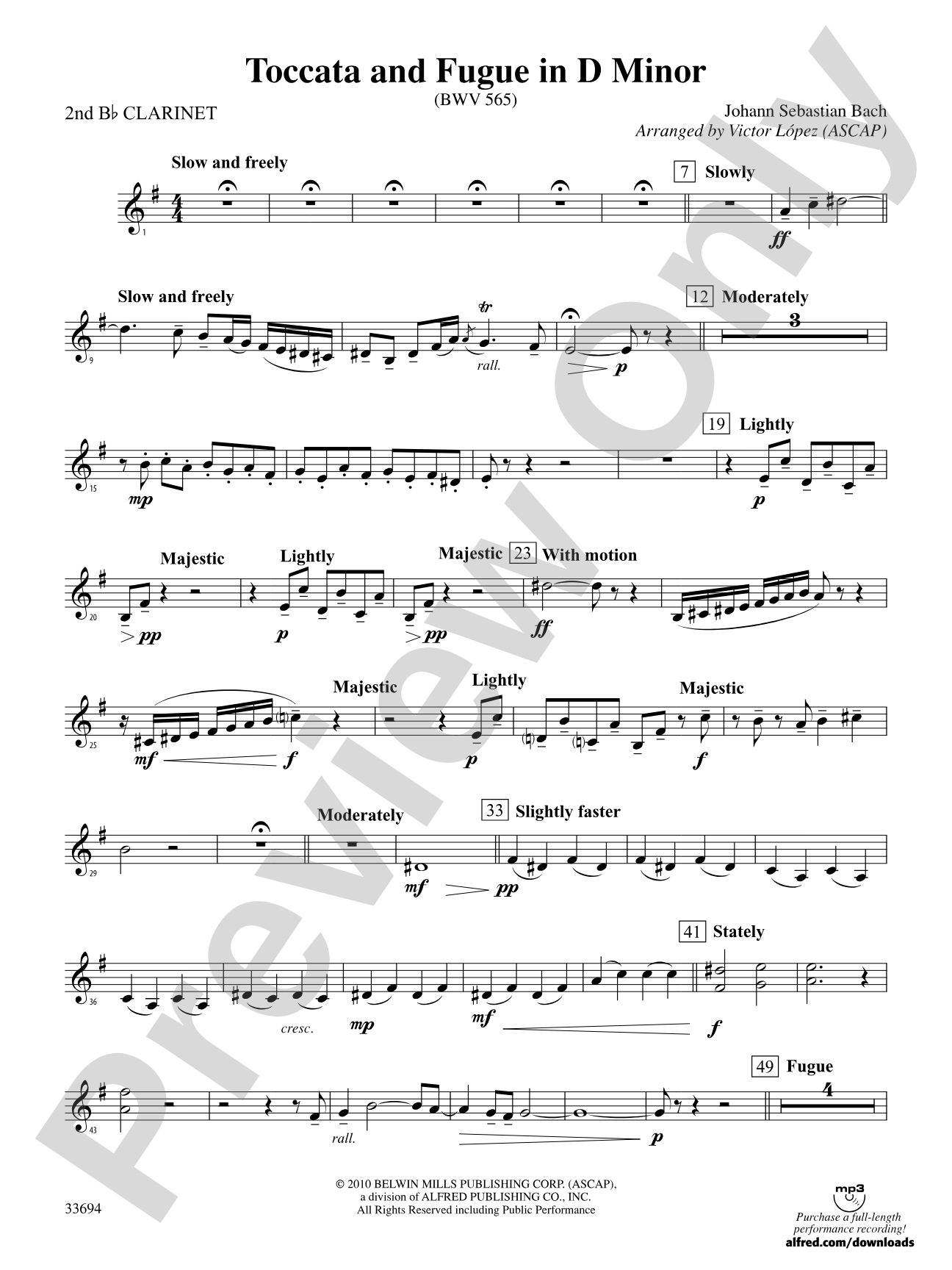
Toccata and Fugue in D Minor: 2nd B-flat Clarinet

BWV 565

By Johann Sebastian Bach / arr. Victor López

Grade: 4.5

Item: 00-PC-0014483_C2

Digital Download
$3.00
Description
Eminently playable by advanced amateur or student orchestras, this arrangement maintains the lush and driven rendition of the original without the developmental sections. The tempo may be adjusted to accommodate your group and the strings have been scored to sound full with or without the winds.

Don't just read it, hear it, play along with it, and watch your students grow with it. In MakeMusic Cloud, Toccata and Fugue in D Minor: 2nd B-flat Clarinet comes alive with professional accompaniment, adjustable tempo, and built-in practice tools that turn solo practice into real progress.

Sample Audio
0:00
0:00
Sample Video
Additional Details
Series: Belwin Concert Full Orchestra
Publisher: Alfred Music
Page Count: 218
SKU: 00-PC-0014483_C2

More about this title

About the Composer: Johann Sebastian Bach

Johann Sebastian Bach (1685-1750) stands as one of the most influential composers in Western music history. His mastery of counterpoint, harmonic innovation, and structural clarity shaped the foundation of musical language for centuries after his death. Bach's works span sacred and secular genres, from the Brandenburg Concertos to the Well-Tempered Clavier, each demonstrating his ability to combine intellectual rigor with profound emotional depth.

Why we love this

Victor López's arrangement honors the architecture and drama of Bach's masterwork while making it genuinely accessible to advanced student orchestras. The removal of developmental sections keeps the piece moving without sacrificing the iconic toccata's propulsive energy or the fugue's contrapuntal sophistication. Programming this opens concert doors to Baroque repertoire that would otherwise sit beyond most community and school orchestras' reach.

What to expect

The toccata explodes with relentless forward drive, virtuosic figurations that crackle with energy as they pass between instrumental families. The fugue settles into architectural logic and cumulative power, building intensity as voices layer upon voices in Bach's timeless pursuit of harmonic and contrapuntal perfection.

Who it's for

Advanced amateur and student orchestras looking to add a recognizable masterwork to their repertoire without the technical demands of the original keyboard version. Conductors seeking a piece that commands audience attention, works as a concert opener or closer, and challenges musicians to shape Baroque counterpoint within their technical range.

How to get the most out of it

  • Shape the opening toccata with clarity and conviction; the driving energy of the figures matters more than individual note accuracy, so emphasize rhythmic precision and forward momentum across sections.
  • Balance the fugal entries carefully so that each voice line emerges distinctly as it enters; this is especially important in the strings, where doubling and voicing choices can either illuminate or muddy Bach's counterpoint.
  • Use the flexibility in tempo marking to suit your ensemble's technical comfort. A slightly modified tempo that allows clean articulation and clear voice leading serves the music far better than pushing beyond your group's secure handling.

How to use it

This arrangement commands a concert opening or closer; its dramatic arc and immediate recognizability grip an audience from the downbeat. Pair it with lighter Baroque works or contrasting contemporary pieces to showcase orchestral range, or use it as the centerpiece of a fall concert or festival performance where audiences expect both technical substance and emotional impact.

Skills your students will build

  • Tracking independent voice lines in four-part counterpoint
  • Maintaining rhythmic precision across figure-driven passages
  • Balancing individual sections while projecting a unified orchestral sound
  • Interpreting Baroque articulation and phrasing conventions
  • Adjusting tempo and character to accommodate ensemble capability

You May Also Like