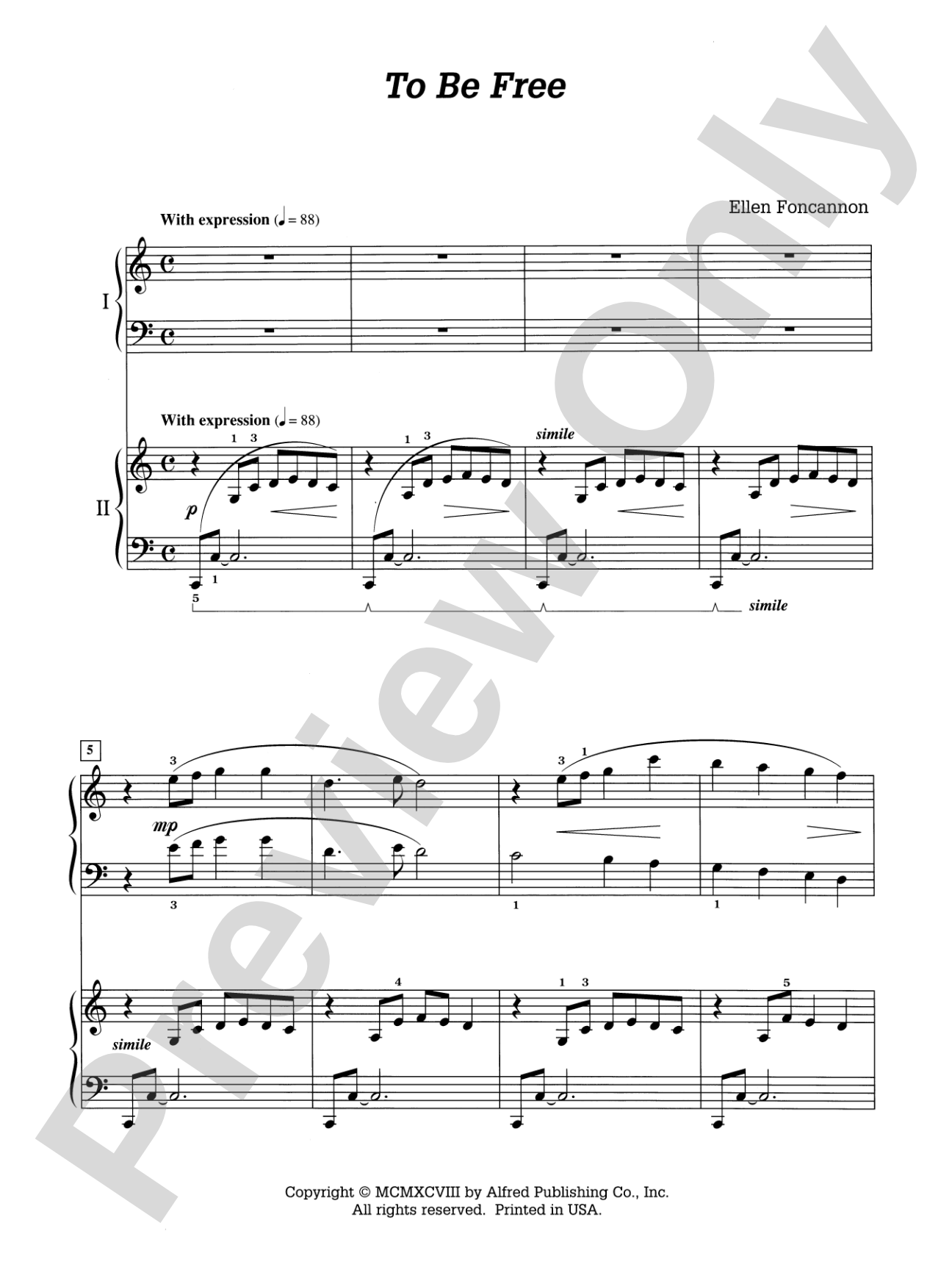
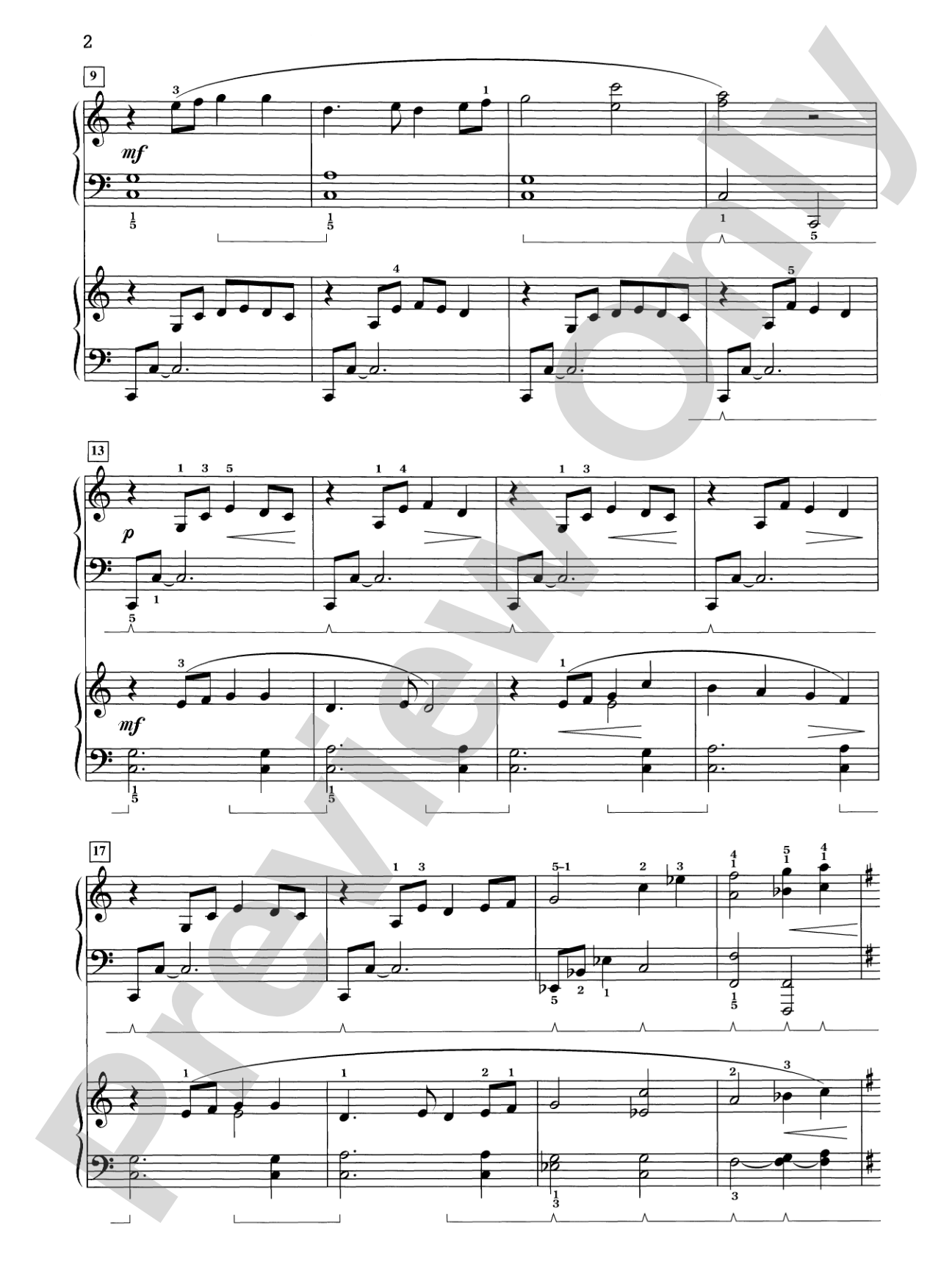
To Be Free - Piano Duo (2 Pianos, 4 Hands) Sheet Music Preview

To Be Free - Piano Duo (2 Pianos, 4 Hands): Piano Duets & Four Hands

By Ellen Foncannon

Level: Late Intermediate

Item: 00-PB-0000649

Digital Download
$6.99
Description
This inspirational piece for late intermediate piano ensemble---two pianos, four hands---begins in the key of C major and 4/4 meter and modulates to G major. The melodic material is interwoven between the two pianos, along with a flowing accompaniment pattern. Two copies are included. A Federation Festivals 2024-2028 selection.

To Be Free - Piano Duo (2 Pianos, 4 Hands): Piano Duets & Four Hands isn't in MakeMusic Cloud just yet...but it could be. Let us know you'd like to see it, and you'll help shape what comes next. In the meantime, start a free trial and dive into thousands of interactive titles your students can play along with today.

Sample Audio
No sample audio found.
Sample Video
Additional Details
Publisher: Alfred Music
Page Count: 16
SKU: 00-PB-0000649

More about this title

Why we love this

The melodic interplay between the two pianos creates a naturally engaging texture without requiring virtuosic technique, making it genuinely rewarding to hear come together in rehearsal. As a Federation Festivals selection, it carries real recognition value for your students' portfolios while remaining thoroughly musical rather than merely competitive.

What to expect

Uplifting and purposeful, with a sense of movement carried by the steady 4/4 pulse and rippling accompaniment. The shift to G major opens the harmonic landscape, giving the piece room to breathe and resolve with genuine lift.

Who it's for

Piano students ready to engage with ensemble playing and interested in Federation Festivals repertoire. This works well for late intermediate duet partnerships, especially those wanting to explore tasteful modulation and shared melodic responsibility.

How to get the most out of it

  • Balance the interwoven melody carefully during rehearsals; mark cues in both scores so each pianist knows when they're supporting versus leading.
  • Work the flowing accompaniment pattern separately at first, then layer the melodic material once both players feel secure with their harmonic foundation.
  • The modulation from C major to G major benefits from a slight tempo lift; discuss together how to execute this transition smoothly without losing the piece's lyrical quality.

How to use it

Ideal for a spring festival performance or as part of a chamber concert showcasing ensemble work. It pairs naturally with other late intermediate duets and gives students a piece they can be proud to submit for competitions.

Skills your students will build

  • Listening and balancing melody against accompaniment in a duo setting
  • Reading and executing key modulations (C major to G major)
  • Maintaining steady pulse and rhythmic cohesion across two instruments
  • Interpreting flowing accompaniment patterns with consistent touch and voicing
  • Ensemble communication and following cues from a partner

You May Also Like