

Tipitin: SSAA, a cappella Choral Octavo
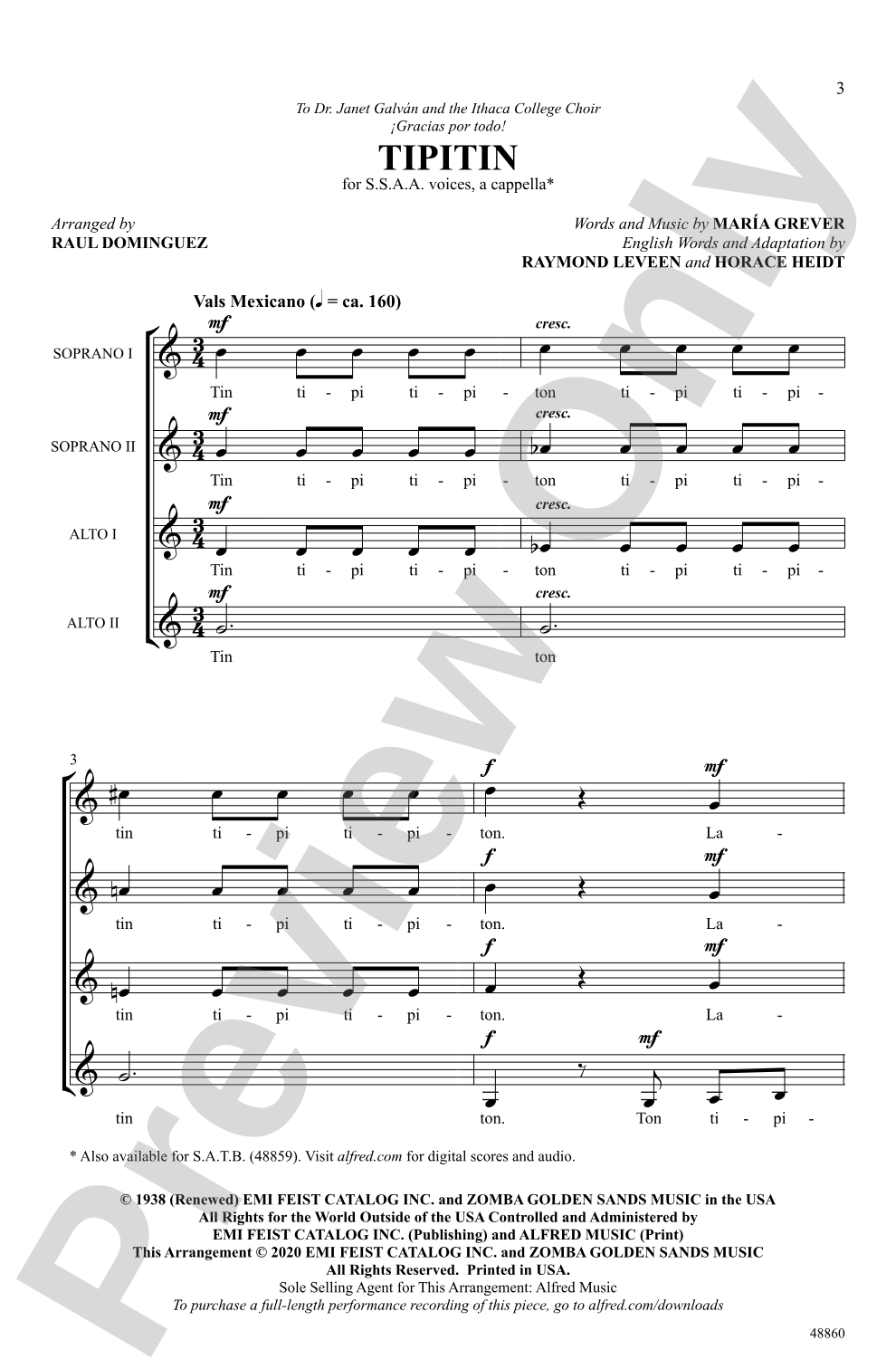
Words and music by María Grever / English words and adaptation by Raymond Leveen and Horace Heidt / arr. Raul Dominguez
Item: 00-PO-0006652
$2.05
Minimum order quantity: 20 copies
One moment…
Description
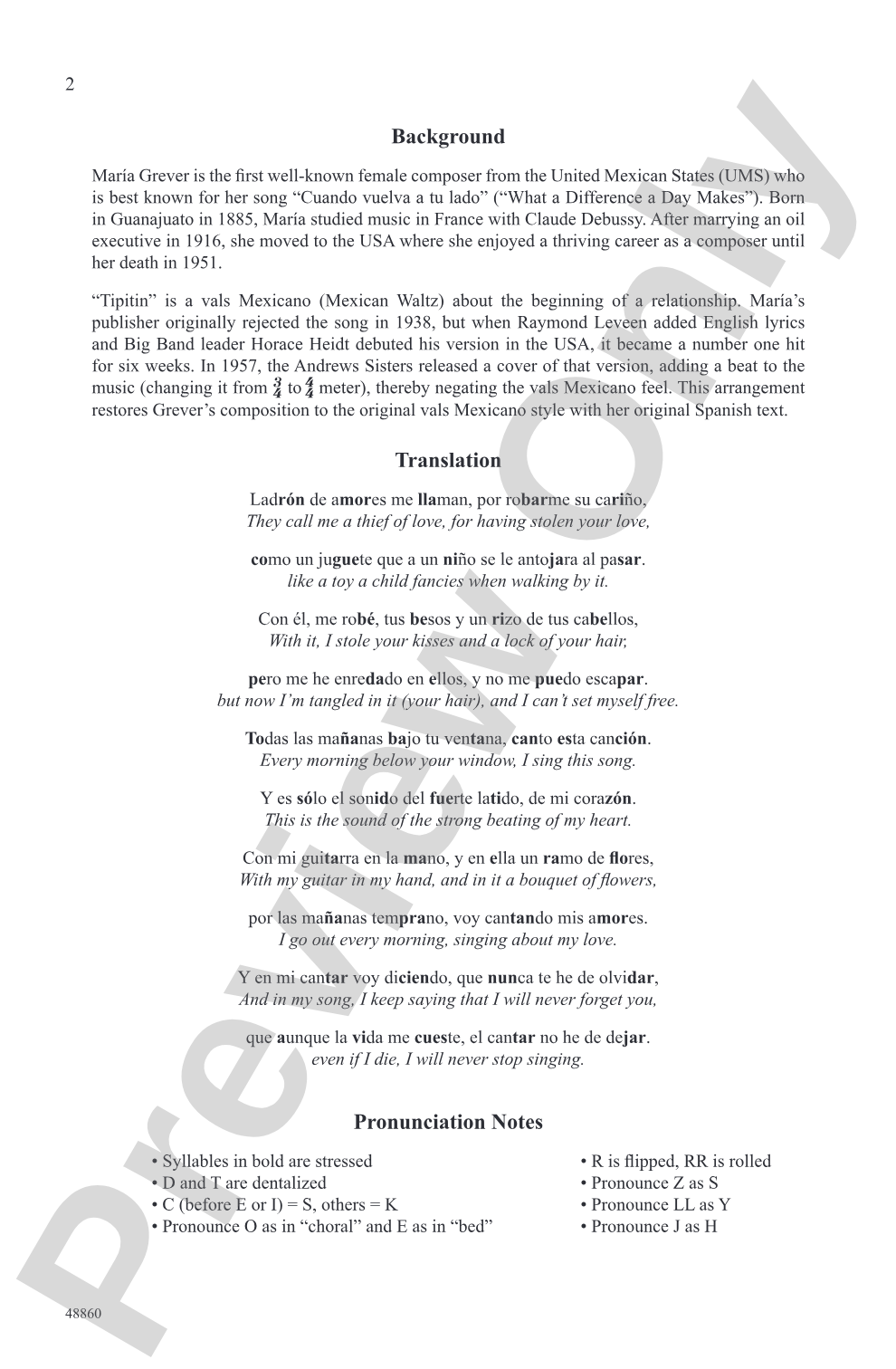
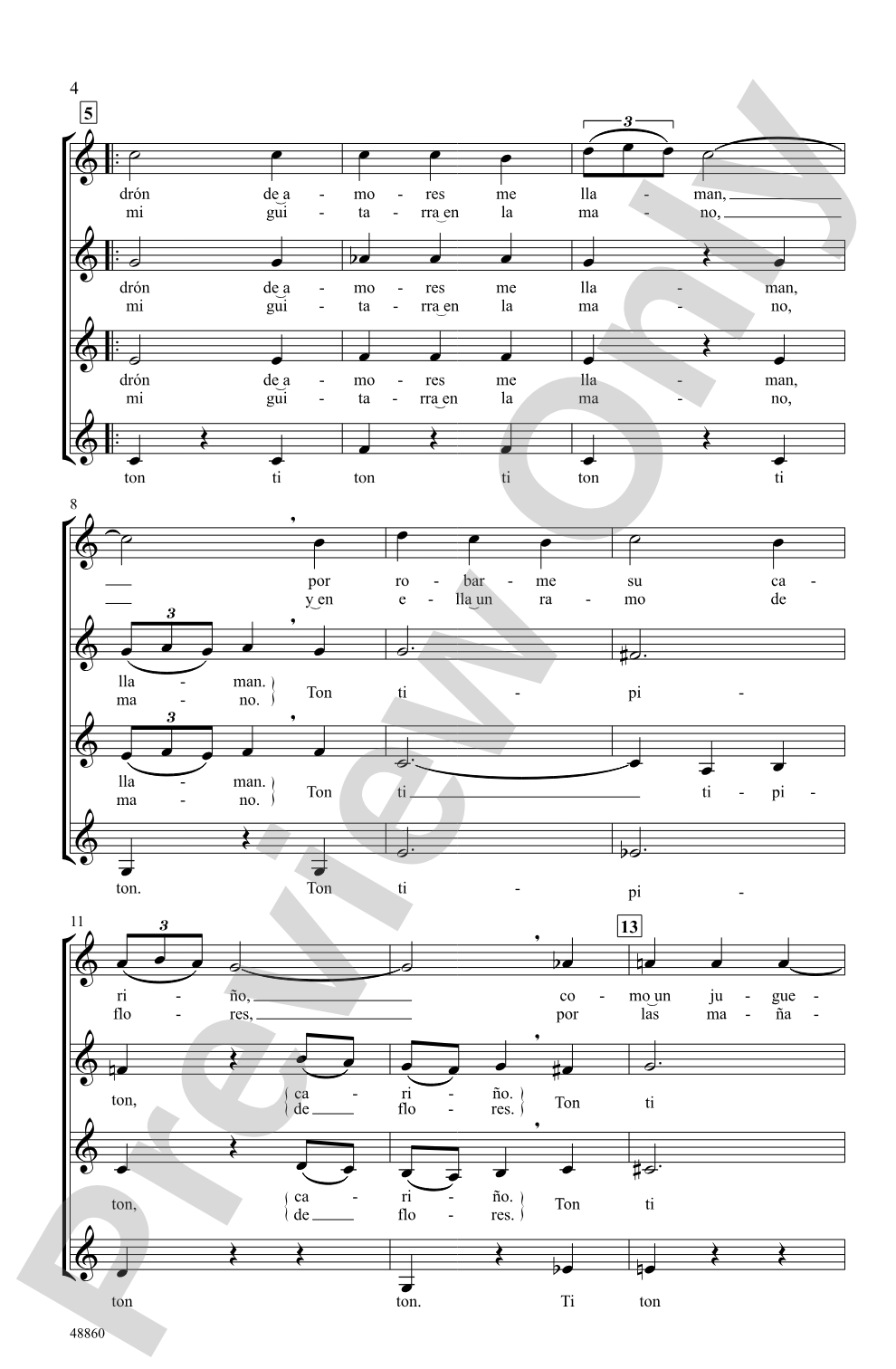
Written by Mexico's first well-known female composer, María Grever, this vals Mexicano (Mexican waltz) makes a charming a cappella work for outstanding choirs. The textured setting offers well-conceived choral parts throughout, sometimes using lower voices to provide a dance-like underscore for the lilting melody. A full translation and pronunciation notes aid in the understanding and mastery of an entirely Spanish text, which recounts a story of new love. Feature an agile soprano on the jaunty descant near the end.


Discover MakeMusic Cloud: thousands of interactive titles your students can play along with today.
Sample Audio
1
Audio File
--:--
0:00
0:00
Sample Video
Additional Details
Series:
Lawson-Gould
Publisher:
Alfred Music
Page Count:
12
SKU:
00-PO-0006652
More about this title
About the Creator: María Grever
María Grever broke through Mexico's male-dominated classical music world to become the nation's first internationally recognized female composer. Working across multiple genres from popular song to art music, she crafted works that drew on Mexican folk traditions while engaging with European compositional techniques, earning her a legacy that extends far beyond her lifetime.
Why we love this
Grever's harmonic language feels both sophisticated and singable, which is a rare combination at the SSAA level. The piece gives you legitimate Spanish repertoire with real compositional weight, not simplified folk arrangements, and the storytelling text keeps singers engaged in meaning rather than mechanics alone.
What to expect
The piece captures the lift and gentle sway of a Mexican waltz, with the upper voices carrying a sweet, lilting melody while lower parts create a rhythmic dance underneath. There's an intimate quality to the storytelling, even as the harmonic movement keeps things moving forward.
Who it's for
Choirs with solid blend and intonation looking for Spanish-language repertoire that performs beautifully in concert settings and festival competitions. This works especially well for groups ready to tackle the textural independence required by the varied voicing.
How to get the most out of it
- Balance the descant melody in the soprano line against the lower voices during the waltz-like sections; the accompaniment should feel rhythmic and propulsive, never heavy.
- Work the Spanish pronunciation from day one using the provided notes. Clean vowels on repeated syllables will unlock the text's musicality.
- Keep the tempo flowing naturally; resist the urge to slow down on the longer note values, which can make the waltz feel sluggish.
How to use it
Place this on a concert where you're exploring world music or Latin American composers, or feature it as a contrasting lighter moment between weightier pieces. It's equally at home on a spring concert or a multicultural festival program.
Skills your students will build
- Singing in Spanish with proper pronunciation and vowel consistency
- Maintaining rhythmic independence in waltz meter across multiple voice parts
- Balancing melodic lines with rhythmic accompaniment textures
- Reading SSAA voicing with varied ranges and text underlay