

Tipitin: SATB a cappella Choral Octavo
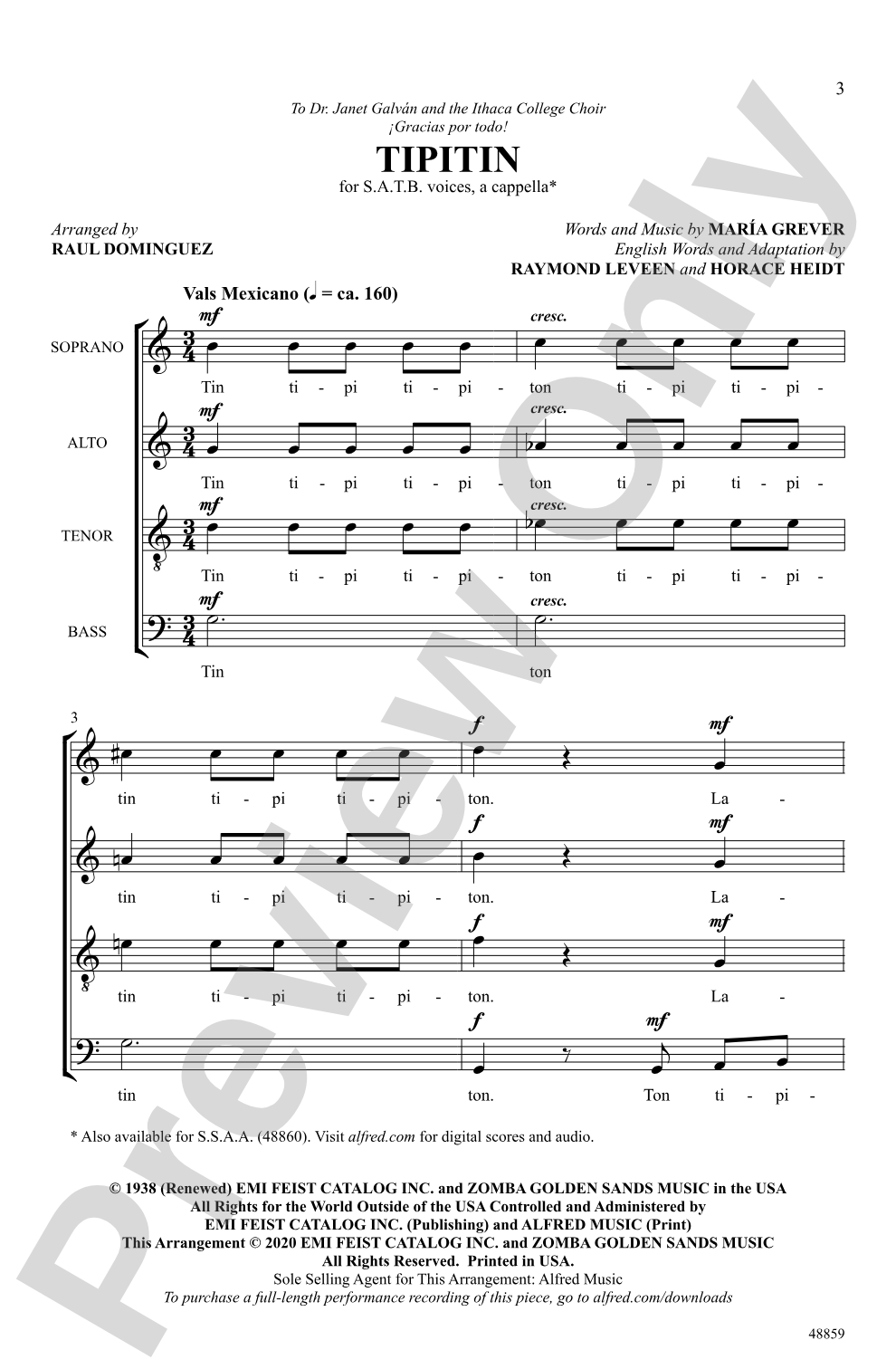
Words and music by María Grever / English words and adaptation by Raymond Leveen and Horace Heidt / arr. Raul Dominguez
Item: 00-PO-0006651
$2.05
Minimum order quantity: 20 copies
One moment…
Description
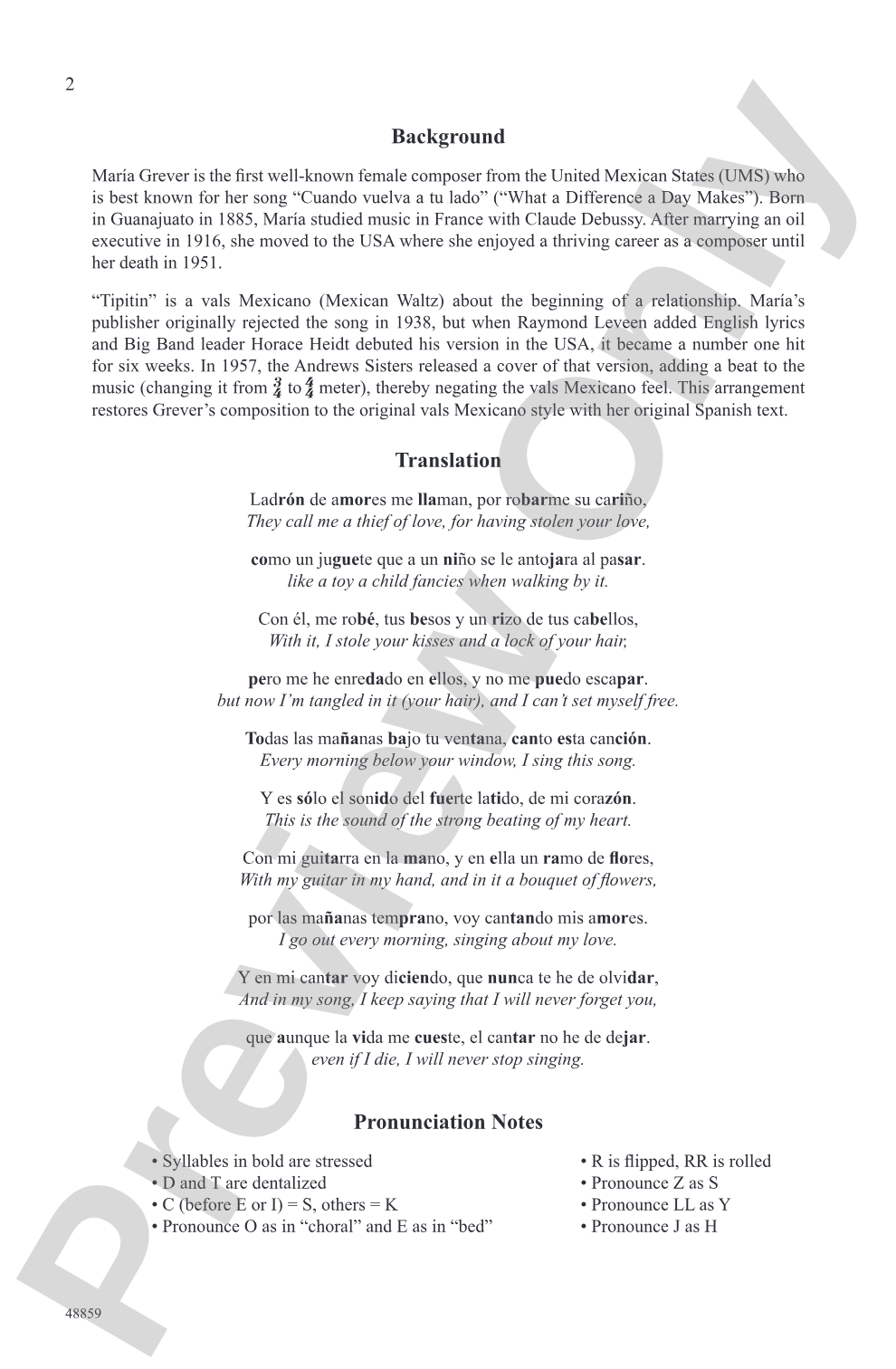
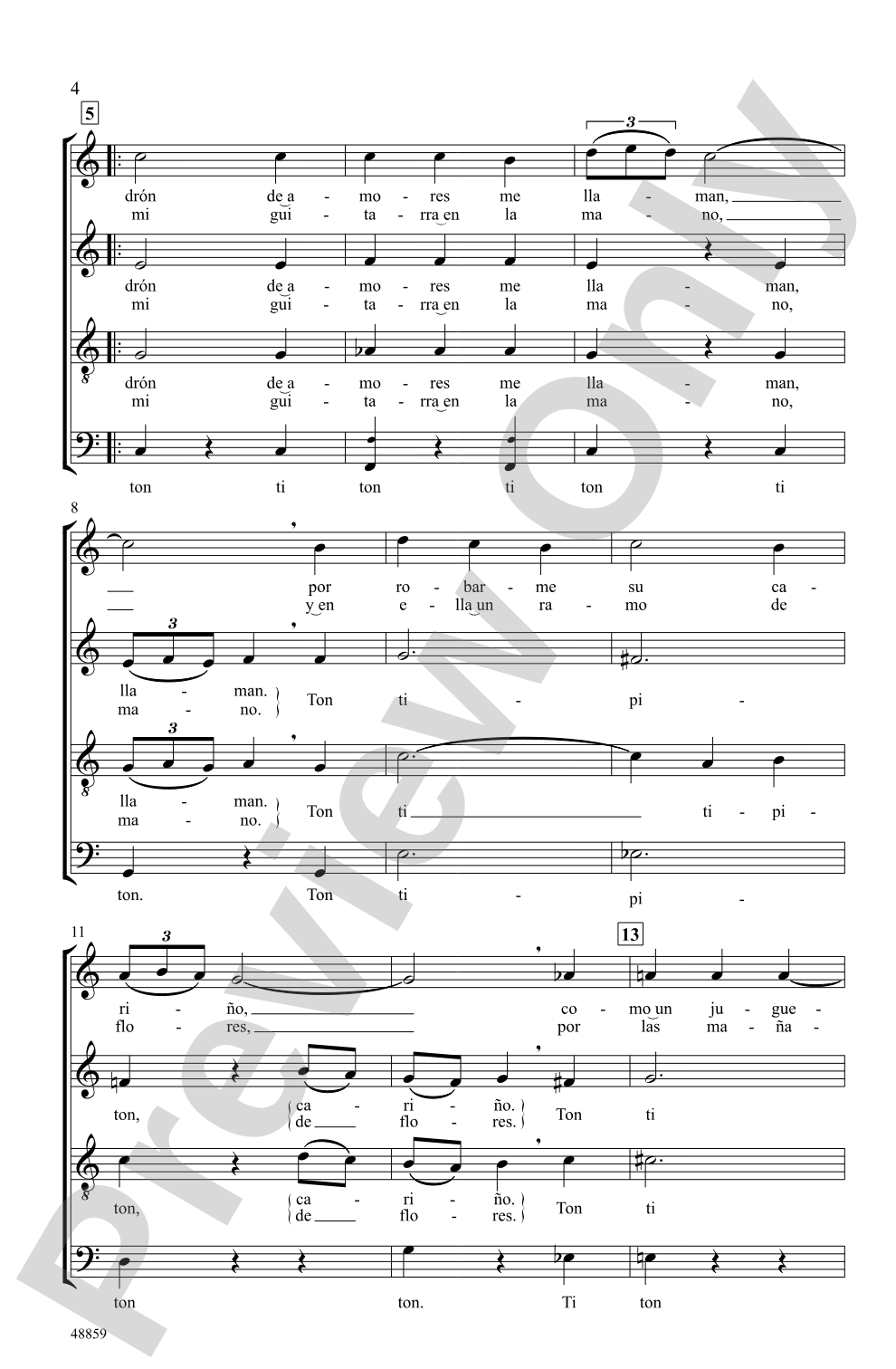
Written by Mexico's first well-known female composer, María Grever, this vals Mexicano (Mexican waltz) makes a charming a cappella work for outstanding choirs. The textured setting offers well-conceived choral parts throughout, sometimes using lower voices to provide a dance-like underscore for the lilting melody. A full translation and pronunciation notes aid in the understanding and mastery of an entirely Spanish text, which recounts a story of new love. Feature an agile soprano on the jaunty descant near the end.


Discover MakeMusic Cloud: thousands of interactive titles your students can play along with today.
Sample Audio
1
Audio File
--:--
0:00
0:00
Sample Video
1 / 2
Additional Details
Series:
Lawson-Gould
Publisher:
Alfred Music
Page Count:
12
SKU:
00-PO-0006651
More about this title
About the Creator: María Grever
María Grever stands as a trailblazer in Mexican music history, becoming the first female composer to achieve widespread recognition in her country during the early 20th century. Her gift for melody and understanding of vocal writing shine throughout her catalog, which spans popular songs, film scores, and concert works that earned her international acclaim and respect from her peers.
Why we love this
Grever's harmonic language and voice leading feel effortless, which is precisely what makes this waltz so effective in performance. The lower voices anchor the piece with rhythmic sophistication rather than mere accompaniment, creating a texture that rewards strong ensemble singing without demanding excessive technical fireworks. Programming a work by Mexico's pioneering female composer alongside standard a cappella fare broadens your choir's repertoire in a meaningful way.
What to expect
Tipitin captures the warmth and gentle humor of early love with graceful, lilting melodic lines set against a propulsive waltz foundation. The piece feels intimate and conversational, with enough rhythmic interest in the lower voices to keep the pulse dancing without overshadowing the romantic text.
Who it's for
Choirs with secure intonation and vowel consistency will bring out the beauty of this a cappella writing. Your group should be comfortable with Spanish diction and able to balance parts independently, since there's no instrumental support.
How to get the most out of it
- Isolate the descant line in rehearsal so your soprano can own its rhythmic clarity and character; it should sound conversational, not pinched or stressed.
- Let the lower voices feel the waltz pulse in their supporting figures. They're not background texture; they're dancing too.
- Work the Spanish text slowly at first, attending to the language's natural rhythm before layering in the melodic line. This prevents the piece from sounding like a translation.
How to use it
This works beautifully on a concert celebrating Latin American composers or a program exploring love songs across cultures. Its modest performance demands and charming character make it an ideal selection for festival competitions or community concerts where you want to showcase both technical skill and genuine musical joy.
Skills your students will build
- Spanish language diction and pronunciation
- Sustaining independent vocal lines in a cappella texture
- Waltz rhythms and metric clarity across all voice parts
- Balancing melody with supporting harmonic figures