

Time Awareness for All Musicians
By Peter Erskine
Item: 00-PB-0002219
$19.99
Pickup currently not available
Description
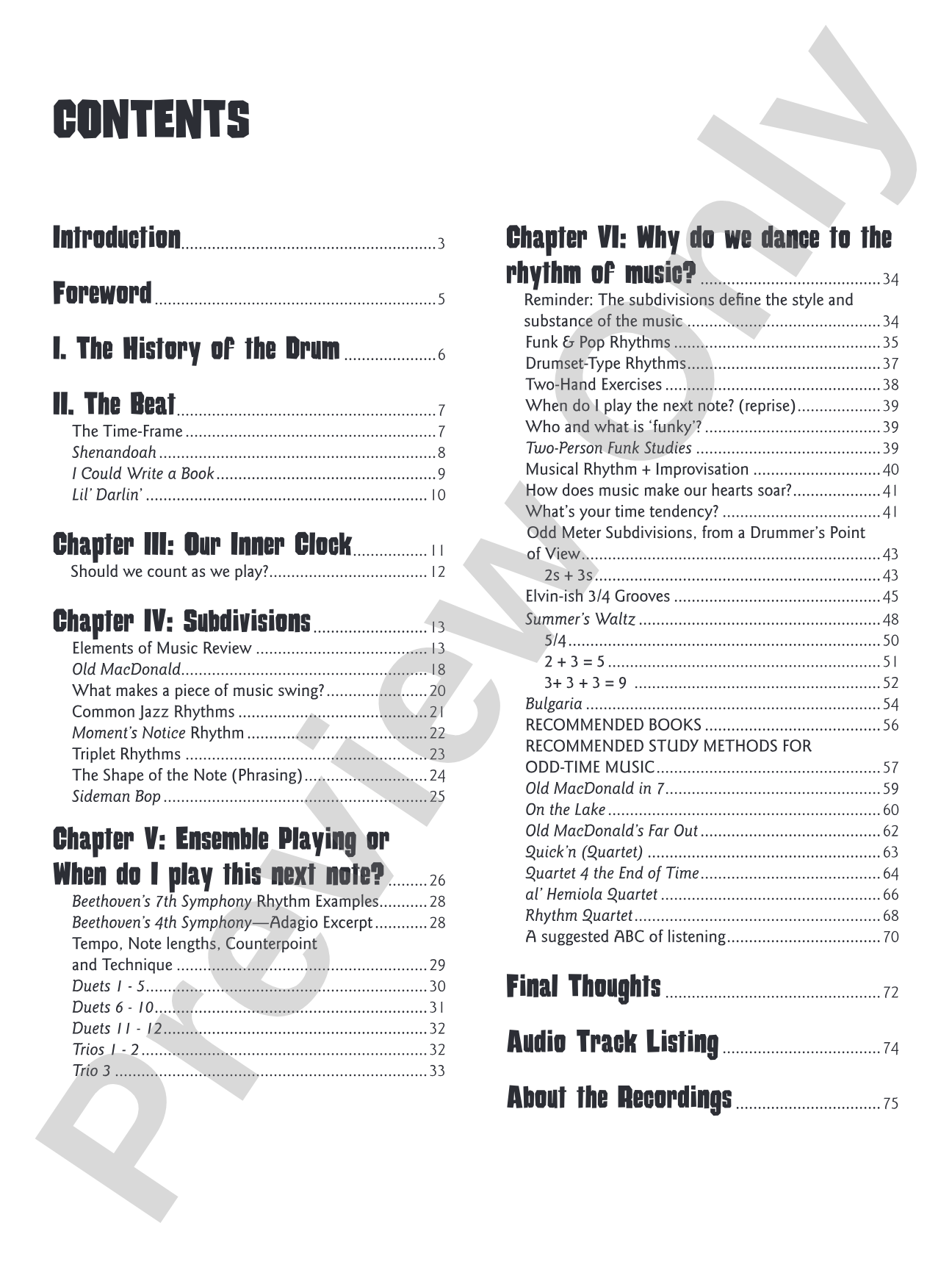
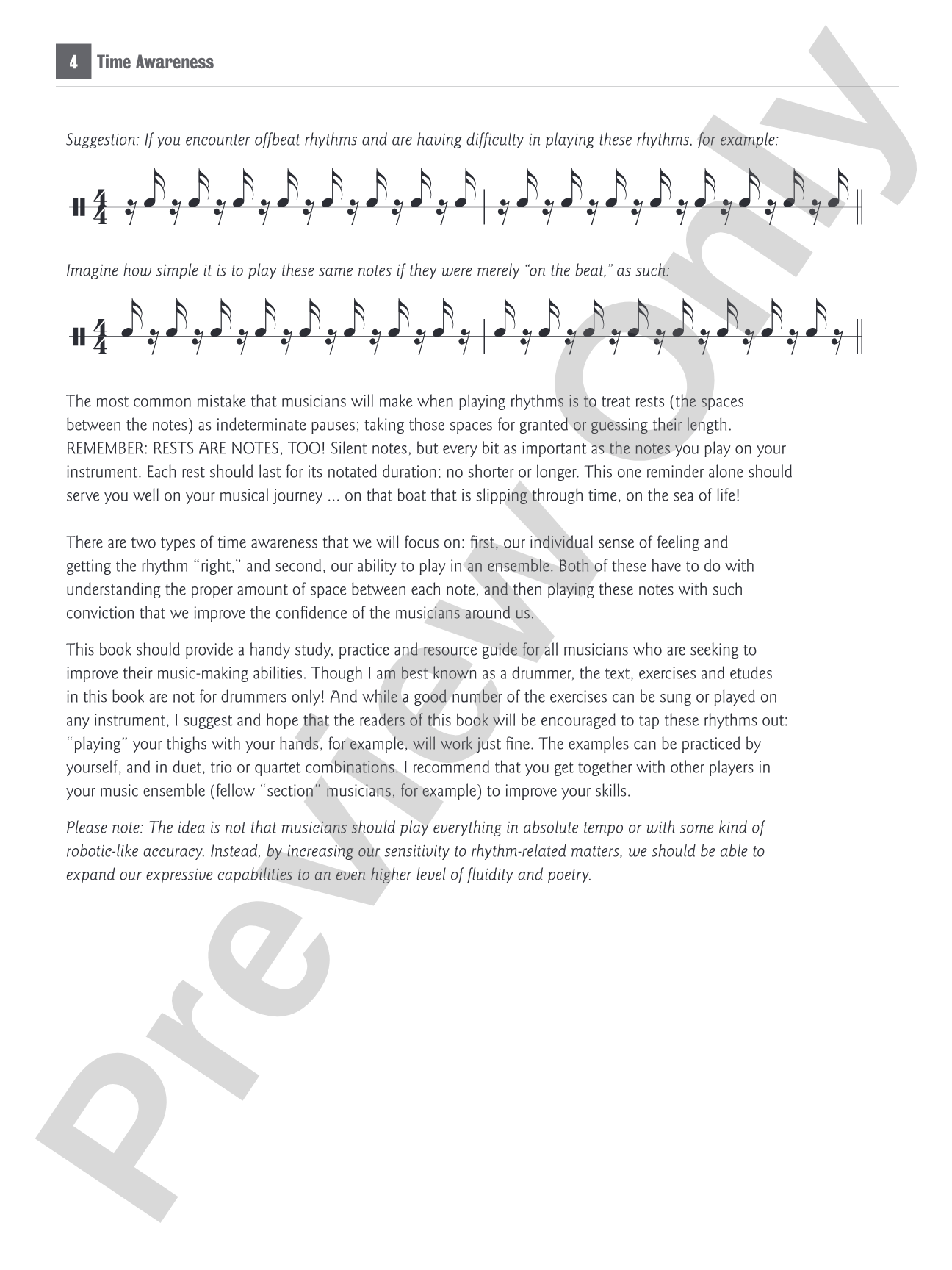
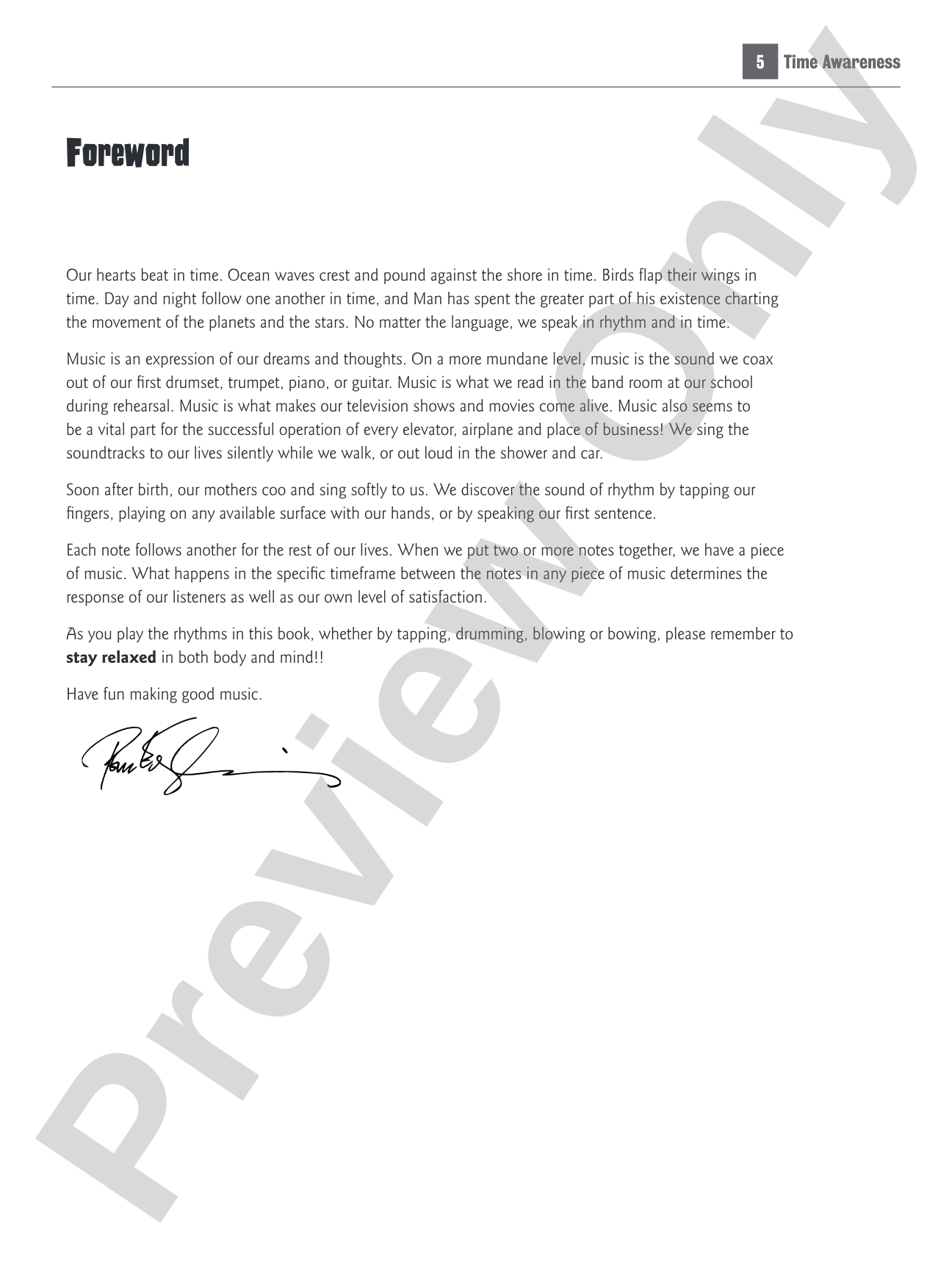
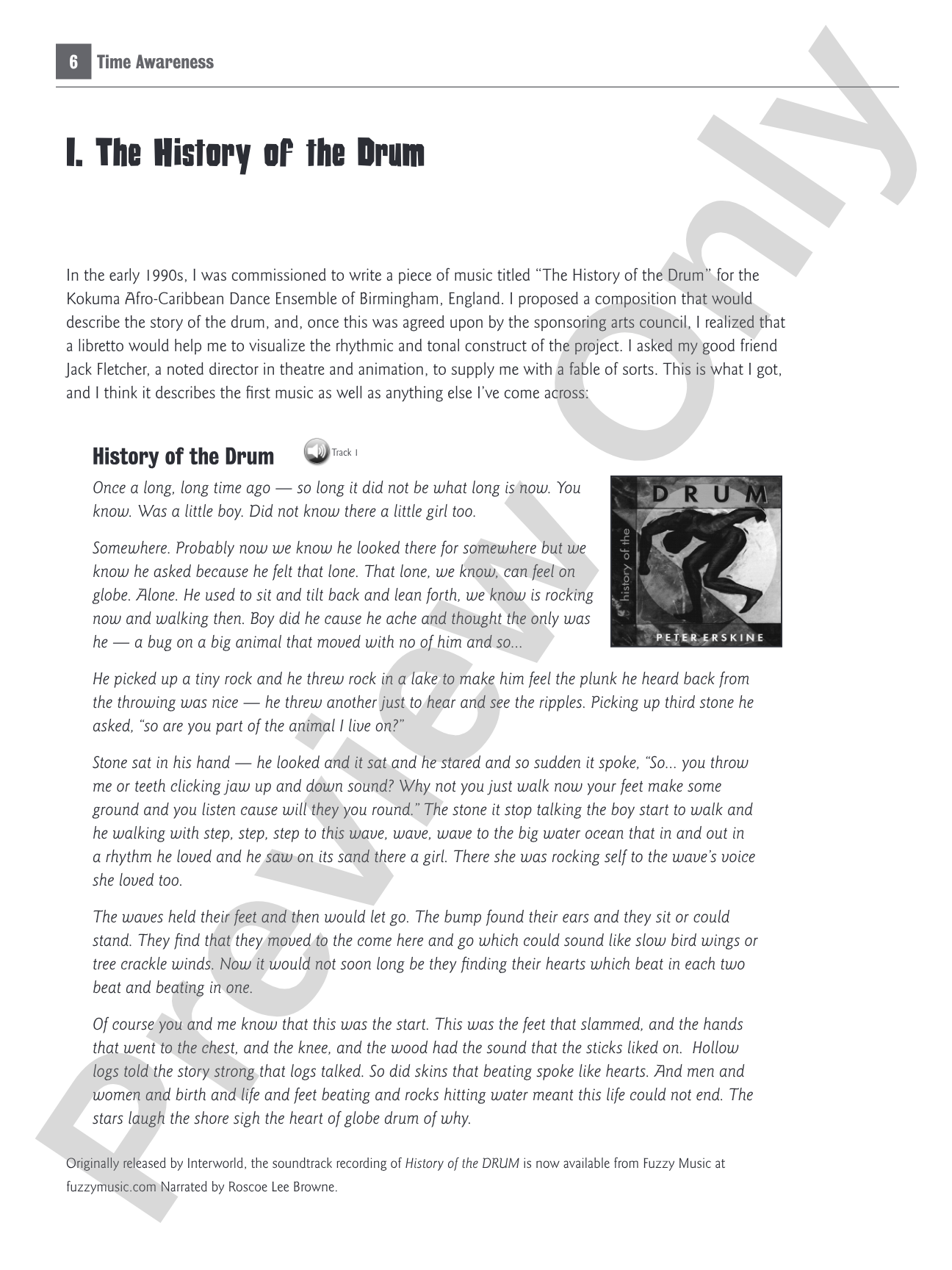
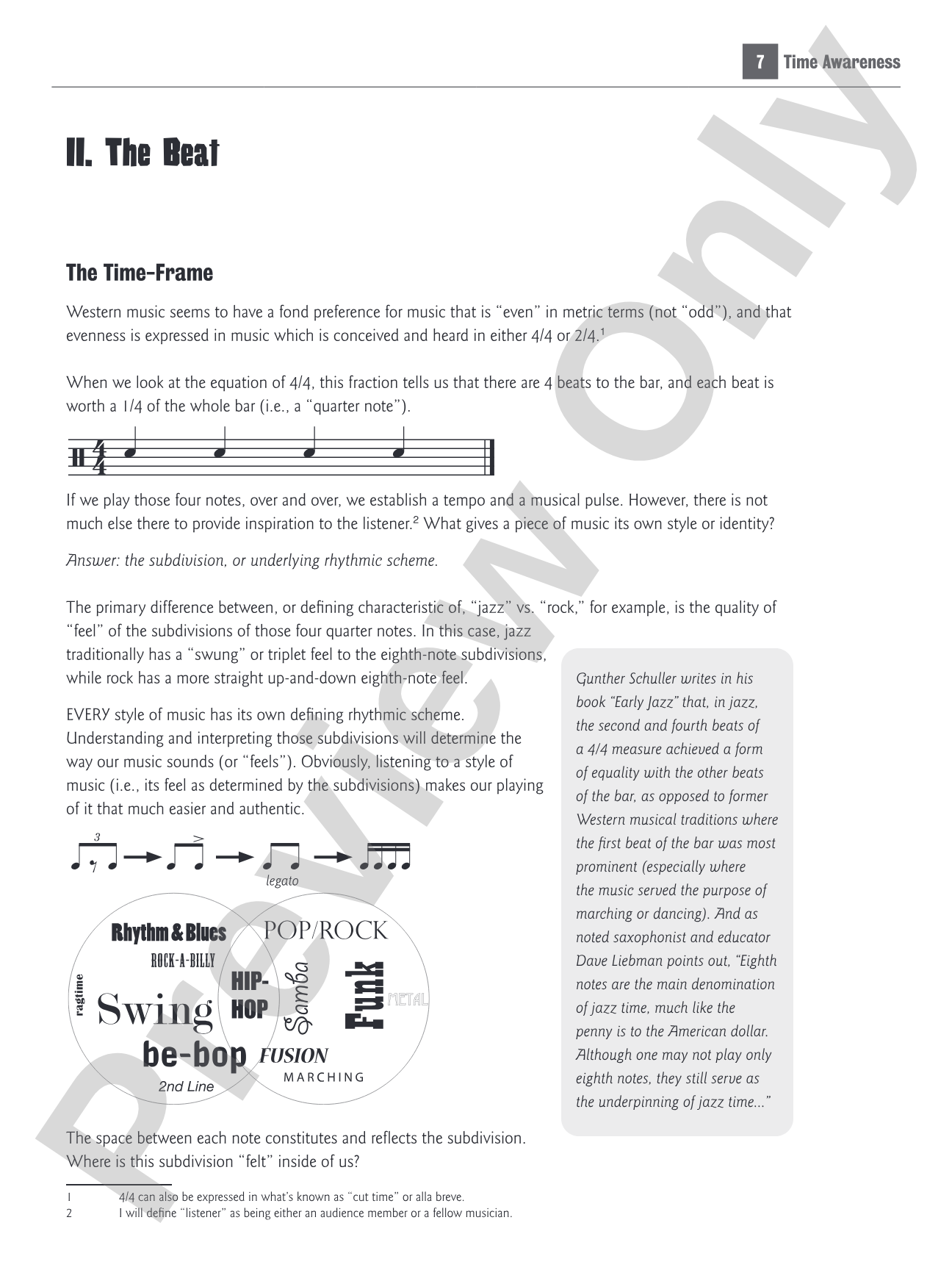
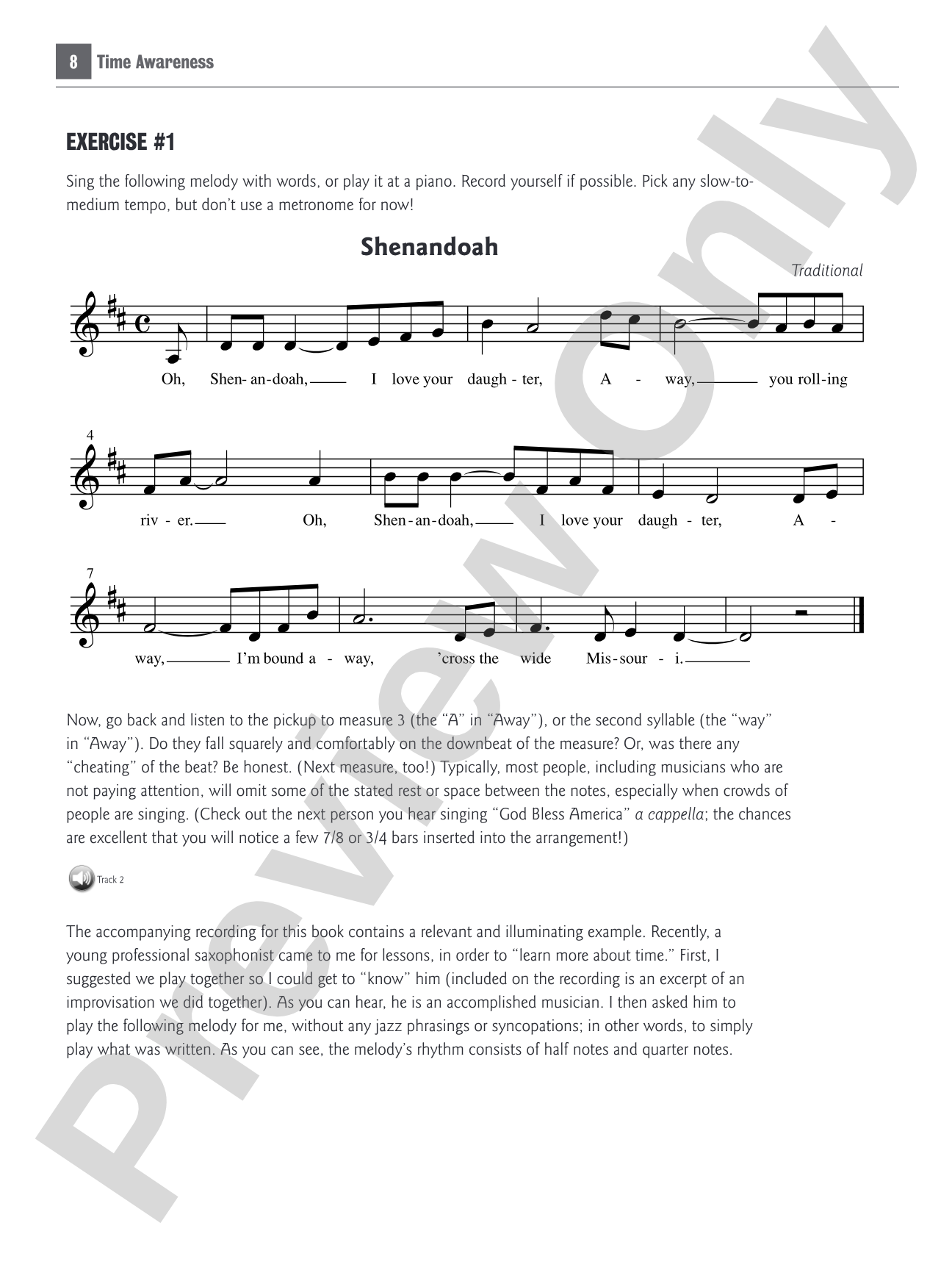
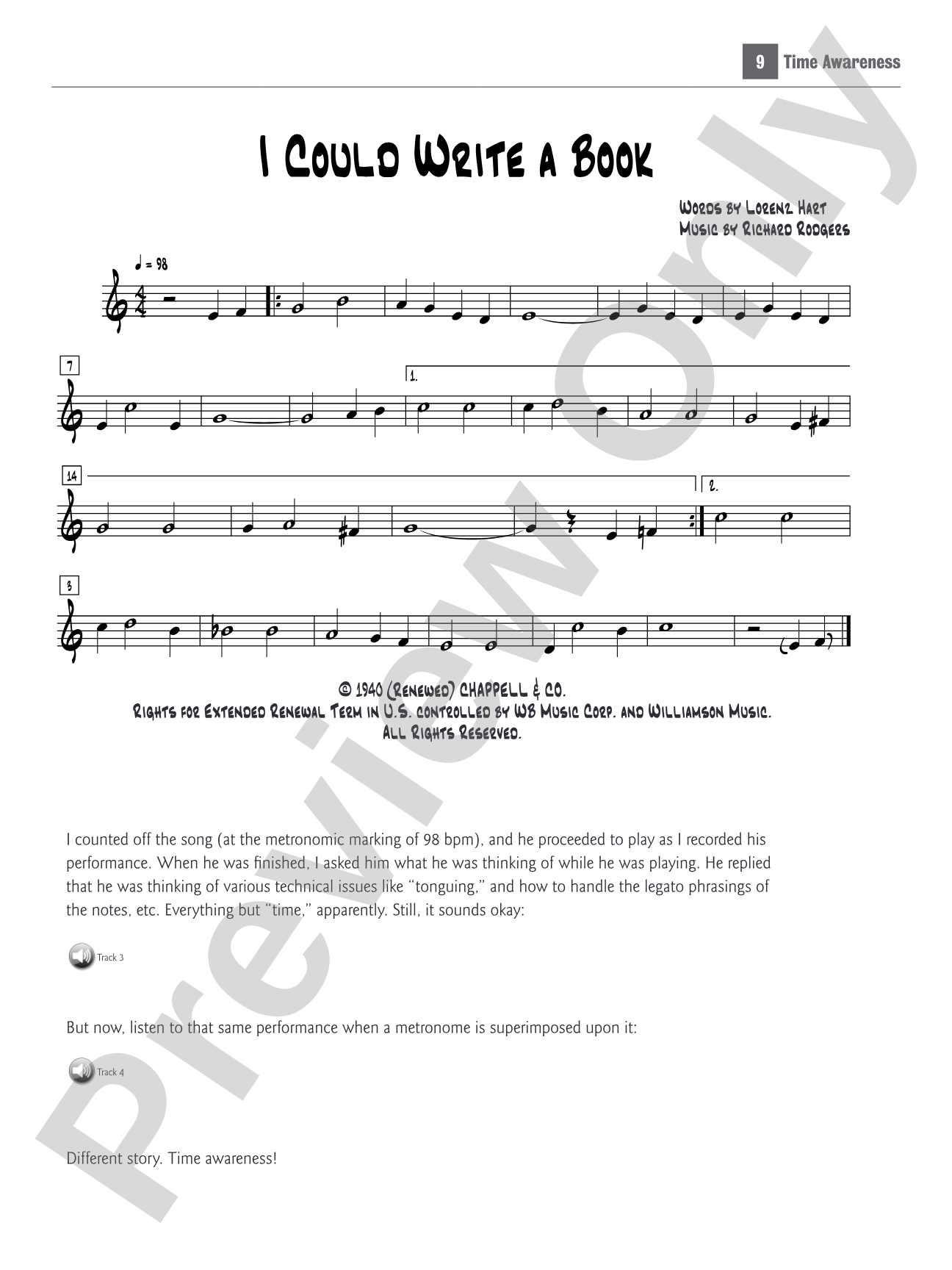
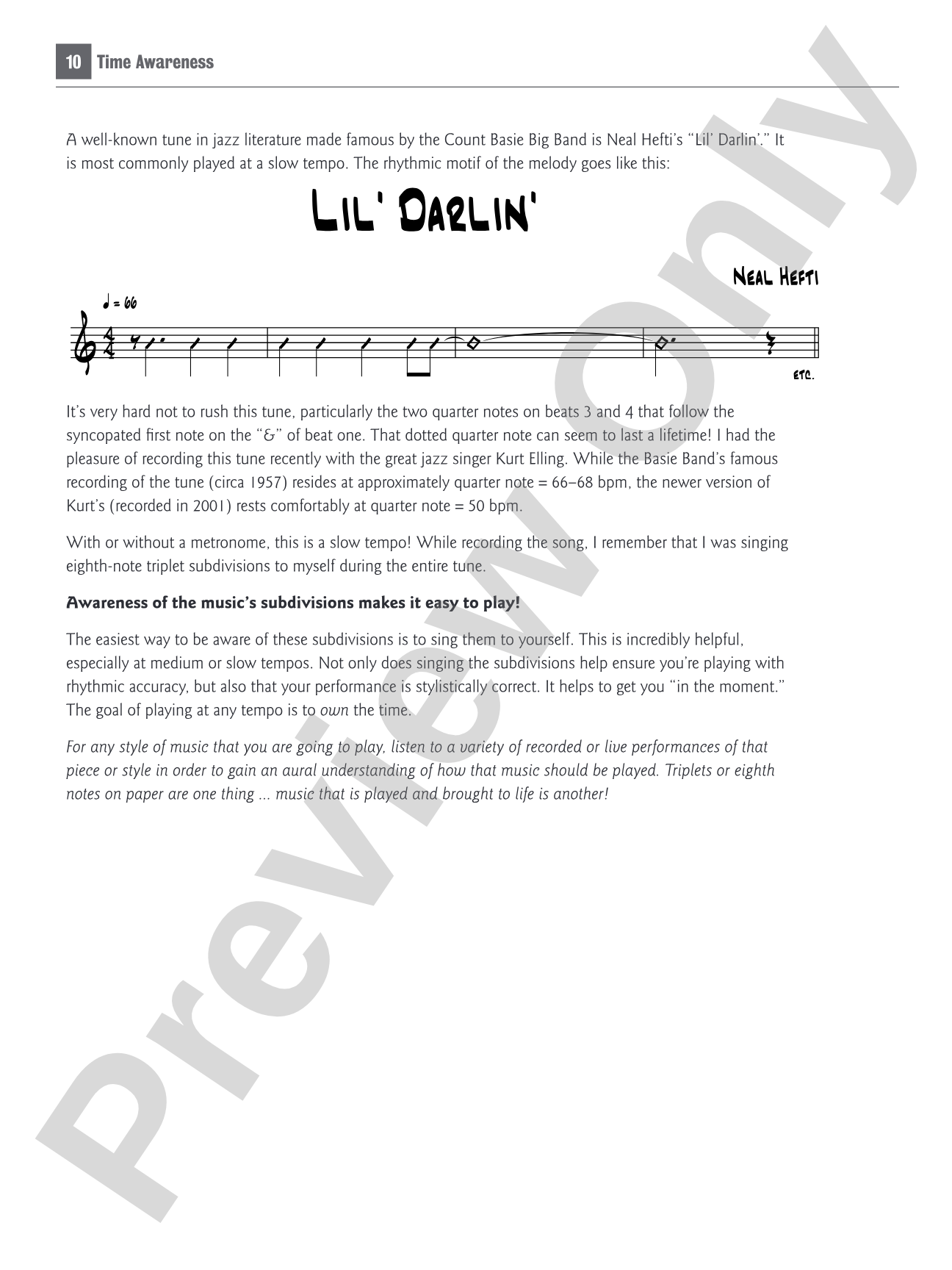
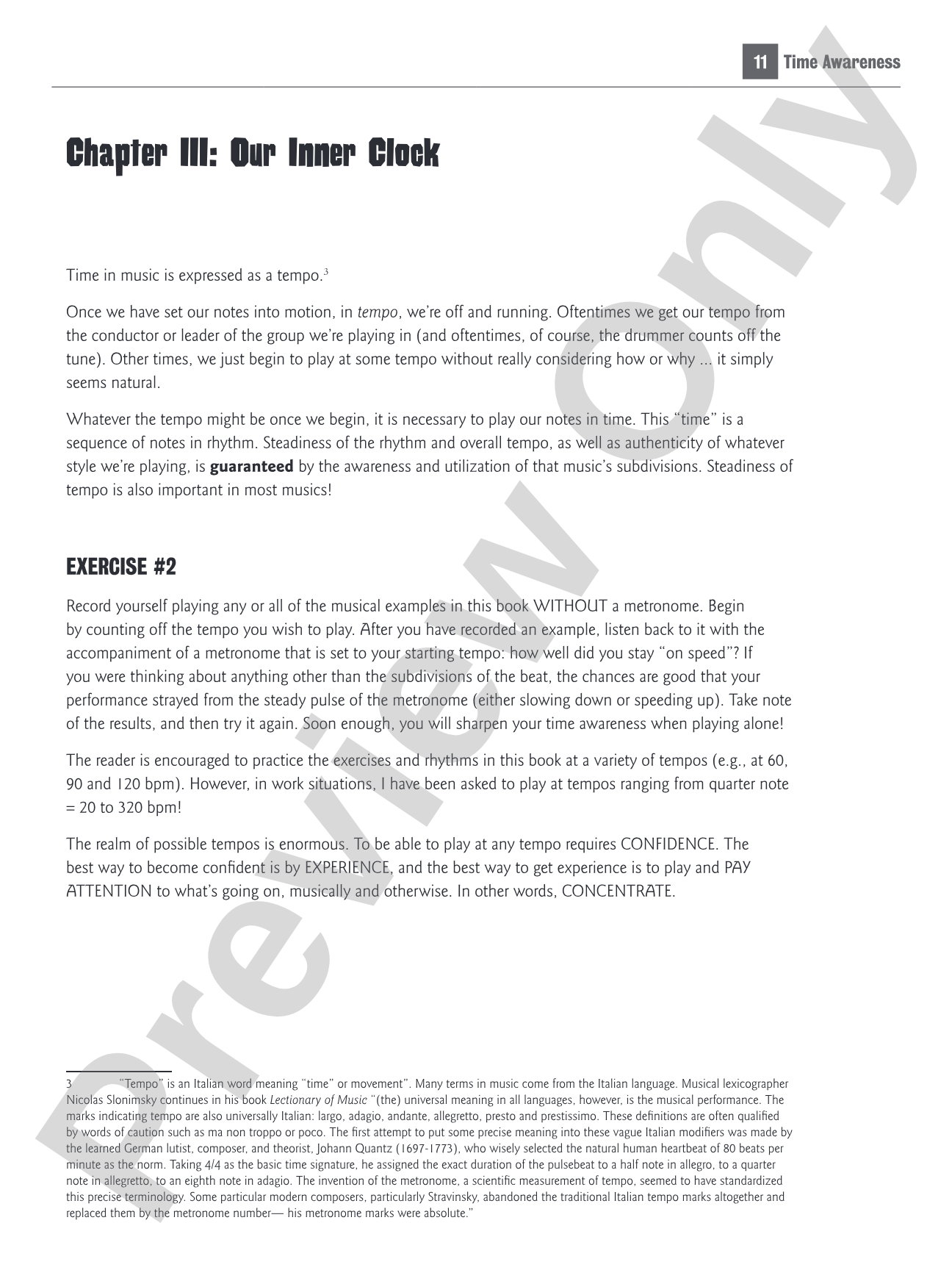
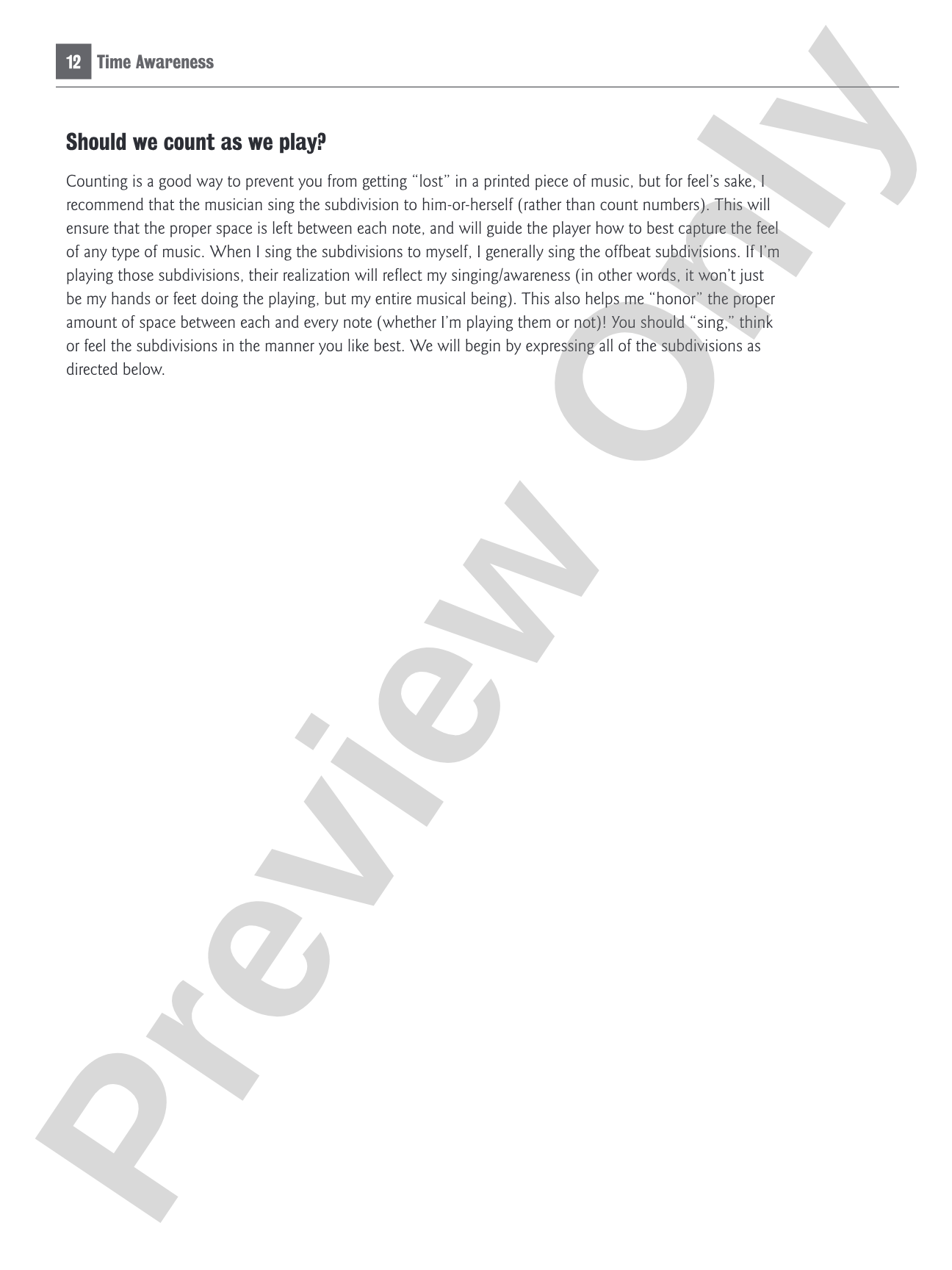
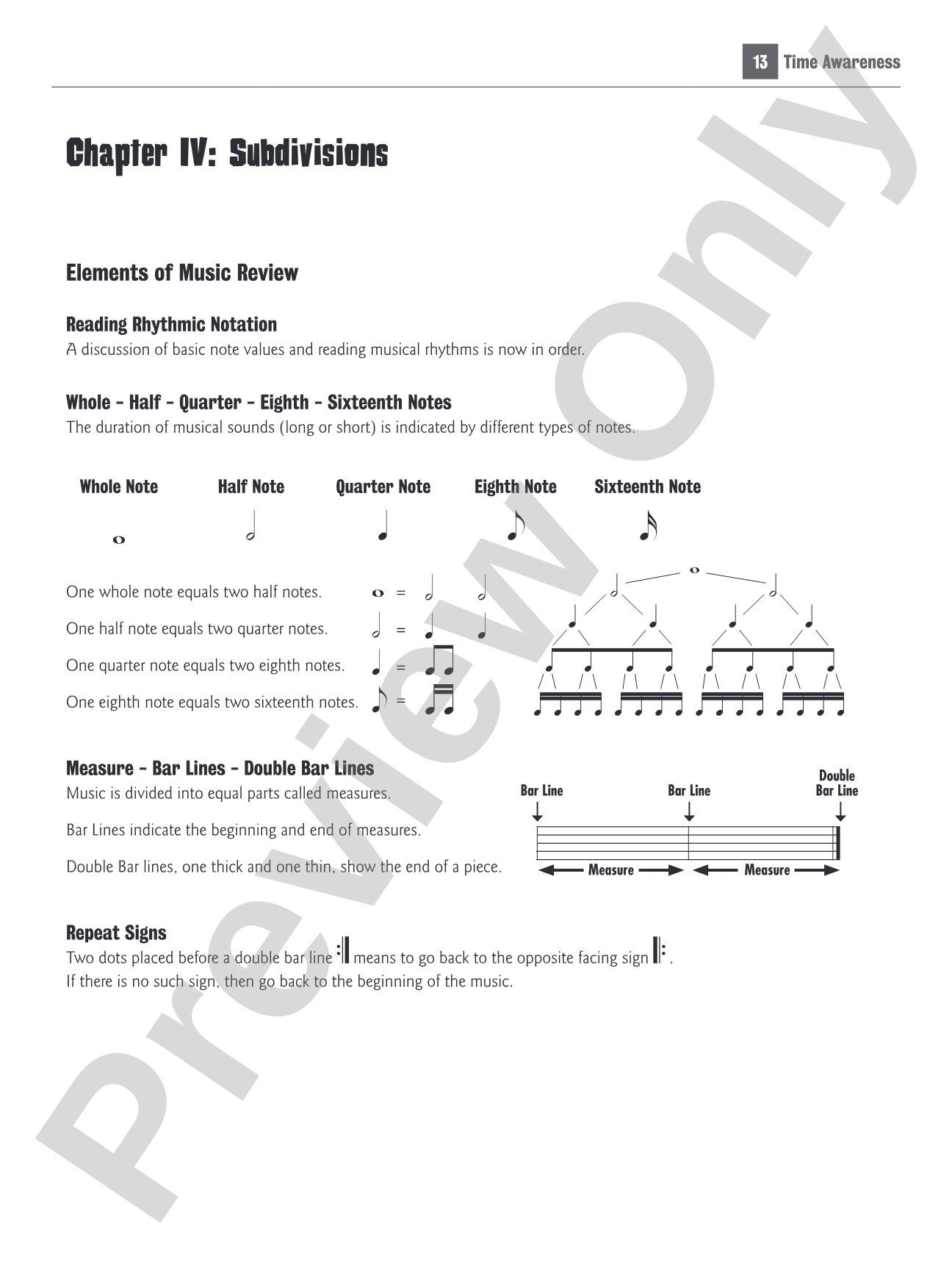
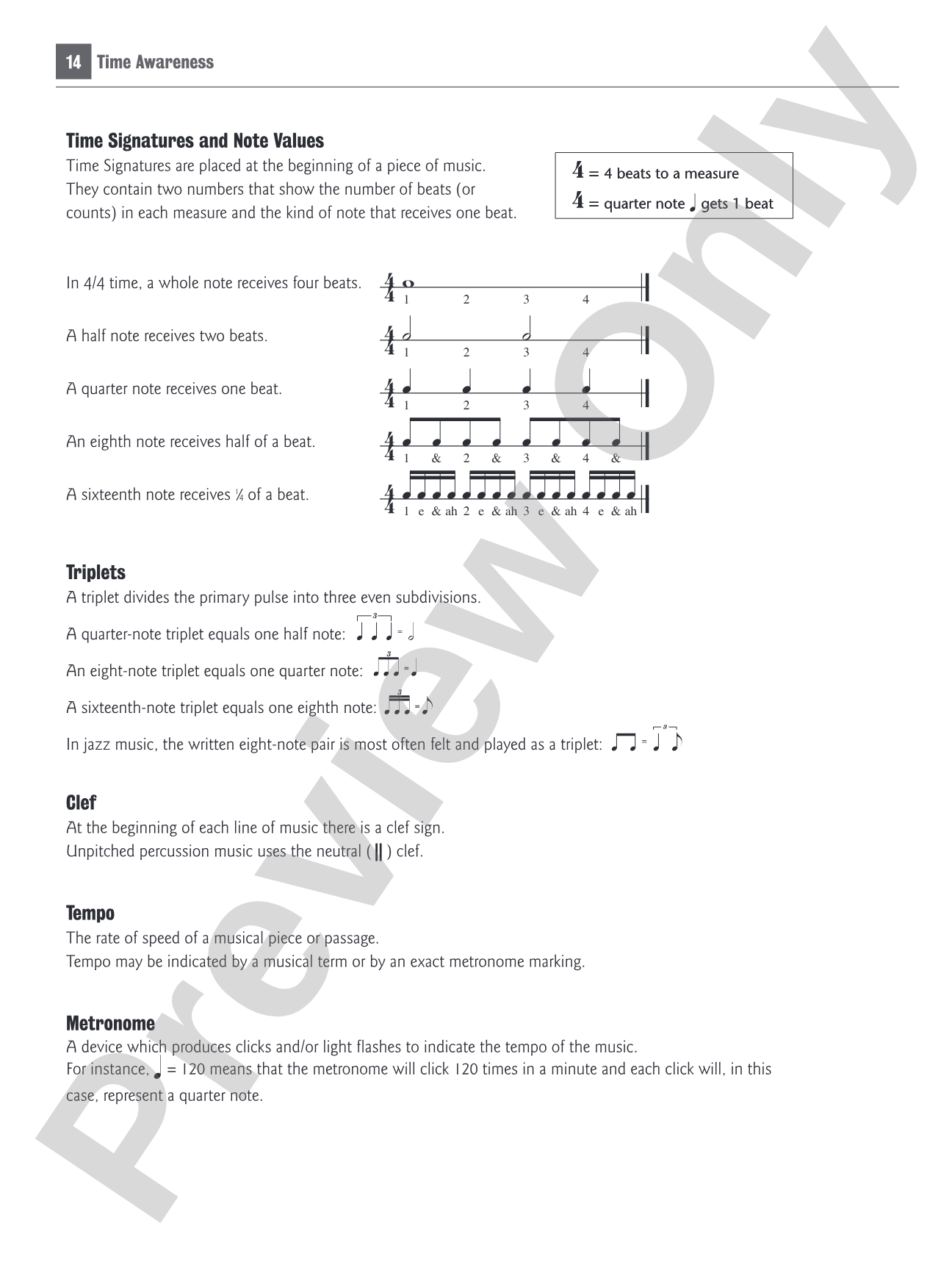
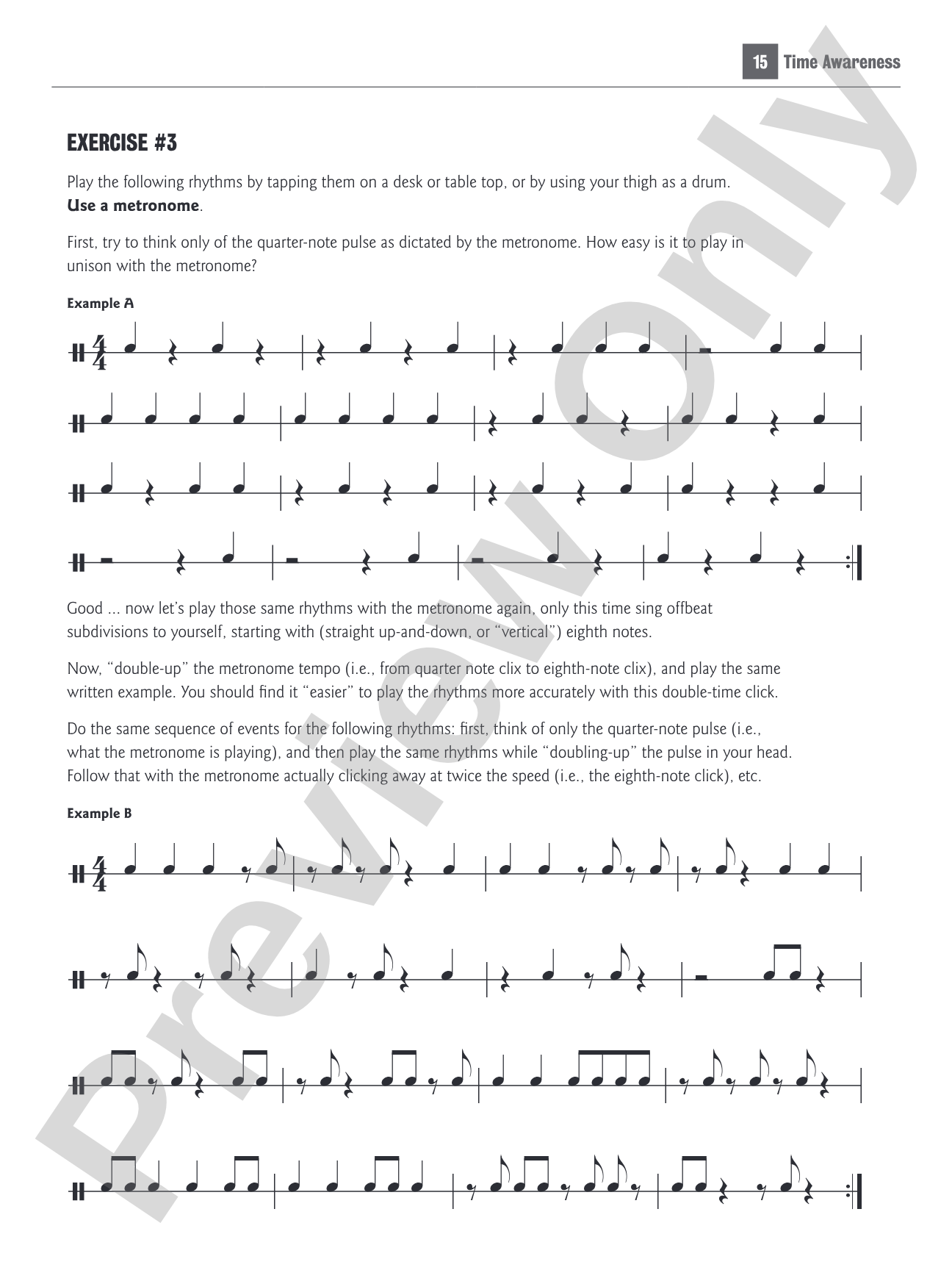
This book provides a handy study, practice and resource guide for all musicians who are seeking to improve their music-making abilities. Though written by a drummer, the text exercises and etudes in this book are not for drummers only! And while a good number of the exercises can be sung or played on any instrument, the reader is encouraged to tap these rhythms out: "playing" your thighs with your hands, for example, will work just fine. The examples can be performed solo or in a small group. Includes: -Training for all musicians -Specific exercises for jazz phrasing, pop/funk and classical music -Solo and duet exercises, playable on any instrument -Rhythm etudes with 1 - 4 parts for solo and ensemble practice -A recording with 19 tracks of listening and reference materials


Time Awareness for All Musicians isn't in MakeMusic Cloud just yet...but it could be. Let us know you'd like to see it, and you'll help shape what comes next. In the meantime, start a free trial and dive into thousands of interactive titles your students can play along with today.
Request This Title
Tell us you want it.
Start Your Free Trial
Explore everything that's ready to play right now.
Sample Audio
No sample audio found.
Sample Video
Additional Details
Publisher:
Alfred Music
Page Count:
76
SKU:
00-PB-0002219
More about this title
About the Composer: Peter Erskine
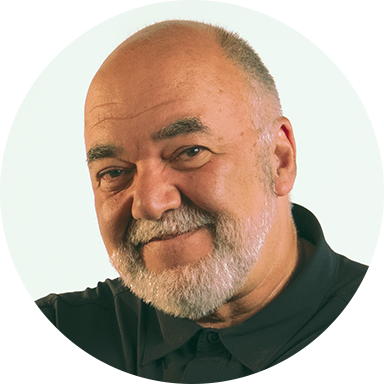
Peter Erskine began his percussion journey at age 4 and has become one of the most recorded drummers in history, appearing on over 700 albums and film scores. His collaborations span an extraordinary range: from the big band traditions of Stan Kenton and Maynard Ferguson to fusion pioneers like Weather Report and Steely Dan, and from jazz masters such as Chick Corea and Pat Metheny to vocalists like Joni Mitchell and Diana Krall. He has soloed with major orchestras worldwide and taught at USC for more than two decades.
Eskine's commitment to musical versatility informs everything he creates as an educator. His 2022 induction into the Percussive Arts Society Hall of Fame, two Grammy Awards, and nine additional nominations reflect a career built on curiosity and craftsmanship across genres. He remains an active clinician and mentor, sharing the rhythmic literacy and stylistic flexibility that have defined his own artistic path.
Why we love this
A drummer writing for all musicians is rare and valuable. Erskine sidesteps the typical percussion workbook by creating exercises that live equally well on your voice, your instrument, or your lap, which means you can actually use this daily in rehearsal without specialized equipment. The inclusion of style-specific training for jazz phrasing, pop/funk, and classical music ensures your ensemble gains rhythmic literacy that transfers directly to the repertoire you're preparing.
What to expect
Practical and grounded in real musical contexts. Rather than abstract rhythm theory, you work directly with the figures and phrasings you hear in actual music, building confidence through immediate, tangible application.
Who it's for
Any musician seeking to strengthen rhythmic foundation, from young students building basic pulse awareness to advanced players refining jazz phrasing and stylistic nuance. Directors will find it especially useful for ensemble sections that struggle with rhythmic precision or stylistic clarity across classical, jazz, and contemporary idioms.
How to get the most out of it
- Encourage students to physically feel the rhythms first by tapping their thighs or clapping before attempting them on their instrument. This kinesthetic entry point builds internal pulse faster than reading alone.
- Use the 19 recorded tracks as listening references before assigning the written etudes. Hearing the intended sound clarifies how a figure should sit rhythmically.
- Start with solo exercises and move to duets and multi-part rhythms only after students demonstrate steady pulse on single-line material.
- Have students sing or vocalize the figures daily, even if their primary instrument is not typically vocal. This strengthens rhythmic internalization in ways pure practice cannot.
How to use it
Integrate individual exercises into sectional rehearsals to establish a common rhythmic language before tackling new repertoire. The style-specific etudes work as focused warm-ups when you are preparing jazz or funk arrangements, and the ensemble pieces can serve as standalone concert openers or intermission fillers in mixed programs.
Skills your students will build
- Reading and internalizing rhythmic figures across simple and complex meters
- Jazz phrasing and swing interpretation
- Pop and funk rhythmic patterns and grooves
- Classical rhythm precision and articulation
- Ensemble rhythmic coordination and independence
- Singing rhythmic lines for stronger internalization
- Listening and replicating recorded reference materials