
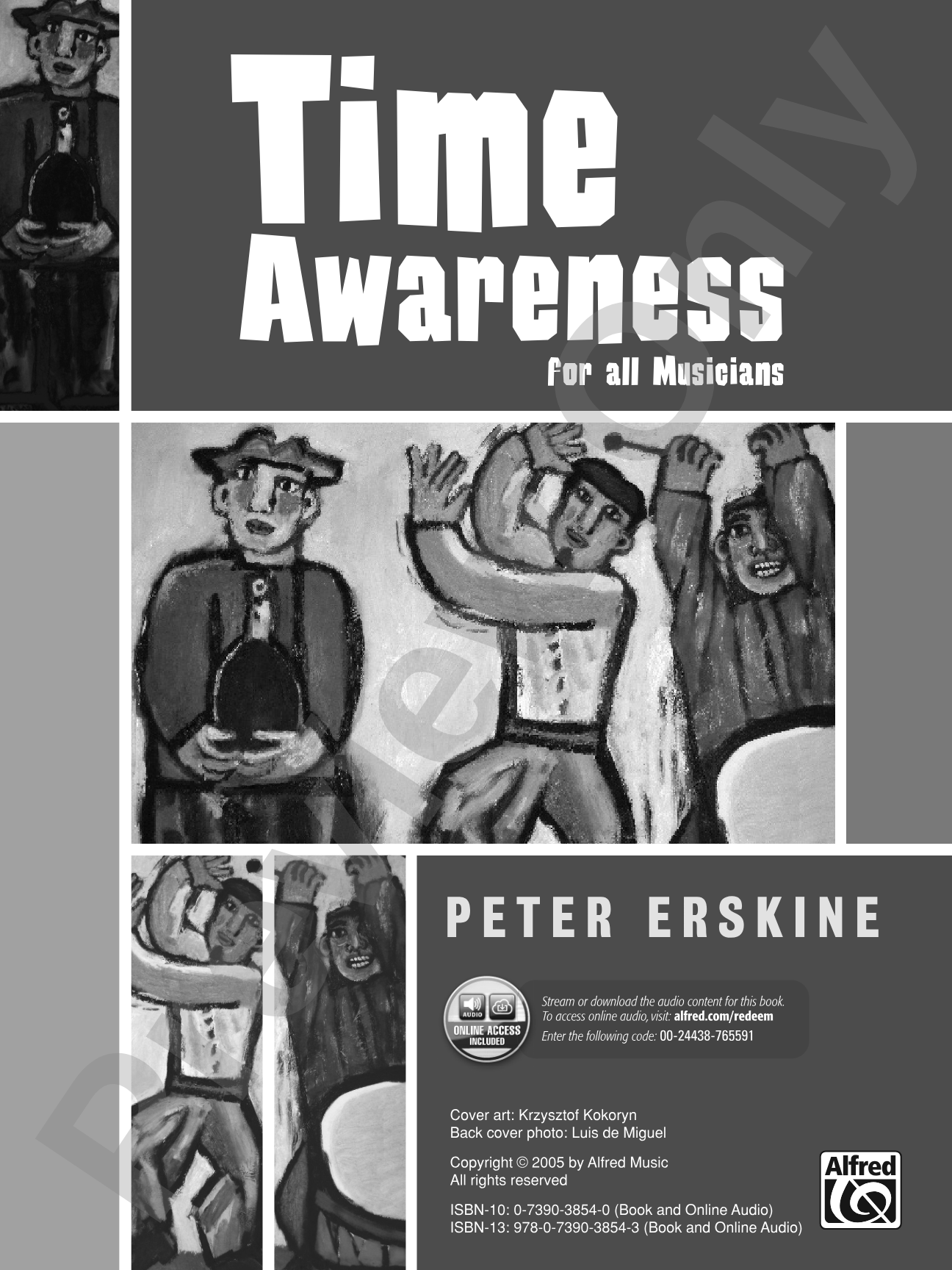

Time Awareness for All Musicians
By Peter Erskine
Item: 00-PB-0002158
$19.99
Pickup currently not available
Description
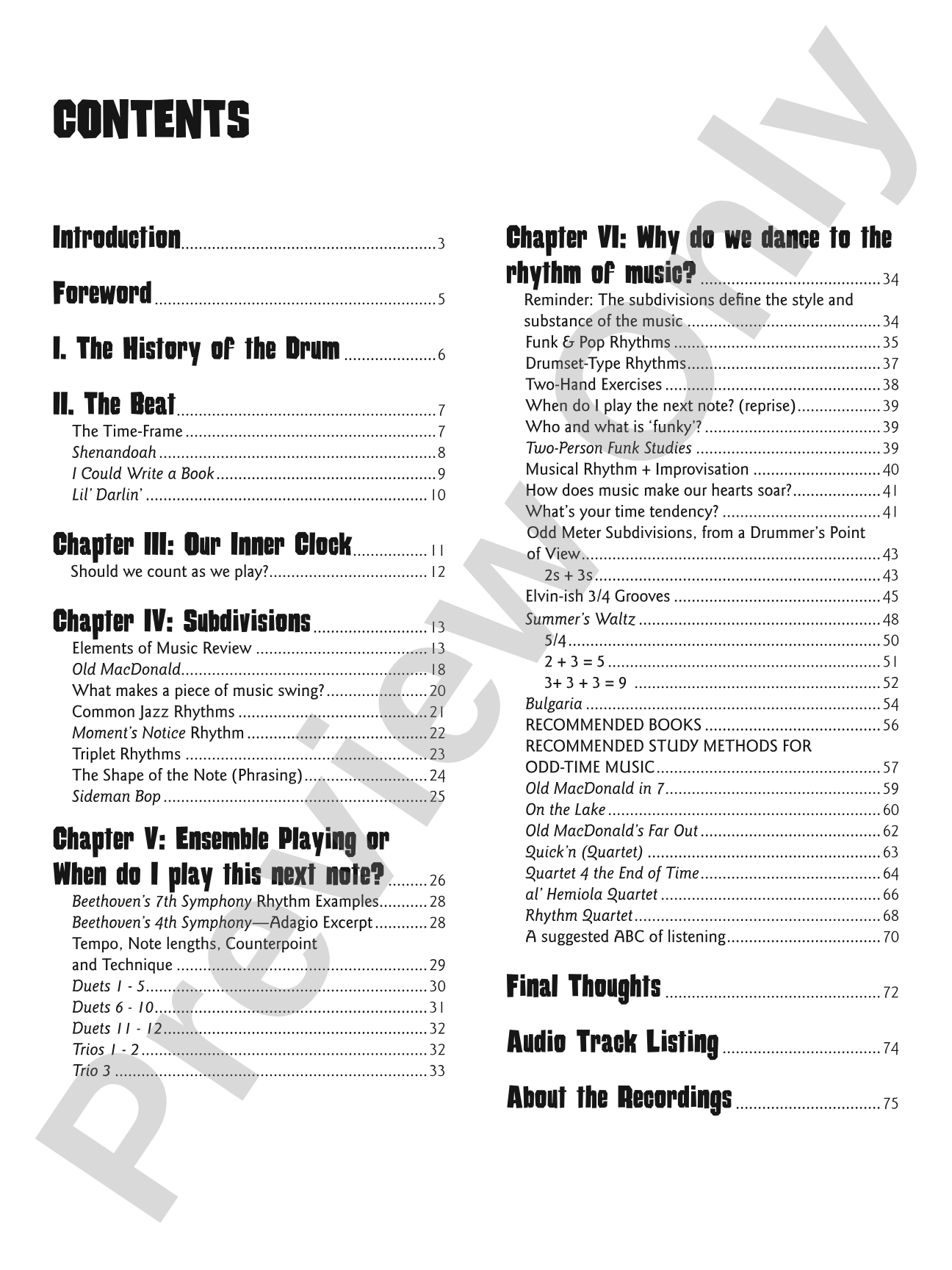
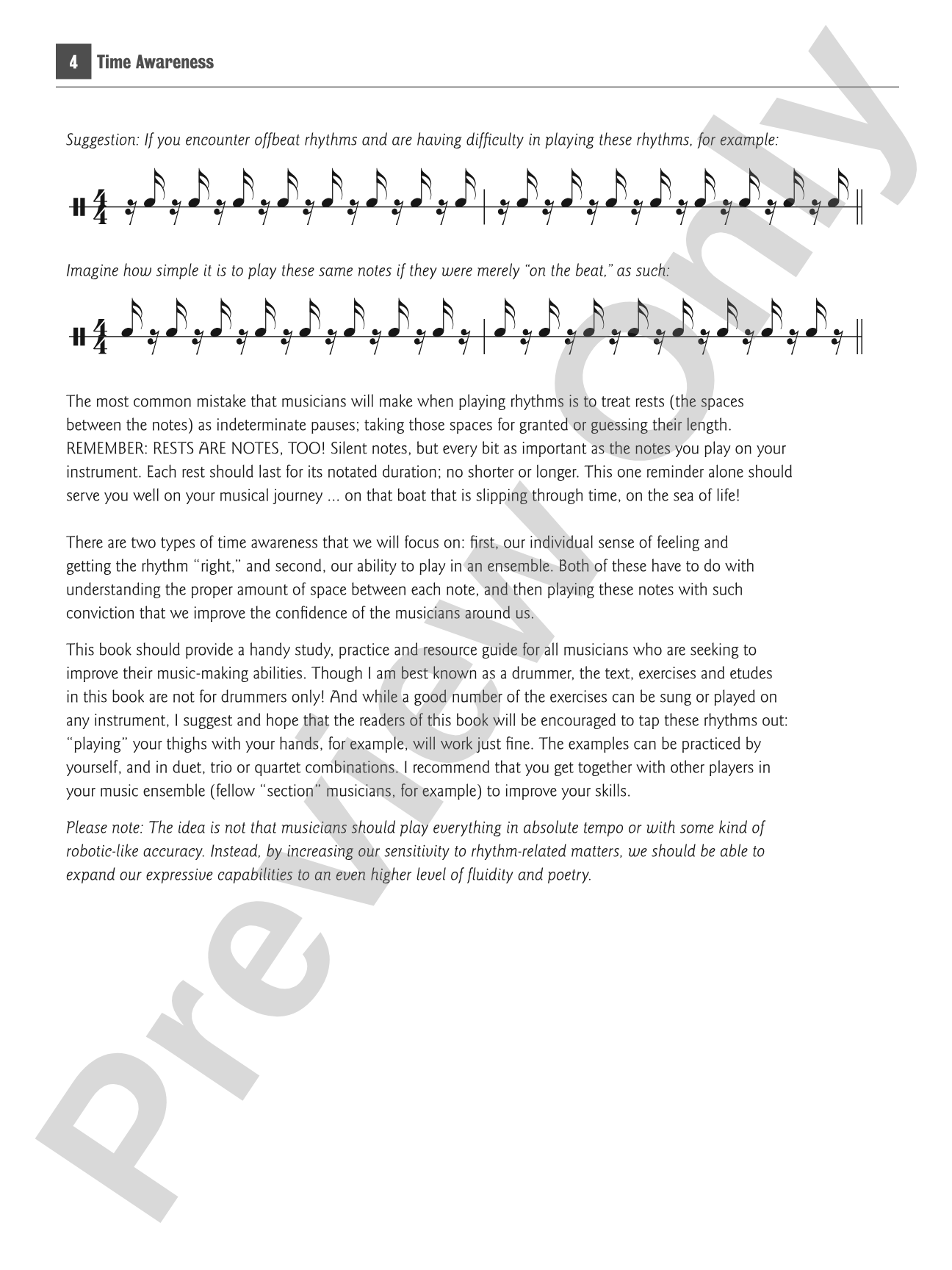
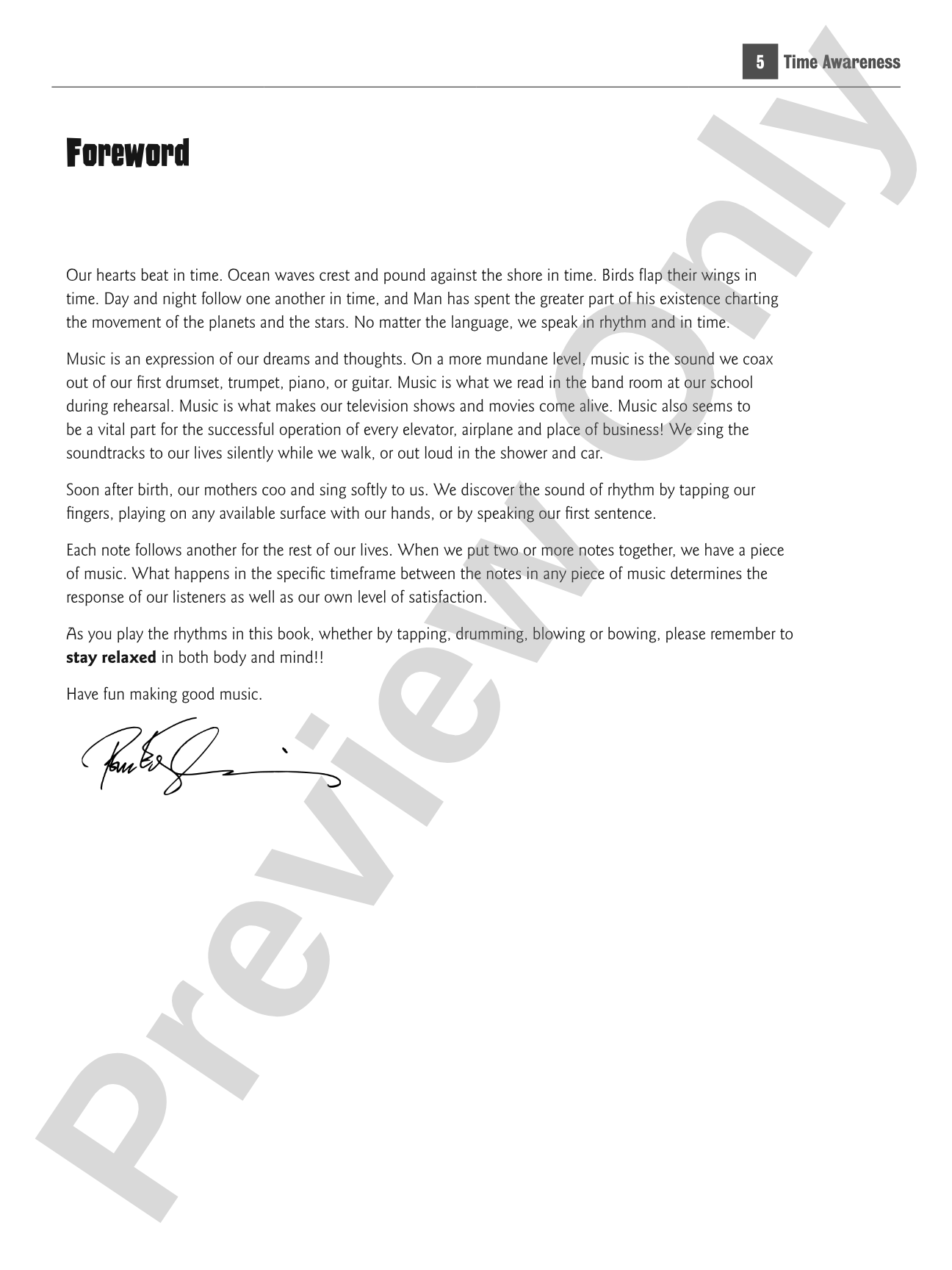
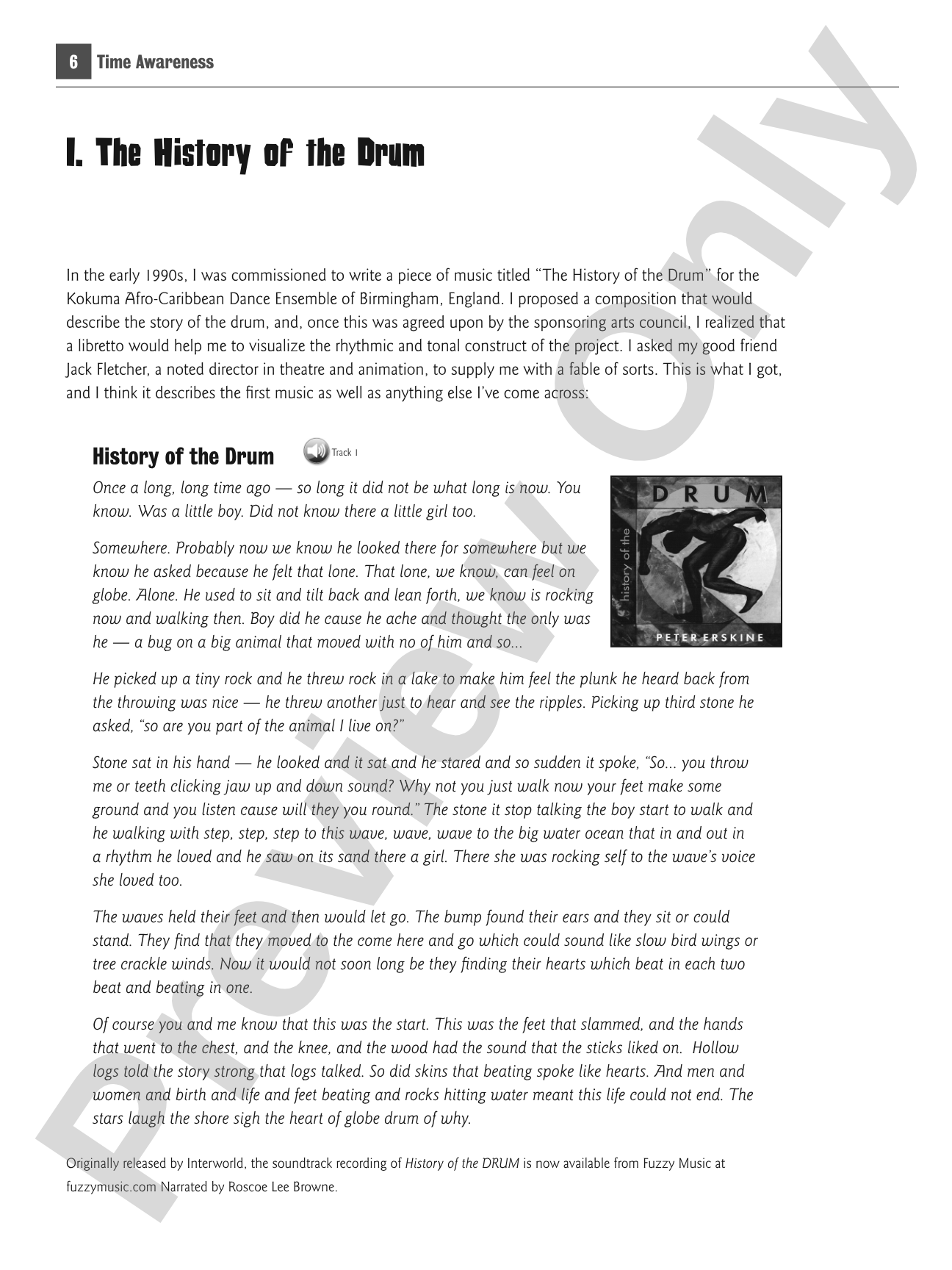
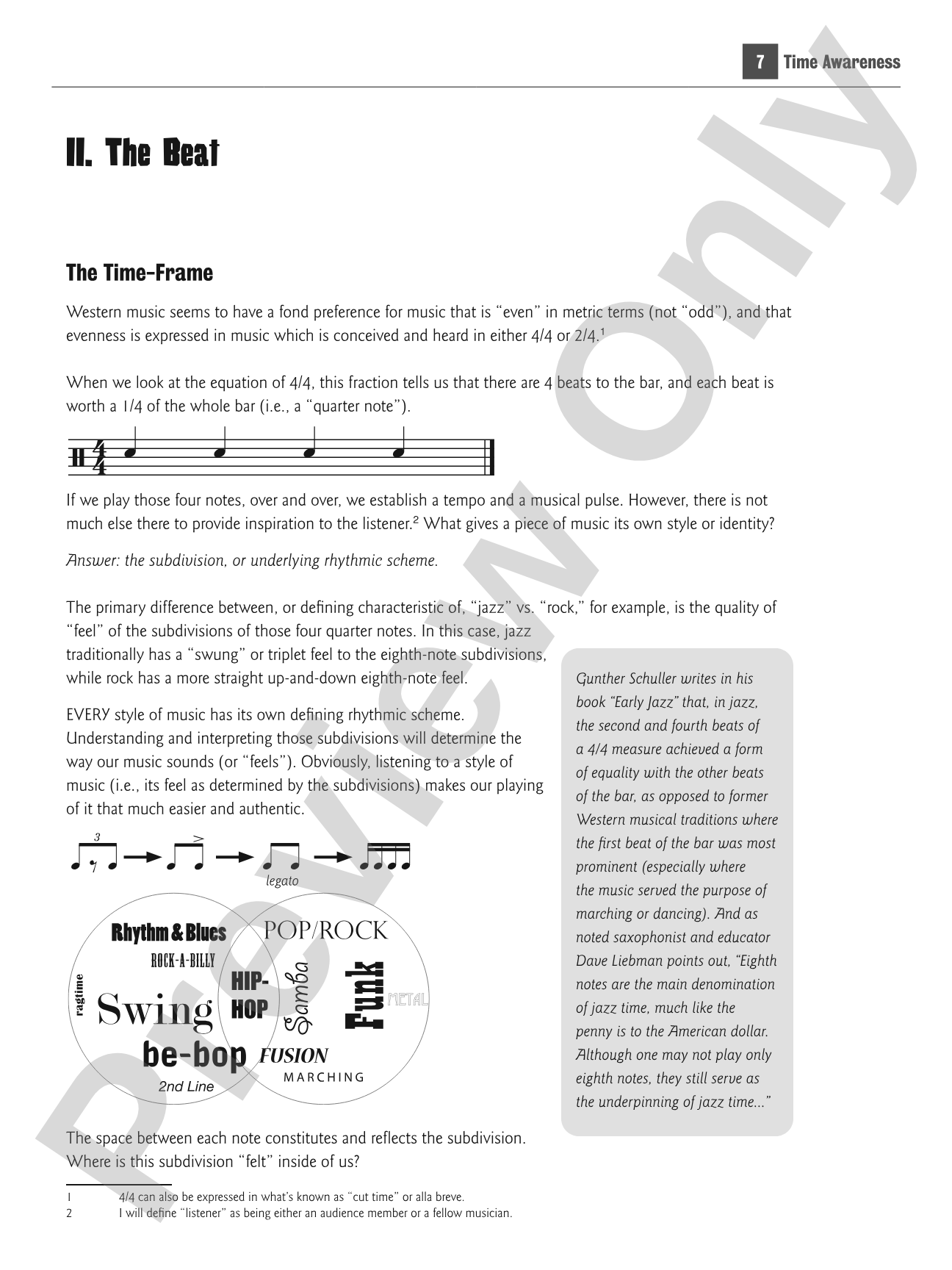
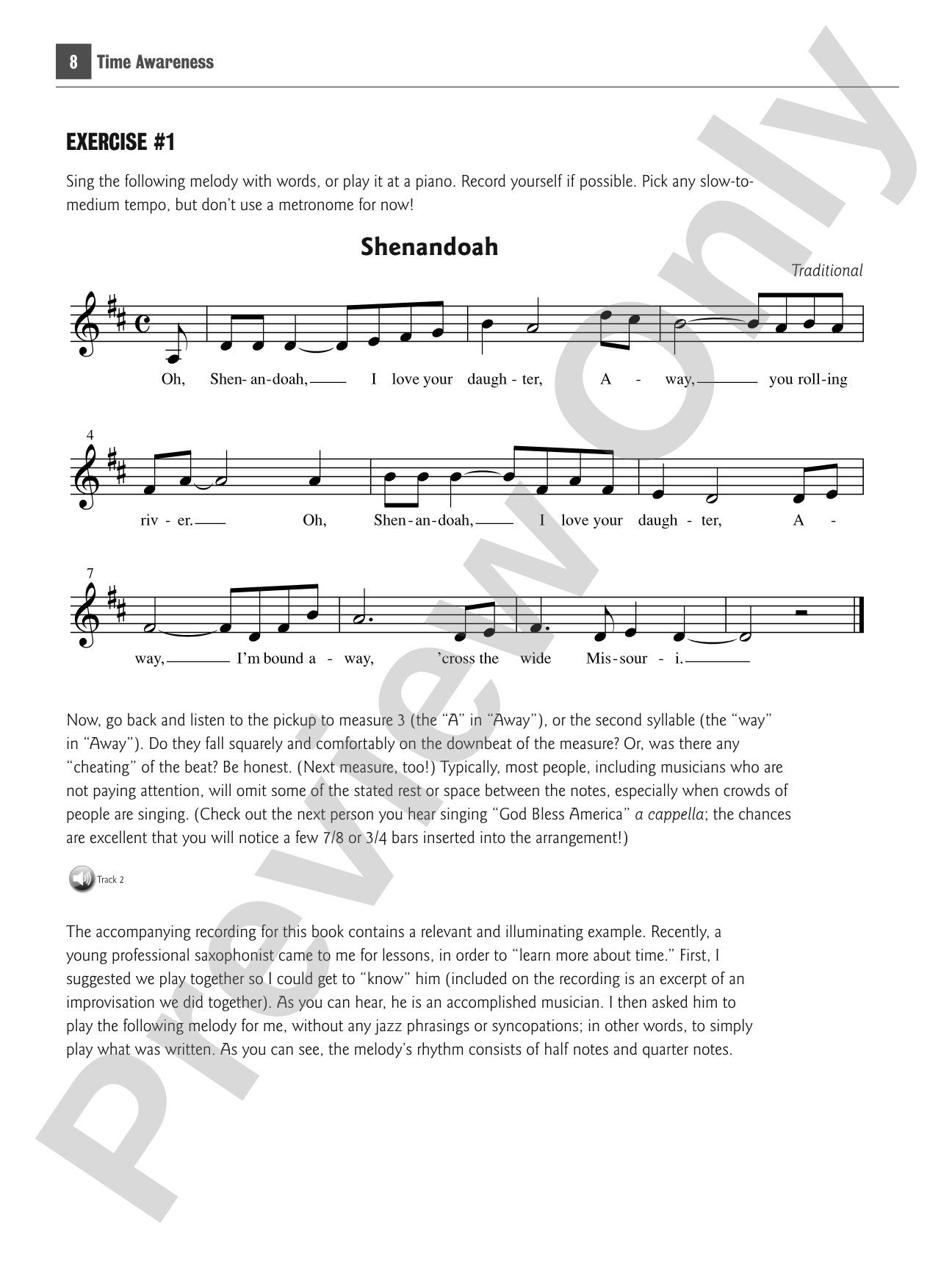
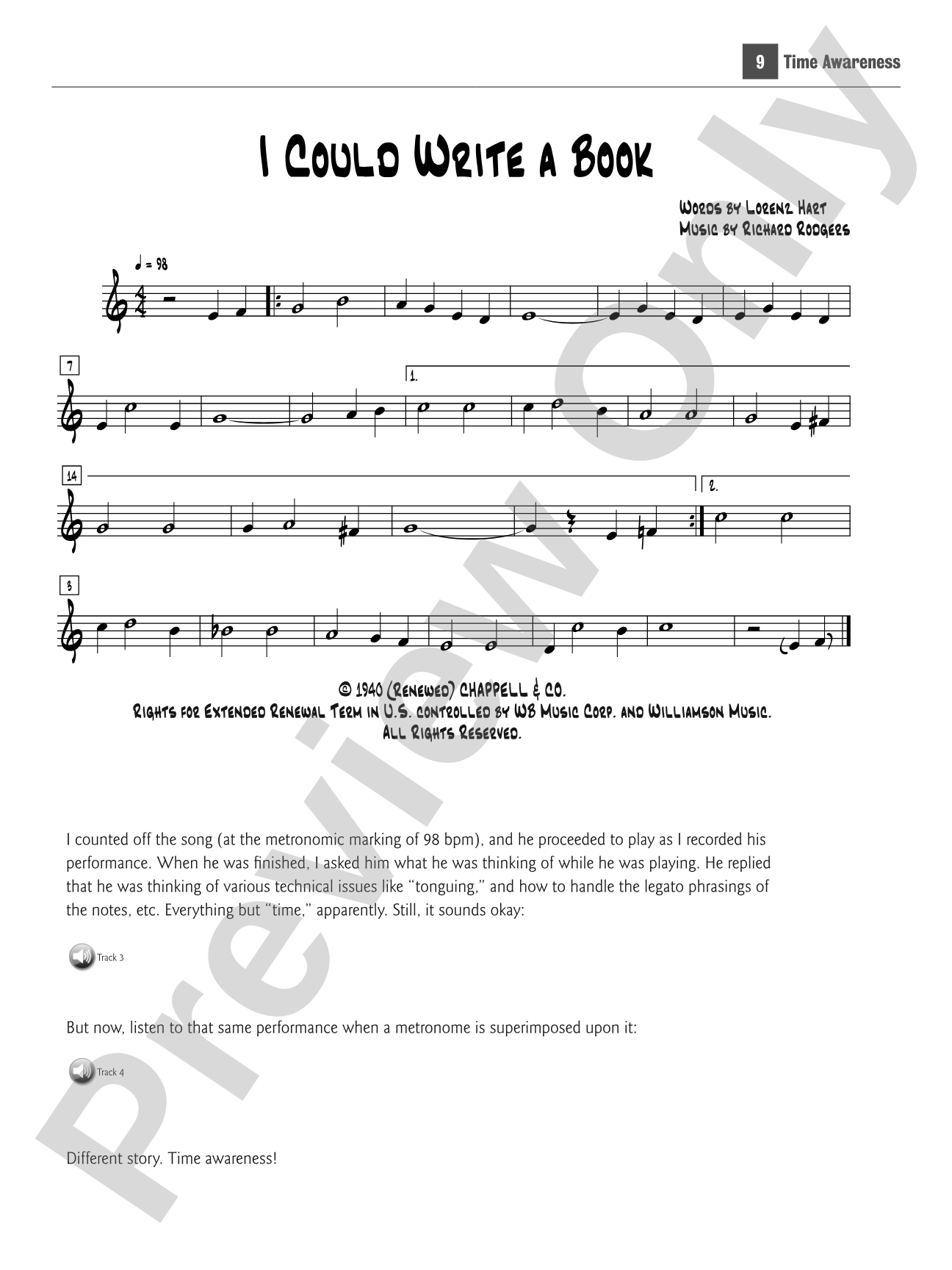
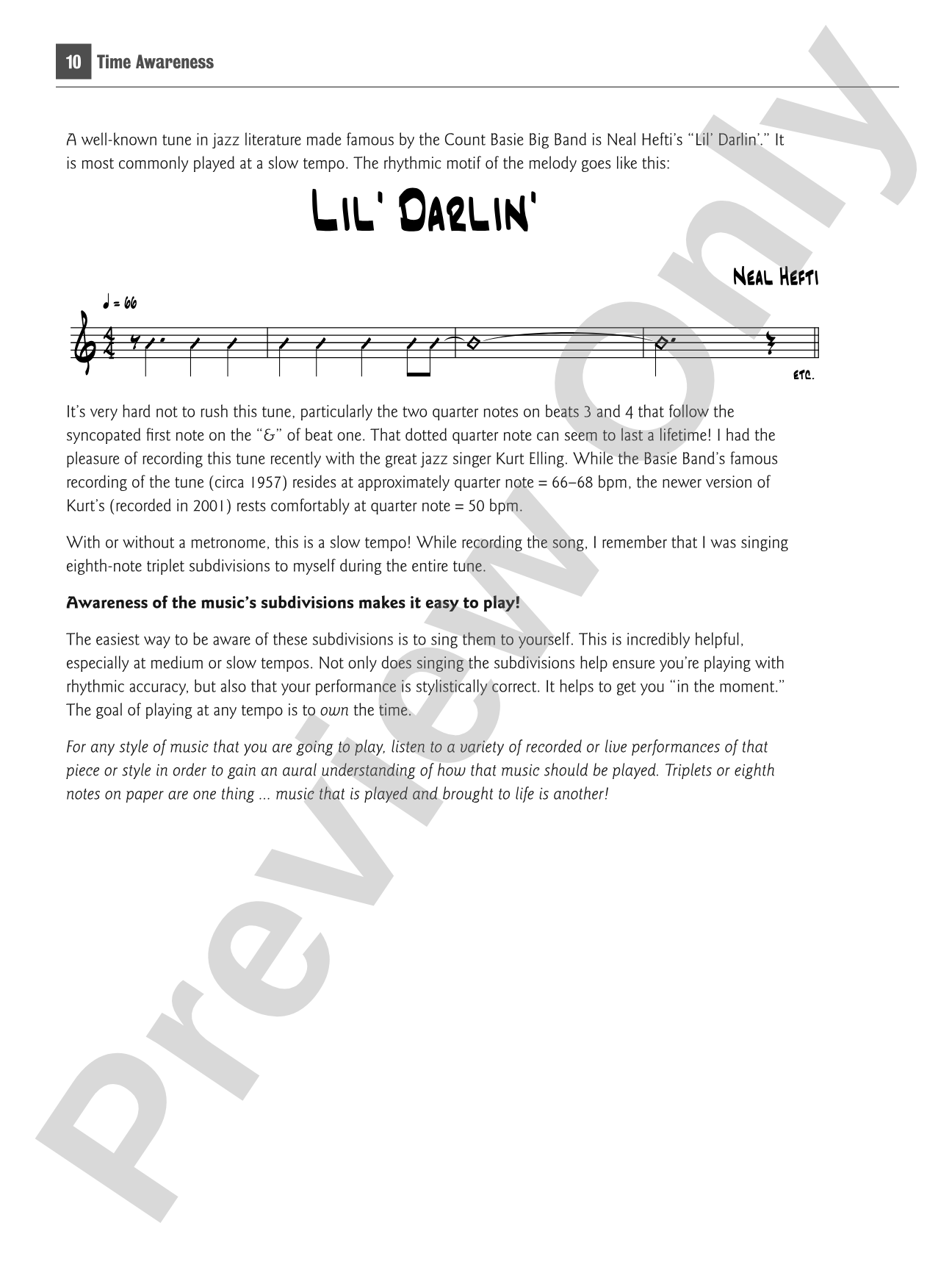
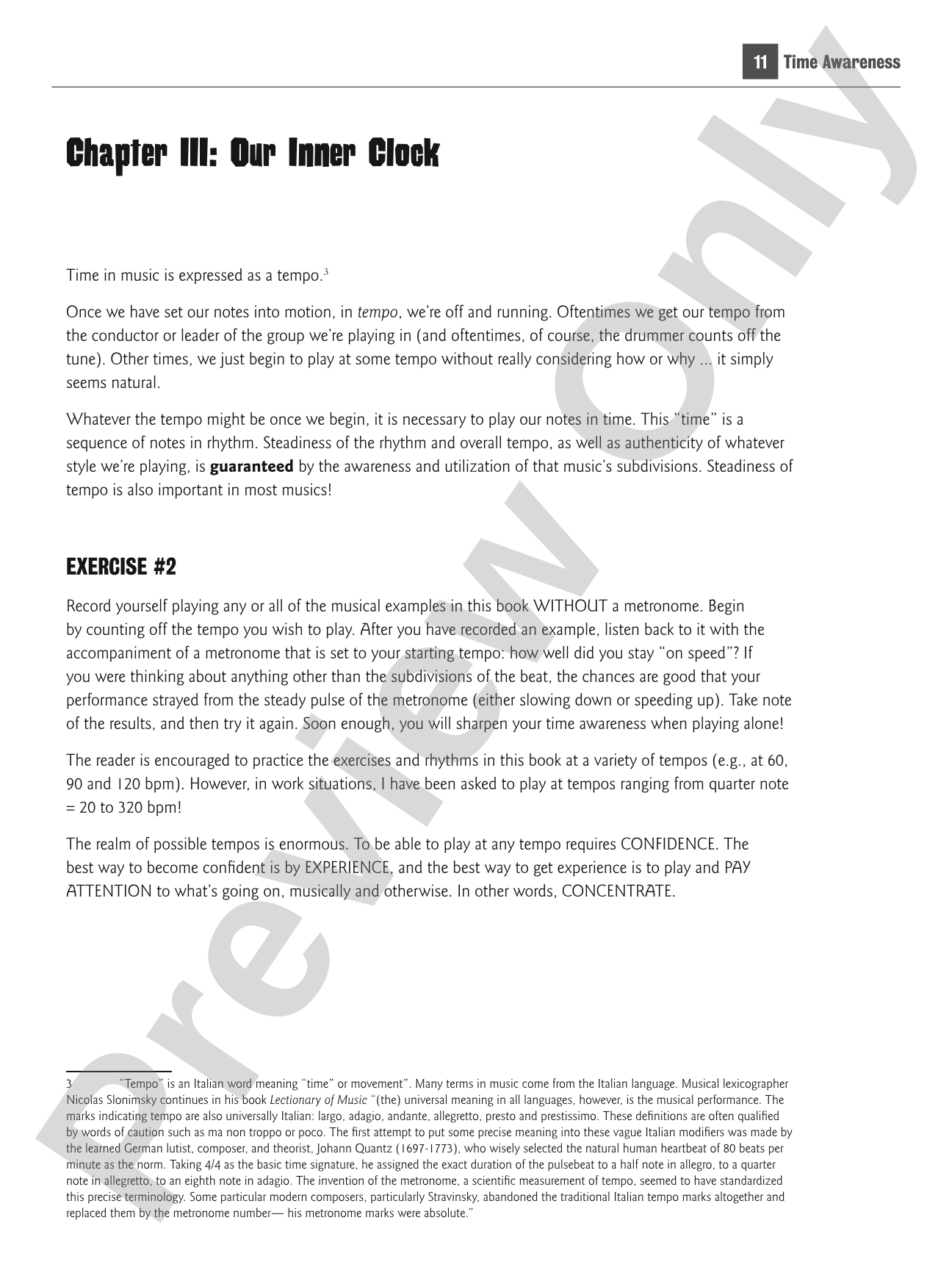
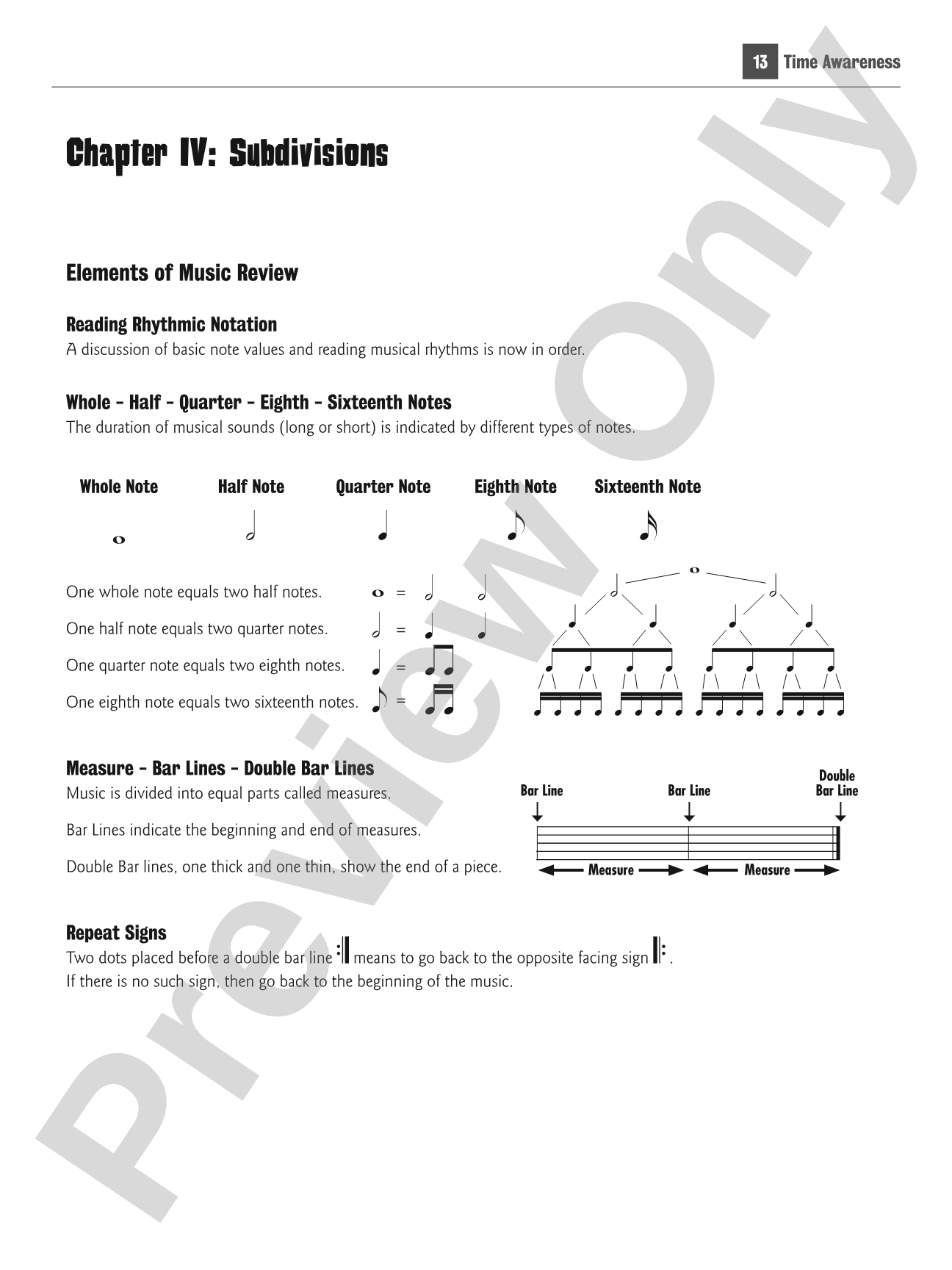
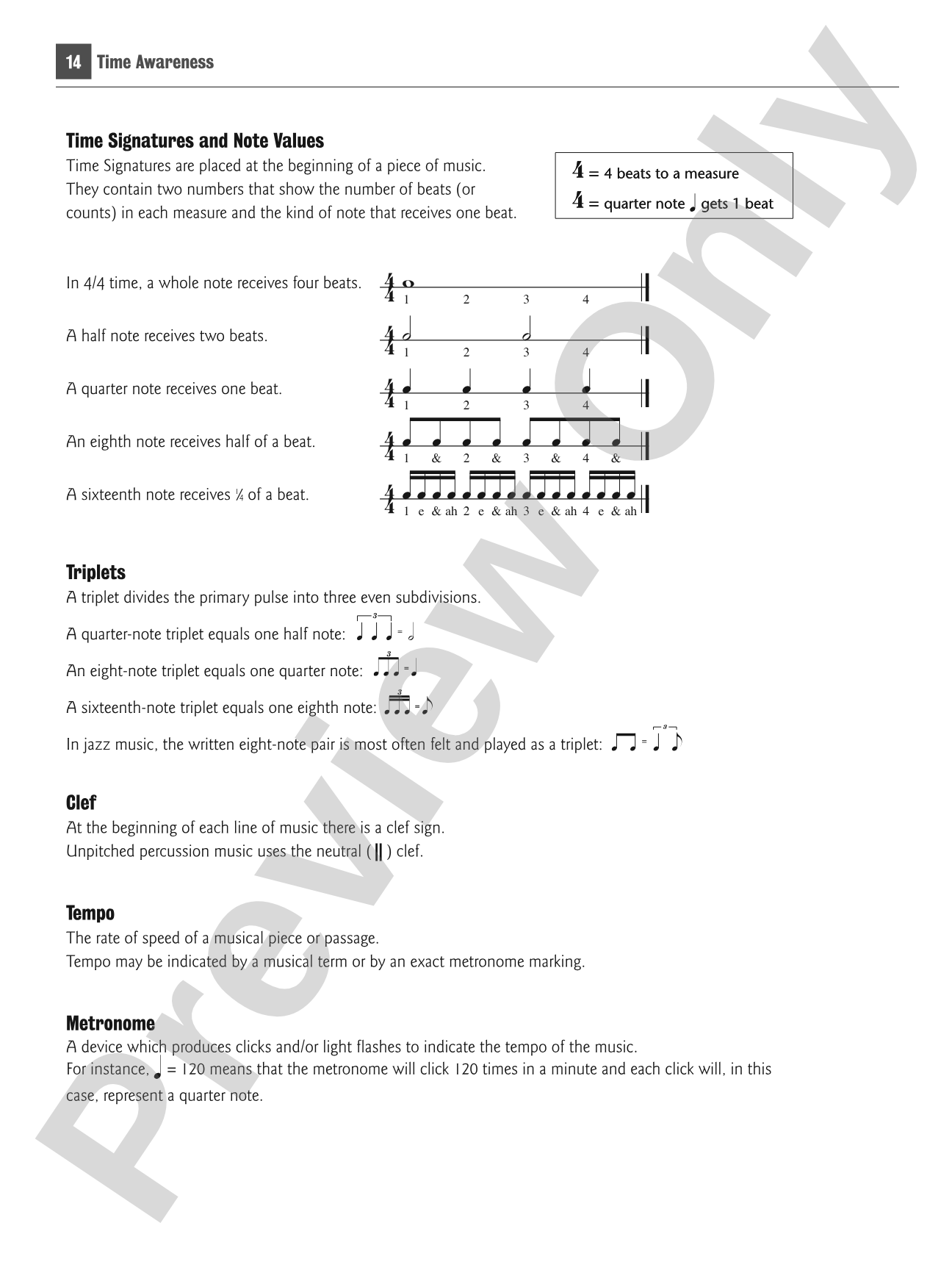
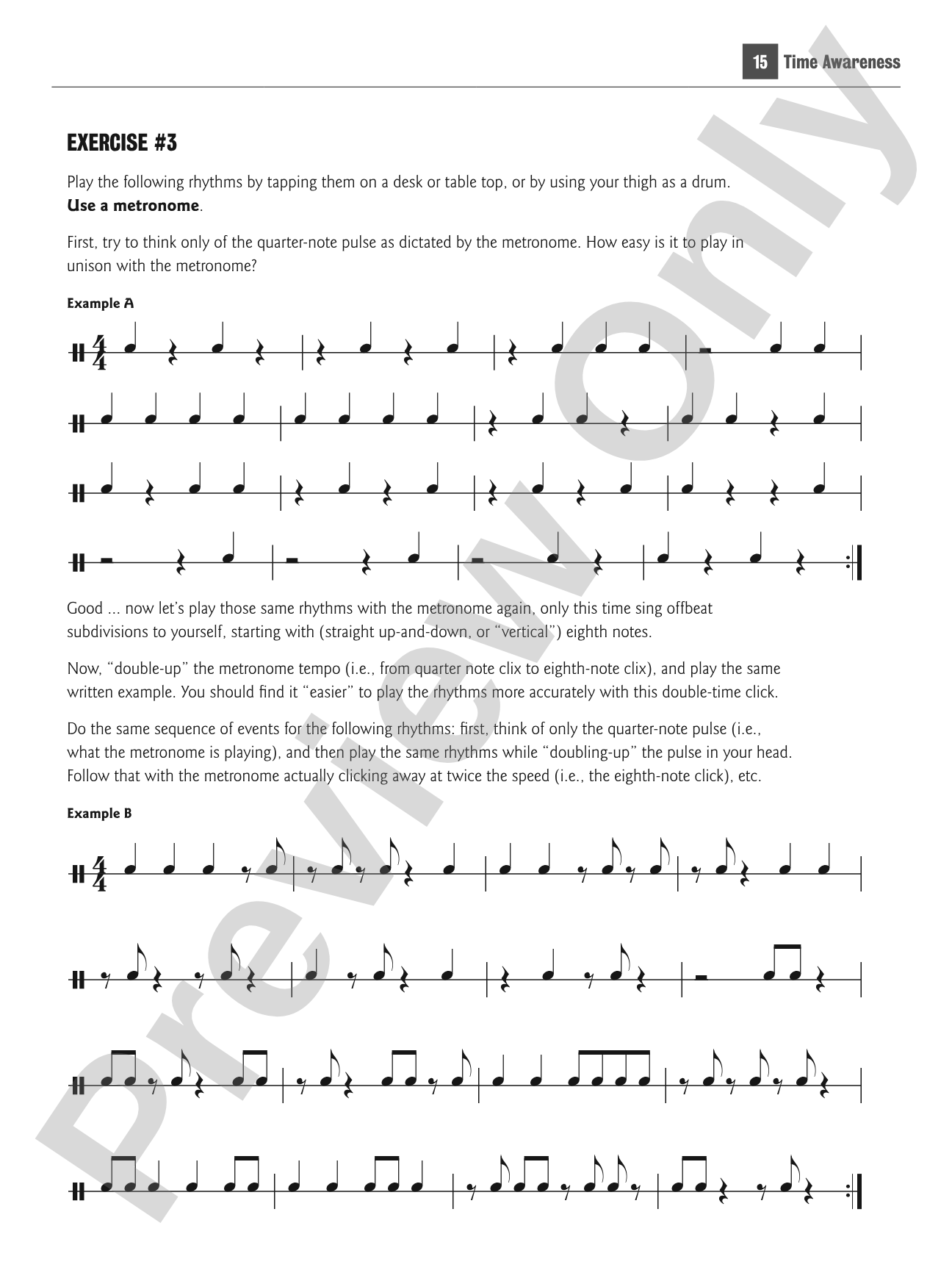
This book provides a handy study, practice and resource guide for all musicians who are seeking to improve their music-making abilities. Though written by a drummer, the text exercises and etudes in this book are not for drummers only! And while a good number of the exercises can be sung or played on any instrument, the reader is encouraged to tap these rhythms out: "playing" your thighs with your hands, for example, will work just fine. The examples can be performed solo or in a small group. Includes: -Training for all musicians -Specific exercises for jazz phrasing, pop/funk and classical music -Solo and duet exercises, playable on any instrument -Rhythm etudes with 1 - 4 parts for solo and ensemble practice -A recording with 19 tracks of listening and reference materials


Time Awareness for All Musicians isn't in MakeMusic Cloud just yet...but it could be. Let us know you'd like to see it, and you'll help shape what comes next. In the meantime, start a free trial and dive into thousands of interactive titles your students can play along with today.
Request This Title
Tell us you want it.
Start Your Free Trial
Explore everything that's ready to play right now.
Sample Audio
No sample audio found.
Sample Video
Additional Details
Publisher:
Alfred Music
Page Count:
76
SKU:
00-PB-0002158
More about this title
About the Composer: Peter Erskine
Peter Erskine began playing drums at age 4 and has spent five decades working across jazz, classical, pop, and film scoring contexts. His recording catalog spans over 700 albums and scores, with collaborations ranging from Weather Report and Steely Dan to the Berlin Philharmonic and contemporary classical ensembles. He taught percussion at USC for more than two decades and was inducted into the Percussive Arts Society Hall of Fame in 2022.
Eskine's career reflects a rare commitment to musical breadth. Two Grammy Awards and nine nominations acknowledge his work, but his real influence comes through mentorship. He conducts clinics and masterclasses worldwide, translating decades of studio, ensemble, and orchestral experience into practical pedagogy. His approach to rhythm and time awareness stems not from theory alone but from real solutions born in working rehearsals with world-class musicians.
Why we love this
Erskine wrote this for musicians of all instruments, which means your band students can work through rhythm independence and internal pulse without needing a drum kit. The 19 accompanying tracks provide immediate reference material so students hear what each exercise should feel like in context. Most notably, the jazz phrasing and funk exercises give wind and string players direct access to the rhythmic sophistication drummers use in real performances.
What to expect
Focused and clear. The exercises build from foundational rhythm patterns into genuinely musical contexts, so practice never feels disconnected from how you actually play. Singing or tapping rhythms alongside recordings grounds the work in sound rather than notation alone.
Who it's for
Any musician looking to sharpen rhythmic accuracy and internal pulse, whether they play wind instruments, strings, keyboards, or percussion. Jazz students and ensemble members benefit especially from the genre-specific exercises in funk and swing phrasing. Classroom teachers can use the solo drills to diagnose timing issues across their section.
How to get the most out of it
- Record yourself performing the solo and duet exercises, then listen back with fresh ears. You'll hear timing inconsistencies that feel invisible while playing.
- Start the rhythm etudes slowly enough that you can tap your thighs cleanly. Once the coordination is locked in, gradually increase tempo using the recorded tracks as reference.
- Approach the jazz phrasing section by listening to the tracks first. Notice where notes land relative to the beat, then replicate that placement before attempting the written exercises.
- Group students in small ensembles for the multi-part etudes. Rotate who plays each line so everyone builds comfort in different rhythmic roles.
How to use it
Assign exercises from this book as part of your daily warm-up rotation, rotating through classical, jazz, and funk sections across different weeks so students experience time awareness across styles. The duet exercises work beautifully in chamber music settings or as sectional checkpoints. For jazz or commercial music ensembles, the phrasing section becomes essential repertoire alongside standard method books.
Skills your students will build
- Internal pulse and subdivision accuracy across changing tempos
- Rhythmic phrasing in jazz, funk, and classical contexts
- Reading and performing multi-part rhythm etudes independently
- Listening and matching rhythmic placement against recorded references
- Meter and time signature flexibility (single and mixed meters)
- Independence between what you hear and what you play