
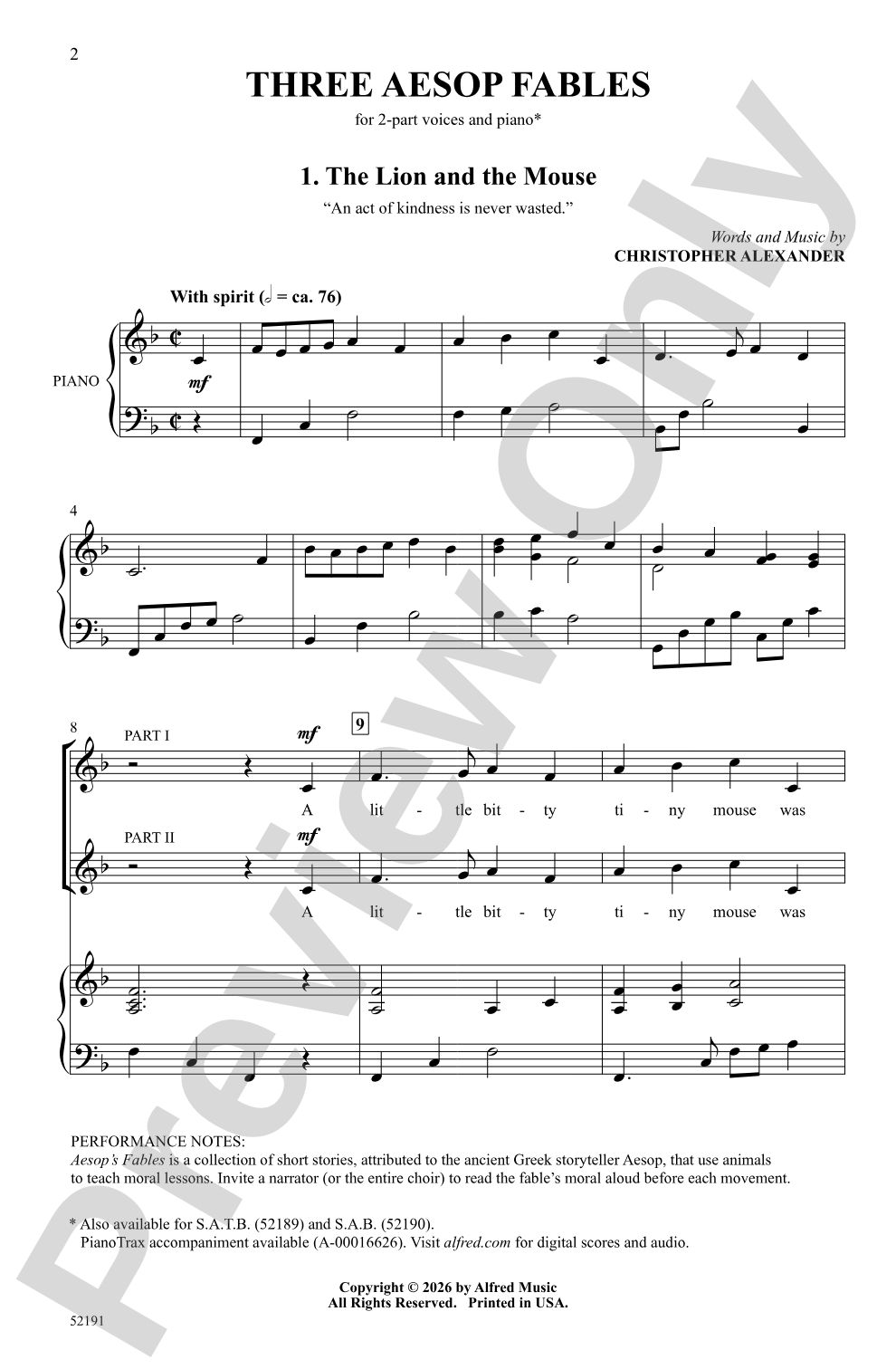
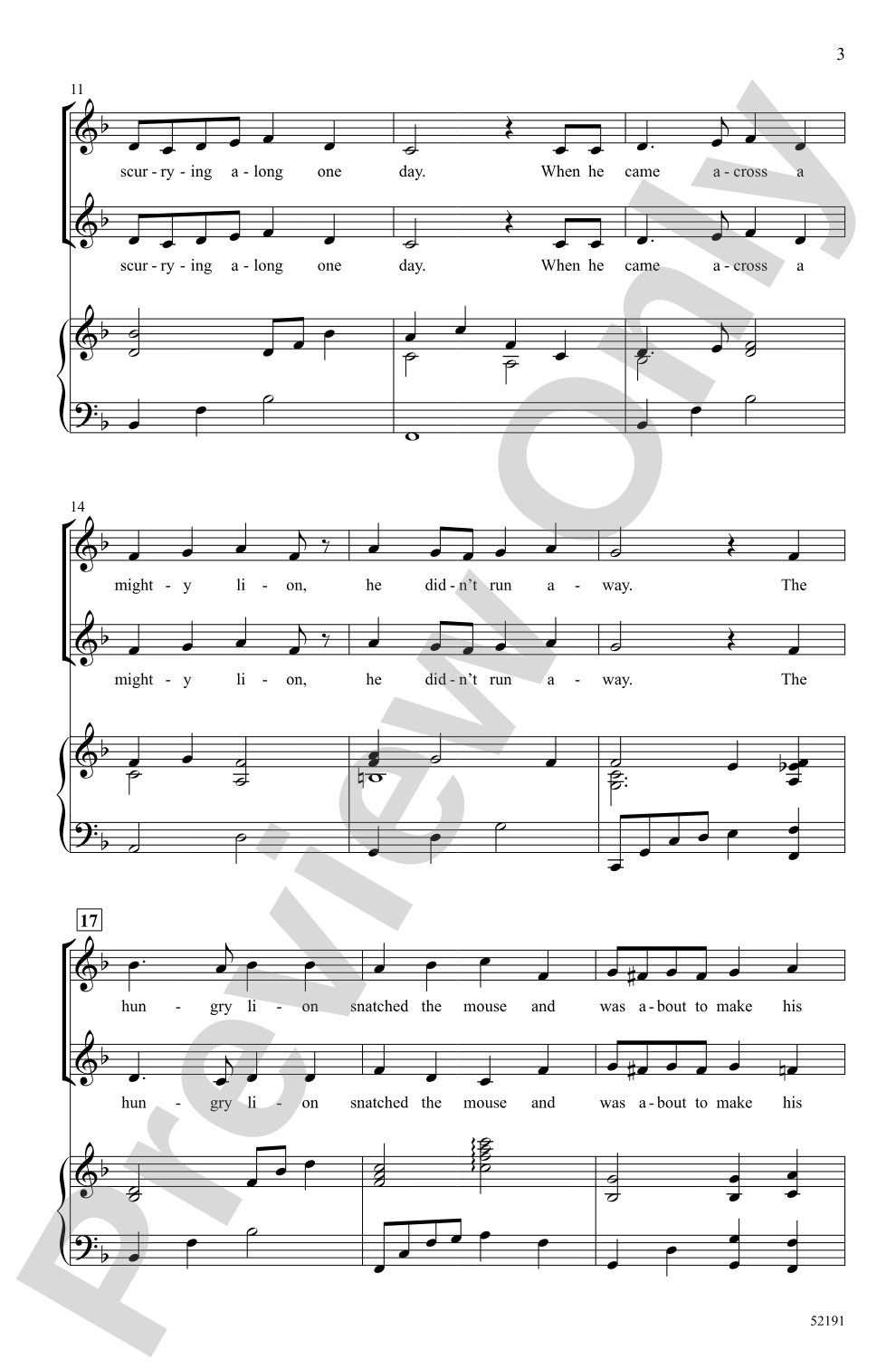
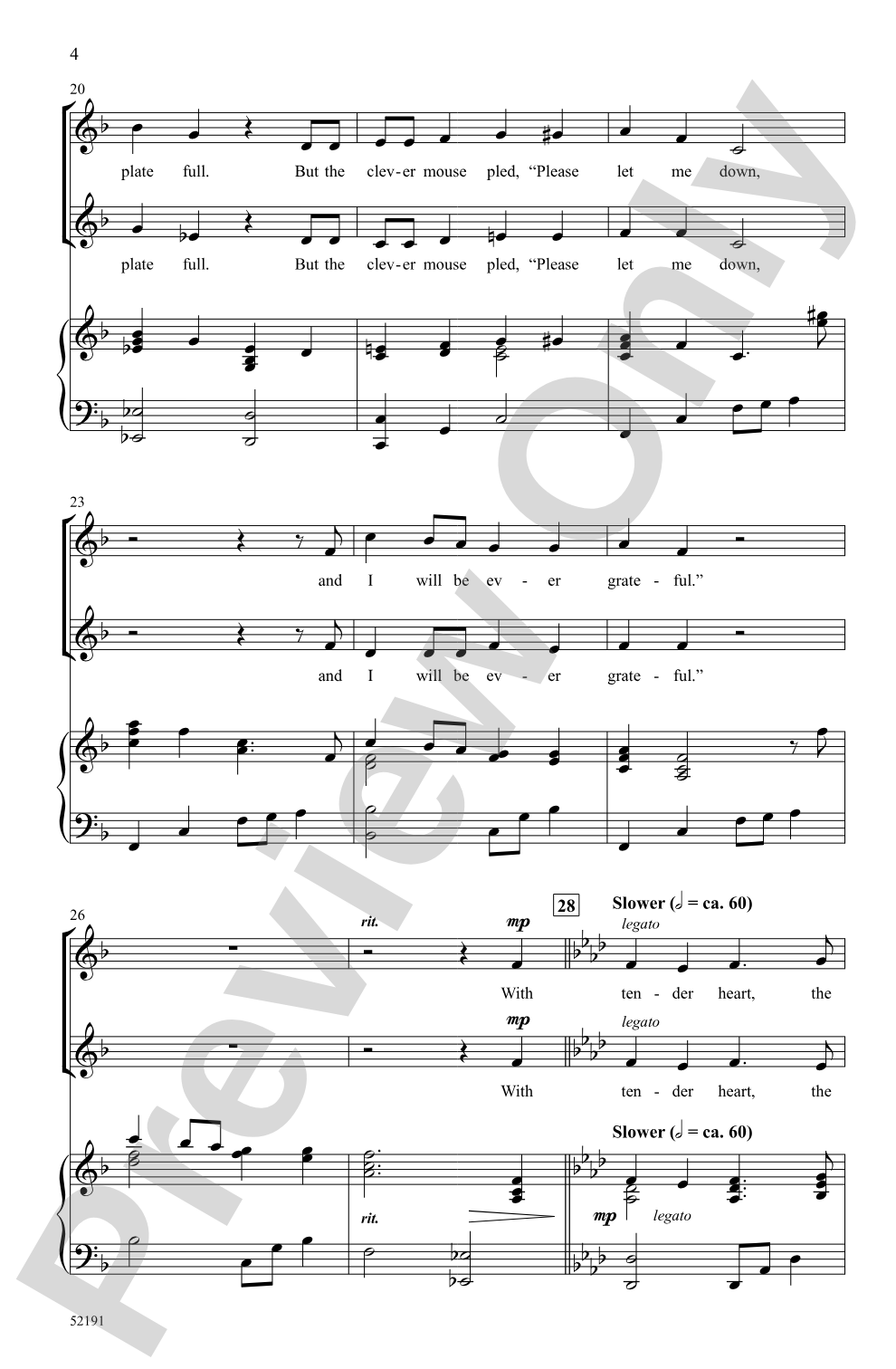

Three Aesop Fables: 2-Part Choral Octavo
1. The Lion and the Mouse 2. The Dog and His Reflection 3. The Crow and the Pitcher
Words and music by Christopher Alexander
Item: 00-PO-0007823
$2.60
Minimum order quantity: 20 copies
Pickup currently not available
Description
Greek storyteller Aesop is known for teaching moral lessons through fables that feature animals with human traits. In this delightful concert work, we learn that "an act of kindness is never wasted," "it is very foolish to be greedy," and "necessity is the mother of invention." Each whimsical movement offers a distinct character and tempo, creating a fantastic opportunity to teach stylistic contrast and dramatic expression. Perform individually or as a five-minute set with singers of any age.


Three Aesop Fables: 2-Part Choral Octavo isn't in MakeMusic Cloud just yet...but it could be. Let us know you'd like to see it, and you'll help shape what comes next. In the meantime, start a free trial and dive into thousands of interactive titles your students can play along with today.
Request This Title
Tell us you want it.
Start Your Free Trial
Explore everything that's ready to play right now.
Sample Audio
1
1 The Lion and the Mouse
--:--
2
2 The Dog and His Reflection
--:--
3
3 The Crow and the Pitcher
--:--
1 The Lion and the Mouse
0:00
0:00
Sample Video
Additional Details
Series:
Alfred Choral Designs
Publisher:
Alfred Music
Page Count:
16
SKU:
00-PO-0007823
More about this title
About the Composer: Christopher Alexander

Christopher Alexander was born in 1986 in St. Joseph, Missouri, and earned his Bachelor of Science in Vocal Music Education from Missouri Western State University in 2009. A self-taught pianist, he has built a prolific catalogue spanning instrumental works, vocal solos, and choral literature, with commissions from singing groups and church choirs across the Missouri and Kansas regions.
Alexander serves as pianist and primary arranger for The New Generation Singers, a Christian youth ensemble based in his hometown, and brings extensive experience as a music director and pianist in musical theatre. His work has appeared in print through Alfred Music, GIA Music Publications, Hal Leonard, and Excelcia Music Publishing. He holds membership in NAfME, ACDA, MCDA, and Phi Mu Alpha Sinfonia Fraternity, and remains active as a commission composer and guest conductor.
Why we love this
Alexander nails the balance between storytelling and musicality here, giving each fable its own sonic personality without sacrificing singability at the 2-part level. The concert programming flexibility (perform together or separately) makes this work hard in an actual rehearsal calendar, and the moral lessons embedded in each text give singers something genuinely meaningful to express rather than just notes on a page.
What to expect
Each movement shifts personality like turning the page in a storybook. One moment feels playful and lighthearted, the next grounded in consequence or clever wisdom. The whimsical orchestration of Aesop's animal characters gives this piece a theatrical warmth that feels both timeless and immediate.
Who it's for
This work welcomes singers at any age or experience level, from middle school choirs through adult ensembles. The 2-part voicing keeps the technical demands accessible while the storytelling and stylistic variety reward singers who can engage dramatically and musically.
How to get the most out of it
- Shape each movement as a distinct musical character. The tempo and style changes between fables are intentional; use them to explore different approaches to tone, dynamics, and phrasing across the five minutes.
- Clarify the text delivery without sacrificing musicality. These are stories with a point, so your singers should feel the narrative arc within each section and understand what moral idea they're conveying.
- Balance the two parts so neither overwhelms. The simplicity of 2-part writing means good voice balance and healthy part independence matter more, not less.
How to use it
Perform all three movements as a unified five-minute concert piece that stands on its own, or use individual fables as shorter selections when you need flexible programming. The accessible voicing and engaging narrative content make this a strong choice for family concerts, festival settings, or educational programs where the text carries as much weight as the music.
Skills your students will build
- Stylistic contrast between contrasting tempos and characters
- Dramatic expression and storytelling through sung text
- Part independence and voice balance in 2-part writing
- Musical phrase shaping across longer formal sections
- Thematic unity across a multi-movement work