This Shall Be for Music Cover Image

This Shall Be for Music: PianoTrax Digital Download

$9.99 USD
Sale price  $9.99 USD Regular price 
Skip to product information
This Shall Be for Music Cover Image

This Shall Be for Music: PianoTrax Digital Download

Words by Robert Louis Stevenson, music and additional words by Mary Donnelly and George L. O. Strid

Item: 00-A-00016457

$9.99
Digital Download
Description

This Shall Be for Music: PianoTrax Digital Download isn't in MakeMusic Cloud just yet...but it could be. Let us know you'd like to see it, and you'll help shape what comes next. In the meantime, start a free trial and dive into thousands of interactive titles your students can play along with today.

Sample Pages

No sample pages found.

Sample Audio
0:00
0:00
Sample Video
Additional Details
Series: Alfred Choral Designs
Publisher: Alfred Music
UPC: 0
SKU: 00-A-00016457

More about this title

About the Composer: Mary Donnelly
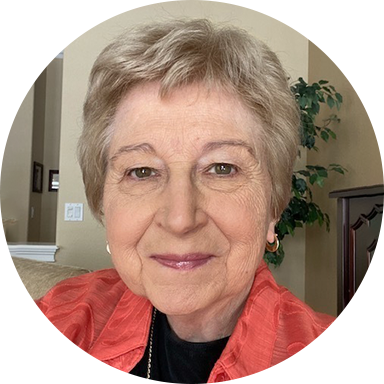
Mary Donnelly

Mary Donnelly spent three decades teaching general music and choir in Washoe County schools while building deep expertise in arts integration and choral pedagogy. She holds a Bachelor of Arts in English and French from the University of Nevada, Reno, and a Master's Degree in Education from Lesley College, where she studied approaches to bringing arts across the curriculum.

In 1985, Donnelly began a prolific creative partnership with George L. O. Strid when their principal challenged them to write a musical for Reading Week. That first collaboration, The Million Dollar Mystery, launched a songwriting team that has since produced over two hundred songs and twenty-five stage musicals. Donnelly is an active member of ACDA, NEA, and ASCAP, and remains based in Reno with her family.

Why we love this

Donnelly and Strid's experience writing for young singers shines through in the accessibility and musicality of this piece. The 2-part and SSA/SSAA voicings make it realistic for middle school and developing high school choirs, while the literary/poetic text and contest/festival designation signal a piece with genuine substance. Directors get something that works for both everyday rehearsals and performance moments without requiring an unusual vocal range or technical demands that outpace their singers' abilities.

What to expect

The marriage of literary and poetic text with the composers' straightforward melodic gift creates a piece that feels both contemporary and timeless. Singers experience clarity in their lines and satisfying harmonic moments without getting lost in unnecessary complexity.

Who it's for

This piece reaches middle school choirs through young adult treble and mixed groups looking for contest or festival material with genuine artistic merit. Directors seeking accessible yet meaningful repertoire that doesn't talk down to singers will find this particularly useful; Donnelly and Strid's catalog shows their gift for writing music young singers actually want to sing.

How to get the most out of it

  • Establish a steady tempo in rehearsal before adding the piano accompaniment; the PianoTrax file can then lock the ensemble's sense of pulse while you refine phrasing and blend.
  • Pay close attention to how the text naturally falls on the melodic contours, especially in SSA/SSAA arrangements where part movement can shift word stress; mark those moments clearly in scores so singers internalize the relationship between words and music.
  • Balance the two parts (or three/four in the SSAA setting) so the primary melodic line reads clearly while inner voices support the harmonic foundation; this becomes crucial when performing with digital accompaniment, which has no give.
  • Rehearse the final gestures thoroughly, since contest and festival performances hinge on confident, unified endings that feel intentional rather than rushed.

How to use it

Program this as a centerpiece for a choral concert segment devoted to accessible yet artfully written repertoire, or enter it in regional or state festivals where 2-part and SSA/SSAA divisions compete. The literary focus pairs well with concerts that explore text-centered programming or thematic connections across multiple art forms.

Skills your students will build

  • Blending and balance in 2-part and multipart texture
  • Connecting lyrical text to musical phrasing
  • Sustained ensemble intonation with digital accompaniment
  • Interpretation of poetry through vocal expression

You May Also Like