
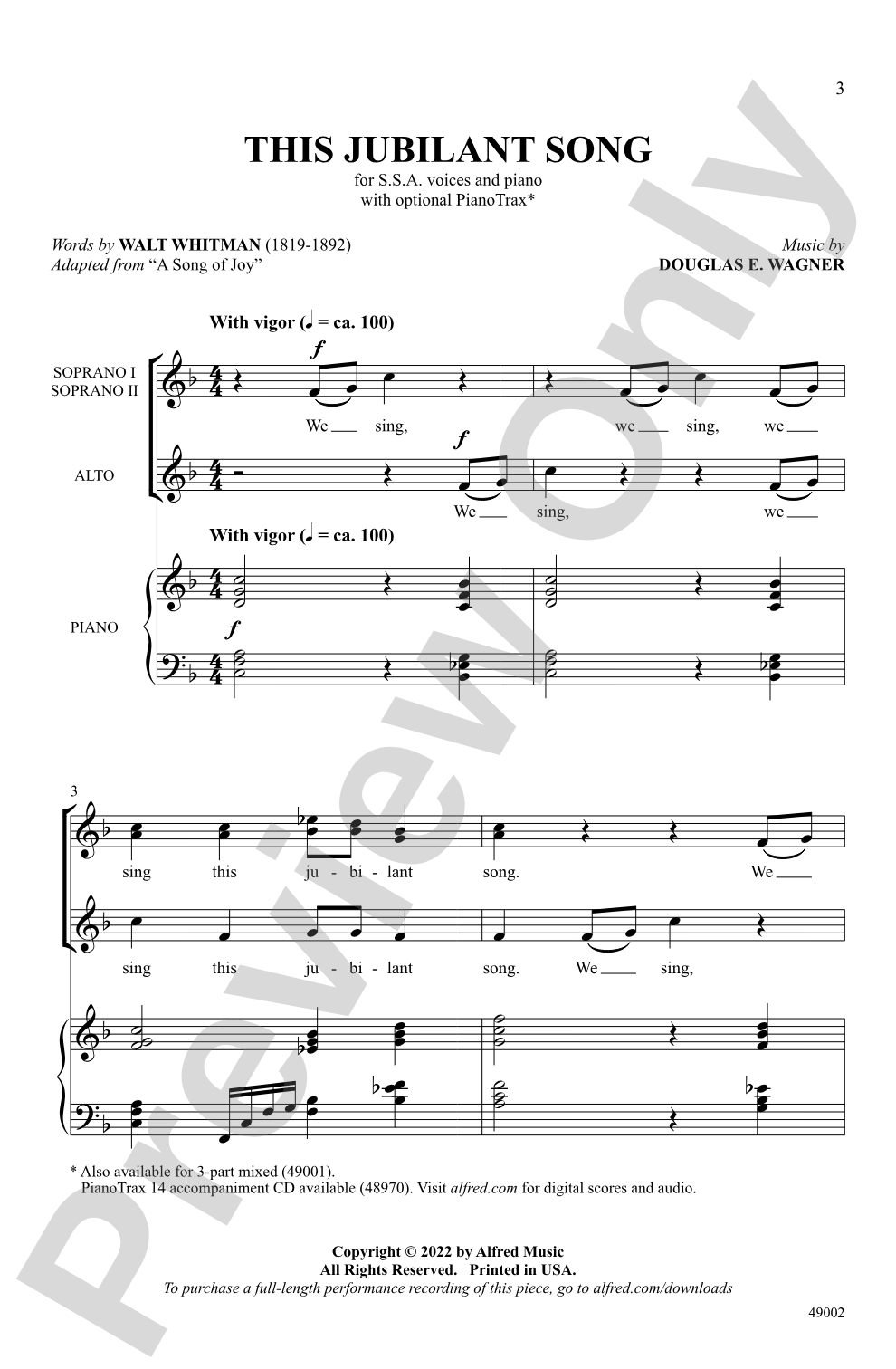
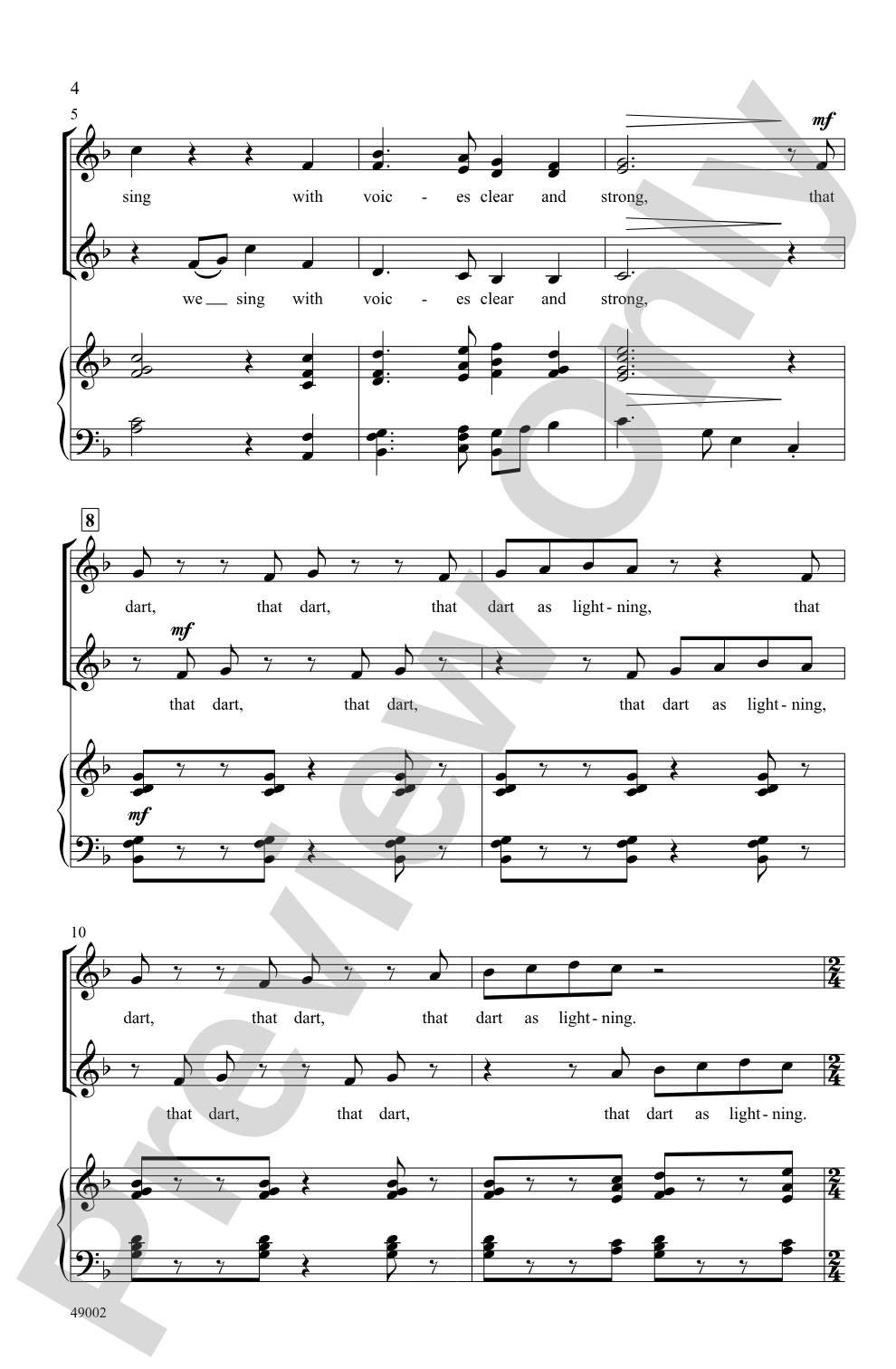

This Jubilant Song: SSA Choral Octavo
Words by Walt Whitman, music by Douglas E. Wagner
Item: 00-PO-0006851

$2.05
Minimum order quantity: 20 copies
Pickup currently not available
Description
Captivate your audience and adjudicators with this masterful work for three-part mixed and treble groups. Grand, awe-inspiring music and a compelling Walt Whitman text make for an impressive festival selection, worthy of the rehearsal time. A sturdy piano accompaniment anchors the kind of classic choral singing that will foster a new level of excellence. Destined to become a staple of choral repertoire. This title is available in MakeMusic Cloud.


Don't just read it, hear it, play along with it, and watch your students grow with it. In MakeMusic Cloud, This Jubilant Song: SSA Choral Octavo comes alive with professional accompaniment, adjustable tempo, and built-in practice tools that turn solo practice into real progress.
Open in the Player
Jump straight in and assign it today.
Start Your Free Trial
Open this title and explore the full library in minutes.
Sample Audio
1
Audio File
--:--
0:00
0:00
Sample Video
Additional Details
Series:
Alfred Choral Designs
Publisher:
Alfred Music
Page Count:
12
SKU:
00-PO-0006851
More about this title
About the Composer: Douglas E. Wagner

Douglas E. Wagner earned his undergraduate and graduate degrees in music from Butler University and spent three decades leading music programs in high schools before transitioning to full-time composition. Since 1973, he has published more than 3,500 works across choral, band, orchestral, handbell, organ, piano, and vocal genres, with global performances reaching concert halls, television broadcasts, and radio programs throughout North America and beyond.
Wagner's prolific output reflects a deep understanding of the rehearsal room and the needs of working educators. Over seventeen million copies of his compositions have been purchased, a testament to his accessibility and craftsmanship. He resides in Indianapolis with his wife, Sandy.
Why we love this
Wagner's harmonic language here feels both contemporary and singable, avoiding the trap of oversimplification while remaining within reach of committed high school choirs. The pairing of Whitman's soaring text with orchestration that never overwhelms the voices creates the kind of piece that impresses adjudicators precisely because the music serves the poetry rather than showboating.
What to expect
Grand and affirmative, with the kind of architectural clarity that makes singers feel part of something larger than themselves. The music swells with genuine jubilation while maintaining the dignity that comes from setting a major American poet's text.
Who it's for
This octavo suits SSA and SSAA choirs of developing to advanced level choirs seeking a festival piece that demonstrates musical maturity without requiring vocal pyrotechnics. It works well for groups with solid reading skills and the capacity to sustain expressive singing across longer phrases.
How to get the most out of it
- Bring out the full resonance of the three-part texture by ensuring sopranos and altos balance each other rather than compete; the piano part will anchor the harmonic foundation without drowning out voices if you listen carefully at rehearsal.
- Pay attention to Whitman's punctuation and phrasing rather than treating the text as secondary decoration; the grand, jubilant character emerges when singers understand what they're celebrating.
- Use your rehearsal recordings available through MakeMusic Cloud to internalize the accompaniment patterns, which will free singers from reading too heavily and allow them to focus on expression and ensemble blend.
How to use it
Open a concert with this piece to establish an elevated artistic tone immediately, or place it as a centerpiece selection that frames lighter fare on either side. Its festival credentials make it especially valuable for contest preparation, but its literary substance also recommends it for programs celebrating American poetry and music in tandem.
Skills your students will build
- Sustaining long phrases with consistent breath support across the SSA range
- Balancing three-part harmony without sacrificing individual voice independence
- Interpreting literary text through vocal color and phrasing choices
- Reading and performing music rooted in extended harmonic language