
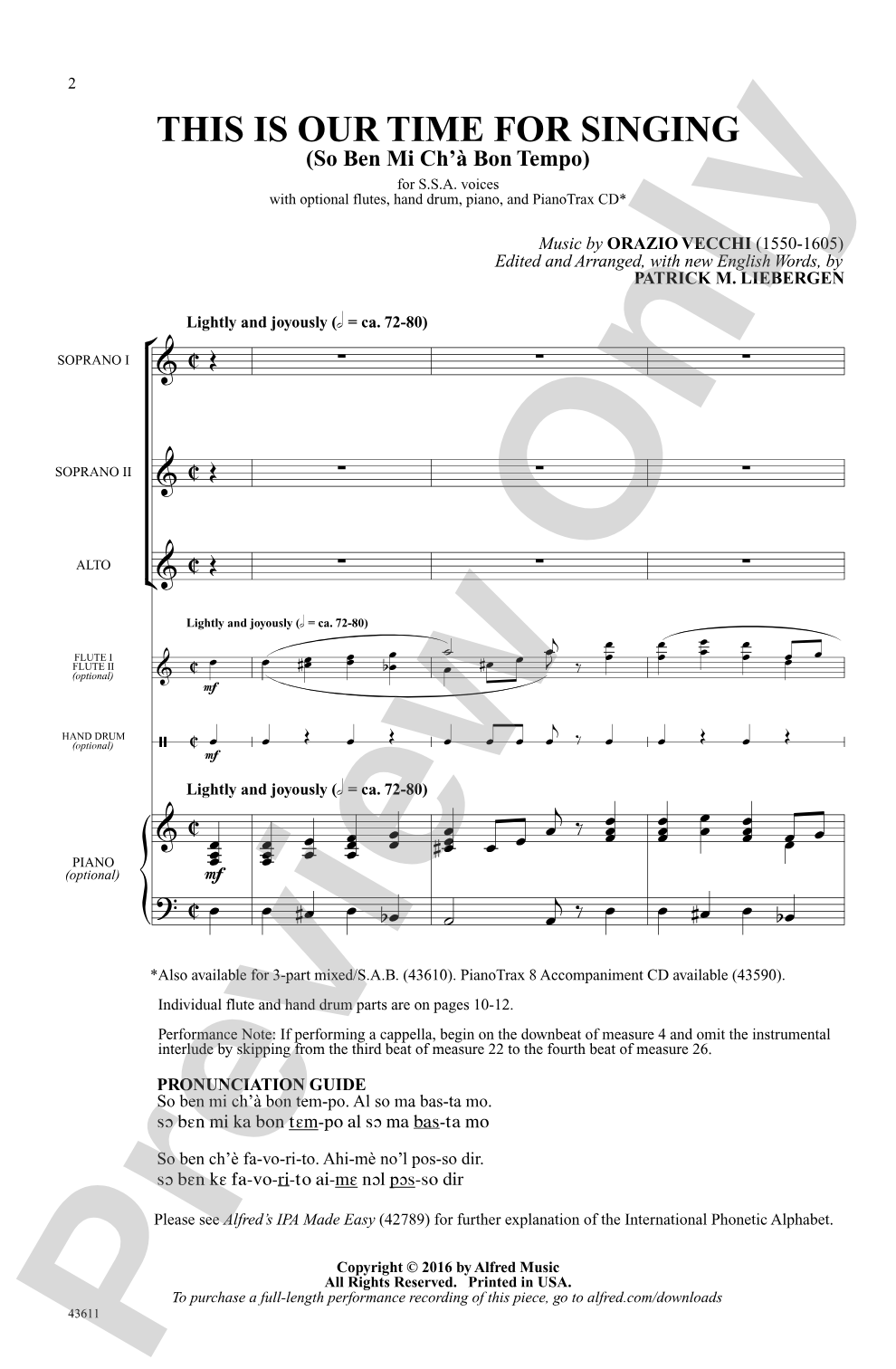
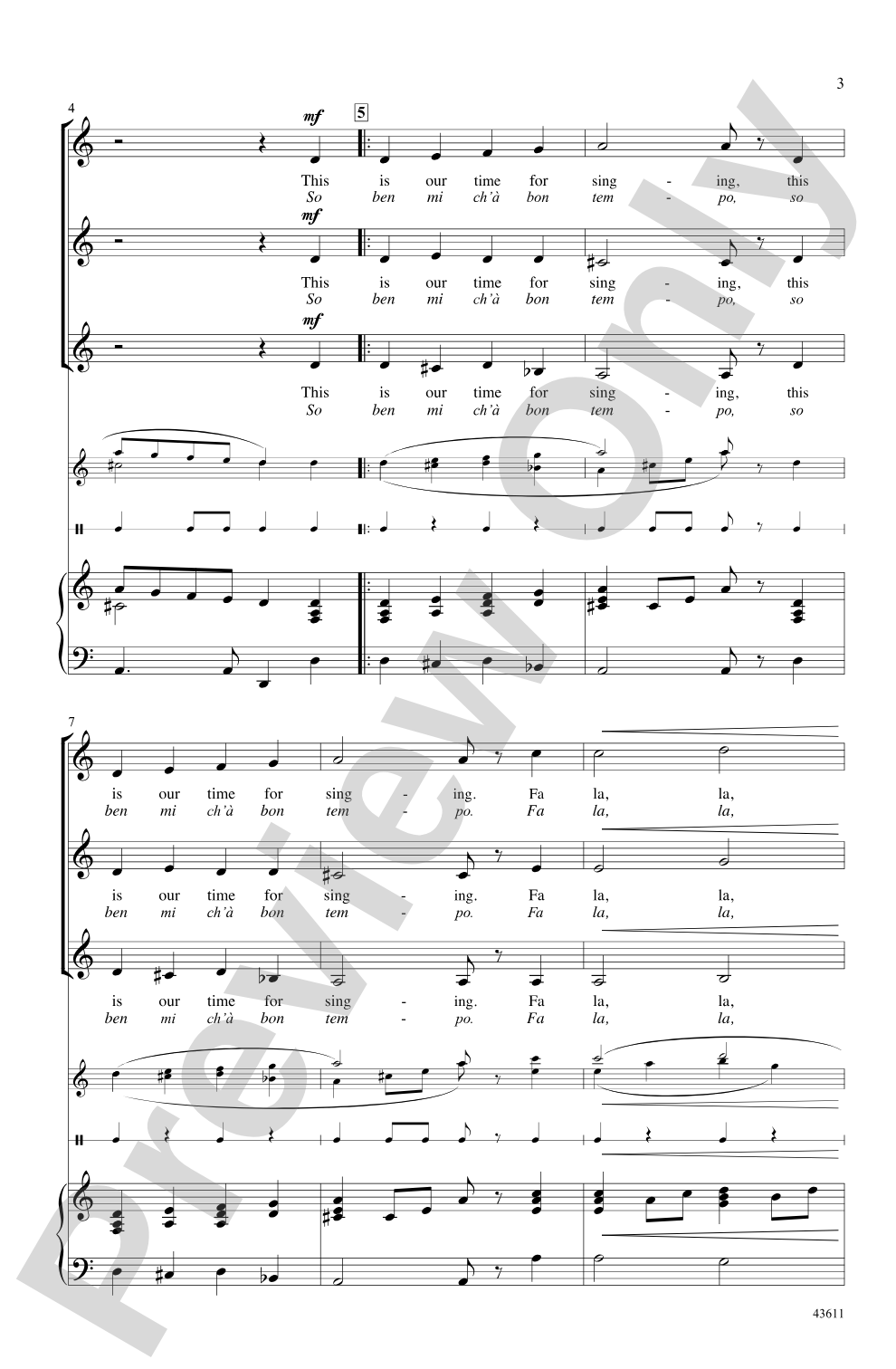
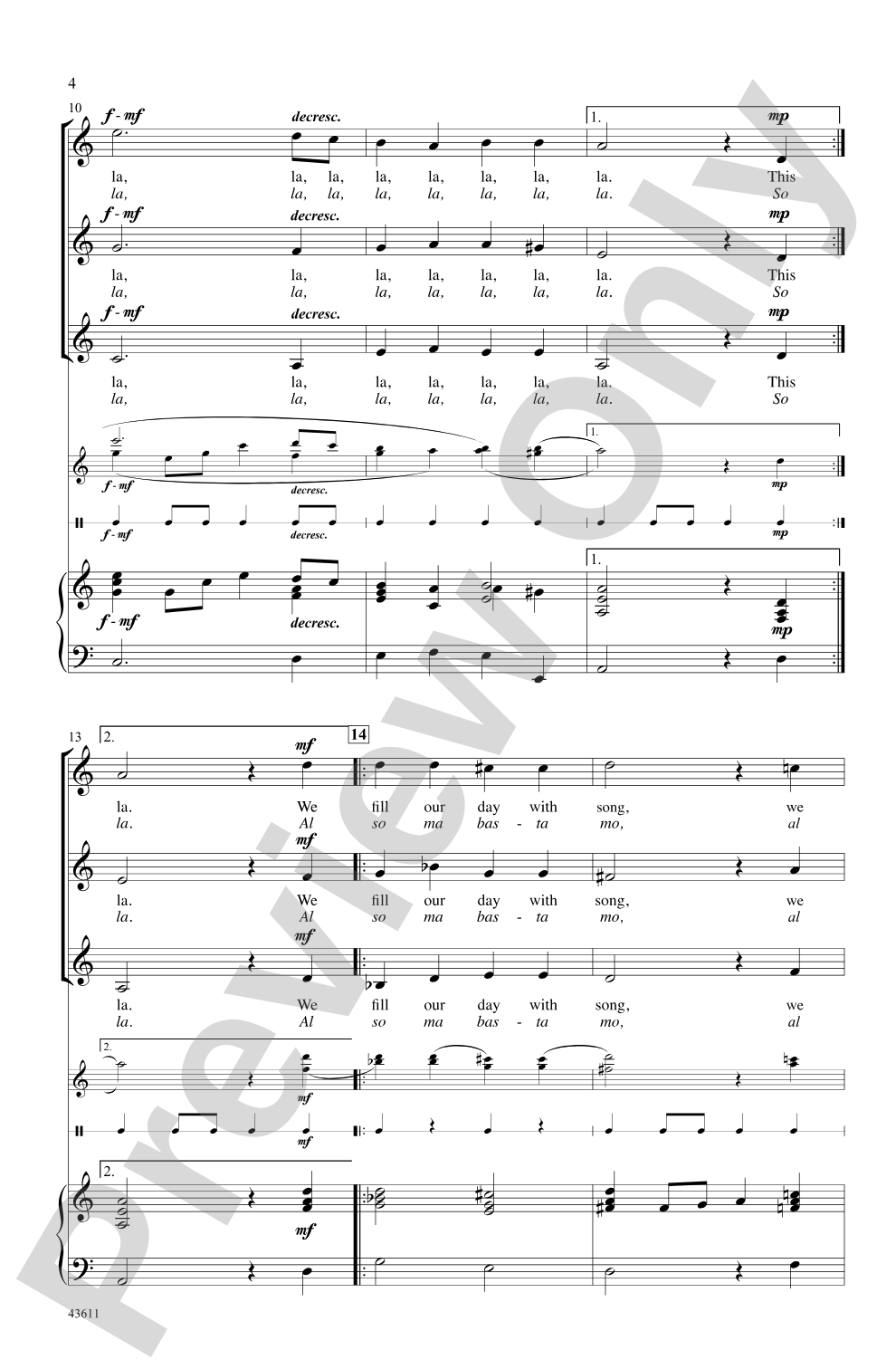

This Is Our Time for Singing: SSA Choral Octavo
(So Ben Mi Ch'à Bon Tempo)
Music by Orazio Vecchi / ed. and arr., with new English words, by Patrick M. Liebergen
Item: 00-PO-0003583
$1.90
Minimum order quantity: 20 copies
Pickup currently not available
Description
Lilting and light, the contrasting sections of this 16th century Italian madrigal provide an ideal introduction to this important musical style. Whether you enjoy singing a cappella or with piano, consider adding the optional flute and hand drum parts. Ideal for concert or adjudication.


This Is Our Time for Singing: SSA Choral Octavo isn't in MakeMusic Cloud just yet...but it could be. Let us know you'd like to see it, and you'll help shape what comes next. In the meantime, start a free trial and dive into thousands of interactive titles your students can play along with today.
Request This Title
Tell us you want it.
Start Your Free Trial
Explore everything that's ready to play right now.
Sample Audio
1
Audio File
--:--
0:00
0:00
Sample Video
No sample videos found.
Additional Details
Series:
Alfred Choral Designs
Publisher:
Alfred Music
Page Count:
12
SKU:
00-PO-0003583
Instrumentation:
with Opt. Flute & Hand Drum
More about this title
About the Composer: Orazio Vecchi
Orazio Vecchi (1550-1605) was a prolific Italian composer and maestro di cappella whose madrigals defined the secular vocal music of the late Renaissance. Working primarily in Modena, he composed over 400 madrigals across multiple collections, establishing himself as one of the most performed composers of his era.
Vecchi's gift lay in crafting music that balanced sophistication with accessibility. His madrigals blend expressive text-painting with singable lines, making them as rewarding for skilled ensembles as they are for students encountering Renaissance polyphony. His influence on madrigal composition shaped vocal writing across Europe for generations.
Why we love this
This arrangement strips away the intimidation factor of Renaissance madrigals without compromising their essential character. The contrasting sections give singers clear structural landmarks to navigate, and the optional instrumental parts let you shape the arrangement to your ensemble's needs and concert vision.
What to expect
Vecchi's music dances across the voices with a natural buoyancy. The contrasting sections shift between lyrical passages that breathe and lighter, more rhythmic moments, creating an overall sense of both sophistication and genuine joy in singing together.
Who it's for
This piece serves intermediate to advanced SSA ensembles ready to engage with Renaissance polyphony in a supportive arrangement. Concert choirs, festival singers, and adjudication-focused groups will find it a manageable yet musically substantial addition to their repertoire.
How to get the most out of it
- Approach the text with attention to phrase shape rather than bar lines. Let the madrigal's natural speech rhythms guide your phrasing, which often extends across barline boundaries.
- Balance the three voices so no single line disappears. The harmonic beauty relies on hearing each strand of the polyphony.
- If adding flute and hand drum, rehearse them separately with the voices first, then layer them in to maintain clarity of the original vocal writing.
- Tune carefully at sectional boundaries where the character or tempo shifts. Renaissance madrigals demand precise intonation to support their intricate harmonies.
How to use it
Position this as a bridge piece between contemporary choral works and more complex polyphonic repertoire. It also works beautifully in programs exploring secular vocal music across eras, and the optional instrumentation makes it flexible enough to serve as either an intimate a cappella moment or a more colorful arranged piece depending on your concert's needs.
Skills your students will build
- Reading Renaissance polyphonic notation and text underlay conventions
- Balancing independent voice lines while maintaining harmonic awareness
- Interpreting madrigal text expression through vocal shaping and phrasing
- Singing with stylistically appropriate tone and articulation for the Renaissance period
- Coordinating optional instrumental parts with vocal lines