
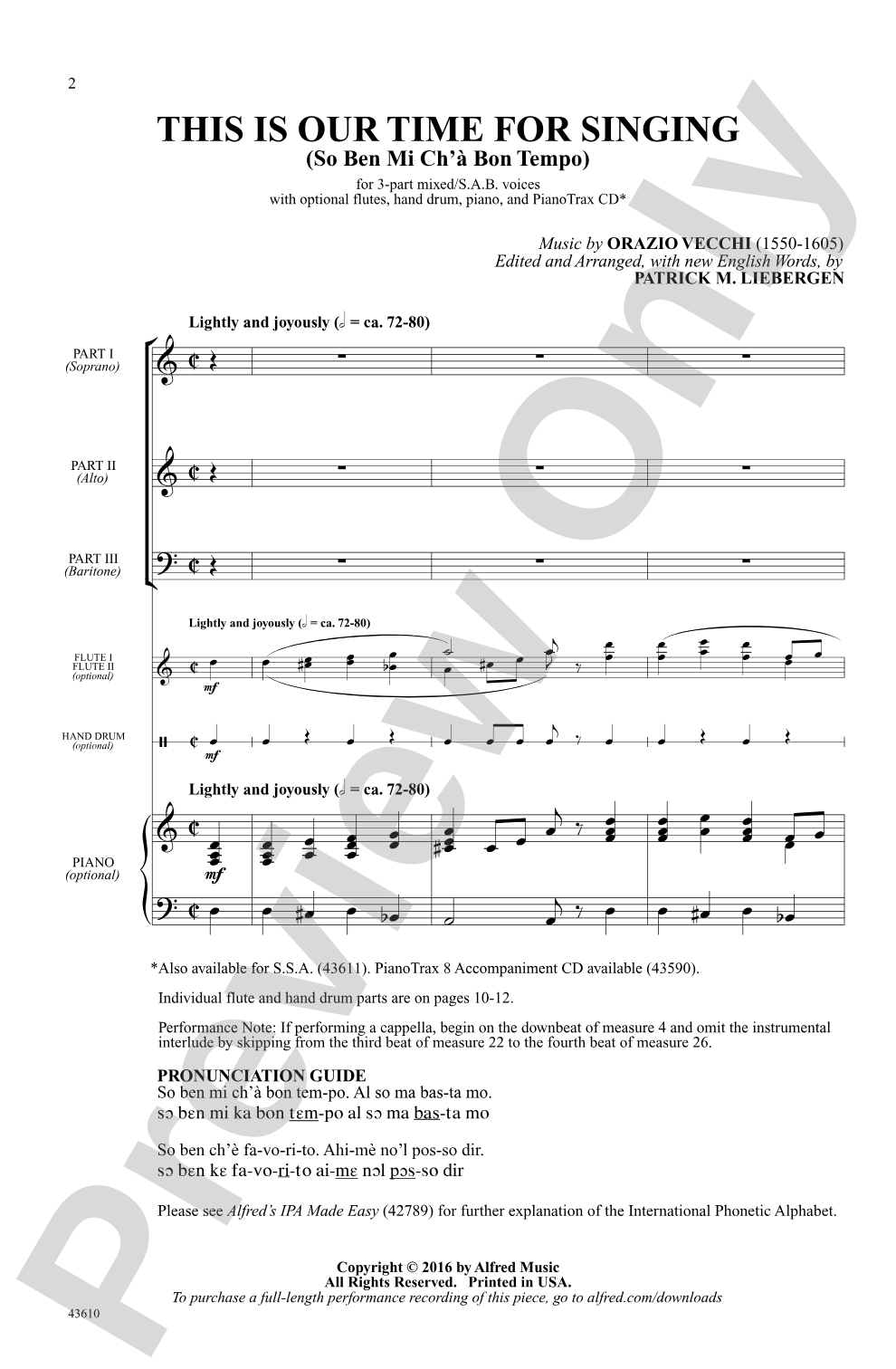

This Is Our Time for Singing: 3-Part Mixed Choral Octavo
(So Ben Mi Ch'à Bon Tempo)
Music by Orazio Vecchi / ed. and arr., with new English words, by Patrick M. Liebergen
Item: 00-PO-0003582
$1.90
Minimum order quantity: 20 copies
Pickup currently not available
Description
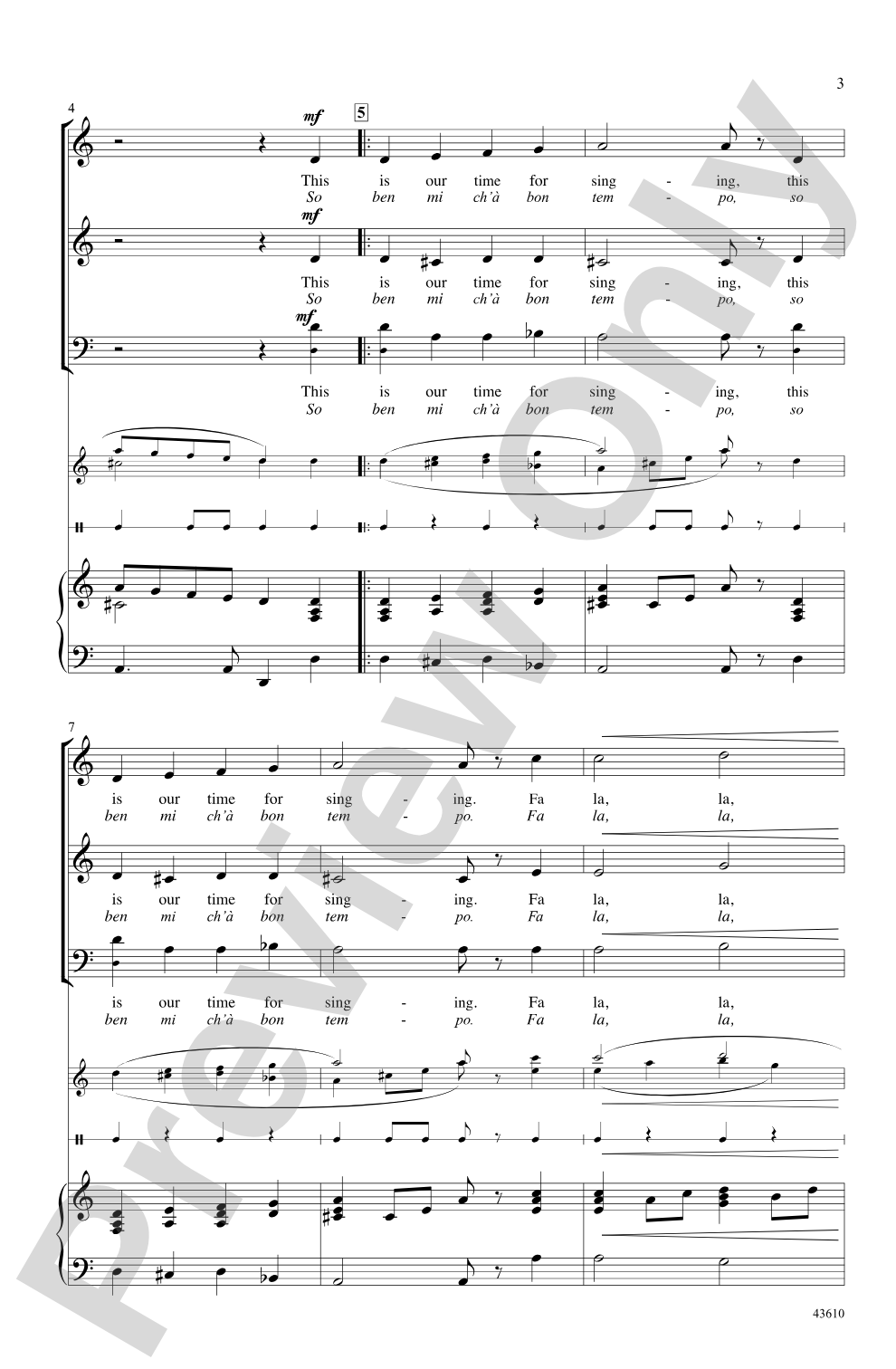
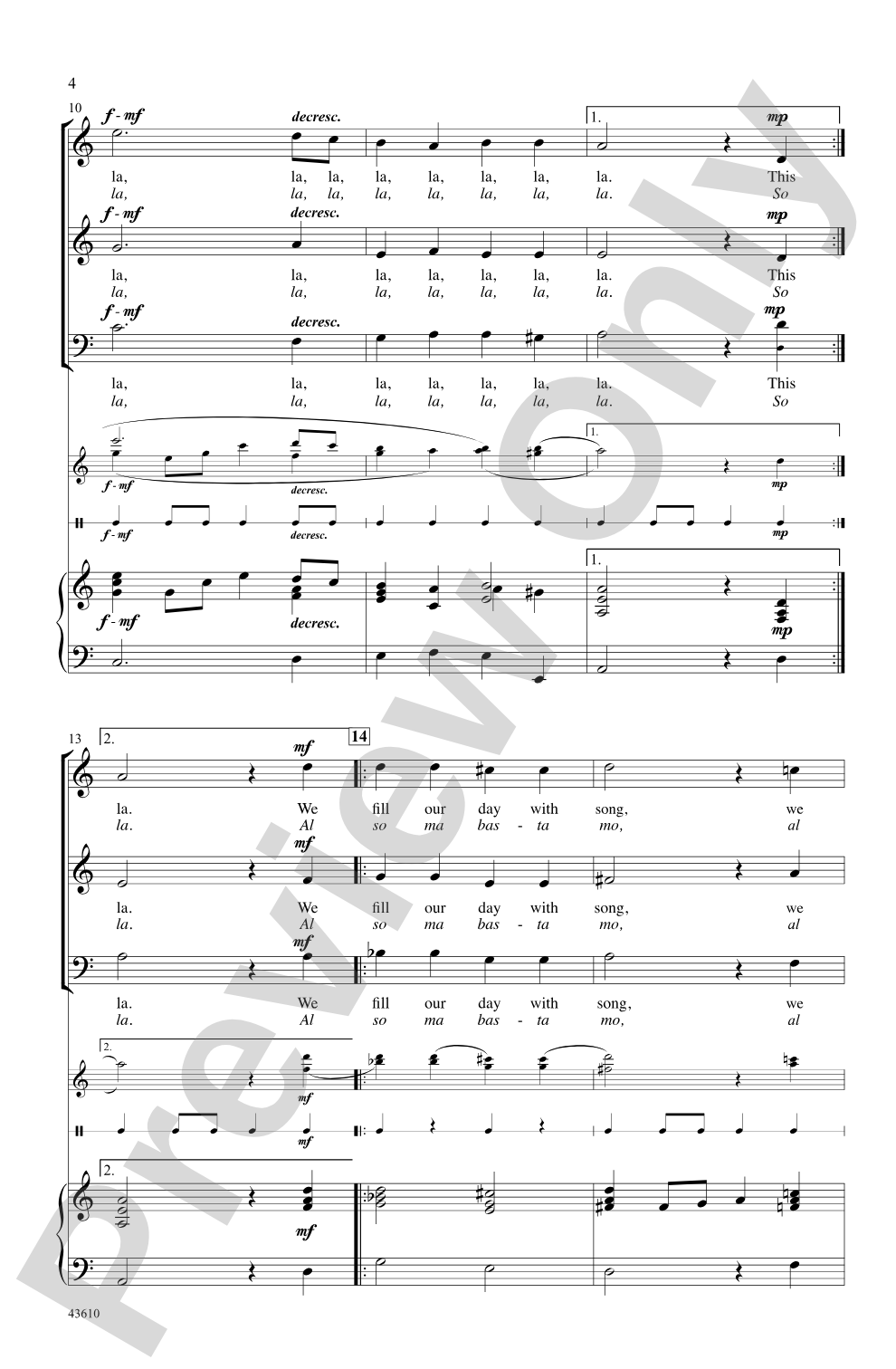
Lilting and light, the contrasting sections of this 16th century Italian madrigal provide an ideal introduction to this important musical style. Whether you enjoy singing a cappella or with piano, consider adding the optional flute and hand drum parts. Ideal for concert or adjudication.


This Is Our Time for Singing: 3-Part Mixed Choral Octavo isn't in MakeMusic Cloud just yet...but it could be. Let us know you'd like to see it, and you'll help shape what comes next. In the meantime, start a free trial and dive into thousands of interactive titles your students can play along with today.
Request This Title
Tell us you want it.
Start Your Free Trial
Explore everything that's ready to play right now.
Sample Audio
1
Audio File
--:--
0:00
0:00
Sample Video
Additional Details
Series:
Alfred Choral Designs
Publisher:
Alfred Music
Page Count:
12
SKU:
00-PO-0003582
Instrumentation:
with Opt. Flute & Hand Drum
More about this title
About the Composer: Orazio Vecchi
Orazio Vecchi (1550-1605) was a prolific Italian composer and maestro di cappella whose madrigals and polyphonic works shaped the secular vocal music of the late Renaissance. He composed across multiple genres but earned lasting recognition for his madrigals, which balanced technical sophistication with lyrical warmth and dramatic expression. His music remains a cornerstone of early music pedagogy and continues to introduce singers to the Italian Renaissance tradition.
Vecchi's compositions exemplify the shift toward expressive text-painting and harmonic innovation that defined late 16th-century music. His works were widely published and performed across Europe, influencing composers of his time and establishing models that conductors still teach today.
Why we love this
This arrangement preserves the elegance of a genuine Renaissance madrigal while making it accessible to young mixed choirs. The contrasting sections give singers real musical material to shape; this isn't a simplified harmonization but a thoughtful adaptation that honors Vecchi's compositional voice. The optional flute and hand drum parts open programming possibilities without requiring them, so you can perform this in a cappella lineup or dress it up for festival competition.
What to expect
The piece floats with Renaissance grace, moving between moments of stillness and gently lilting motion. Singers feel the warm openness of the era's harmonic language while the text-setting invites them to shape phrases expressively rather than mechanically.
Who it's for
This octavo suits developing mixed choirs, especially groups ready to tackle Renaissance style without extensive prior experience. It works equally well for high school choirs preparing for festival adjudication and community or church choirs seeking accessible masterworks.
How to get the most out of it
- Shape the lilting sections with gentle phrasing rather than metronomic precision; let the text and musical line breathe naturally between phrases.
- If you include the optional flute and hand drum, rehearse them separately first so the singers lock the a cappella version before adding color.
- Emphasize vowel consistency across all three voice parts, especially in the sustained sections where blend directly affects intonation.
- Use the contrast between sections as a rehearsal tool; identify where the music shifts and have singers physically sit differently or reset their breath to mark the change.
How to use it
Program this on a concert that emphasizes Renaissance repertoire or as a bridging piece between contemporary works and classical masters. At festivals or adjudications, it demonstrates your singers' ability to handle style and blend while remaining engaging enough to hold an audience's attention.
Skills your students will build
- Singing a cappella with secure intonation in three-part mixed voicing
- Recognizing and performing characteristic Renaissance text-setting and phrasing
- Balancing multiple voice parts to achieve blend in open harmonic sonorities
- Coordinating optional instrumental parts with choral voices
- Interpreting stylistic contrasts through dynamic shape and articulation