
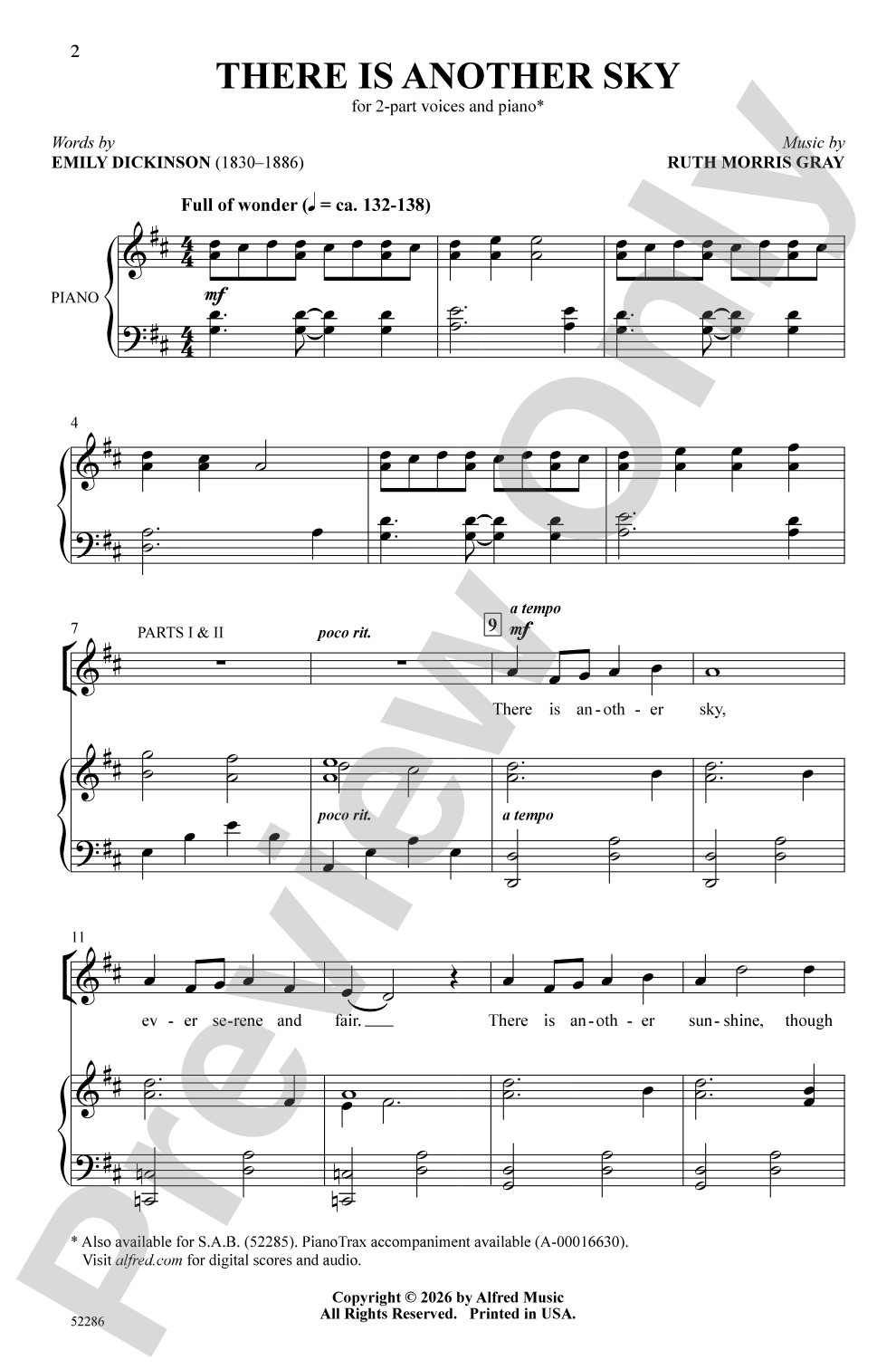

There Is Another Sky: 2-Part Choral Octavo
Words by Emily Dickinson, music by Ruth Morris Gray
Item: 00-PO-0007856
$2.50
Minimum order quantity: 20 copies
Pickup currently not available
Description
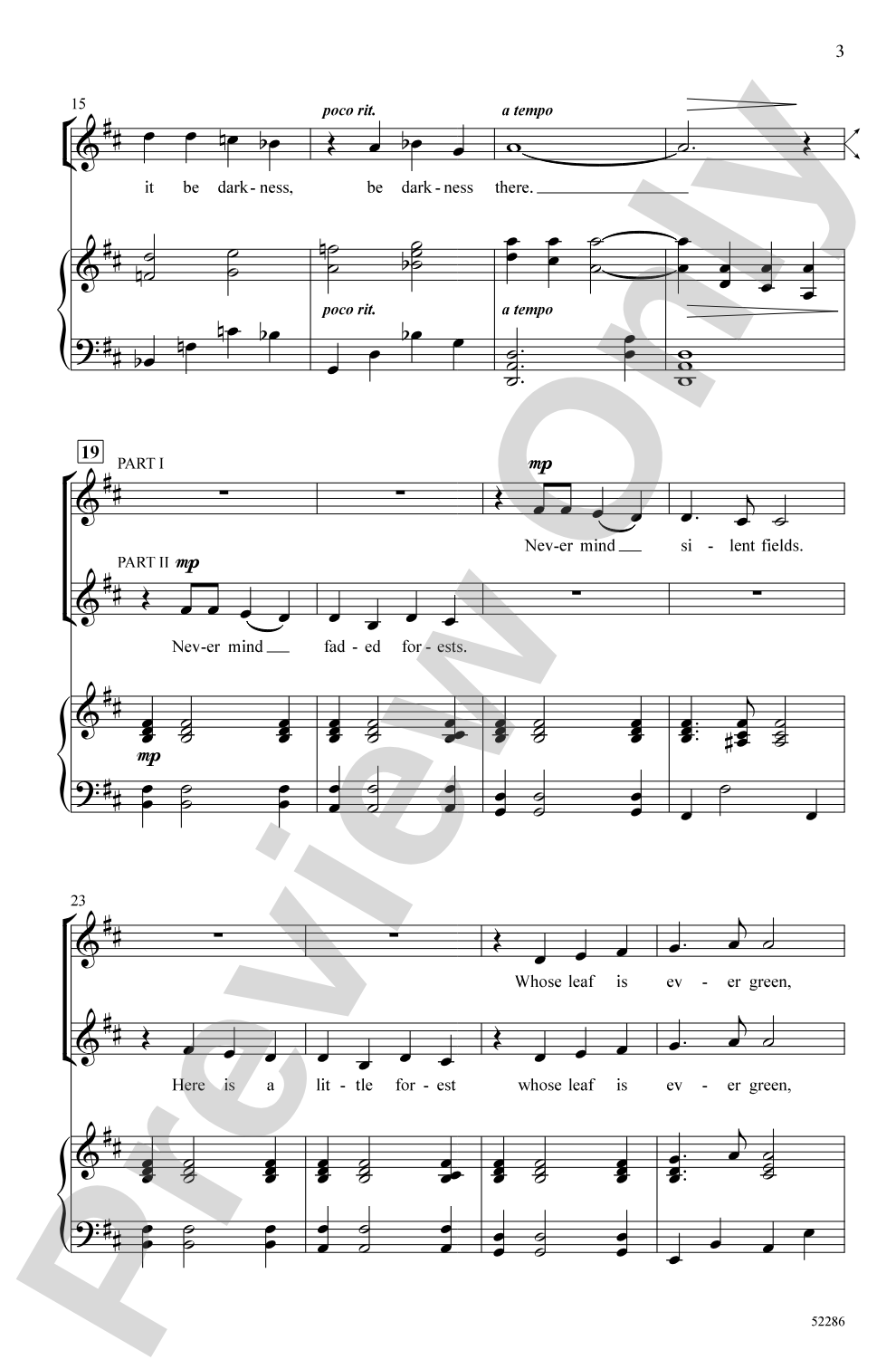
Singers will love the independent vocal lines in this bright setting of Emily Dickinson's hopeful poem. A lovely melody is introduced in unison and later assembles in canon. Radiant refrains are driven by a rhythmic piano hook that adds to the uplifting nature of the words. A winning selection for developing SAB choirs as well as 2-part treble groups looking for a meaningful musical experience.


There Is Another Sky: 2-Part Choral Octavo isn't in MakeMusic Cloud just yet...but it could be. Let us know you'd like to see it, and you'll help shape what comes next. In the meantime, start a free trial and dive into thousands of interactive titles your students can play along with today.
Request This Title
Tell us you want it.
Start Your Free Trial
Explore everything that's ready to play right now.
Sample Audio
1
Audio File
--:--
0:00
0:00
Sample Video
Additional Details
Series:
Alfred Choral Designs
Publisher:
Alfred Music
Page Count:
8
SKU:
00-PO-0007856
More about this title
About the Composer: Ruth Morris Gray

Ruth Morris Gray directs choirs at Rosemead High School in California, where she has taught since 2004. She holds degrees in Piano Performance and Composition from Biola University and a Master of Arts in Music Composition from UC Santa Barbara, along with her California Single Subject Music Credential from Cal State Northridge.
With over 100 published choral works to her name, Gray has established herself as a prolific voice in contemporary choral writing. Her compositions reflect both her training as a pianist and her deep understanding of what developing choirs can achieve musically and expressively.
Why we love this
Gray's setting captures the essence of Dickinson's text without overshadowing it. The unison opening builds accessibility, and the later canon writing feels earned rather than imposed, giving singers a real sense of achievement when the parts align. The rhythmic piano accompaniment drives the piece forward without becoming a distraction, making this genuinely rewarding for both directors and singers.
What to expect
Bright and uplifting, with a contemporary sensibility that never loses sight of lyricism. The rhythmic piano hook gives the piece forward momentum and accessibility, while the canon writing creates genuine textural interest and a moment where singers can hear themselves as part of something larger than a single line.
Who it's for
This piece fits 2-part treble ensembles and developing SAB choirs ready to engage with rhythmic independence and layered textures. It works equally well for singers aged 13 and up, whether in middle school developing groups, high school non-audition choirs, or community ensembles seeking repertoire that builds confidence without requiring advanced technique.
How to get the most out of it
- Emphasize the rhythmic precision of the piano hook during rehearsal. Have singers count through it independently before layering voices, so they understand how their lines interact with the accompaniment rather than competing against it.
- Shape the unison melody with slight dynamic variation to prevent it from feeling static. This opening phrase deserves attention to phrasing and breath placement even though voices are unified.
- Balance the canon sections carefully. The second part often needs reminding that it's not a harmony; it's a complete melodic statement entering after the first. Rehearse the two parts separately first, then combine.
- Let the text of Dickinson's poem breathe. Avoid rushing through the rhythmic sections just because they feel energetic. The hope in 'another sky' lands better when singers understand what they're singing about.
How to use it
Program this as a centerpiece for a concert celebrating contemporary poetry or hope-focused themes. Its 8-page length and straightforward vocal writing make it a solid anchor piece that balances heavier or more complex selections. It also works well in contest settings where the combination of accessibility and musical substance tends to resonate with adjudicators.
Skills your students will build
- Singing independent parts in unison and canon writing
- Rhythmic precision while singing against an accompaniment hook
- Interpreting literary text and connecting words to musical choices
- Ensemble balance in layered vocal textures
- Phrase shaping and breath control in contemporary settings