

There Is Another Sky: SAB Choral Octavo
Words by Emily Dickinson, music by Ruth Morris Gray
Item: 00-PO-0007855
$2.50
Minimum order quantity: 20 copies
Pickup currently not available
Description
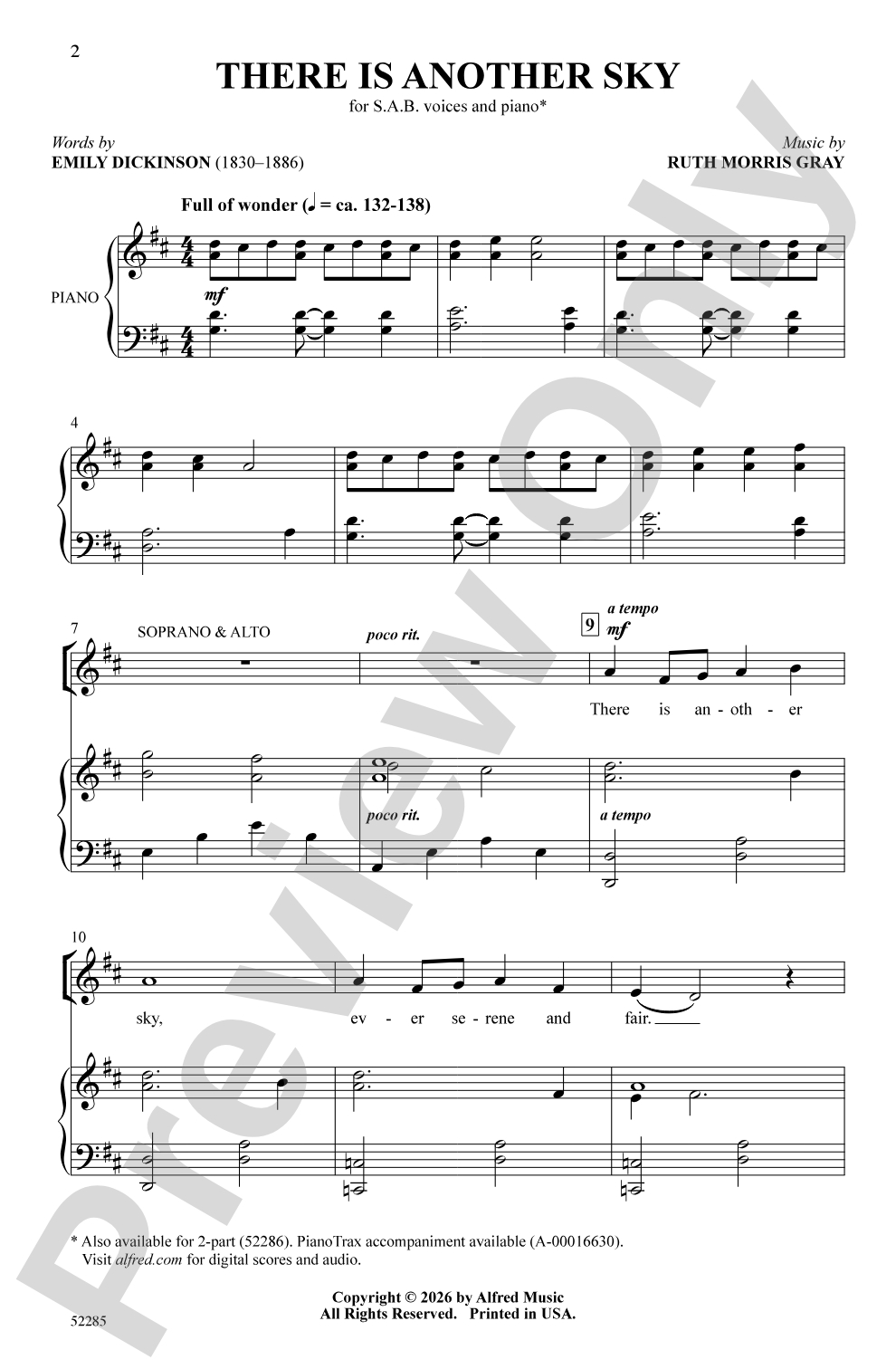
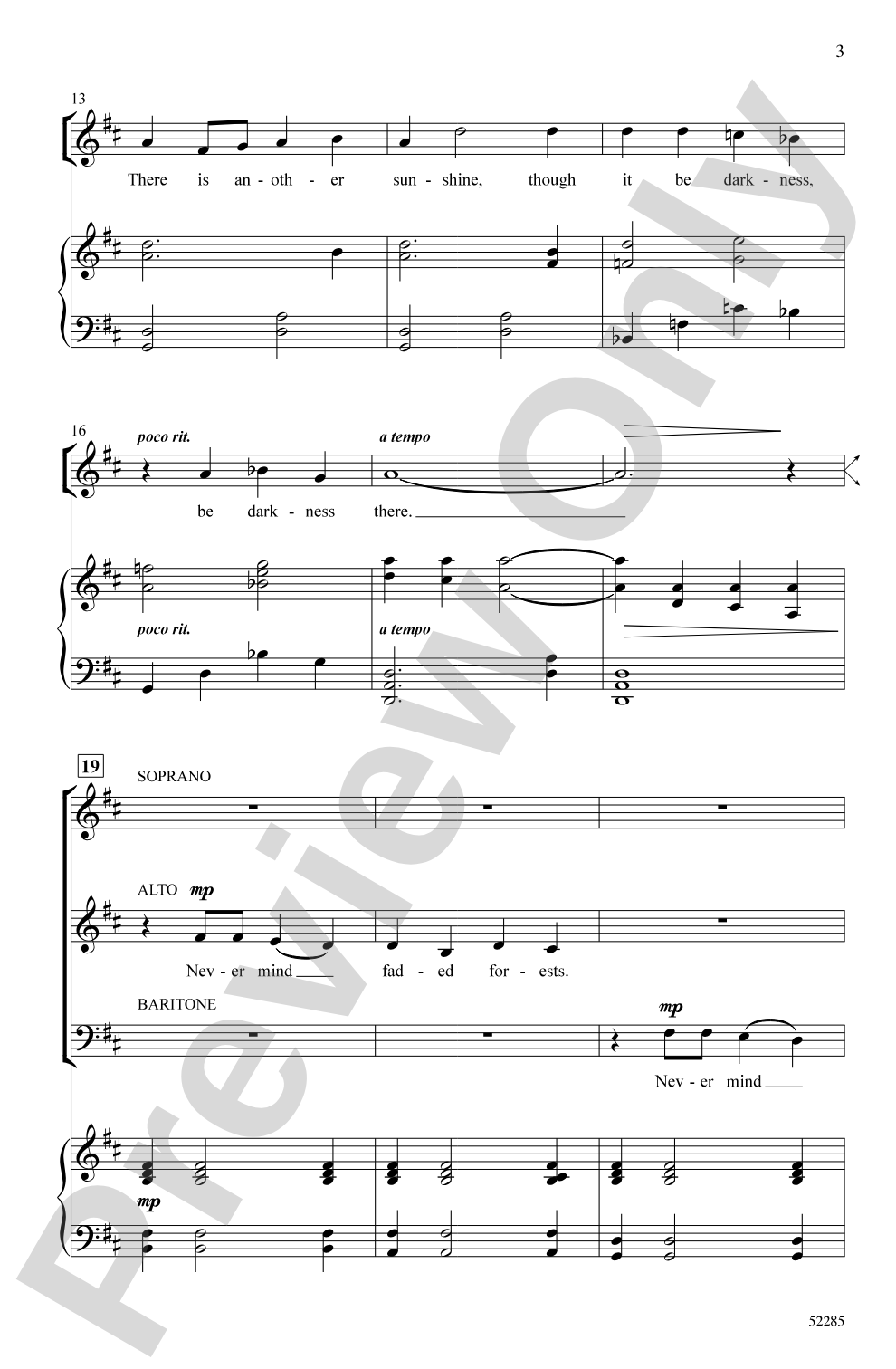
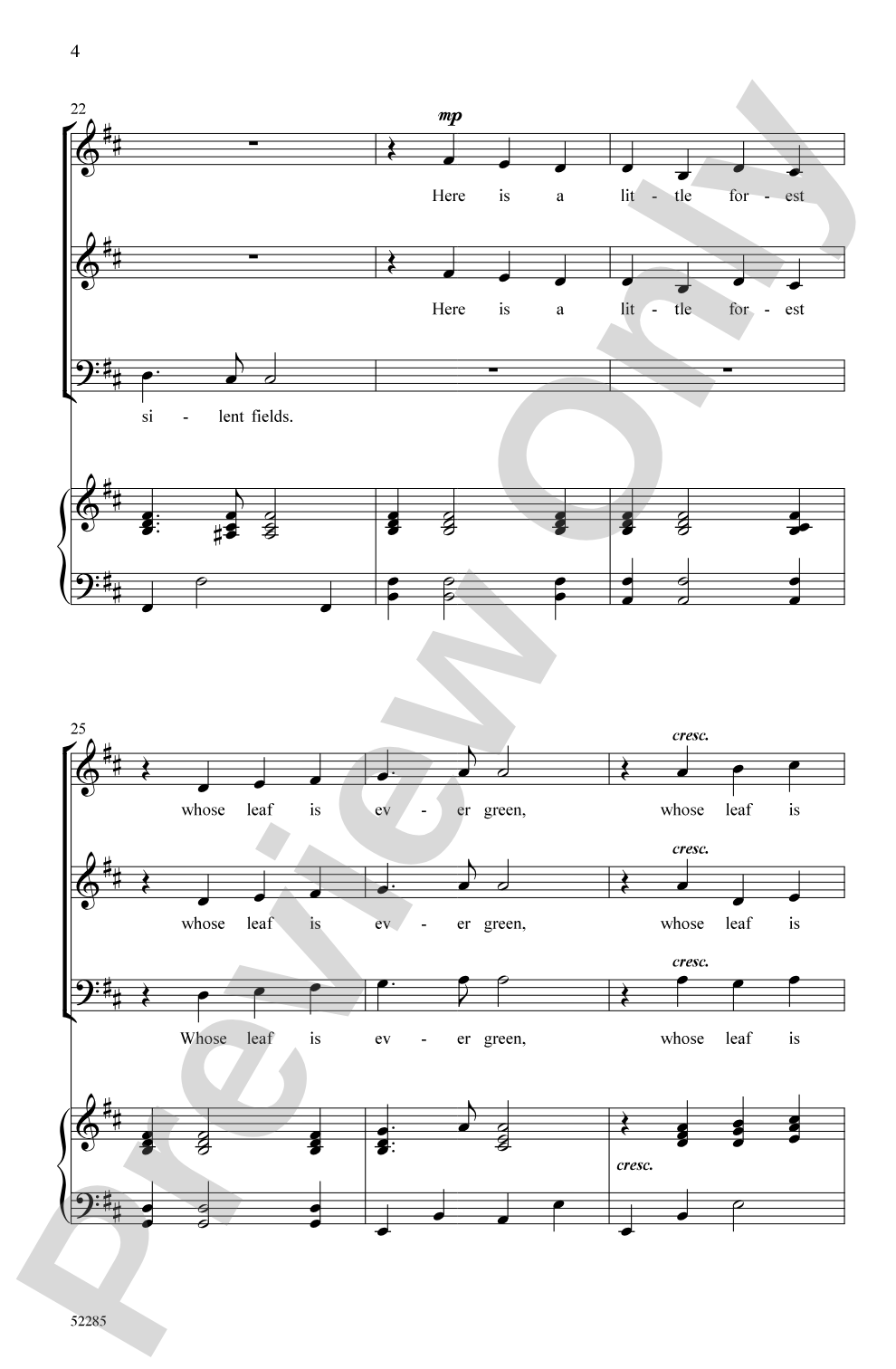
Singers will love the independent vocal lines in this bright setting of Emily Dickinson's hopeful poem. A lovely melody is introduced in unison and later assembles in canon. Radiant refrains are driven by a rhythmic piano hook that adds to the uplifting nature of the words. A winning selection for developing SAB choirs as well as 2-part treble groups looking for a meaningful musical experience.


There Is Another Sky: SAB Choral Octavo isn't in MakeMusic Cloud just yet...but it could be. Let us know you'd like to see it, and you'll help shape what comes next. In the meantime, start a free trial and dive into thousands of interactive titles your students can play along with today.
Request This Title
Tell us you want it.
Start Your Free Trial
Explore everything that's ready to play right now.
Sample Audio
1
Audio File
--:--
0:00
0:00
Sample Video
Additional Details
Series:
Alfred Choral Designs
Publisher:
Alfred Music
Page Count:
12
SKU:
00-PO-0007855
More about this title
About the Composer: Ruth Morris Gray

Ruth Morris Gray has directed choirs at Rosemead High School in California since 2004, where she also teaches piano. Her compositional output spans over 100 published choral works, reflecting a deep commitment to creating music that serves the needs of student singers at all levels.
Gray holds a Bachelor of Music in Piano Performance and Composition from Biola University and earned her Master of Arts in Music Composition from the University of California, Santa Barbara. She completed her California Single Subject Music Credential at California State University, Northridge. Beyond the classroom and rehearsal room, Gray is an active performer and composer who values travel, reading, and outdoor pursuits.
Why we love this
This setting gives SAB singers genuine independence within a unified musical framework. The canon writing allows each voice to shine individually while contributing to a cohesive whole, and that rhythmic piano hook creates immediate buy-in from singers who appreciate modern, accessible textures alongside the lyrical melody.
What to expect
There's an inherent optimism in this music that matches Dickinson's hopeful vision. The bright, unison opening feels inviting and grounded; when the canon unfolds and the rhythmic piano accompaniment activates the refrain, the texture becomes luminous and contemporary without losing warmth.
Who it's for
This piece speaks directly to developing SAB choirs seeking repertoire with real musical substance and to 2-part treble ensembles ready for slightly more complex voice leading. It works equally well in middle school or high school settings where singers benefit from accessible writing paired with genuine artistry.
How to get the most out of it
- Introduce the unison melody first so singers hear the complete musical phrase before dividing into parts; this reference point matters when the canon enters.
- Let the piano rhythm drive ensemble entries during the refrain sections; have singers count through the accompaniment during early rehearsals to lock the relationship between voices and piano.
- Shape the canon carefully so each voice remains distinct in color and weight, avoiding the blend that can accidentally flatten the texture.
- Dickinson's text deserves clear diction throughout; mark phrase endings and breath points early so the poetry lands as intended.
How to use it
This pairs beautifully in a concert built around poetry-in-music themes or works exploring hope and resilience. Its moderate length and uplifting character also make it an excellent opener that sets a positive, engaging tone for the program.
Skills your students will build
- Reading canon notation and maintaining independence within a repeating melodic figure
- Sustaining unison singing with secure pitch and unified tone
- Coordinating entry points with a rhythmic piano accompaniment
- Interpreting literary text with clarity and expressive intention