
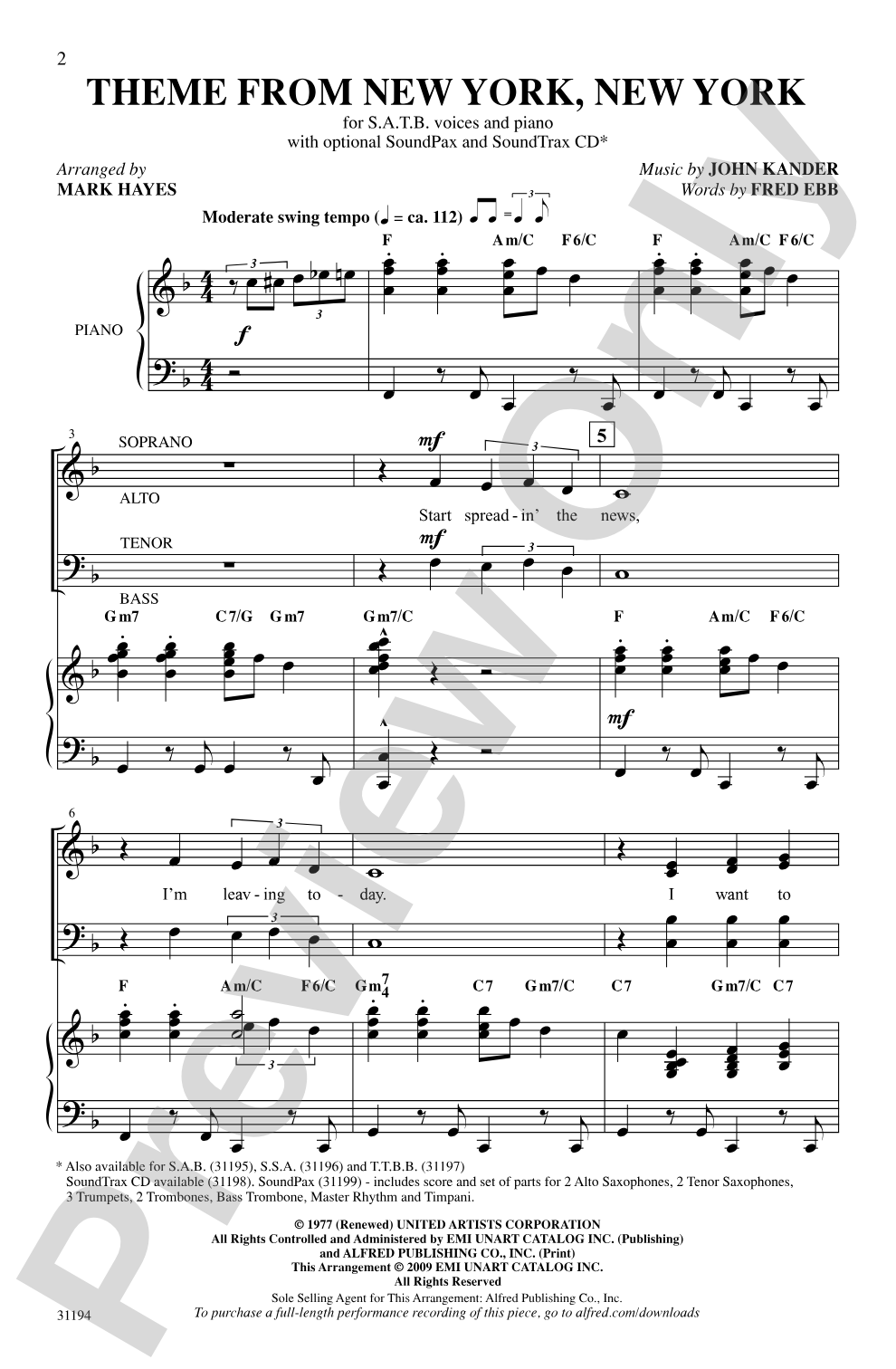

Theme from New York, New York: SATB Choral Octavo
Music by John Kander, words by Fred Ebb / arr. Mark Hayes
Item: 00-PO-0007677
$2.10
Minimum order quantity: 20 copies
One moment…
Related Items
Theme from New York, New York: SoundTrax Digital Audio Download |
$27.99
|
View | |
Theme from New York, New York: SAB Choral Octavo |
$2.25
|
View | |
Theme from New York, New York: SSA Choral Octavo |
$2.25
|
View | |
Theme from New York, New York: TTBB Choral Octavo |
$2.10
|
View | |
Theme from New York, New York: Choral SoundPax |
$50.00
|
View | |
Theme from New York, New York: SATB Choral Octavo |
$2.65
|
View | |
Theme from New York, New York: SAB Choral Octavo |
$2.25
|
View | |
Theme from New York, New York: SSA Choral Octavo |
$2.25
|
View | |
Theme from New York, New York: TTBB Choral Octavo |
$2.10
|
View | |
Theme from New York, New York: Choral Octavo SoundTrax CD |
$27.99
|
View | |
Theme from New York, New York: Choral SoundPax |
$50.00
|
View |
Description
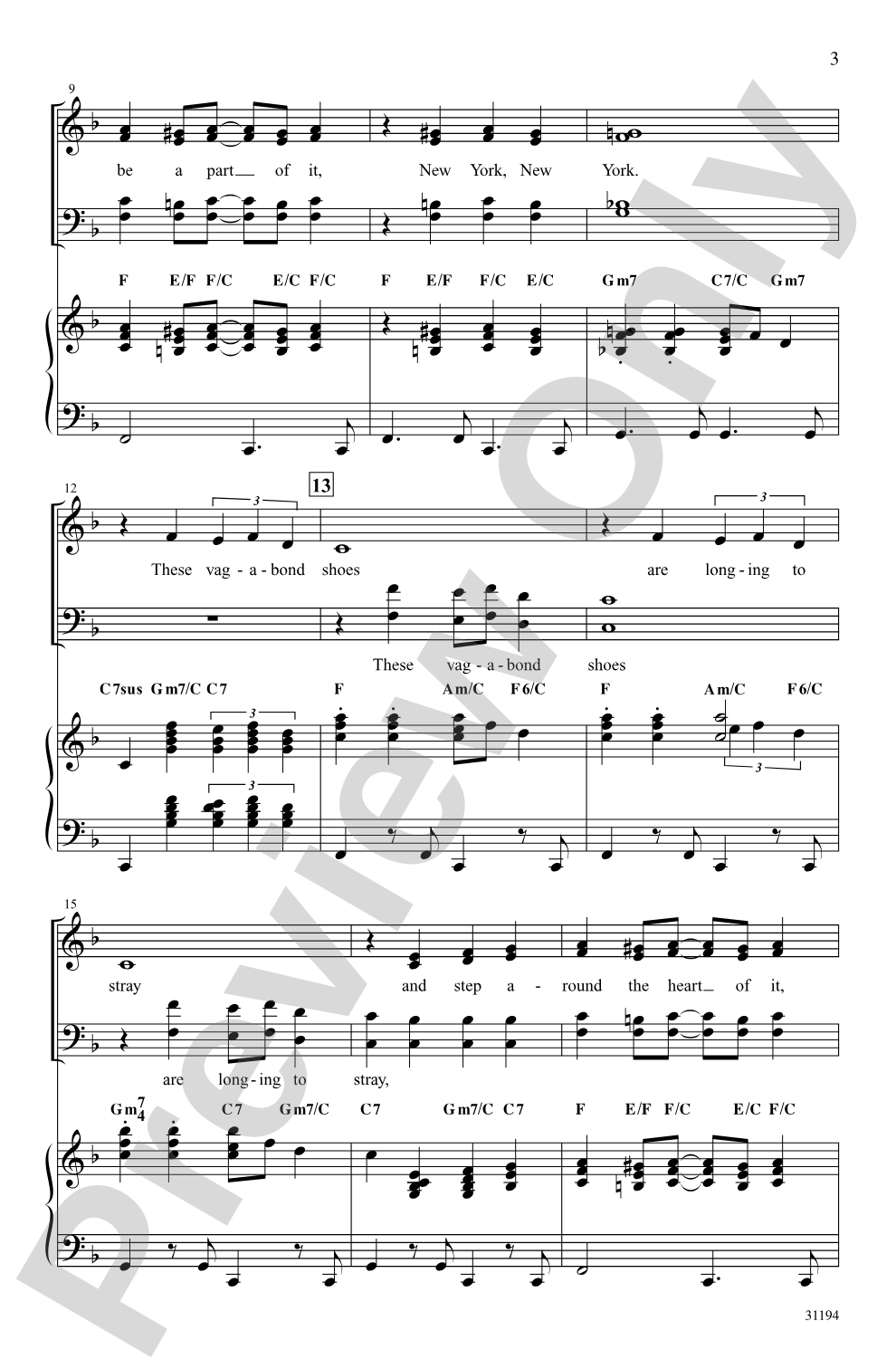
Everyone's favorite tribute to the Big Apple has been newly arranged in an unforgettable "Sinatra-style," complete with the irresistible final kick line. A choral classic, sure to last in your library for years. "Start spreadin' the news!"


Discover MakeMusic Cloud: thousands of interactive titles your students can play along with today.
Sample Audio
1
Audio File
--:--
0:00
0:00
Sample Video
No sample videos found.
Additional Details
Series:
Alfred Pop Choral Series
Publisher:
Alfred Music
Page Count:
12
SKU:
00-PO-0007677
More about this title
About the Composer: John Kander
John Kander is an American composer best known for his collaborations with lyricist Fred Ebb on major Broadway musicals including Cabaret, Chicago, and Kiss of the Spider Woman. His work spans theater, film, and concert music, characterized by memorable melodies, sophisticated harmonies, and an instinctive sense of dramatic pacing. Kander's scores have shaped American musical theater for over six decades and remain central to both professional and educational repertoire.
Why we love this
Mark Hayes has crafted an arrangement that honors the swagger and style of Sinatra's original while giving choirs the scaffolding they need to deliver a genuine performance, not an imitation. The kick line ending is a showstopper that audiences recognize instantly, making this piece work equally well as a concert closer or a pops program anchor. It's the rare standard that feels both accessible and genuinely fun to rehearse.
What to expect
Energetic, confident, and celebratory. The arrangement swings with the ease of a seasoned jazz vocalist while the final kick line delivers a jolt of theatrical joy that lands like a punch line. From the opening notes, you're in the world of big-city glamour and unbridled optimism.
Who it's for
This arrangement suits choirs with a taste for contemporary musical theater and jazz-inflected pops repertoire. Singers need secure ensemble blend and comfort with swing rhythms, but the piece doesn't demand extreme range or virtuosic technique, making it accessible to intermediate-advanced choral programs.
How to get the most out of it
- Anchor the groove with your rhythm section and bass line; the Sinatra-style swing depends on a relaxed, confident pocket that draws from jazz phrasing rather than strict metronomic time.
- Shape the melody with natural breath points and lean into the character of the text—this is a love letter to New York, not a technically demanding choral workout.
- Build energy gradually through the form so the final kick line lands as a genuine climax; avoid front-loading your dynamics in the opening phrases.
- Balance the four parts so solo passages (if your arrangement includes them) sit forward without losing the ensemble's cohesion when all voices enter.
How to use it
This works beautifully as a concert finale, especially in a program mixing standard choral literature with contemporary pops or musical theater selections. It's also an ideal choice for spring pops concerts, fundraising galas, or any program that needs a recognizable, high-energy closer that audiences will remember and applaud.
Skills your students will build
- Swing rhythm and jazz phrasing in choral context
- SATB blend and balance in a contemporary style
- Stylistic awareness of musical theater and Sinatra-era jazz
- Ensemble precision in climactic moments and rhythmic figures
- Character and theatrical presence in secular repertoire