

The Young Pianist's Library: From Bach to Bartók, Book 1A: Piano
Arranged by Denes Agay
Level: Early Intermediate
Item: 00-PB-0001886
$7.99
Pickup currently not available
Related Items
The Young Pianist's Library: From Bach to Bartók, Book 1A: Piano Book |
$7.99
|
View |
Description
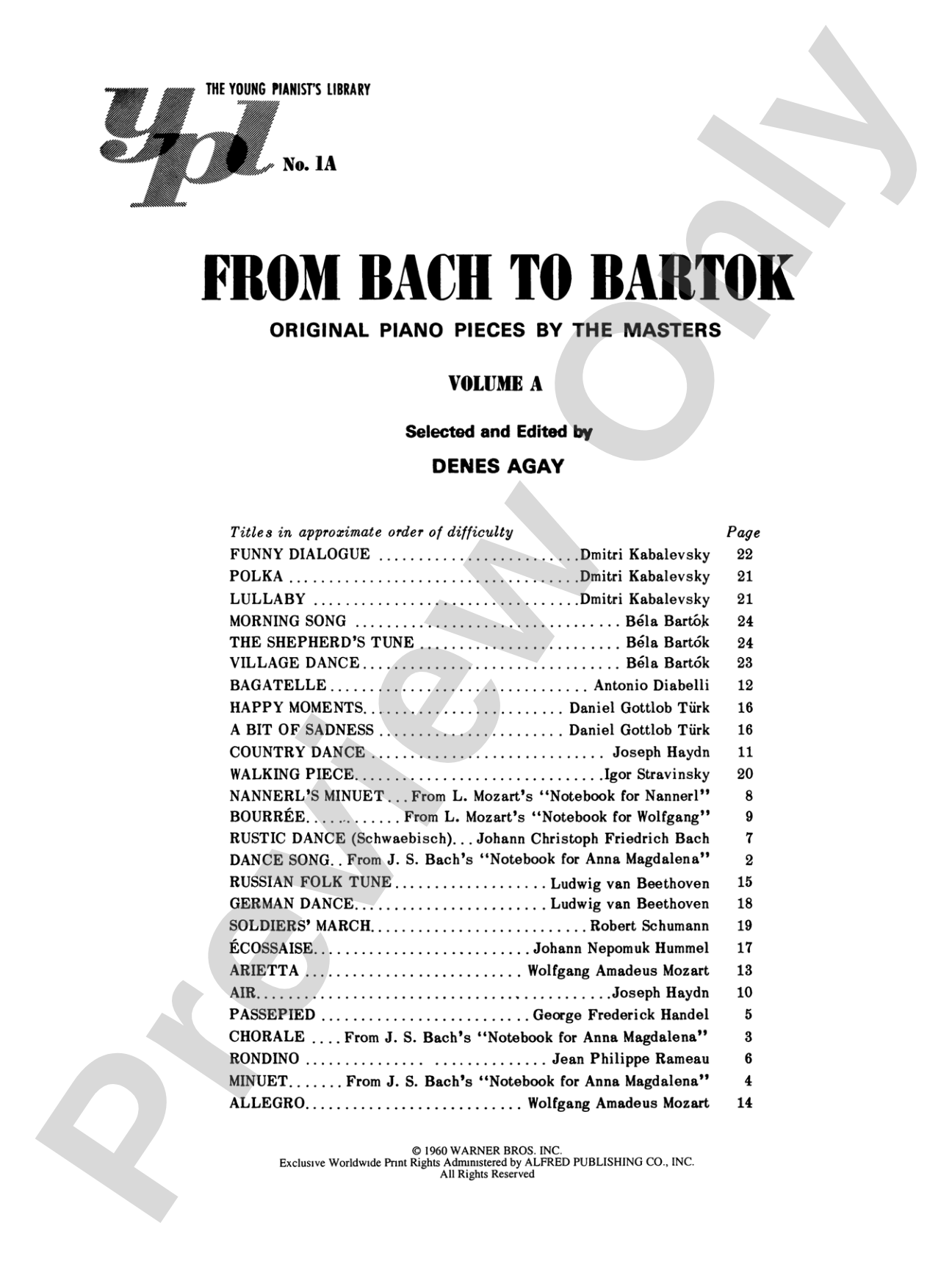
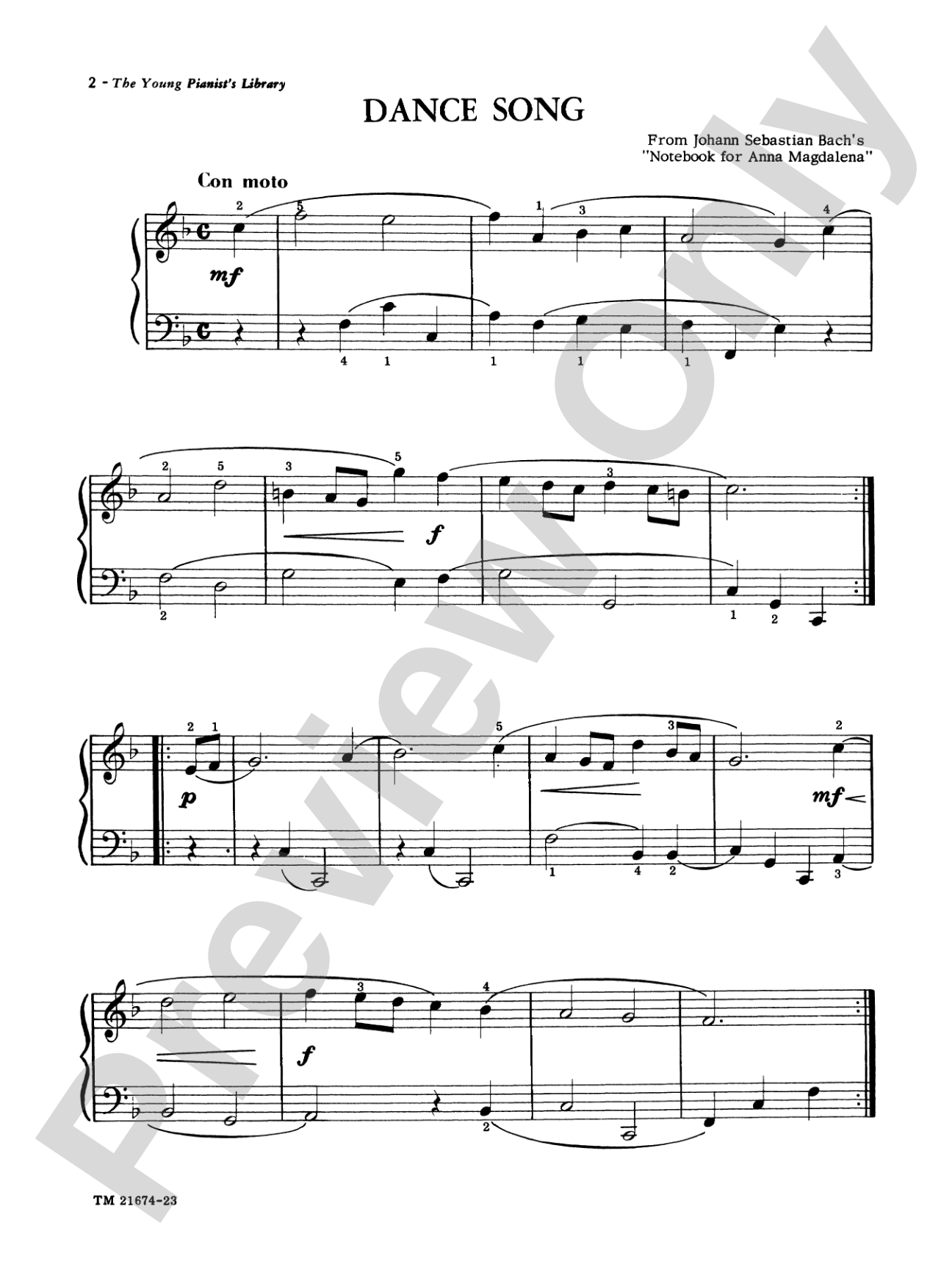
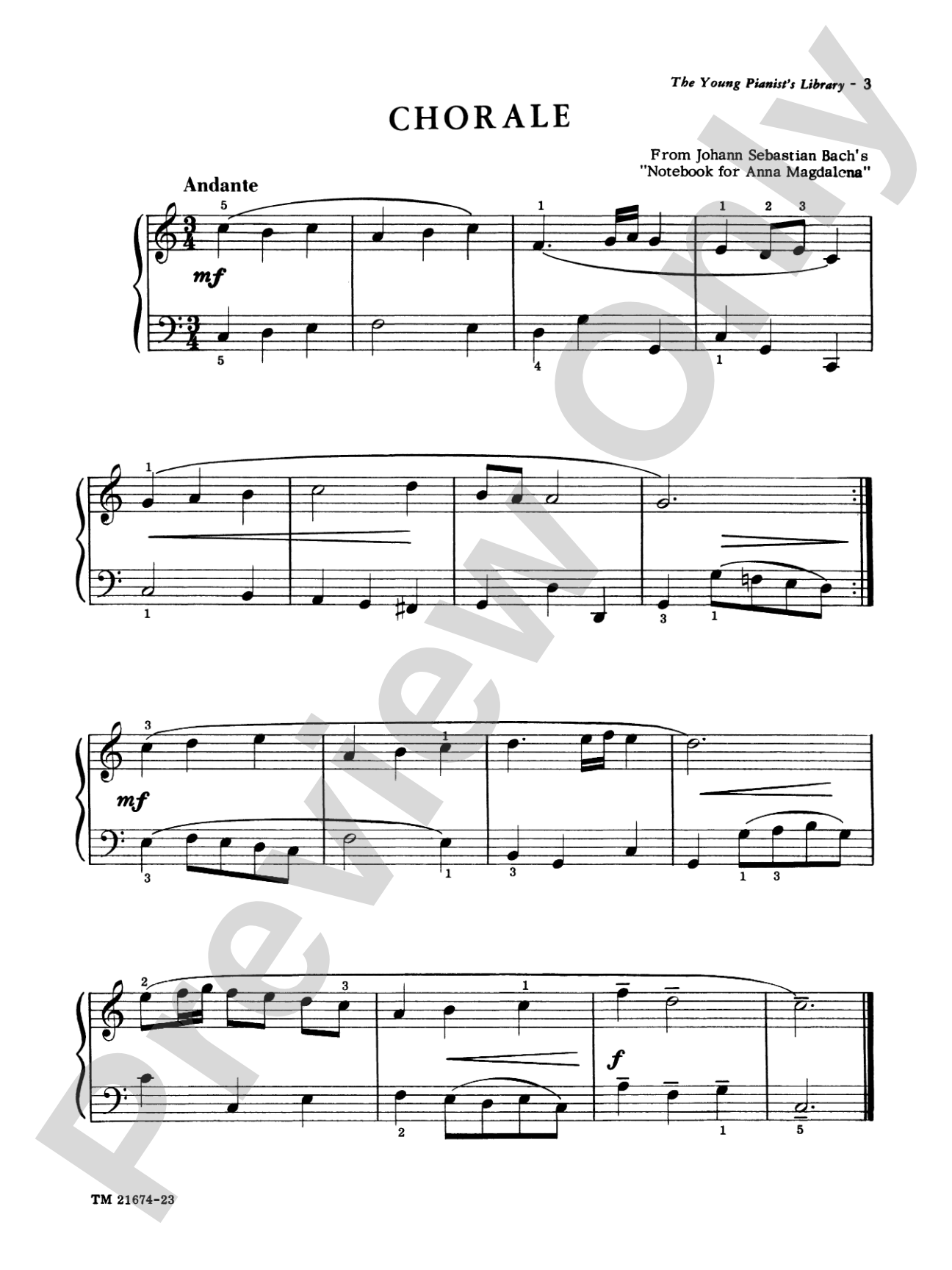
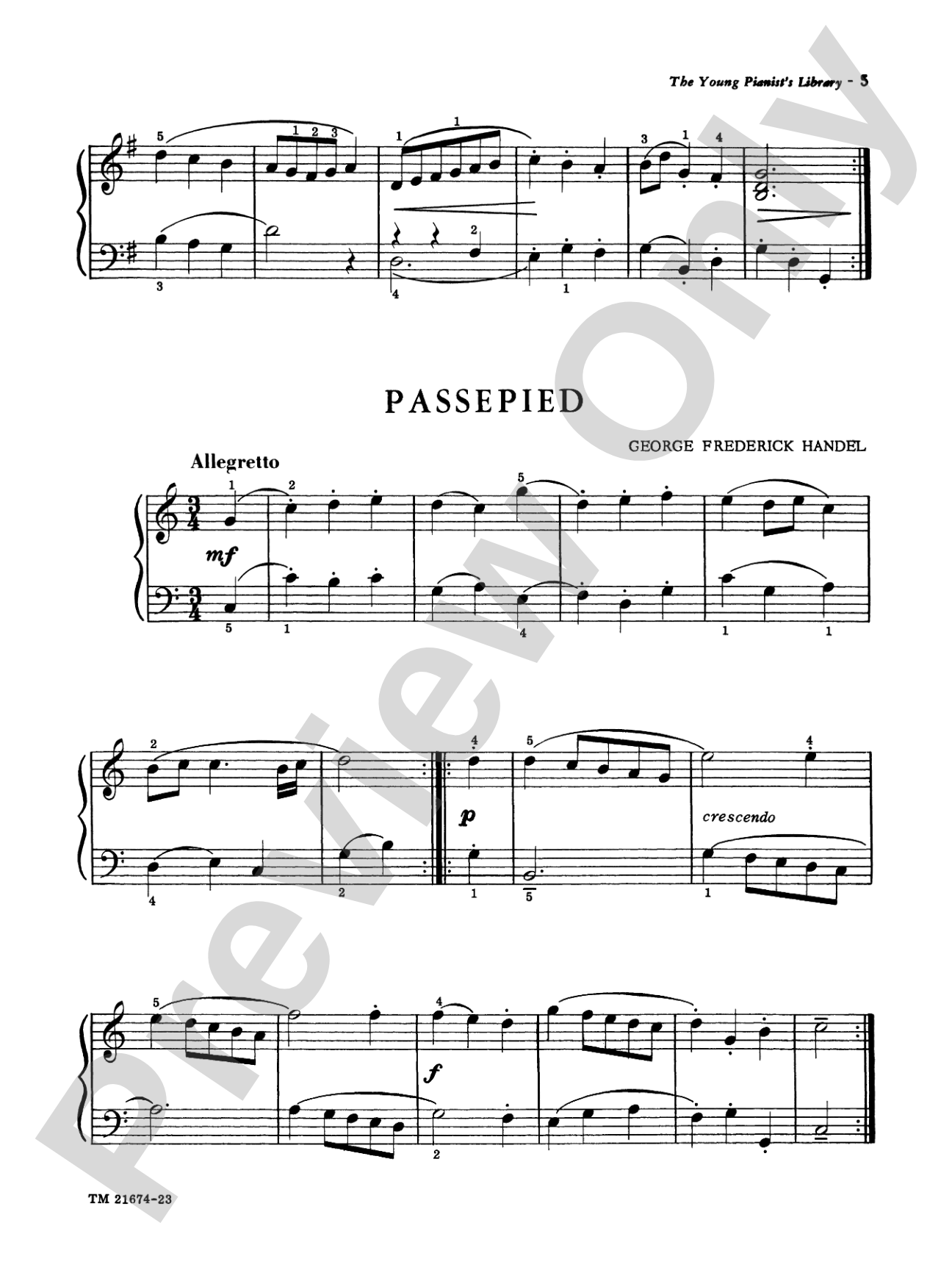
Original piano pieces from the masters. Titles (in approximate order of difficulty): Funny Dialogue * Polka * Lullaby * Morning Song * The Shepherd's Tune * Village Dance * Bagatelle * Happy Moments * A Bit of Sadness * Country Dance * Walking Piece * Nannerl's Minuet (from L. Mozart's "Notebook for Nanner!") * Bourrée * Rustic Dance (Schwaebisch) * Dance Song (from J. S. Bach's "Notebook for Anna Magdalena") * Russian Folk Tune * German Dance * Soldiers' March * Écossaise * Arietta * Air * Passepied * Chorale (from J. S. Bach's "Notebook for Anna Magdalena") * Rondino
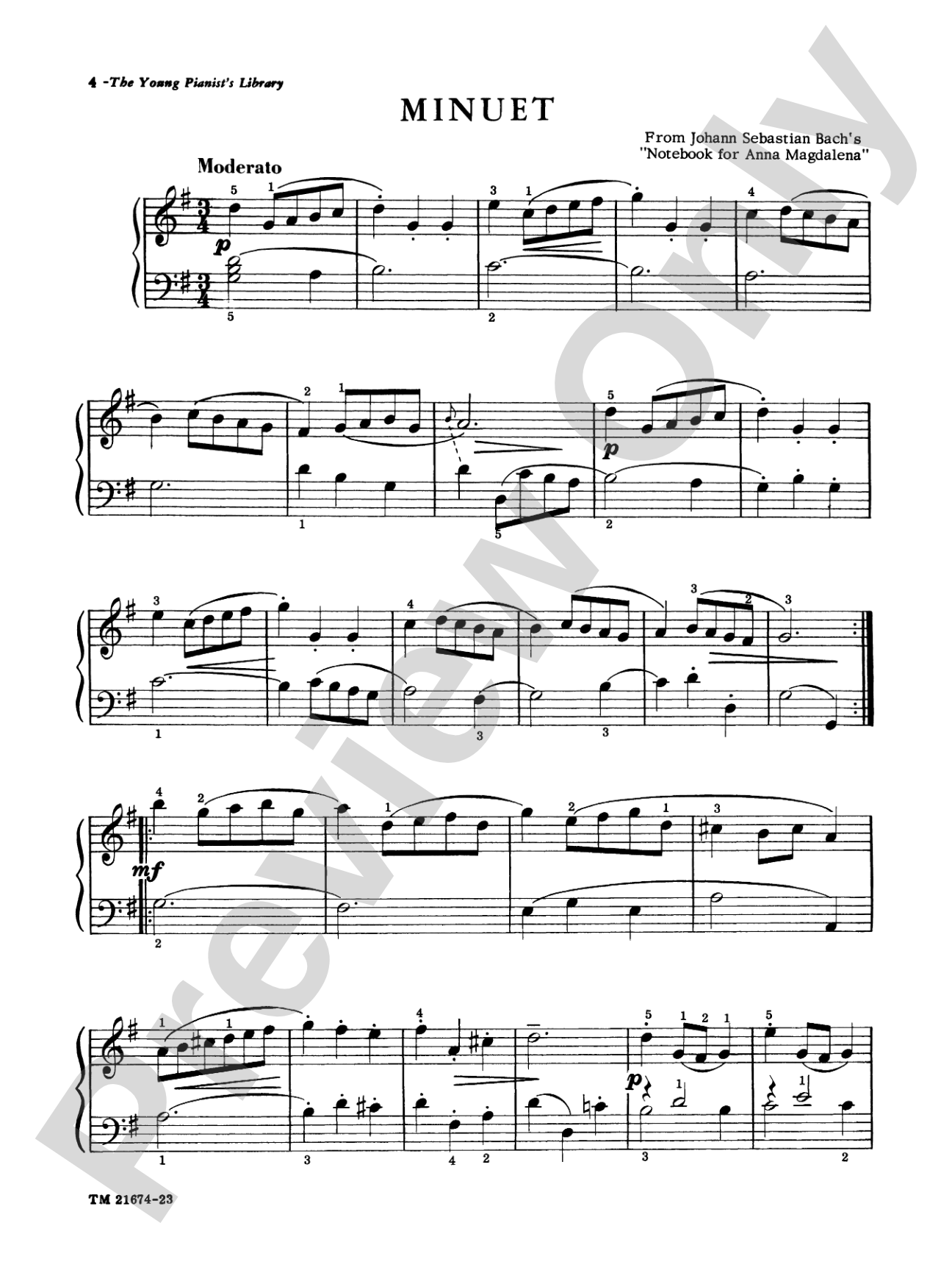
*Minuet (from J. S. Bach's "Notebook for Anna Magdalena") * Allegro


*Minuet (from J. S. Bach's "Notebook for Anna Magdalena") * Allegro
Discover MakeMusic Cloud: thousands of interactive titles your students can play along with today.
Sample Audio
No sample audio found.
Sample Video
No sample videos found.
Additional Details
Series:
Belwin Edition: The Young Pianist's Library
Publisher:
Alfred Music
Page Count:
24
SKU:
00-PB-0001886
More about this title
About the Arranger: Denes Agay

Denes Agay began his musical life at three years old in a small village near Budapest, where he quickly established himself as a serious musician. After earning his doctorate in piano composition and performance from Liszt Ferenc Academy of Music in 1934, he conducted the Budapest Philharmonic in performances of his own symphonies and composed scores for film. When political circumstances forced him to leave Hungary in 1939, Agay relocated to New York and eventually served in the U.S. Army during World War II, where he arranged and performed music for hospital patients.
Following the war, Agay built a prolific career as a teacher, composer, and publisher while also working as a conductor and arranger for NBC radio. His "Young Pianist's Library" series became one of his defining legacies, offering carefully curated collections that introduce students to music across multiple centuries and compositional styles. These anthologies remain central to piano pedagogy because they balance musical quality with genuine accessibility.
Why we love this
Agay understood what early intermediate pianists actually need: exposure to authentic masterworks without the technical walls that often block young players from repertoire worth their time. This collection introduces Bach, Mozart, Bartók, and folk traditions in pieces that sound genuinely musical at first sight, building confidence alongside technical growth. The progression feels natural rather than arbitrary, and students encounter recurring compositional forms and textures that reinforce what they're learning in lessons.
What to expect
A musical walk through centuries of European tradition, where simplicity never means emptiness. You'll encounter the deliberate grace of Baroque counterpoint, the charm of folk melodies, and the humor of miniatures by composers like Bartók. Each piece feels like discovering a small treasure rather than completing an exercise; there's genuine joy in the writing.
Who it's for
Early intermediate pianists working through their first exposure to classical forms, arrangers and teachers building recital programs from shorter works, and students ready to move beyond method books but not yet prepared for longer sonatas or concertos. This book also serves teachers who want to broaden students' historical awareness without overwhelming them.
How to get the most out of it
- Attend to the stylistic differences between pieces; a Baroque minuet and a Russian folk tune demand distinct articulation and phrasing.
- Use the folk tunes and dances as opportunities to explore rubato and rhythmic flexibility appropriate to each tradition.
- Balance between technical accuracy and musical shape; these shorter pieces reward singers who find the melodic arc even in very simple writing.
- Practice transitions between contrasting pieces to strengthen your ability to reset your touch and approach between rehearsals.
How to use it
Build a short student recital entirely from this collection, programming pieces in contrasting moods and styles to showcase range without demanding extended performance stamina. These pieces also work beautifully as opening or closing items in mixed recitals, or as teaching tools during masterclasses to illustrate different historical periods and compositional approaches. Many fit well into thematic concerts organized around folk traditions or "Then and Now" programming.
Skills your students will build
- Reading and executing Baroque articulation and ornamentation in context
- Distinguishing stylistic conventions across centuries of composition
- Recognizing and performing binary and ternary forms
- Interpreting folk-based melodies with appropriate rubato and character
- Sight-reading across multiple keys and time signatures
- Building finger independence through two-part writing and voice leading