The Young Pianist's Library: From Bach to Bartók, Book 1A Cover Image

The Young Pianist's Library: From Bach to Bartók, Book 1A: Piano Book

$7.99 USD
Sale price  $7.99 USD Regular price 
Skip to product information
The Young Pianist's Library: From Bach to Bartók, Book 1A Cover Image

The Young Pianist's Library: From Bach to Bartók, Book 1A: Piano Book

Arranged by Denes Agay

Level: Early Intermediate

Item: 00-DA0002

$7.99
Shipped

One moment…

Description
Original piano pieces from the masters. Titles (in approximate order of difficulty): Funny Dialogue * Polka * Lullaby * Morning Song * The Shepherd's Tune * Village Dance * Bagatelle * Happy Moments * A Bit of Sadness * Country Dance * Walking Piece * Nannerl's Minuet (from L. Mozart's "Notebook for Nanner!") * Bourrée * Rustic Dance (Schwaebisch) * Dance Song (from J. S. Bach's "Notebook for Anna Magdalena") * Russian Folk Tune * German Dance * Soldiers' March * Écossaise * Arietta * Air * Passepied * Chorale (from J. S. Bach's "Notebook for Anna Magdalena") * Rondino
*Minuet (from J. S. Bach's "Notebook for Anna Magdalena") * Allegro

The Young Pianist's Library: From Bach to Bartók, Book 1A: Piano Book isn't in MakeMusic Cloud just yet...but it could be. Let us know you'd like to see it, and you'll help shape what comes next. In the meantime, start a free trial and dive into thousands of interactive titles your students can play along with today.

Sample Pages

Sample Audio
No sample audio found.
Sample Video
Additional Details
Series: Belwin Edition: The Young Pianist's Library
Publisher: Alfred Music
Page Count: 24
ISBN10: 0-89724-256-4
ISBN13: 978-0-89724-256-1
UPC: 029156152234
SKU: 00-DA0002

More about this title

About the Arranger: Denes Agay
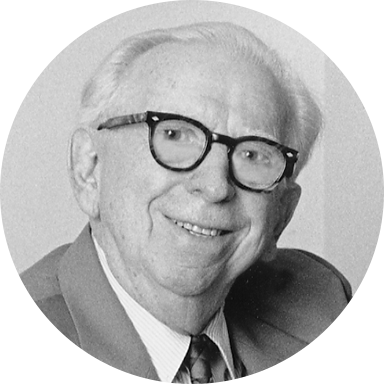
Denes Agay

Denes Agay began his musical life at age three in a village near Budapest, Hungary, and went on to earn his doctorate in piano composition and performance from Liszt Ferenc Academy of Music in 1934. He conducted the Budapest Philharmonic in performances of his own symphonies and composed and orchestrated music for film before leaving Hungary in 1939.

After immigrating to New York and serving in World War II, Agay built a prolific career as a teacher, composer, and publisher. He worked as conductor and arranger for the NBC radio program "Guest Star" and created numerous piano teaching collections and anthologies that have shaped decades of piano study. His most enduring legacy is "The Young Pianist's Library," a series that has introduced generations of students to the music of the masters across multiple styles and technical levels.

Why we love this

Agay's gift was knowing exactly what early intermediate pianists need to hear and play. This collection pairs well-chosen baroque and folk-inspired pieces with careful voice leading and hand position that builds genuine technique without overwhelming the student. The progression from "Funny Dialogue" through the minuets and allemandes feels musical at every step, not like a drill.

What to expect

This collection feels like a musical conversation between centuries. Baroque minuets sit beside Russian folk tunes and Hungarian dances, all arranged with clarity and warmth. The pieces breathe with the character of dance and dialogue, inviting the pianist to hear music first and technique as the means to express it.

Who it's for

Early intermediate pianists working through their first years of repertoire study will find accessible yet musically substantial pieces here. Teachers building recital programs for their younger students or seeking solid supplementary material will appreciate the range of styles and the pedagogical thoughtfulness of Agay's selections.

How to get the most out of it

  • Listen for the melodic shape in each piece before focusing on hands separately. Many of these dances and dialogue pieces have a clear character that should lead your phrasing.
  • Keep your tempo steady through the repeated sections. The rhythmic regularity of the minuets and dances rewards a metronomic approach without sounding mechanical.
  • Articulate the bass line with the same care as the melody. In pieces like the German Dances and Écossaise, the accompaniment pattern is part of the dance's identity.

How to use it

Use Book 1A as a recital album for a young pianist's first solo performance, programming the pieces in a narrative arc from lighter character pieces through the more formal minuets. It also works well as a semester's worth of solo material in a private studio, allowing students to explore multiple styles and composers without leaving the book.

Skills your students will build

  • Reading and performing baroque dance forms (minuet, bourrée, allemande, écossaise)
  • Hand position and finger independence in pieces requiring melodic and harmonic accompaniment
  • Phrasing and articulation in dialogue and dance forms
  • Sight-reading across multiple styles from a single collection
  • Tempo stability and rhythmic regularity in repeated sections
  • Interpretation of character and stylistic nuance in short, focused pieces

You May Also Like