The X Brigade (Action Heroes' March): Baritone/Euphonium Sheet Music Preview

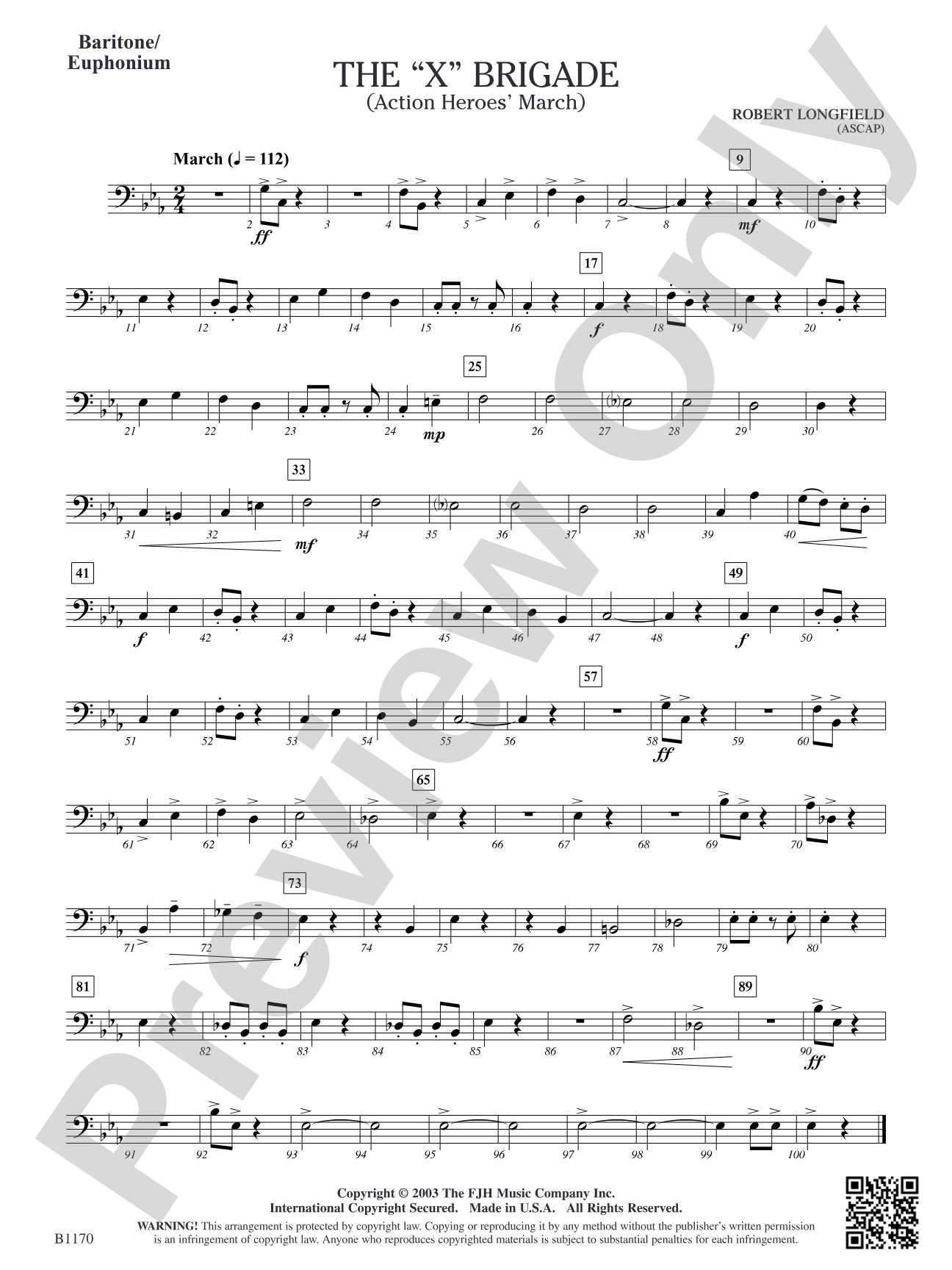
The X Brigade (Action Heroes' March): Baritone/Euphonium

Action Heroes' March

By Robert Longfield

Grade: 1.5

Item: 98-PC-DB1170_BBC1

Digital Download
$7.00
Description
Here's a unique march that is ideal for directors that are looking for something slightly different. Subtitled "Action Heroes' March," the work has a stately quality to it. The composition effectively alternates between major and minor, thus providing some excellent teaching potential.

The X Brigade (Action Heroes' March): Baritone/Euphonium isn't in MakeMusic Cloud just yet...but it could be. Let us know you'd like to see it, and you'll help shape what comes next. In the meantime, start a free trial and dive into thousands of interactive titles your students can play along with today.

Sample Audio
0:00
0:00
Sample Video
Additional Details
Series: FJH Developing Band
Publisher: The FJH Music Company, Inc.
SKU: 98-PC-DB1170_BBC1

More about this title

About the Composer: Robert Longfield

Robert Longfield is a prolific composer and arranger whose work appears regularly in school band and orchestra curricula. His compositions for developing ensembles balance accessibility with musical substance, giving young musicians material that sounds mature without requiring advanced technique.

Why we love this

Most marches at this level stick to a single harmonic color, but Longfield keeps things interesting by shifting between major and minor tonalities. The contrast isn't jarring; it feels natural and gives your ensemble genuine expressive work to do while they're still building fundamental skills.

What to expect

The music has dignity without being stiff. There's a processional quality that invokes the 'action hero' subtitle without resorting to bombast or contemporary idioms. The alternation between major brightness and minor introspection gives it a narrative arc unusual for this level.

Who it's for

Beginning to early-intermediate bands (grades 4-6) with solid rhythm section foundations. It works especially well for ensembles still developing intonation control, since the Grade 1.5 scoring keeps the harmonic demands manageable.

How to get the most out of it

  • Shape the transitions between major and minor sections with slight dynamic nuance. A soft pull-back into the minor passage helps the shift land clearly without sounding accidental.
  • Keep the march tempo steady but not rigid. Young players often rush marches out of habit, so establish the pulse early and remind the ensemble that 'stately' means deliberate, not fast.
  • Balance the melody line so it sits clearly above the supporting voices. Longfield's orchestration can muddy if the inner voices aren't controlled.

How to use it

Include this early in a concert to establish energy and poise, or pair it with a contrasting slow piece to showcase your band's range. It also works as a standalone opener at assemblies or pep rallies where you want something that feels substantial but plays well at that setting.

Skills your students will build

  • Maintaining steady tempo through tonal shifts
  • Major and minor modal contrast and ear training
  • Balancing melodic and supporting voices
  • Controlled dynamic transitions between sections
  • Stylistic interpretation of march conventions

You May Also Like