

The Wonderful World: 2-Part / SSA Choral Octavo
Words by William Brighty Rands, music by Janet Gardner
Item: 00-PO-0001760
$1.85
Minimum order quantity: 20 copies
Pickup currently not available
Description
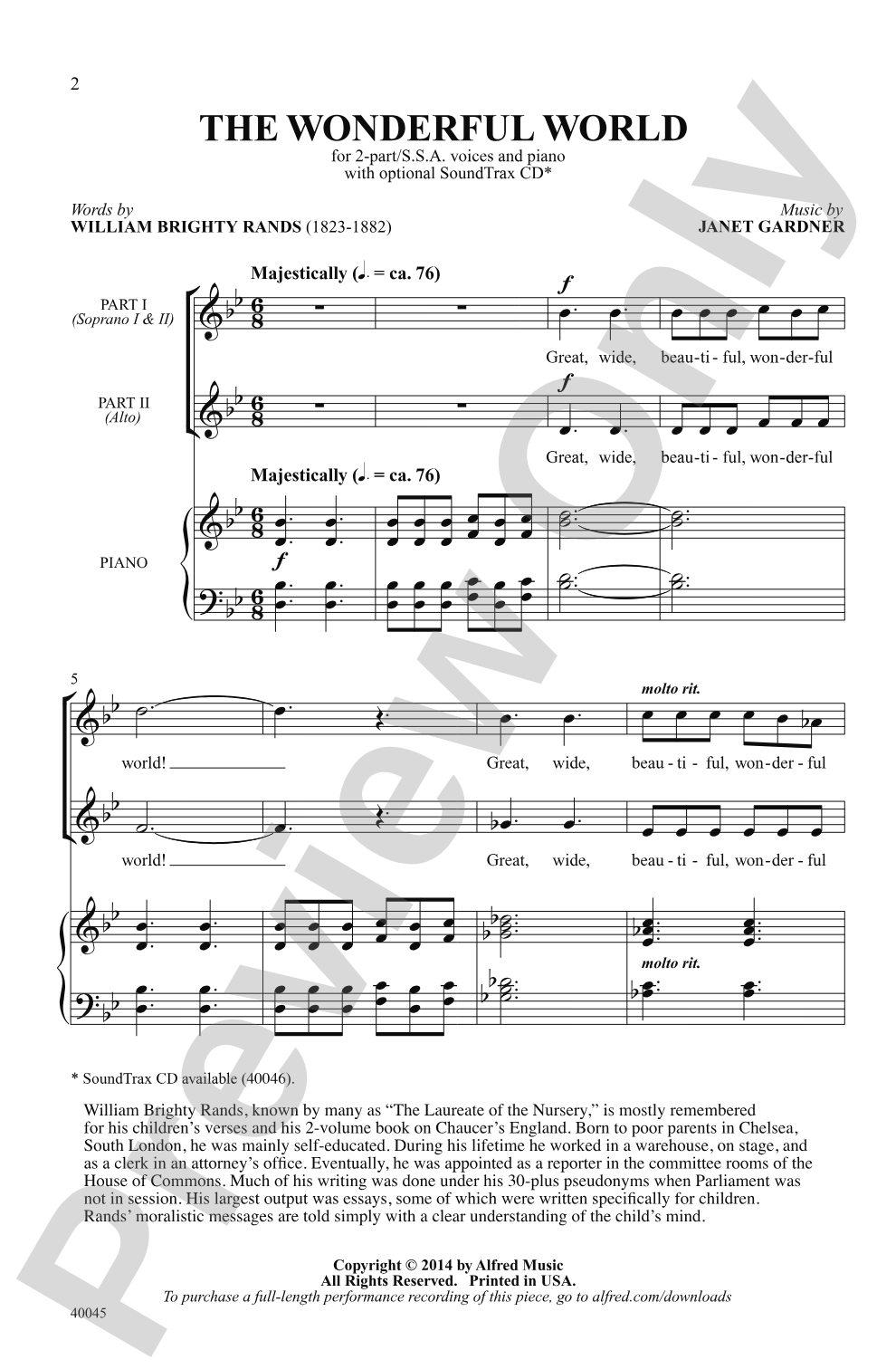
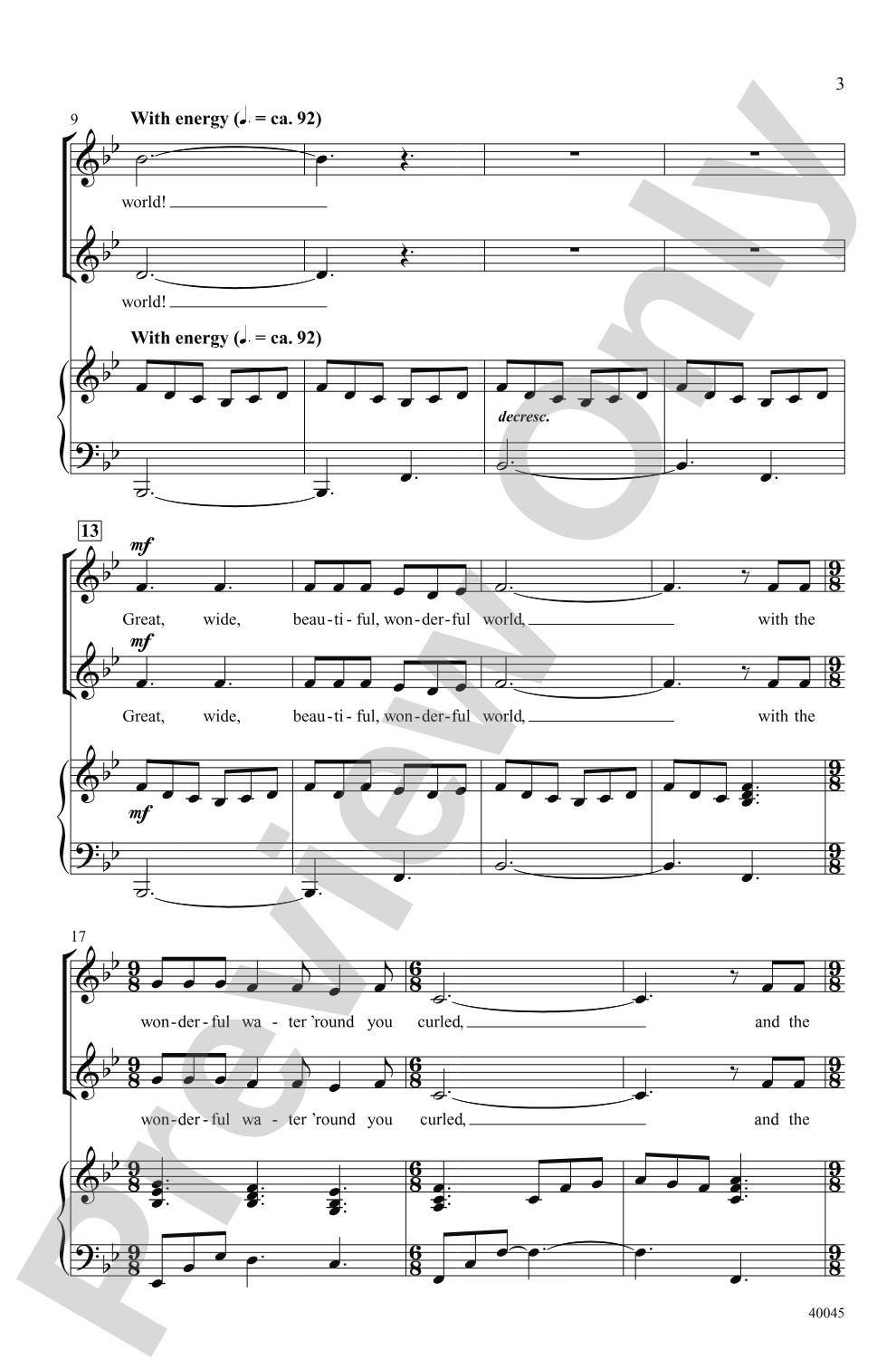
With words by "The Laureate of the Nursery," this exciting concert piece offers an optimistic view of one's place in the world. A gentle lilt and a constant eighth note make the meter changes seamless, and optional cue-sized notes easily turn this 2-part choral into an SSA arrangement.


The Wonderful World: 2-Part / SSA Choral Octavo isn't in MakeMusic Cloud just yet...but it could be. Let us know you'd like to see it, and you'll help shape what comes next. In the meantime, start a free trial and dive into thousands of interactive titles your students can play along with today.
Request This Title
Tell us you want it.
Start Your Free Trial
Explore everything that's ready to play right now.
Sample Audio
1
Audio File
--:--
0:00
0:00
Sample Video
No sample videos found.
Additional Details
Series:
Alfred Choral Designs
Publisher:
Alfred Music
Page Count:
12
SKU:
00-PO-0001760
More about this title
About the Composer: Janet Gardner

Janet Gardner studied music education at Concordia College in Moorhead, Minnesota, then spent 33 years teaching elementary general music in Montevideo. Her impact on music education extended beyond the classroom: she led workshops at state universities, presented as a clinician at state conventions, and earned the 1995 Minnesota Music Classroom Teacher of the Year award. She also chaired the Minnesota Elementary Composition Contest for six years.
Gardner has composed numerous musicals for Alfred Publishing, including Bones!, Broadway Santa, The Granny Awards, and The Phantom of the Music Room, alongside choral works like Godfrey Gordon Gustavus Gore and The Wind. Her compositions have received annual ASCAP recognition. Since retiring from classroom teaching in 2006, she has continued composing while serving as a church musician, directing an ecumenical contemporary music ensemble, and participating in her community's concert association in Montevideo, where she lives with her husband.
Why we love this
Gardner writes with elementary and middle school choirs in mind, and this piece proves it: the text celebrates childhood wonder while the music stays rhythmically clear and melodically singable. The optional cue notes transform the piece from 2-part to SSA without requiring a second arrangement, giving you real flexibility across skill levels and ensemble sizes. The gentle lilt combined with purposeful meter changes keeps the piece engaging without becoming fussy.
What to expect
The piece radiates gentle optimism, with a natural lilt that feels conversational rather than forced. The interplay between meter changes and the steady eighth note pulse creates forward momentum without rushing, giving singers a sense of purposeful movement through the text's celebration of the world around them.
Who it's for
This octavo works beautifully for upper elementary through middle school choirs that have developed basic part independence but aren't ready for complex harmonic writing. It's equally suited to honor choirs, festival ensembles, or mixed-age community groups seeking concert repertoire with accessible yet thoughtful material.
How to get the most out of it
- Keep the constant eighth note motion flowing naturally; it's the glue holding the meter changes together, so maintain steady pulse work in rehearsal before addressing melodic nuance.
- Balance the two or three parts so the upper line remains audible; lighter voiced singers often struggle to project in unison sections when lower parts enter.
- Let the optimistic text guide your interpretation; resist the temptation to oversell dynamics, as the piece's warmth comes from sincerity rather than contrasts.
- If using the recorded accompaniment, have singers listen to it several times before rehearsal so they can internalize the rhythmic feel and stylistic tone.
How to use it
Program this alongside other pieces that celebrate perspective and growth; it pairs well with folk-inspired or literary texts. The concert and contest/festival designation makes it suitable for both informal performances and competition settings, and its warm character provides a refreshing alternative to more dramatic or novelty-based youth repertoire.
Skills your students will build
- Navigating meter changes while maintaining steady pulse
- Balancing independent melodic lines with rhythmic precision
- Singing with consistent tone quality through moderate tessitura
- Adapting to flexible voicing (2-part vs. SSA) without losing ensemble blend
- Interpreting text with age-appropriate musicality and conviction