

The Winter Wind: 2-Part Choral Octavo
Words and music by Mary Donnelly and George L. O. Strid
Item: 00-PO-0003626
$1.90
Minimum order quantity: 20 copies
Pickup currently not available
Description
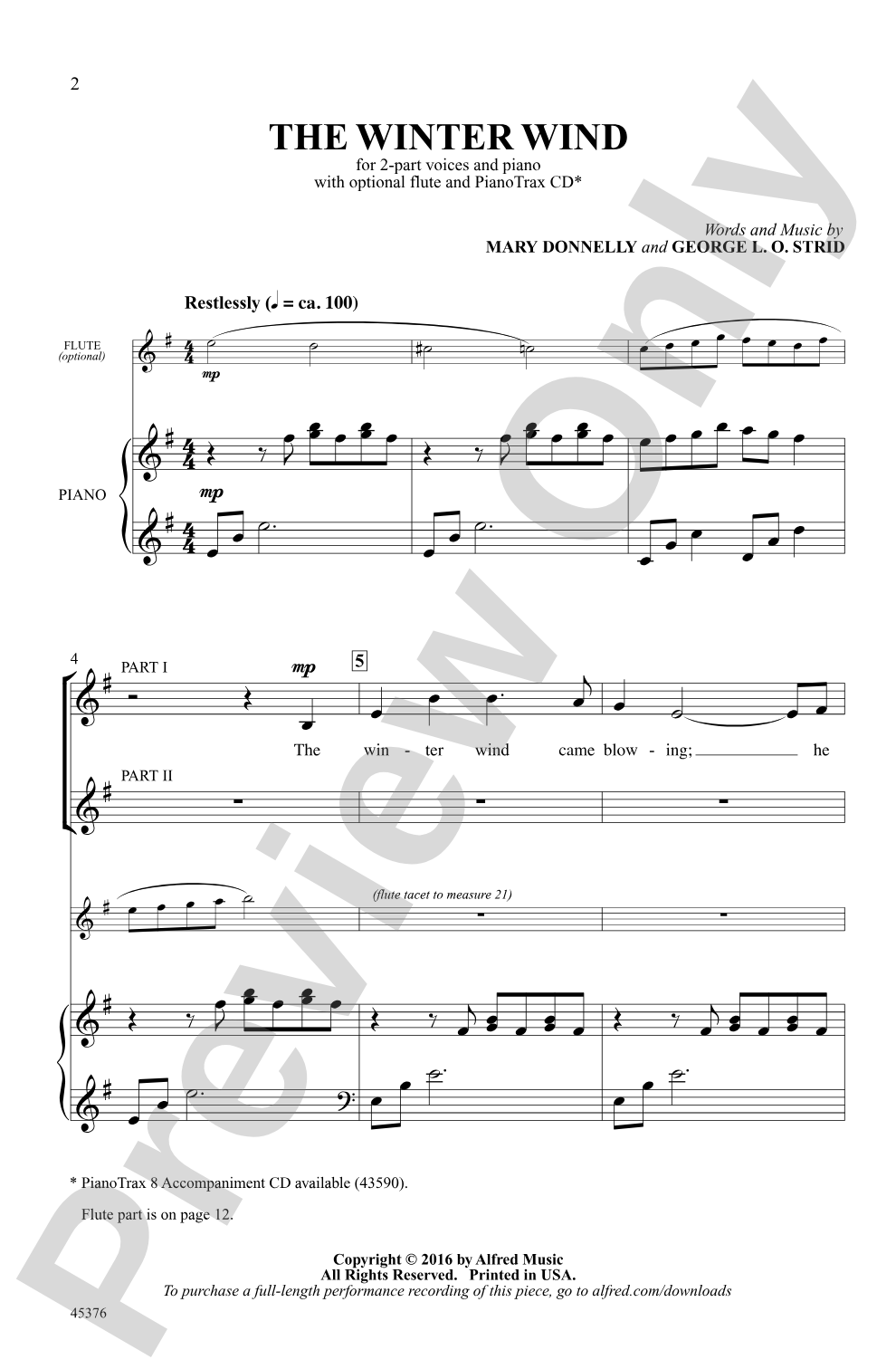
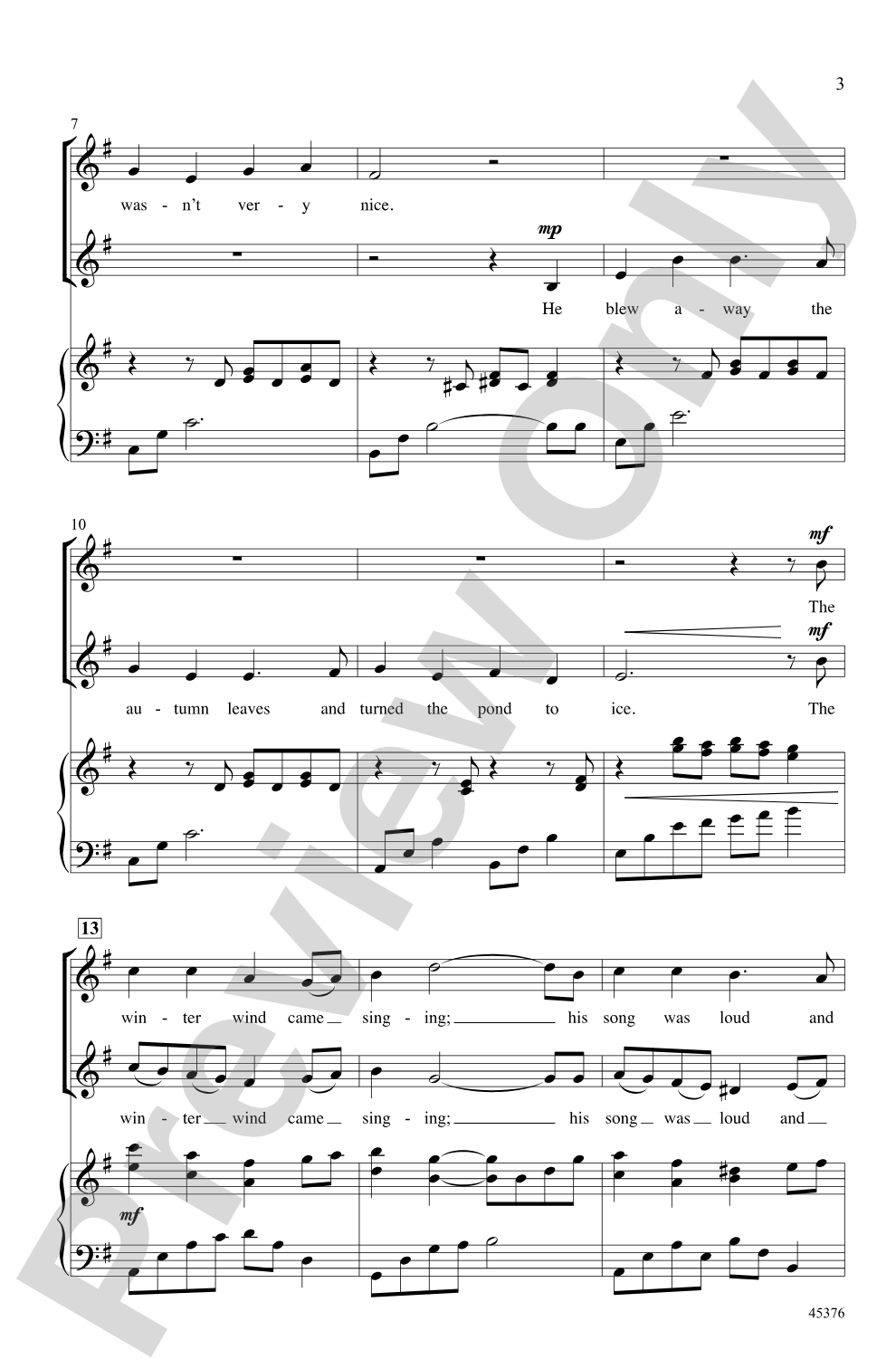
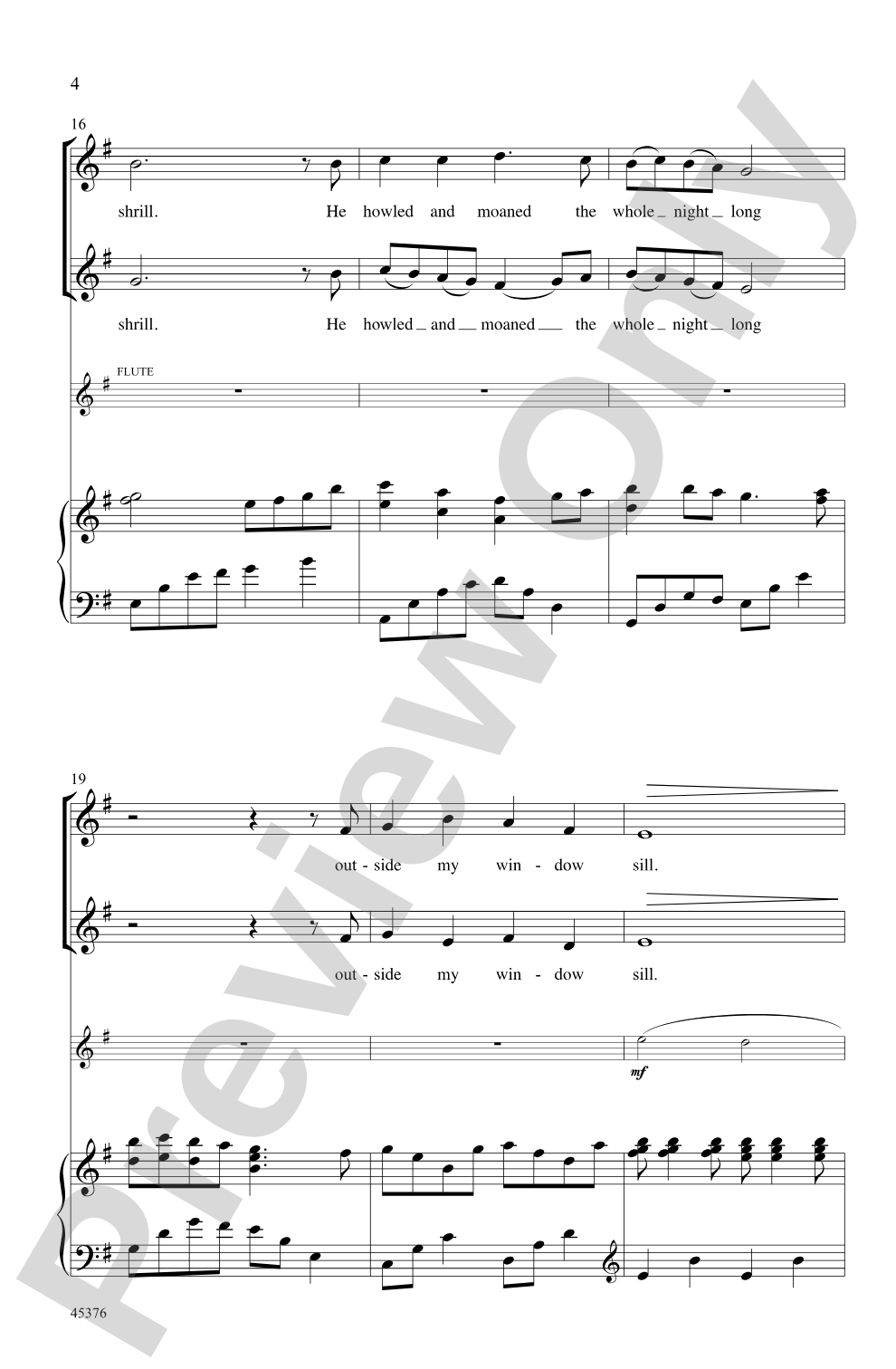
A delicate piano accompaniment and a chromatic flute obbligato set the wintry scene for this evocative treble choral with no mention of the holidays. Both the topic and tessitura are perfect for younger singers. A final Picardy third symbolizes the arrival of spring.


The Winter Wind: 2-Part Choral Octavo isn't in MakeMusic Cloud just yet...but it could be. Let us know you'd like to see it, and you'll help shape what comes next. In the meantime, start a free trial and dive into thousands of interactive titles your students can play along with today.
Request This Title
Tell us you want it.
Start Your Free Trial
Explore everything that's ready to play right now.
Sample Audio
1
Audio File
--:--
0:00
0:00
Sample Video
Additional Details
Series:
Alfred Choral Designs
Publisher:
Alfred Music
Page Count:
12
SKU:
00-PO-0003626
Instrumentation:
with Flute Obbligato
More about this title
About the Composer: Mary Donnelly

Mary Donnelly grew up in Reno, Nevada, and studied English and French at the University of Nevada, Reno. While still in college, she organized children's choruses and discovered her passion for music education, prompting her to pursue teacher certification and eventually earn a Master's Degree in Education from Lesley College in Cambridge, Massachusetts, where she focused on integrating the arts across disciplines.
Donnelly spent thirty years teaching general music and choir in the Washoe County School District, retiring as an active member of ACDA, NEA, and ASCAP. In 1985, she began a prolific collaborative partnership with George L. O. Strid when their principal asked them to write a musical for Reading Week. Together they have created over two hundred songs and twenty-five musicals, establishing themselves as trusted voices in choral music for young singers.
Why we love this
Donnelly and Strid have crafted a piece that respects the vocal range and maturity of younger singers while offering genuine musical sophistication. The chromatic flute obbligato and piano accompaniment create atmosphere without overwhelming the treble voices, and the Picardy third ending delivers a poignant harmonic moment that students will remember long after the concert.
What to expect
The piece unfolds like snow accumulating on a winter landscape. Donnelly and Strid build atmosphere through the gentle piano accompaniment and delicate flute obbligato, creating a reflective mood that feels introspective rather than cheerful. The final shift to a major tonality suggests quiet hope and the inevitable return of spring.
Who it's for
This piece suits treble choirs in middle school and early high school settings where singers are developing secure intonation and expressive phrasing. It works equally well for church choirs, festival performances, or concert programs seeking repertoire that engages younger voices without condescending to them.
How to get the most out of it
- Balance the flute obbligato so it weaves around rather than dominates the vocal line; younger singers should never feel they're competing for the listener's ear.
- Work the chromatic passages slowly in rehearsal to ensure intonation stays centered; the wintry character depends on clarity rather than speed.
- Let the final Picardy third breathe; resist rushing the resolution and allow singers to feel the harmonic shift from major to minor.
How to use it
Program this for winter or early spring concerts when you want to shift away from seasonal clichés; the lack of holiday references makes it suitable across multiple seasons. It pairs beautifully with contrasting repertoire, offering a contemplative moment that deepens a concert's emotional arc without requiring soloists or elaborate staging.
Skills your students will build
- Singing sustained, legit phrases with proper breath support
- Balancing treble voicing with instrumental accompaniment
- Navigating chromatic melodic movement with secure intonation
- Understanding harmonic color and the effect of altered final sonorities (Picardy third)