
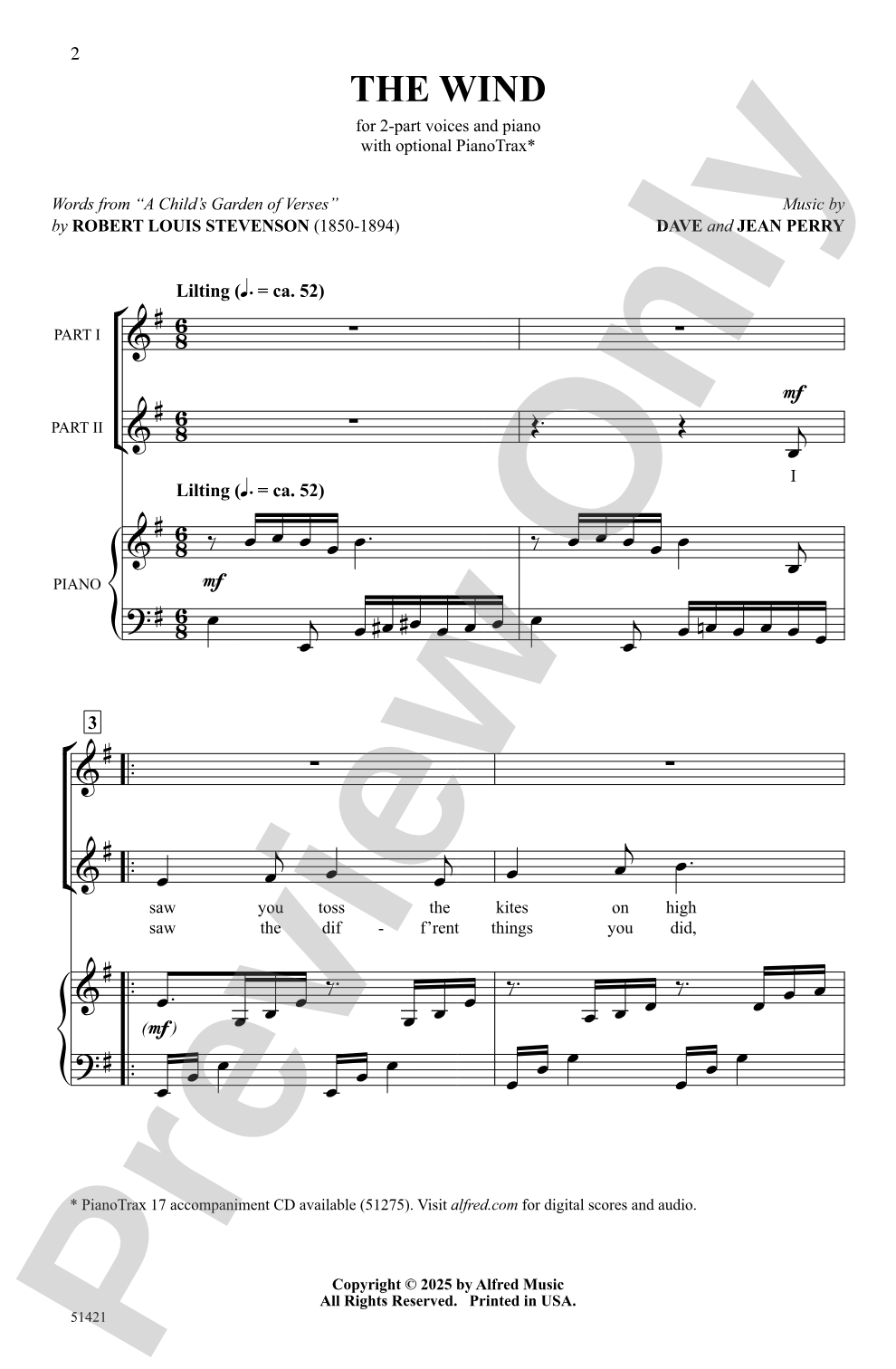
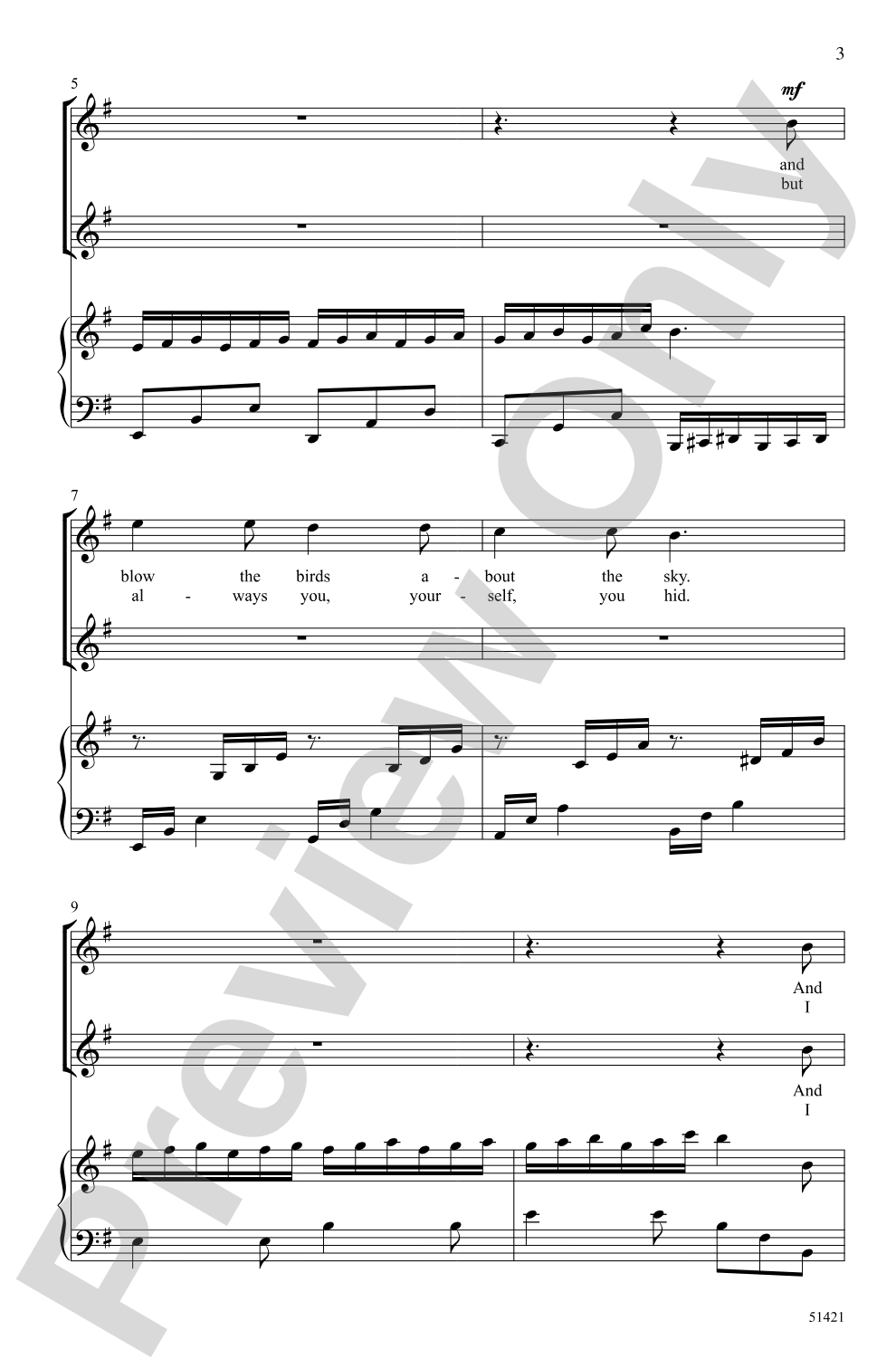

The Wind: 2-Part Choral Octavo
Words by Robert Louis Stevenson, music by Dave and Jean Perry
Item: 00-PO-0007441
$2.20
Minimum order quantity: 20 copies
Pickup currently not available
Description
This playful minor-key setting of Robert Louis Stevenson's famous poem examines the wind through a child's eyes. The lilting, etude-like accompaniment mimics the sound of rustling wind, and well-crafted vocals are just right for beginning part-singers. A nice feature for your collaborative pianist, or use the professionally played PianoTrax for rehearsal or performance.


The Wind: 2-Part Choral Octavo isn't in MakeMusic Cloud just yet...but it could be. Let us know you'd like to see it, and you'll help shape what comes next. In the meantime, start a free trial and dive into thousands of interactive titles your students can play along with today.
Request This Title
Tell us you want it.
Start Your Free Trial
Explore everything that's ready to play right now.
Sample Audio
1
Audio File
--:--
0:00
0:00
Sample Video
Additional Details
Series:
Alfred Choral Designs
Publisher:
Alfred Music
Page Count:
8
SKU:
00-PO-0007441
More about this title
Why we love this
The etude-like accompaniment is the real star here. Perry crafts a piano part that becomes its own character, suggesting the wind's movement through carefully voiced figuration that your collaborative pianist will enjoy bringing to life. The vocal writing respects the developmental level of beginning part-singers while still offering genuine musical substance, which means your singers sound confident without feeling oversimplified.
What to expect
Playful and slightly mysterious, with the minor key lending an understated intrigue rather than darkness. The piano's rustling accompaniment captures the wind's restless energy, while the vocal lines dance above it with the wonder and curiosity of a child watching leaves scatter.
Who it's for
Beginning part-singers in middle school or community choirs who are ready for a musical challenge beyond unison. Directors seeking repertoire that combines literary merit with accessible two-part writing will find this pairs well with singers developing independence in their vocal lines.
How to get the most out of it
- Shape the accompaniment's rhythmic figures to suggest motion and texture; avoid letting the etude-like patterns become mechanical or rushed.
- Encourage singers to match the lightness and buoyancy of Stevenson's text. The minor key shouldn't feel heavy or dramatic here.
- If using the recorded PianoTrax, have singers listen through once before rehearsing to absorb the accompaniment's character and energy.
- Balance the two vocal parts so neither disappears; the interplay between them mirrors the wind's playful, unpredictable nature.
How to use it
This fits naturally into a concert exploring poetry and nature, or as a standalone opener that signals to the audience an evening of imaginative storytelling. Its modest length and literary foundation make it strong companion to other settings of classic children's verse or seasonal programming.
Skills your students will build
- Reading two independent vocal parts with confidence
- Maintaining part integrity while listening to the accompaniment
- Shaping phrases in minor-key vocal writing
- Coordinate with piano accompaniment, whether live or recorded