

The Water Is Wide: SSA Choral Octavo
Arr. Mark Hayes
Item: 00-PO-0004221

$2.25
Minimum order quantity: 20 copies
Pickup currently not available
Related Items
The Water Is Wide: SATB Choral Octavo |
$2.25
|
View | |
The Water Is Wide: SAB Choral Octavo |
$2.25
|
View | |
The Water Is Wide: SATB Choral Octavo |
$2.25
|
View | |
The Water Is Wide: SAB Choral Octavo |
$2.25
|
View | |
The Water Is Wide: SSA Choral Octavo |
$2.25
|
View | |
The Water Is Wide: Choral Octavo SoundTrax CD |
$27.99
|
View | |
The Water Is Wide: Choral SoundPax |
$20.00
|
View |
Description
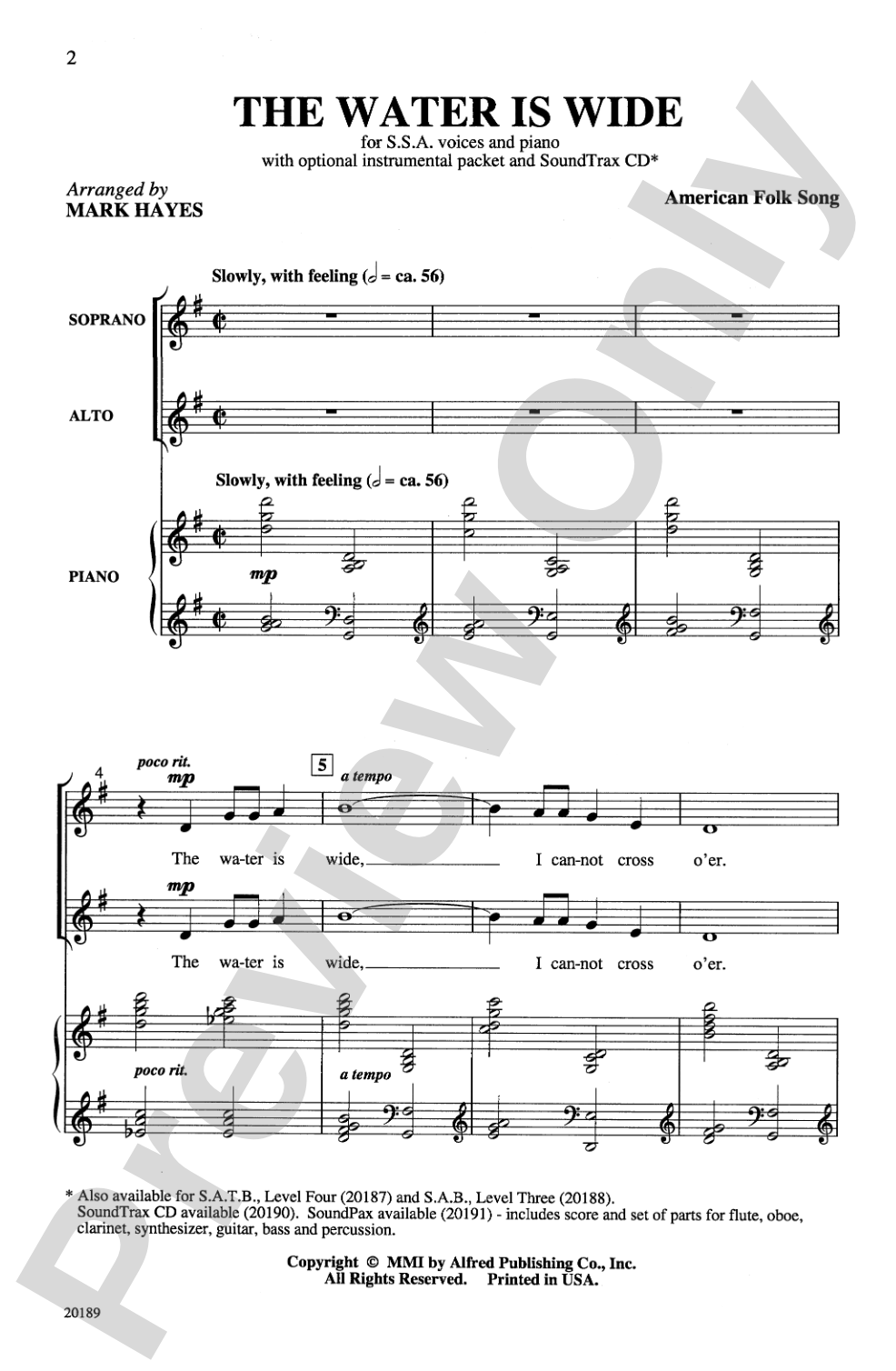
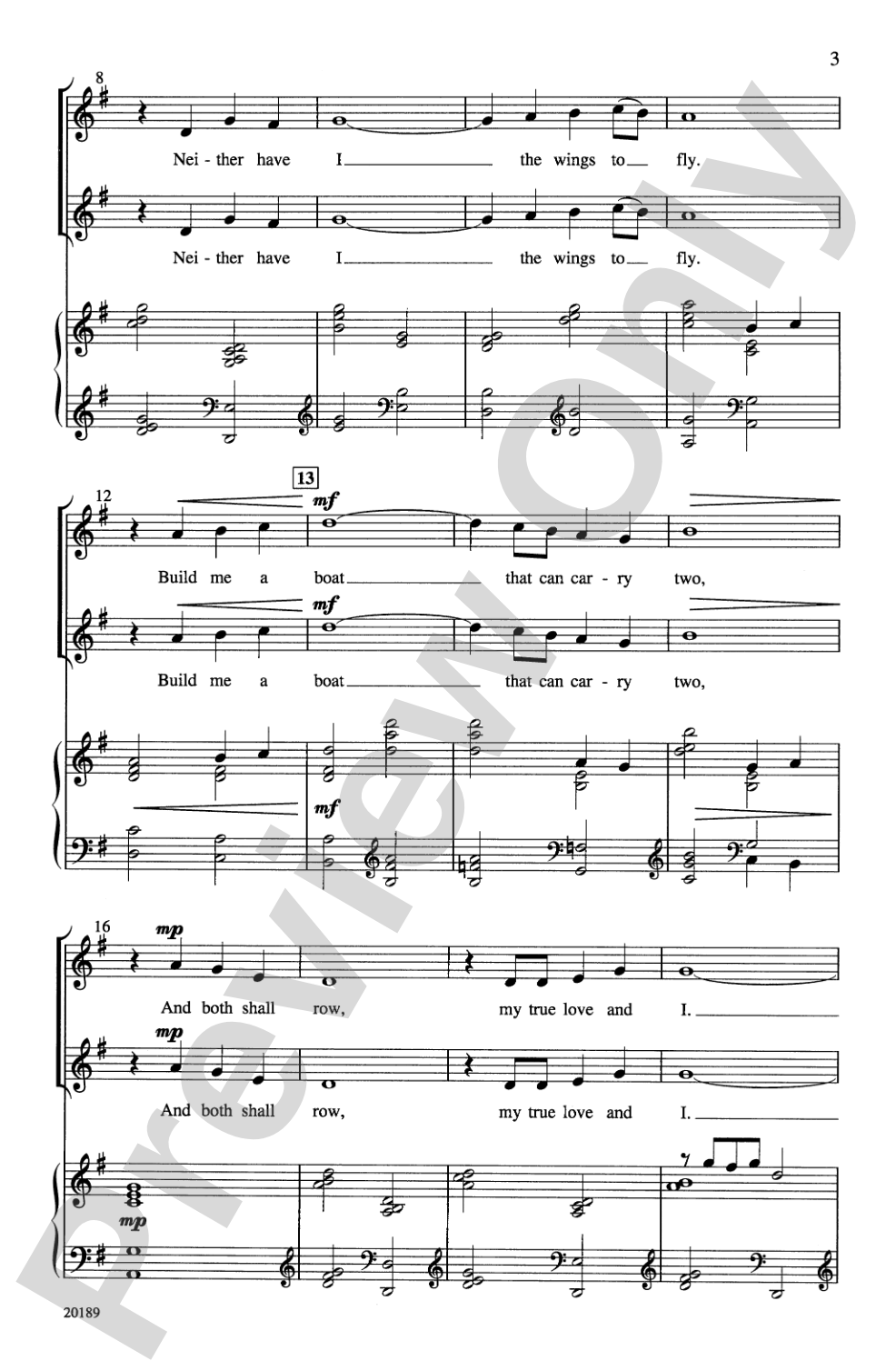
This new arrangement by Mark Hayes is destined to become a classic and a favorite of choral groups of any age. It's fresh, inventive, yet rich in choral tradition---hallmarks of Mark Hayes' writing. The first verse is strong unison writing, the second features an echo section, the third is voiced with lush, fluid harmonies, and the fourth scores the female voices in counterpoint with the men. The arrangement fades away, "like the morning dew." Outstanding SoundPax and SoundTrax CD.


Don't just read it, hear it, play along with it, and watch your students grow with it. In MakeMusic Cloud, The Water Is Wide: SSA Choral Octavo comes alive with professional accompaniment, adjustable tempo, and built-in practice tools that turn solo practice into real progress.
Open in the Player
Jump straight in and assign it today.
Start Your Free Trial
Open this title and explore the full library in minutes.
Sample Audio
1
Audio File
--:--
0:00
0:00
Sample Video
No sample videos found.
Additional Details
Series:
Alfred Archive Edition: Alfred Choral Designs
Publisher:
Alfred Music
Page Count:
12
SKU:
00-PO-0004221
More about this title
About the Arranger: Mark Hayes

Mark Hayes brings the sensibility of a virtuoso pianist to every project he undertakes. With over 1,750 published works spanning sacred and secular genres, he has established himself as a composer and arranger of remarkable versatility. His educational credentials include a summa cum laude degree in Piano Performance from Baylor University, and his conducting credits span prestigious venues including Lincoln Center, the National Cathedral, and Carnegie Hall. In 2010, Baylor University honored him with the Award for Exemplary Leadership in Christian Music.
Hayes has built an international reputation through major commissions and premieres. He conducted the world premiere of his Requiem at Lincoln Center in 2013 and later presented it at St. Ignatius Basilica in Rome as part of a Vatican-sponsored festival. His work extends beyond concert music into musical theater; he orchestrated the musical Madame Buttermilk and arranged music for We'll Meet Again. His catalog includes more than 100 piano books in print across styles ranging from gospel to classical to jazz, reflecting his deep engagement with the instrument. Based in Kansas City, Missouri, Hayes continues to compose and perform internationally.
Why we love this
Hayes's approach to this folk tune respects the song's core while revealing fresh harmonic and textural possibilities at every verse. The arc of the arrangement, moving from unison strength through echo techniques to intricate counterpoint, gives singers tangible musical goals and keeps audiences engaged. The final fade, described as dissolving "like the morning dew," shows thoughtful attention to how a piece concludes in memory.
What to expect
There is a pastoral quality to this setting, grounded in the simplicity of the folk melody yet enriched by Hayes's harmonic language. The arrangement moves seamlessly between moments of quiet introspection and fuller vocal texture, creating an emotional journey that feels both intimate and expansive.
Who it's for
This arrangement works for treble choirs ranging from high school and college to community and adult ensembles. The SSA/SSAA voicing accommodates choirs with varying numbers of singers and allows flexibility in doubling parts where needed.
How to get the most out of it
- Emphasize the unison melody in the opening verse; clarity and confidence here establish the tune's identity before harmonic layers enter.
- Shape the echo section with precision and balance; the responding voices must sit just beneath the primary line so the device enhances rather than muddies the melody.
- Prepare the counterpoint passage carefully in sectionals; ensure lower voices understand their independent line while trusting the sopranos to carry the folk tune.
- Build the final diminuendo gradually and deliberately, allowing the music to dissolve rather than simply fade to silence.
How to use it
This piece fits naturally into programs built around American or British folk traditions, or as part of a concert exploring water imagery and nature themes in vocal music. Its moderate length and variable difficulty level make it suitable for both opening and closing positions in a concert.
Skills your students will build
- Singing sustained unison lines with tonal blend and precision
- Executing echo technique as a responsive ensemble device
- Reading and performing independent vocal lines in counterpoint
- Managing dynamic control during extended diminuendos